A Freight of Steel and Silence: One Man’s Reckoning on the Long Road to Truth
CHAPTER 1: The Weight of Steel
The rain didn’t just fall in Virginia; it hammered. It was a rhythmic, relentless percussion against the roof of the Peterbuilt, a sound that usually lulled me into a trance behind the wheel. Tonight, it sounded like static. I sat in the driver’s seat, my knuckles white against the steering wheel, staring at the patch of gravel where the police cruisers had just pulled away.
The mud on my boots felt heavy, like lead. My ribs burned with every inhale, a dull, throbbing reminder of the boot that had found me when I was pinned in the staging area. I turned the ignition. The massive engine turned over with a deep, guttural growl that vibrated through the floorboards, a beast waking up to a world that was suddenly much more dangerous than it had been four hours ago.
“You should move, Jack,” Elias said. He was sitting in the passenger seat, his posture no longer the hunched, fragile silhouette of a broken man, but the rigid, alert bearing of someone who had once commanded a perimeter.
I glanced over. The wooden box sat on his lap. Its hinges were bent, and the wood was scarred, but he held it with a possessive, almost religious reverence. My gaze flickered to the dash. The red light of the camera blinked back at me—a small, steady eye that held the footage that would either save us or make us targets for the rest of our lives.
“I’m moving,” I said, my voice raspy. I shifted the transmission, the gears clicking into place with a mechanical finality.
We pulled onto the blacktop, the headlights cutting through the thick, wet dark. I didn’t head toward the interstate. I took the service road that snaked through the back woods of the county. Every shadow cast by the trees felt like a potential threat. I wasn’t just driving a truck anymore; I was moving a liability.
“What’s really in there, Elias?” I asked, keeping my eyes on the shimmering wet asphalt.
Elias traced the grain of the wooden box with his thumb. He didn’t answer immediately. He stared out the side window, watching the trees pass like dark sentinels. “Memories that were supposed to stay buried,” he finally murmured. “Some things aren’t lost, Jack. They’re quarantined.”
I frowned, the tension in my shoulders tightening. As I reached for my radio to check the channels, my hand brushed against the seat cushion. Something wasn’t right. I felt a slight lump in the upholstery—a physical discrepancy in the way the fabric lay over the frame.
I paused, my heart hammering a quick, erratic rhythm against my ribs. I tapped the spot. It wasn’t padding. It was sharp, cold, and rectangular.
Before I could reach for it, my peripheral vision caught a flash of light in the distance—not the flicker of a distant farmhouse, but the synchronized, high-beam sweep of two vehicles pulling out from a hidden logging trail three miles back.
They weren’t troopers. And they definitely weren’t civilians.
CHAPTER 2: The Geometry of a Trap
My hand didn’t hesitate. I shoved the gear shifter into a lower range, the transmission complaining with a metallic grind that echoed the tightness in my chest. The lump beneath the seat upholstery—that sharp, rectangular anomaly—burned against my fingertips as I gripped the wheel. Whatever was hidden there would have to wait. The headlights in my mirror weren’t waiting.
“They aren’t just following,” I said, my voice barely audible over the roar of the diesel engine. I watched the mirrors. The two vehicles—a sleek, dark sedan and a heavy pickup—were pacing us, hugging the curves of the logging road with a precision that didn’t belong to locals or lost drivers. They were closing the distance, their high beams washing out the world behind me into a blinding, featureless white glare.
Elias didn’t look back. He kept his eyes forward, his posture rigid. “They’re forcing you to the bottleneck,” he said, his voice terrifyingly calm. “Three miles ahead, the road dips into the creek bed. It’s narrow. If they push you onto the shoulder there, the mud will take the trailer, and the weight of the steel will pull the cab over.”
I felt a cold sweat break across my neck. “How do you know the terrain that well?”
“I built it,” Elias replied. The words hung in the air, sharp and unexplained. “In another life, I mapped every square mile of this sector. Don’t go for the shoulder. If they move to pit you, don’t brake. Increase speed. Keep the drive tires engaged with the asphalt. Friction is your only defense against their weight.”
My mind flashed back to the diner—the way he had moved when he threw that tire iron, the way he had dismantled those men without a moment’s wasted energy. A phantom memory flared in my mind, unbidden: a humid, suffocating night in a jungle I’d only ever seen in history books, the smell of cordite and wet earth. It wasn’t my memory, but for a heartbeat, it felt like it. I shook it off, focusing on the dark road ahead. The scent of ozone and diesel was suffocating.
The sedan on my left accelerated, pulling alongside the trailer. I could see the silhouette of the driver, a shadow leaning forward. He wasn’t trying to overtake; he was trying to nudge. The sedan tapped my rear trailer tire. The jolt vibrated through the frame of the Peterbuilt, a sickening shudder that tested the steel’s structural integrity.
“They’re starting,” I growled, my heart hammering against my ribs. I checked the dash—the red light was still blinking. I was carrying the evidence of a conspiracy, and they were trying to put me in the ditch to bury it.
I didn’t slow down. I ignored the instinct to pull over, to stop, to seek help. Instead, I pressed the accelerator deeper into the floor, the turbocharger whistling a high, strained note. The heavy load behind me groaned as the rig picked up speed, the tires fighting for grip on the slick, rain-drenched surface.
“They’re coming in for the pit,” Elias warned.
The sedan swerved toward my driver’s side door. I didn’t flinch. I kept the wheel steady, my gaze locked on the narrow, winding ribbon of gray concrete ahead. The sedan’s bumper kissed my fender—a metallic screech that sounded like a scream. I felt the rig tilt, the trailer swaying with the momentum of eighty thousand pounds. I braced my boots against the floorboard, every muscle coiled, waiting for the moment of impact that would decide whether we reached the highway or ended up as wreckage in the Virginia mud.
“Not today,” I muttered, the resolve hardening in my blood. I held the line, refusing to yield a single inch of the road.
CHAPTER 3: Friction and Resolve
The impact sent a shockwave through the cab that rattled my teeth and made the dashboard lights flicker like dying stars. I didn’t fight the pull of the wheel; I leaned into it. The sedan was a parasite, latching onto the side of the trailer and dragging its weight against our momentum. I heard the sickening rasp of steel tearing into steel, the sound of the trailer’s side panel being shredded by the sedan’s fender.
“Hold on!” I shouted, though Elias didn’t need the advice. He was braced against the passenger door, his gaze fixed on the side mirror with that same detached, terrifying calculation I’d seen in the diner.
The rig lurched. The right wheels caught the soft gravel of the shoulder—the edge Elias had warned me about. The cab bucked, the front end dipping as the soft earth gave way under the massive weight. I felt the trailer start to jackknife, the back end swinging out toward the sedan like a pendulum of death.
“Now, Jack,” Elias said, his voice cutting through the roar of the diesel engine. “Cut the throttle and drop a gear. Don’t let the drive tires lock.”
I reacted before my brain could analyze the physics. I snapped the transmission down, the engine howling as it resisted the deceleration. I yanked the wheel to the right, steering into the skid. The Peterbuilt shuddered, the tires clawing at the mud for a fraction of a second, then finding the solid bedrock hidden beneath the washboard gravel. The trailer snapped back into alignment with a bone-jarring thud that echoed through the dark woods.
The sedan, caught unprepared by my sudden change in inertia, skidded violently across the road. It spun in a perfect, uncontrolled circle, its headlights sweeping the treeline before it slammed backward into a drainage ditch. The heavy pickup behind it swerved, its brakes locking up in a cloud of acrid smoke, and slid to a halt just inches from the rear of my trailer.
I didn’t stop. I couldn’t. I hammered the accelerator, feeling the surge of power as the engine responded. We cleared the bottleneck and hit the long, flat stretch of the service road, the hum of the tires on asphalt returning as a symphony of salvation.
“We’re clear,” I exhaled, my heart hammering a frantic rhythm against my chest.
Elias didn’t celebrate. He reached down to the floorboard and retrieved the tire iron he’d snatched back at the diner. He set it on his lap, his knuckles white. “They’ll regroup,” he said, staring at the empty road behind us. “The sedan is dead, but the pickup is still functional. And they know we aren’t turning back.”
I glanced at him. The adrenaline was starting to fade, replaced by a cold, hard clarity. “You said you built these roads, Elias. What did you mean by that?”
He looked at me, his eyes reflecting the dim light of the instrument panel. There was a depth in his gaze that seemed to stretch back decades, filled with things that no office clerk should ever know. “I spent years mapping routes, Jack. Not for trade, and not for shipping. I mapped them for extraction. When you’re responsible for getting people out of places they shouldn’t be, you learn that every road is a potential trap. And every trap has a way out—if you know where to look.”
He tapped the wooden box on his lap. “What’s inside this isn’t just paper. It’s the map to the exit. And they’ll kill anyone who holds the key.”
I looked down at the seat, remembering the sharp, rectangular lump I’d felt earlier. I reached down, my fingers digging into the seam of the upholstery. The fabric gave way, revealing a small, hidden pocket beneath the cushion. I pulled it out. It was a flat, hardened plastic case, small enough to hide in a palm, with a small, specialized interface port on the side. It was a data drive—high-density, military grade.
I looked at it, then at Elias. He didn’t look surprised. He just nodded slowly.
“You knew it was there,” I said, my voice low.
“I knew I had to get it out of the facility,” he said. “I didn’t know who would be the one to carry it. I just waited for someone who wouldn’t stop when things got difficult.”
I looked back at the road. The sense of being an observer had evaporated. I was a participant now, a link in a chain that stretched back to a war that had never really ended for men like Elias. My hand tightened on the drive, the plastic feeling cold and heavy with the weight of decades of buried secrets.
The engine roared, the Peterbuilt devouring the miles, but the silence between us felt heavy, charged with the realization that the road ahead wasn’t just leading to DC. It was leading into the heart of a machine that had been running perfectly for fifty years, and I had just thrown a wrench into the gears.
CHAPTER 4: Echoes of the Valley
The hum of the Peterbuilt’s engine had become a constant, low-frequency vibration that seemed to resonate deep in my marrow. We were miles from the wreck, back on the main artery toward DC, but the highway felt different now. Every set of headlights that swept across the rearview mirror didn’t just look like traffic anymore; they looked like teeth.
“You’re holding that drive like it’s a live grenade,” Elias said. His voice was steady, but he was staring at the dashboard, his hands resting on the wooden box. The stutter that had haunted him in the diner was entirely absent. He was a man who had left a mask behind, and the face underneath was one that had seen too much.
I shifted my grip on the drive, feeling the cold, textured casing against my thumb. “It feels like one,” I muttered. “I’m a trucker, Elias. I haul steel beams and furniture, not government secrets. Why me? Why not hand this to the senator or a journalist in DC?”
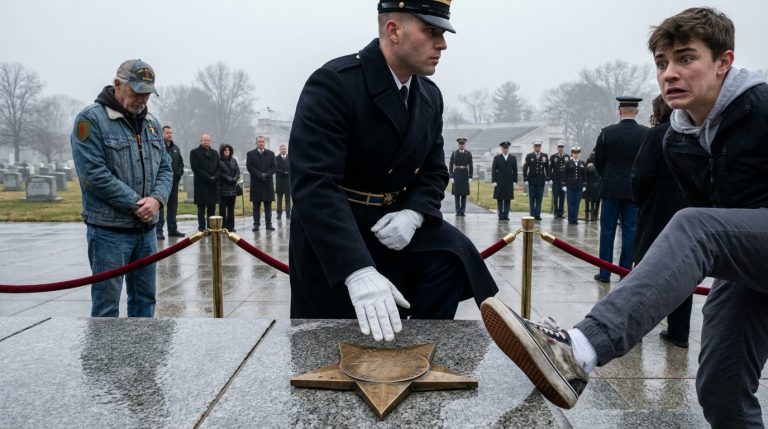
Elias leaned back, the shadows in the cab playing across his weathered face. “Journalists look for headlines, Jack. Senators look for reelection. I needed someone who understands the weight of a load. Someone who knows that if you lose control, the people behind you are the ones who pay the price.” He looked at me, his gaze piercing. “Besides, you were the only one who didn’t look away when that boy tried to break my life in that diner. You saw the medal. You didn’t just see the ‘nobody’ the suit wanted you to see.”
I looked down at the drive. I had a small, portable reader rigged to the truck’s auxiliary display. I hesitated, then pushed the drive into the port. A faint blue light pulsed, and a directory tree bloomed on the screen. It was sparse—only a few file folders labeled with dates from 1969. I clicked on the first one, expecting classified memos or scanned documents.
Instead, it was a list of names. Names I recognized from the war memorial plaques I’d seen a dozen times on my runs through the capital. Next to each name was a coordinate, followed by a sequence of letters and numbers that looked like radio frequencies.
“This isn’t a report,” I said, my brow furrowing. “This looks like a manifest.”
“It’s a list of the men who were supposed to be forgotten,” Elias said. His voice dropped, losing its sharp edge and becoming something else—hollow, resonant with a grief that hadn’t dulled with age. “They were the ones left behind at the perimeter. The ones the high command decided were too expensive to recover. That drive is the only proof that they were there, and that they didn’t just vanish into the fog.”
I tapped the screen, opening a sub-file. There was a discrepancy. The file structure had a timestamp from three weeks ago—a ghost in the system. Someone had been accessing this data recently. Someone inside the Senator’s office.
“Elias,” I said, my voice dropping. “These files. They’ve been touched. Three weeks ago. Whoever was in charge of that memorial unveiling… they didn’t just want to honor you. They were looking for something.”
Elias went very still. The air in the cab suddenly felt thin, charged with a static that made the hair on my arms stand up. “Are you certain?”
“I know the architecture of a file system,” I said. “This wasn’t a static archive. Someone was hunting for these specific coordinates.”
He didn’t speak for a long time. The only sound was the rhythmic thrum-thrum of the tires on the expansion joints of the highway. He stared out the window, his reflection ghostly against the dark glass. “Then the trap isn’t just on the road,” he whispered. “The trap is waiting for us at the end of it.”
I looked at the road ahead, where the distant glow of the capital was beginning to bleed into the horizon. The weight of the drive, once just a mystery, now felt like a target painted on my back. I didn’t slow down, but I felt my hand tighten on the wheel, my fingers curling around the leather until the grain bit into my skin. We weren’t just driving to a memorial anymore. We were driving into a collision with a past that wasn’t content to stay buried.
CHAPTER 5: The Geography of Deception
I kept my eyes on the road, but my attention was split. Every shadow in the trees, every set of headlights in the oncoming lane, seemed to be part of an invisible net being drawn tight around the Peterbuilt. The data drive pulsed faintly—a rhythmic, blue heartbeat behind the dash panel. It wasn’t just data anymore; it was an active beacon.
“They aren’t just hunting the drive,” I said, my voice barely audible over the hum of the tires. “They’re tracking the signature. If I keep this plugged into the dash, they’ll have our location every time the signal pings a cell tower.”
Elias didn’t look at me. He was staring at the wooden box on his lap, his fingers tracing the bent latch. “Then disconnect it,” he said simply. “But we need that information to reach the memorial. If we arrive without proof, the senator will simply have us escorted away before a single word is spoken.”
I reached over and pulled the drive from the port. The blue light died, plunging the cab back into a murky, amber gloom. I tucked the drive into the breast pocket of my flannel shirt, feeling the sharp, cold edge of the plastic against my chest. It felt like holding a live wire.
“We need a new plan,” I said, my hands tightening on the wheel. “If they’re tracking the signal, they’ll expect us to head straight for the memorial site. They’ll have a blockade waiting, or worse—a ‘security detail’ that’ll make us disappear before we even hit the parking lot.”
Elias nodded, finally turning to look at me. The vulnerability he’d shown earlier—the fear of the past—was gone. In its place was a cold, pragmatic steel. “I know this terrain, Jack. Not just the main roads, but the service routes. We need to go dark. We need to reach the memorial from a direction they aren’t monitoring.”
“You want to go off-road again?” I asked, a wry smile touching my lips despite the danger. “My insurance agent is going to have a heart attack.”
“Your insurance agent isn’t the one who buried a platoon’s worth of records in a graveyard of secrets,” Elias retorted, his voice dry. “Take the next exit. We’re heading for the back-gate of the maintenance yard. It feeds directly into the rear of the memorial complex. It’s restricted, forgotten, and exactly the kind of place where a ghost like me can move unseen.”
I didn’t question him. I maneuvered the rig onto the off-ramp, the heavy trailer swaying as I navigated the tight, sweeping curve. We left the main highway behind, the glow of the capital fading as we descended into the dark, tangled woods bordering the regional waterways. The service road here was little more than a dirt track, rutted and slick with the remains of the evening’s rain.
We drove in silence for miles, the only sounds the grinding of the transmission and the snapping of branches against the sides of the trailer. I navigated by the dim glow of the truck’s running lights, my senses dialed to an extreme, unnatural sharpness. I was looking for patterns—the gleam of a cruiser’s lightbar, the unnatural stillness of a stakeout.
“Jack,” Elias said suddenly, pointing toward a break in the trees. “There.”
Ahead, a rusted chain-link fence stretched across the overgrown path, choked with vines and choked by time. It was a relic of a forgotten construction project, exactly the kind of place that didn’t appear on any modern digital map. I eased the truck forward, the heavy front bumper gently nudging the chain-link aside. It gave way with a screech of tortured metal, the sound swallowed by the vast, damp darkness of the woods.
As we rolled through, I caught a glimpse of something in the periphery—a flicker of movement in the trees, perhaps a deer, or perhaps a watcher. I didn’t slow down. I pushed the rig forward, guided by Elias’s quiet, confident navigation, deeper into the bowels of the complex.
“They’ll be waiting at the front gate,” Elias murmured, his eyes scanning the looming shadows of the memorial structures ahead. “They expect a man who plays by the rules. They don’t expect a man who knows how to tear the rules down.”
I felt the weight of the drive in my pocket, the secret cold against my skin. We were in the belly of the beast now, moving through the unseen cracks in their architecture. I didn’t know what we would find when we finally broke cover, but for the first time since the diner, I felt like we were the ones dictating the tempo. I was a trucker, an observer, a man who just wanted to stare at the wall—but tonight, the wall was something I was going to help tear down.
CHAPTER 6: The Architects Blueprint
The interior of the maintenance staging area was a labyrinth of concrete and industrial shadow, a stark contrast to the manicured, ceremonial grounds that lay just beyond the perimeter. The Peterbuilt groaned as I eased it over a raised drainage grate, the heavy tires crunching over discarded gravel and rusted rebar. I kept the lights dimmed to a crawl, navigating by the faint, filtered moonlight that pierced the high, grime-streaked windows of the warehouse structure.
Elias sat motionless beside me. He had become a statue of focus, his eyes tracking the geometry of the facility with a precision that was unsettling. “To your left,” he murmured, pointing toward a service door that looked like it hadn’t been opened in a decade. “That leads to the sub-level tunnels. They were used for the heavy logistics during the construction. If we can reach the utility hub underneath the main podium, we can access the master terminal.”
I steered the rig toward the door, my heart laboring against the cold, stagnant air. Every movement of the truck felt like a seismic event in the silence. I stopped the engine, the sudden absence of the diesel’s roar leaving my ears ringing. For a long, tense moment, we sat in the quiet, listening. Beyond the walls, there was only the hum of the city—a distant, indifferent sound that contrasted sharply with the claustrophobic reality of where we were.
“You speak as if you know the wiring,” I said, unbuckling my seatbelt. My hand drifted to the tire iron, then to the data drive in my pocket. “You weren’t just a clerk, Elias. You knew where the bones were buried before the memorial was even built.”
Elias opened the passenger door, the hinges protesting with a shrill, metallic whine. He stepped out into the mud, his movements fluid and efficient. He turned back, his face a mask of iron-gray resolve. “I didn’t just file papers, Jack. I designed the logistics for the entire operation in ’69. I knew how to move men, how to hide them, and eventually, how to help them vanish when the political tide turned against them. The senator needs me because I’m the only one who knows the actual blueprints of the failure.”
He walked toward the service door, his boots leaving deep, rhythmic impressions in the muck. I followed, keeping low, my senses screaming at the sight of every shift in the dark. As I stepped toward the entrance, a flicker of movement in the rafters above made me freeze.
I looked up. A silhouette stood against the faint moonlight, a static shape that seemed to bleed into the darkness. It wasn’t a guard. It was something else—a lingering memory, a phantom projection of the man Elias had been fifty years ago. I blinked, and the shadow was gone, replaced by the mundane outline of a rusting pipe.
My breath hitched. The psychological weight of this place was beginning to erode my perception. I reached into my pocket and touched the data drive, using its sharp, defined corners to ground myself.
“Elias,” I called out, my voice tight. “We’re being watched. I felt it.”
“They’ve been watching for fifty years,” Elias replied, not breaking stride. He reached the service door, sliding a thin, tempered-steel pick into the lock. With a sharp, practiced click, the door swung inward. “The difference is that tonight, we aren’t hiding. We’re showing them that the architecture they built to cover the truth has cracks.”
We slipped into the sub-level, the darkness closing in like a physical weight. The air smelled of damp earth and electrical dust—the smell of a machine that was being kept alive far past its prime. As we moved through the tunnels, I noticed something strange about the walls. They weren’t just concrete; they were lined with heavy, lead-shielded conduits.
I traced a hand along the metal, feeling the hum of high-voltage cables. This wasn’t just a maintenance route. It was a secure line, a private bypass that led directly into the heart of the memorial’s surveillance grid. I realized then that the decoy secret—the trade documents I’d seen on the drive—were just the surface. What Elias was leading me to was a master override, a way to broadcast the truth not just to the people in the square, but to every terminal tied to the memorial’s network.
“You’re not just going to prove they survived,” I realized, the gravity of it chilling me. “You’re going to expose the entire command chain.”
Elias stopped, turning to face me in the dim light of the tunnel. His expression was neither triumphant nor vengeful. It was simply tired. “The truth is a weight, Jack. I’ve carried it for half a century. Tonight, I intend to set it down.”
He turned and continued down the tunnel, his shadow stretching out long and jagged against the concrete. I followed, every step feeling like a move in a game I hadn’t realized I was playing until it was already too late to walk away.
CHAPTER 7: The Terminal Pulse
The sub-level tunnel widened into a pressurized vestibule, the air smelling sharp and clean, filtered by industrial-grade ventilation. Before us stood a heavy, steel-clad door—not a standard service entrance, but a high-security access point marked with the Department’s faded, authoritative seal. Elias approached it with the familiarity of a man returning to his own home, though his eyes never stopped scanning the periphery for the flicker of a hidden camera or the weight of a silent presence.
“This is it,” Elias whispered, his voice barely audible over the low, rhythmic throb of the facility’s power grid. “The terminal here is linked directly to the primary data core beneath the memorial podium. It’s an air-gapped system, never intended to be accessed from the surface.”
I stepped beside him, my senses strained to the breaking point. The shadows in the corners of the room seemed to shift, and I kept my hand hovering near the hickory stick tucked into my belt. Every second we spent here was a liability; the longer we lingered, the more chance we had of being flagged by the automated security protocols.
Elias bypassed the external keypad, prying open a maintenance panel with the same precision I’d seen in the staging area. He connected a small, handheld interface to the exposed wires, his fingers moving with a dexterity that belied his age. I watched the console, the screen flickering to life with a cascade of amber text.
“I need to bridge the connection,” Elias muttered, his brow furrowed as he navigated the archaic file structure. “If I can spoof the administrative handshake, I can push the manifest directly to the live feed for the ceremony.”
As I watched the screen, I noticed a secondary layer of encryption that hadn’t been evident in the drive. A small, cascading sequence of red digits was running in the corner of the display—a counter-security protocol that was slowly closing the window of opportunity. It was a digital lock, and we were the unwanted keys.
“We have company,” I said, catching a sound from the tunnel behind us—the rhythmic, measured strike of boots on concrete. It wasn’t the clumsy, adrenaline-fueled stride of the goons from the diner. This was disciplined, tactical. Someone had tracked us.
Elias didn’t look up. “Thirty seconds, Jack. That’s all I need.”
“You have twenty,” I retorted, moving to the threshold of the vestibule. I peered into the tunnel, the dark expanse stretching out like a throat. I saw the faint, tell-tale beam of a tactical light cutting through the shadows, scanning the walls, the floor, the ceiling. They were using a grid search. They were hunting.
I braced myself against the doorframe, my muscles coiled. I knew I couldn’t win a stand-up fight against professional security, but I could buy time. I looked at the conduits running along the ceiling. They were heavy, exposed, and vulnerable. If I could create a short-circuit, the resulting surge might overload the local security node and plunge this entire sector into a reboot cycle.
I grabbed the heavy metal end of the hickory stick and swung it with all the force I could muster against the junction box near the ceiling. A shower of sparks erupted, the air turning thick with the ozone-heavy scent of frying electronics. A brilliant, blinding strobe of blue light filled the vestibule as the conduits shrieked and died.
The tactical light in the tunnel went out, followed by a curse and the sound of someone stumbling in the sudden, absolute dark. The security grid was down, but the terminal in front of us began to wail—a low, rhythmic alarm that pulsed in the dark like a heartbeat.
“Done,” Elias said, his voice ringing with a grim satisfaction. The screen in front of him flashed a steady, solid green. “The manifest is in the queue. It will hit the main broadcast at the moment the senator steps to the podium.”
“We need to move,” I said, grabbing his arm. “Now.”
We didn’t wait for the terminal to finish its cycle. We turned and plunged back into the dark of the tunnels, guided only by the lingering afterimage of the flash on our retinas. We were deeper in now, with the truth locked and loaded, but the path back to the surface had become a closing circle. The memorial was just above us, a massive, stone-clad monument to the very history we were about to shatter.
CHAPTER 8: The Breach of Silence
The tunnel was no longer a path; it was a throat, and it was constricting. Behind us, the rhythmic, heavy strikes of boots against concrete echoed, amplified by the low ceiling and the exposed lead-lined walls. They were fast, efficient, and they weren’t making the mistake of using flashlights anymore. They were moving in the dark, hunting by sound and by the lingering, acrid smell of the burnt conduits I had triggered.
“This way!” Elias rasped, his hand gripping my sleeve with a strength that surprised me. He lunged into a narrow service passage, a vein of rusted pipe and flickering fluorescent bulbs that ran perpendicular to the main artery. I followed, my boots sliding on the damp grime, the hickory stick gripped white-knuckled in my hand.
I was disoriented. The geometry of the sub-levels was deceptive, a shifting landscape of steel and concrete that seemed to rearrange itself as we moved. The flickering light from the dying bulbs cast long, erratic shadows that danced across the walls, making every pipe, every valve, look like a weapon aimed in our direction. My heart wasn’t just pounding; it was a rhythmic thudding that drowned out the sound of the pursuers, a primal drumbeat of panic.
“We need to reach the ventilation shaft,” Elias whispered, his voice sharp and focused, cutting through the haze in my brain. “If we can reach the maintenance level above, we can break out near the main podium’s riser.”
“How much further?” I asked, checking behind me. The darkness in the tunnel seemed to pulsate.
“Two hundred yards. But we have to cross the bypass valve station.”
We emerged from the passage into a cavernous, high-ceilinged room filled with the massive, rusted hulks of water-treatment machinery. It was an industrial cathedral of iron and shadow. Massive pipes, sweating with condensation, crisscrossed the ceiling like the veins of a gargantuan beast. I could hear the distant, muffled sound of a crowd above us—the ceremonial music, the low hum of voices—a reminder that a world of light and order existed just a few feet away, entirely oblivious to the hunt unfolding beneath their feet.
Then, the sound behind us stopped.
The silence that followed was absolute, terrifying. No boots, no shouting, just the rhythmic dripping of water from a cracked pipe somewhere in the darkness. They were listening. They were waiting for us to make a sound, to give away our position in this hollow, echo-filled space.
I pressed my back against the cold, iron surface of a turbine housing, my lungs burning as I forced myself to breathe slow, controlled gulps of the damp air. Beside me, Elias was as still as stone. He hadn’t reached for the tire iron. He was staring toward the far end of the station, where a thin, pale strip of light indicated the maintenance ladder.
A subtle flicker of movement caught my eye—a shadow, darker than the surrounding gloom, detaching itself from a structural pillar. It was a person, moving with the fluid, predatory grace of a professional. Another shadow emerged on the opposite side of the room. They weren’t just following; they were flanking.
“They have the exit pinned,” I whispered.
“Not if we change the variables,” Elias replied, his voice barely a breath. He reached into his pocket and pulled out a small, metallic device—a backup battery he’d stripped from the terminal. He turned to look at the massive water-pressure gauge looming above us. The needle was deep in the red zone, trembling under the weight of the system’s stress.
“When I drop this into the main feed, the pressure regulator will surge,” Elias said. “It’ll trigger a safety vent in the bypass line—right where they’re positioning themselves. It’ll be loud, chaotic, and it’ll throw every sensor in this room into a full-scale alarm.”
“That’ll bring the entire security team down on us,” I countered.
“Exactly,” he said, his eyes hard. “And in the confusion, the security team won’t be looking for us. They’ll be looking for the breach.”
He didn’t wait for my agreement. He tossed the battery into the open housing of the bypass control. A sharp, electric crack echoed through the room, followed by the roar of escaping steam and the shriek of metal under pressure. The room transformed in a heartbeat—a hurricane of noise and blinding white vapor that surged outward, scouring the station in a freezing, high-pressure fog.
I didn’t wait. I lunged for the ladder, my hands finding the cold, rusted rungs even as the room erupted in a chaos of alarms and the frantic shouting of our pursuers. We were climbing into the light, but beneath us, the hunt was only escalating.
CHAPTER 9: The Shadow of the Podium
The ladder terminated in a narrow, cramped crawlspace beneath the floorboards of the main memorial platform. Above, the muffled sounds of the ceremony had transformed into a rhythmic, droning speech—the senator’s voice, filtered through the thick stone and heavy carpeting of the stage, vibrating through the wooden joists. I pulled myself up, the dust of half a century clogging my throat, and helped Elias over the edge.
He looked around, his breath coming in sharp, shallow bursts. His face was streaked with soot and sweat, but his eyes were fixed on the junction box directly above us, connected to the massive audio-visual array that powered the public address system.
“We have to bridge the signal here,” Elias said, pointing to a thick bundle of shielded cables running toward the center of the podium. “If we tap into this, the data file will bypass the internal network and feed directly into the local broadcaster. It’ll reach every screen, every speaker, and every mobile device within a five-mile radius.”
I moved toward the cables, my muscles screaming from the exertion of the climb. I pulled the data drive from my pocket. It felt heavier now, charged with the weight of everything we were about to destroy. As I reached for the connector, the floor above us shuddered. A heavy footfall, then another—they were searching the platform.
“Hurry,” Elias whispered, his hand braced against the joist above his head.
I made the connection. The drive hummed against my palm, a tiny, synthetic vibration. The screen on my interface flickered: Uploading: 10%… 20%…
A shadow flickered over the floorboards above us—the silhouette of a man walking across the stage, directly over our heads. The senator’s voice paused. There was a moment of absolute, bone-chilling silence, then a sharp, metallic clack of a firearm being readied.
“They’re searching the platform,” I whispered, my voice tight. “They know the signal was tapped. They must have triangulated the spike in the power draw.”
“Don’t stop,” Elias commanded, his eyes focused on the progress bar. 40%… 50%…
Above us, the floorboards groaned under the weight of a sudden, violent movement. A boot slammed down, splintering a piece of wood near my foot. A beam of light cut through the cracks in the floor, illuminating the dust motes dancing in the cramped space. I held my breath, every muscle coiled, ready to spring. If they discovered the hatch, there was nowhere to run. We were trapped in a coffin of stone and secrets.
“I hear something,” a voice rasped from above—cold, precise, devoid of emotion. “It’s coming from the sub-floor.”
“Tear it open,” another voice replied.
The sound of a pry bar digging into the wood made my blood run cold. Elias didn’t flinch. He stayed fixed on the interface, his thumb hovering over the final confirmation command. 70%… 80%…
“They’re opening it, Elias!” I hissed, grabbing the hickory stick. I knew the odds. I knew that the moment they breached the floor, we were as good as dead. But I also knew that if we finished the upload, the truth would be out. That was the only victory that mattered.
“Wait for it,” Elias said, his voice a low, steady rumble.
The wood above us shrieked as it was torn upward. A blinding flash of light flooded the crawlspace, accompanied by the sight of a black-clad figure staring down at us, a suppressed weapon leveled at Elias’s head.
I didn’t wait. I launched myself forward, not at the figure, but at the light itself, swinging the hickory stick in a wide, desperate arc. I felt the impact, a sickening crunch of cartilage, and the man collapsed backward, his weapon clattering onto the floorboards.
“Now!” I roared.
Elias jammed his finger against the screen. 100% Upload Complete. Broadcast Active.
The world outside erupted. A massive, deafening chime rang out over the memorial grounds, followed by the senator’s own voice—not the rehearsed speech he had planned, but a raw, panicked, and unvarnished recording of a private conversation from 1969, leaked into the public record. The sound was so immense, so sudden, that the entire platform seemed to tilt under the weight of the collective gasp of the crowd outside.
We had done it. But as the sound of sirens began to swell from every direction, rushing toward the memorial like a rising tide, I realized that we were still in the dark, still trapped, and now, the entire city knew exactly who we were.
CHAPTER 10: The Unseen File
The crawlspace was buckling. The impact of the tactical team breaching the floor, combined with the structural stress of the old memorial’s foundation, triggered a slow, grinding groan of metal and aged timber. I didn’t wait to see if the man I’d struck was getting back up. I shoved Elias toward the service riser, the only remaining exit that wasn’t blocked by the structural failure.
“Move!” I yelled, my voice lost in the chaos of the broadcast outside. The senator’s voice, raw and unfiltered, was now echoing across the entire National Mall, a damning confession of fifty-year-old betrayal.
We scrambled into the narrow riser, a vertical shaft filled with rusted maintenance ladders and bundles of thick, insulated cabling. We climbed, our breaths coming in ragged, painful gasps. The air was hot, smelling of ozone and the damp, metallic tang of the memorial’s foundation. Below us, the sound of shouting intensified as the security team realized the terminal had been compromised from within their own structure.
We emerged through a service hatch near the rear of the staging area, hidden behind a stack of industrial-sized floral displays. I peeked through a gap in the fabric. The mall was in an uproar. Security personnel were sprinting toward the podium, confusion and panic rippling through the crowd.
“We need to get to the truck,” I said, checking the perimeter. “If we can reach the Peterbuilt, we can blend in with the chaos and get off the grounds.”
Elias grabbed my arm, his grip surprisingly firm. He reached into his pocket—not for the tire iron, but for a thin, unassuming manual override key he’d pulled from the terminal’s housing. “Jack, there’s something else. When I accessed the master directory, I didn’t just upload the manifest. I pulled the archive key. The files we broadcasted were the ones they wanted us to find—the decoy. The real report, the one that details the off-the-books protocols… it wasn’t on the terminal.”
He pulled a small, physical microfilm strip from the liner of his battered wooden box. My heart skipped a beat. “You had it all along?”
“I couldn’t risk the digital signal,” he said, his eyes scanning the crowd. “They had a trace on any electronic transmission. I knew they’d find the drive, and I knew they’d stop the upload if they thought they had the full truth. This microfilm is the only complete copy of the extraction protocols I designed. It proves that the senator wasn’t just silent—he was the one who ordered the perimeter strike.”
I felt the blood drain from my face. We weren’t just whistleblowers; we were holding a grenade with no pin.
“We have to get this to the press,” I said, my voice barely a whisper.
“We have to get to the car,” Elias corrected. “My daughter has a contact. She’s waiting at the perimeter of the memorial, on the north side.”
We moved through the shadows of the memorial grounds, keeping low. The confusion in the crowd was working in our favor. People were flooding toward the exits, and the security teams were completely focused on securing the stage. We reached the North Perimeter gate, the chain-link fence humming with the vibration of the crowd’s collective shock.
A dark sedan was idling near the curb, engine running. Sarah was in the driver’s seat, her eyes fixed on the entrance. As we approached, she spotted us. Her relief was visible, but it was quickly replaced by a sharp, warning glare. She pointed toward the far end of the street—two black SUVs were accelerating toward our position, sirens dead, tactical teams fanning out.
“They’re not giving up,” I growled, reaching into my pocket for the hickory stick, though I knew it wouldn’t stop an SUV.
“Get in,” Sarah shouted as we sprinted toward the car.
I dove into the backseat, the microfilm clutched in my hand. Elias scrambled in beside me, the wooden box pressed against his chest. As Sarah floored the accelerator, the black SUVs swung into the lane behind us, their headlights flashing in the rearview mirror like the eyes of some relentless, mechanical predator. We were out of the memorial, but we were definitely not out of the woods. The truth was in my hand, and the hunt had only just begun.
CHAPTER 11: The Senators Gambit
The car surged through the backstreets of DC, Sarah driving with a desperate, white-knuckled focus that kept us inches ahead of the black SUVs. I watched out the rear window, the headlights of our pursuers cutting through the night like searchlights.
“They’re not backing off!” Sarah yelled, jerking the wheel to avoid a parked truck.
“They can’t,” Elias said, his voice strangely calm. He was clutching the wooden box, his knuckles bruised and white. “If that microfilm reaches the press, the senator’s career isn’t just over—his entire legacy is a crime scene. He will burn this city to the ground to keep it from surfacing.”
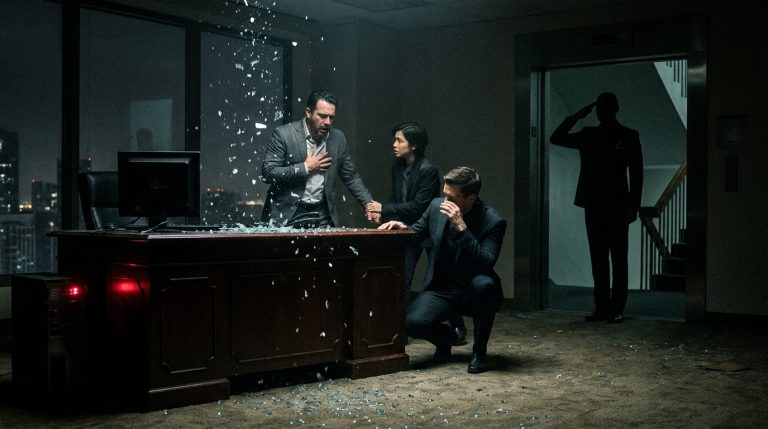
As if to punctuate his words, a loud crack echoed over the wind—a suppressed shot that shattered the rear passenger window. Glass sprayed the interior, glinting in the dark like diamonds. Sarah didn’t scream; she just hit the brakes, sending the car into a controlled slide that forced the lead SUV to slam on its brakes to avoid hitting us.
“Get out!” I shouted, kicking the door open.
We spilled out onto the pavement of a deserted industrial district, the humid night air thick with the smell of wet asphalt. The SUVs skidded to a halt, and armed men—not the goons from the diner, but tactical professionals—poured out, their weapons trained on us.
The leader stepped forward, his silhouette framed by the streetlights. It was the Senator himself, looking less like a politician and more like a man who had lost everything. He didn’t monologue; he just held out his hand.
“The film, Elias,” the Senator said, his voice cold, hollowed out by decades of compromise. “Give it to me, and you can walk away. You’ve had your moment of vindication. Don’t throw it all away for a piece of plastic.”
Elias stood up, moving away from the cover of the car. He wasn’t a clerk anymore, and he wasn’t a victim. He was the man who had designed the very protocols the Senator was now trying to hide. He held the microfilm strip up, catching the light.
“You remember the Valley of Tears, don’t you?” Elias asked, his voice steady, carrying over the hum of the city. “You weren’t there. You were in an office, signing the orders that kept us pinned down. You treated those men as line items on a balance sheet. You didn’t just abandon them—you murdered them to protect a trade deal.”
“I protected the country,” the Senator spat, his composure finally fracturing. “I made the hard choices.”
“You made the profitable choices,” Elias corrected.
He moved with a sudden, violent grace, not toward the Senator, but toward the open door of the lead SUV. He tossed the wooden box into the front seat—the decoy—and then, in a blink, he threw the microfilm strip into the path of an oncoming city bus that roared down the intersection. The film vanished under the heavy, rubber wheels, ground into the grit of the road.
The Senator lunged toward the bus, his face contorted in pure, unadulterated rage. It was the mistake Elias had been waiting for. The tactical team, confused by the Senator’s sudden, panicked move, lowered their weapons.
In that split second, the sirens of the real police—not the Senator’s private detail—erupted from all sides, blinding blue and red lights flooding the street. The Senator froze, his hand still outstretched toward the bus that had destroyed his insurance policy.
“It’s over,” Elias said, his voice dropping to a whisper.
The police swarmed the intersection, weapons drawn, but they weren’t aimed at us. They were aimed at the Senator. The captain from the memorial stepped out, his expression one of grim professional satisfaction. He looked at the Senator, then at the shattered remains of the microfilm on the asphalt.
“Sir,” the captain said, his voice hard. “We have the broadcast logs from the memorial. And we have your private security detail recorded on a dozen dash cams. You’re under arrest.”
The Senator’s shoulders slumped. The man who had held the city in his palm for decades suddenly looked old, small, and utterly broken. As the officers moved in, he looked at Elias one last time—not with hatred, but with a terrible, empty recognition.
I stood there, the cool air of the night washing over me, watching as the man who had ordered the destruction of a platoon was led away in handcuffs. The struggle had been long, brutal, and costly, but the weight of the truth—the real truth, the one that proved what had happened in 1969—was now finally resting in the public record.
Elias turned to me, his shoulders dropping, the tension of fifty years finally seeping out of him. He looked at the empty wooden box sitting on the seat of the SUV.
“It’s done,” he said.
“Yeah,” I replied, the adrenaline leaving me in a sudden, crashing wave of exhaustion. “It’s done.”
CHAPTER 12: The Architecture of Peace
The city had begun to wake, unaware that the foundation of its history had been cracked open by the broadcast of a few grainy audio files and the stubbornness of an old man who refused to be forgotten. I sat on the tailgate of my Peterbuilt, parked at the edge of the maintenance yard. The truck was still covered in the mud of the Virginia backroads, its mirror missing and the metal scarred, but as the sun began to climb above the skyline of DC, it felt like a monument of a different kind.
Elias sat on the steps of the trailer, the battered wooden box open beside him. He wasn’t looking at the box. He was looking at his hands—those bruised, steady, scarred hands that had once held the lives of his platoon in the palm of his grip. Sarah was nearby, speaking quietly into a phone, her voice thick with the residual relief of a daughter who had just discovered the true strength of her father.
“It’s all out there now,” Elias said, his voice barely a murmur. He looked up at the stone silhouette of the memorial in the distance. “The protocols, the names, the orders… every piece of the puzzle I kept buried for fifty years. It’s no longer my burden.”
“You did more than just broadcast a file,” I said, leaning back against the cold, iron frame of the trailer. “You dismantled a machine. That senator, those contractors… they’re already being processed. The truth didn’t just come out; it held up.”
Elias nodded, his expression softening. He reached into the wooden box and pulled out a small, tarnished silver star—the one that had been kicked into the dirt at the diner. He held it for a moment, then, with a slow, deliberate movement, he stood up and walked over to my truck.
He reached out and attached the medal to the underside of the dashboard, near the ignition. “A reminder,” he said. “That some loads are worth carrying, no matter how much they weigh.”
I looked at the medal. It wasn’t about the status or the recognition anymore; it was a testament to the fact that the secret—the Layer 2 reality of Elias’s role as the architect of the extraction protocols—had finally been vindicated by the public record. He wasn’t just a clerk who filed papers; he was the man who had authored the only survival manual that mattered in the Valley of Tears.
The captain of the state troopers walked over, his demeanor no longer the cold, professional authority of a man on the job, but something bordering on reverence. He stopped a few feet away, tipped his cap to Elias, and stood there in the quiet morning air. He didn’t say a word. He didn’t have to. The respect was clear, a silent acknowledgment of a debt finally paid.
As the captain turned to leave, Elias walked over to the wooden box and closed the lid. The snap of the latch was the final, defining sound of the night. It wasn’t a sound of closing a secret; it was the sound of locking the door on a room he no longer needed to inhabit.
“What now, Jack?” Sarah asked, walking over to join us. She looked at her father, then at me. “The world is going to want to talk to you. The media, the investigators… it’s going to be loud for a long time.”
I looked at the road stretching out beyond the gates of the memorial. It was a long, open highway that led toward a horizon I hadn’t mapped out yet. The violence, the chase, the tension of the last twenty-four hours—it had all hardened into a sense of purpose. I had started this trip looking for a moment of silence to stare at a wall. I had ended it by helping to move one.
“I’ve got a load to deliver,” I said, jumping down from the tailgate and feeling the solid, familiar ground beneath my boots. I walked over to the driver’s side door and climbed in. The cab smelled of diesel, stale coffee, and the faint, lingering scent of ozone from the terminal override. It felt like home.
“You’re heading out?” Elias asked, walking to the door.
“I’ve got a promise to keep to my dispatcher,” I said, a small, tired smile forming on my face. “And I think I’ve seen enough monuments for a lifetime.”
Elias nodded. He leaned against the doorframe, his posture no longer the rigid, tactical alert of a soldier, but the relaxed, easy stance of a man at peace. “The road is a good place for the truth, Jack. It’s hard to bury anything when you’re always moving.”
I started the engine. The massive diesel heart of the Peterbuilt roared to life, a steady, powerful thrum that vibrated through the frame of the truck. I looked at Elias one last time—the old man who had saved a platoon, the architect who had built a future out of the ruins of the past.
“See you down the road, Elias,” I said.
I shifted into gear and pulled away from the memorial, the massive rig gathering speed as I hit the main thoroughfare. The sun was fully up now, painting the city in shades of gold and gray. I didn’t look back at the memorial. I didn’t need to. The truth was out, the road was open, and for the first time in a long time, the only thing I was responsible for was the path directly in front of me.