The $92 Million Snub: How a Disowned Daughter Used Her Grandmother’s Final Secret to Take the Empire
CHAPTER 1: THE PLAZA DISINHERITANCE
The stem of my water glass was cold enough to numb my fingers.
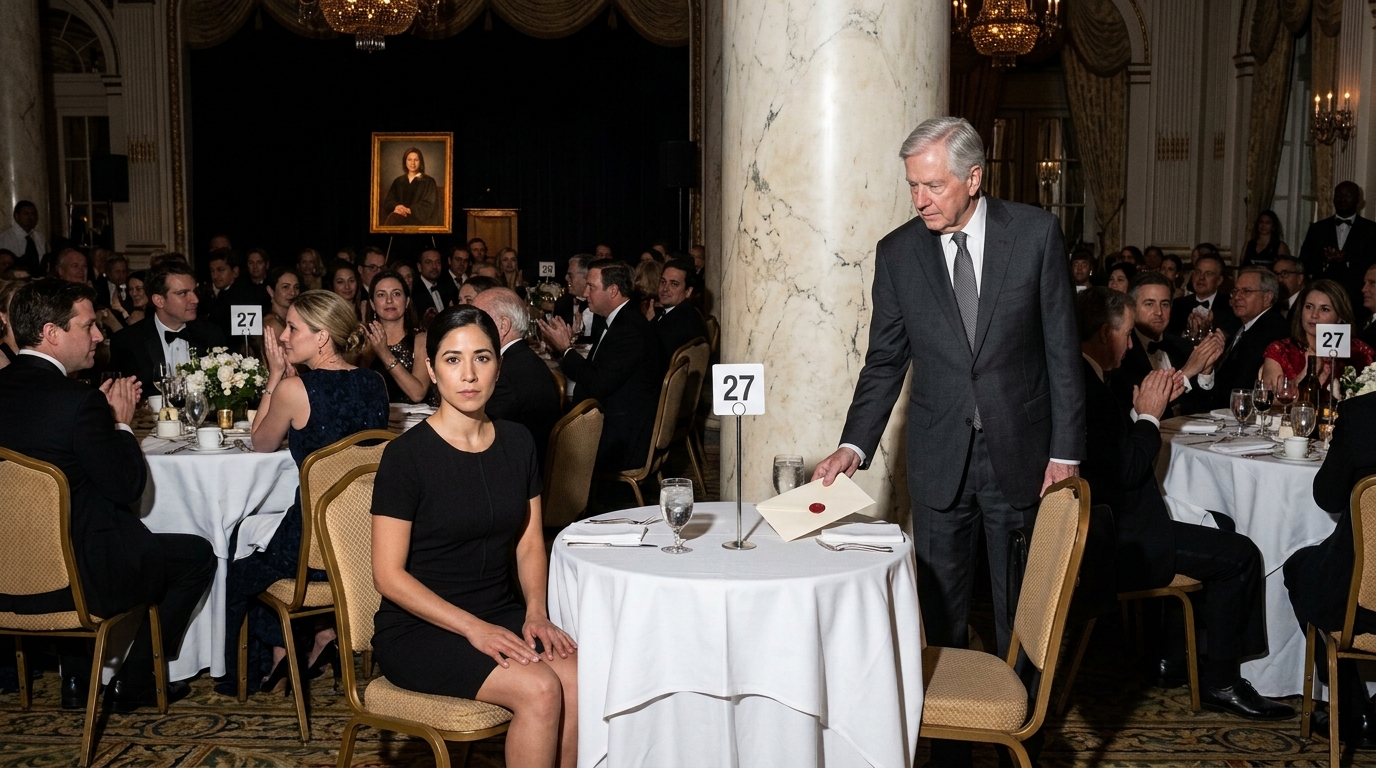
Table 27 sat directly behind a marble pillar near the kitchen doors, where the swing of the double doors pushed a steady draft of roasted garlic and dish soap across our linen tablecloth.
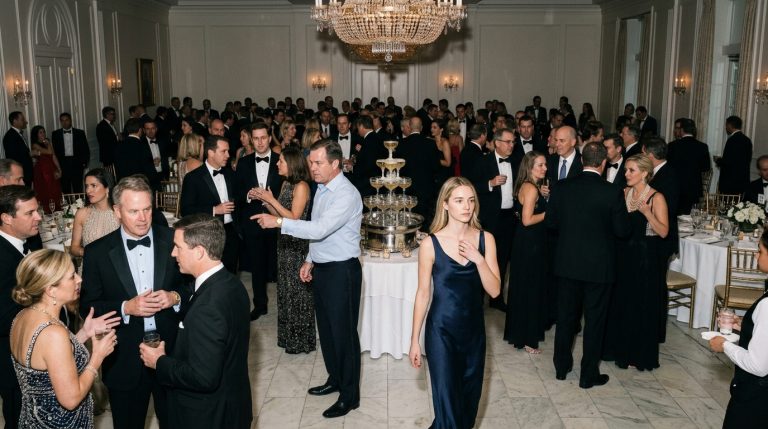
Up on the main stage, under the giant gold-framed portrait of Miranda in her Harvard Law robes, my father tapped his butter knife against his crystal flute.
“Ladies and gentlemen,” Gerald Witford’s voice boomed through the ballroom speakers, smooth as polished marble.
Three hundred guests went dead silent.
My mother, Priscilla, sat in the front row, her diamond tennis bracelet catching the light every time she dabs her eyes with a monogrammed napkin.
“Tonight, we don’t just celebrate Miranda graduating in the top five percent of her class,” Gerald said, his chest expanding under his tuxedo. “Tonight, I am announcing the future of Witford Properties.”
Beside me, a third cousin twice removed took a heavy gulp of Pinot Noir and didn’t even look my way.
“Effective upon my retirement, my eldest daughter, Miranda, will inherit my entire estate,” Gerald announced, his hand sweeping toward the stage. “The Park Avenue residence, the commercial holdings, and full operational control as CEO of our ninety-two million dollar firm.”
The ballroom erupted in a wave of applause that rattled the chandelier prisms overhead.
Miranda stepped to the microphone, her emerald Valentino gown shimmering as she threw her head back in practiced, modest laughter.
I didn’t clap.
My palm stayed flat against my thigh, pressing into the cheap polyester seam of my seventy-nine dollar black dress.
A shadow fell over the edge of Table 27.
“Miss Witford?”
I turned.
An elderly man in a charcoal suit stood in the dim space behind the pillar, his silver hair neatly parted, holding a leather briefcase against his knee.
“I’m Dulce,” I said, keeping my voice low so the distant cousins wouldn’t turn around.
“My name is Jonathan Ellis,” the man said, reaching into his coat pocket to pull out a heavy cream envelope sealed with red notary wax. “I was your grandmother Eleanor’s attorney.”
My heart gave one hard, uneven thud against my ribs.
“Grandma passed three years ago,” I whispered.
“I am aware,” Ellis said, his voice flat, professional, and entirely unbothered by the standing ovation still roaring near the stage. “She left explicit instructions. This was to be handed to you on the exact day your father publicly disinherited you.”
He slid the heavy envelope onto the table right next to my water glass.
“You have seventy-two hours to read it and act,” Ellis added, turning his wrist to check a gold pocket watch. “The clock started the second your father finished that speech.”
CHAPTER 2: THE MAHOGANY BOX
I didn’t open the document in the hallway.
The air near the Plaza’s kitchen smelled of scorched butter and silver polish, a chemical sharpness that made my eyes water as waiter after waiter shouldered past my pillar. I tucked the heavy cream stock deep under my arm, pressed my elbow tight against my ribs, and walked straight out the revolving glass doors into the cool May rain.
The N train back to Astoria was nearly empty at nine thirty.
I sat on the orange plastic seat, the envelope resting across my knees like a heavy tile. Every time the subway car jolted over the switches near Queensboro Plaza, the edges of the thick paper scraped against the denim of my coat. I didn’t look at the text on the train; the harsh fluorescent light flickering overhead made the letters dance and twist into unreadable knots.
My apartment smelled of damp shoes and cheap radiator paint.
My two roommates were out—one working the late shift at a diner in Midtown, the other staying at her boyfriend’s place in Brooklyn. The silence in the small living room was absolute, save for the rhythmic, metallic ticking of the water pipe behind the plaster.
I sat cross-legged on my narrow twin bed and reached beneath the frame.
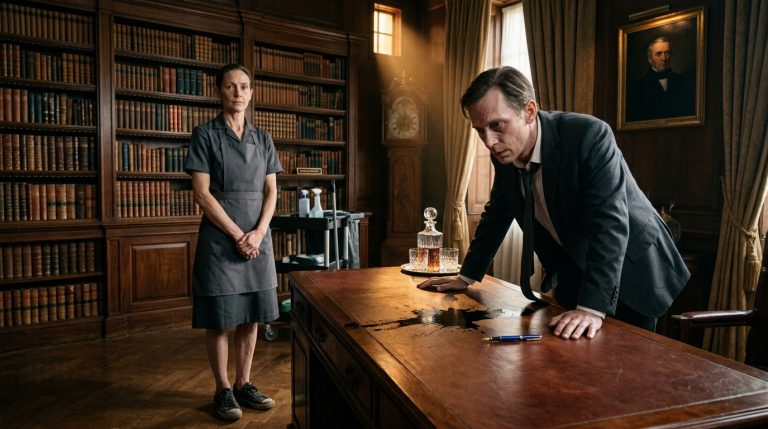
My fingers brushed the dusty brass latches of the mahogany box Grandma Eleanor had handed me five years ago. I pulled it out into the faint orange glow of the streetlamp leaking through my blinds.
The wood was dark, dense, and cool to the touch.
I flipped the brass latches—they opened with a dull, heavy click that resonated in my chest. Inside lay two things: a modern USB drive wrapped in a rubber band, and a single, yellowed sheet of heavy parchment stamped with an official city seal dated August 14, 1965.
My eyes strained against the dim light, but the visual diagrams Grandma had taught me to draw in her Upper West Side apartment immediately took shape in my mind.
I didn’t need to read every dense legal sentence to understand the structure. The 1965 charter wasn’t just a business license; it was a permanent governance structure. Section 4, Subsection B explicitly stated that the founder’s original Class-A shares carried irrevocable voting rights that could never be diluted, modified, or transferred without a unanimous vote of the founding directors—rights that survived the founder and attached directly to whichever single heir was named in a valid primary bequest.
Gerald had spent twenty years assuming he owned the empire because he held the title of CEO. He didn’t know the dirt the foundation was poured on belonged to a completely different legal entity.
I unfolded the document Jonathan Ellis had handed me at the Plaza.
The notary stamp at the bottom was crisp: September 12, 2019. Four years after Gerald had drafted his own version of Eleanor’s will.
To my granddaughter, Dulce Anne Witford, I bequeath 51% of my Class-A shares in Witford Properties LLC…
My thumb ran over Eleanor’s shaky signature at the bottom of the third page. Beneath her name, in her sharp, slanted handwriting, was a single handwritten clause:
This bequest is contingent upon the beneficiary filing a formal petition for an emergency board meeting within seventy-two hours of notice. Should she fail to claim her seat, the shares shall revert to the corporate treasury.
Grandma knew me better than I knew myself. She knew if she gave me a month, I’d spend it rationalizing Gerald’s cruelty. She knew I’d convince myself that forty-two thousand dollars a year was enough, that keeping the peace was better than causing a scene, that I was just the “slow one” who didn’t belong in a room with mahogany tables.
The clock was ticking. Seventy-two hours.
I set the parchment back inside the mahogany box, right beside the brass hinge. Beneath the velvet lining at the bottom of the box, my finger caught on something hard and thin—a small, laminated business card for Margaret Coleman, the oldest surviving member of Witford Properties’ board of directors.
Gerald thought he had until Monday to sign my termination papers. He thought I was sitting in my Queens bedroom crying over a Zara dress.
I pulled out my phone and dialed the handwritten cell number on the back of Margaret’s card.
“Margaret,” I said, the moment the line clicked open on the second ring. “This is Dulce. We need to talk about my grandmother.”
CHAPTER 3: ASSEMBLING THE BOARD
“I’ve been waiting three years for this call, Dulce,” Margaret said, her breath clicking against her telephone speaker. “I thought you were going to let Gerald sweep you right under the rug.”
My thumb tightened against the brass hinge of the mahogany box on my lap. “He handed me my termination notice yesterday afternoon. Effective July first.”
A low, guttural chuckle rattled through the receiver. “Gerald always did lack timing. He thinks because he wears a five-thousand-dollar suit, nobody notices he’s running his mother’s business on borrowed credit and loud speeches.”
“I have Eleanor’s 2019 will,” I said, keeping my voice level, grounded in the immediate reality of the documents spread across my bed. “And the original 1965 charter. But the bequest has a seventy-two-hour clause. I need an emergency board meeting called before Friday evening.”
The line went silent for three full seconds, save for the faint hum of a television playing in Margaret’s apartment.
“Bylaws state an emergency session requires three director signatures,” Margaret stated, her tone instantly shifting into pure, unsentimental corporate arithmetic. “I am one. You need two more. And Gerald has spent the last five years filling those seats with his golf buddies.”
“Who isn’t his buddy?” I asked directly.
“Richard Holloway,” she answered without hesitation. “Gerald tried to force Richard out of his committee chair last winter after Richard questioned the debt load on the Midtown acquisition. And Susan Parker. Susan was your grandmother’s protégé before Gerald sidelined her to market research.”
“Will they sign?”
“They’ll hesitate,” Margaret said bluntly. “Richard is terrified of a public proxy fight ruining his firm’s reputation, and Susan has two kids in college. They aren’t going to blow up their board fees just because Eleanor Witford’s granddaughter feels mistreated.”
“I’m not asking them to take a stand on family drama,” I replied, tracing the stamped ink of the 1965 city seal. “I’m handing them an unassailable legal charter that restores the founder’s original governance structure. If they sign the petition, they aren’t taking a risk—they’re executing their fiduciary duty.”
“You sound like Eleanor,” Margaret murmured, a soft edge cutting through her gravelly rasps. “She used to say the same thing when the bank officers tried to talk down to her in 1970.”
“Can you get them to a private room tomorrow morning?”
“The diner on Forty-Fourth,” Margaret replied instantly. “Eight a.m. Corner booth near the back emergency exit. Bring the original parchment, Dulce. Richard won’t believe a word of it unless he can feel the notary stamp under his fingers.”
“I’ll be there.”
“And Dulce?” Margaret paused, her voice hardening again. “If Gerald catches wind of this before eight o’clock tomorrow, he’ll use every corporate attorney on the retainer to tie up that will in probate before you can even file the petition. Keep your mouth shut in that copy room.”
I looked down at the brass hinges reflecting the dull Queens streetlamp.
“I’ve spent twenty-eight years being invisible in this family,” I said softly. “Staying quiet for another twelve hours isn’t going to be a problem.”
CHAPTER 4: THE BOARDROOM TRAP
“You aren’t on the authorized attendee list, ma’am,” the guard repeated, his voice dropping into that practiced, low drone used on people who look like they took the service elevator by mistake.
“I am an employee of Witford Properties,” I said, holding my leather portfolio against my ribcage. “And I have official business with the directors.”
“Is there a problem here?”
Miranda stepped out from the side corridor, her heels clicking crisply against the Italian marble floor. Her navy silk power suit was tailored to the millimeter, and her tailored Hermes scarf sat perfectly pinned at her throat. She looked at me, then at the scuffed toe of my shoe, her lips twisting into a small, pitying smirk.
“Dulce?” Miranda laughed, a short, musical burst meant strictly for the guard’s benefit. “What are you doing up here? The copy room is on fourteen.”
“I’m attending the emergency session,” I replied, standing my ground.
“You don’t even know what ROI stands for,” Miranda murmured, stepping closer so the guard couldn’t hear her whispers. “Dad’s about to open the meeting. Don’t make a scene. Go back down to your desk before you embarrass yourself completely.”
“Return on investment,” I said, looking her straight in the eyes. “It’s not complicated.”
Before Miranda could answer, Gerald stepped out of his corner office flanked by two senior vice presidents. He was adjusting his French cuffs, his face relaxed in that effortless, wealthy confidence he wore like cologne. Then his gaze fell on me, and his eyes narrowed into cold disgust.
“Dulce,” Gerald said, his voice dropping an octave as he approached. “Go back downstairs. This is a closed board session.”
“Actually,” Margaret Coleman’s dry, rasping voice cut through the hall as she pushed the heavy boardroom door wide open, “she’s here at my invitation. Let her in, Gerald.”
Gerald’s jaw tightened, a sharp muscle twitching under his manicured jawline, but Margaret had been on the board since before he took over. He couldn’t overrule her in front of his vice presidents without looking panicked.
“Fine,” Gerald spat, stepping aside with exaggerated tolerance. “Let her speak. Let’s see how long it takes for her to realize she’s out of her depth.”
The boardroom was a vault of polished walnut and floor-to-ceiling glass overlooking the East River. Twelve leather chairs surrounded the center table. In the corner, sitting quietly with his briefcase resting across his knees, was Jonathan Ellis. He gave me a single, imperceptible nod.
Gerald took his seat at the head of the table. Miranda sat to his right, leaning back with her arms folded, waiting for the show.
“The board will come to order,” Chairman Robert Hartley announced, tapping his pen on a notepad. “This emergency session was petitioned by Margaret Coleman, Richard Holloway, and Susan Parker. Margaret, the floor is yours.”
Margaret didn’t stand. She simply gestured across the polished table toward me. “I yield my time to Dulce Witford.”
“Robert, this is ridiculous,” Gerald interrupted instantly, raising a hand. ” Dulce is my daughter, and I love her, but she works in file management. She has no legal training, no financial background, and frankly—she has severe reading limitations. She is not qualified to address this room.”
Miranda leaned forward, adding her practiced, sympathetic head tilt. “Dulce has dyslexia. She struggles with basic comprehension. We’ve supported her for years, but some limitations simply can’t be overcome.”
A uncomfortable murmur rippled through the older board members. Richard Holloway shifted in his seat, looking down at his desk.
“Mr. Witford,” Hartley said firmly, holding up his hand. “Miss Witford petitioned through proper channels. She has five minutes.”
I walked to the head of the table, laying my leather portfolio flat on the dark walnut wood. I didn’t look at Miranda. I didn’t look at my father. I reached inside and pulled out the crisp, white copy of the 2019 legal bequest, laying it beside Eleanor’s original 1965 parchment charter.
“I’m not here to talk about my reading comprehension,” I said, my voice steady and completely devoid of emotion. “I am here to present the last will and testament of Elellanar Witford, executed September twelfth, 2019, and registered with Morrison and Blake.”
Gerald’s face drained of color so fast his tan turned gray. “That’s impossible. My mother’s will was finalized in 2015.”
“A 2015 will that was legally revoked by this document four years later,” I stated, sliding the three notarized pages directly across the table to Robert Hartley. “Under New York state law, this document supersedes all prior filings.”
Jonathan Ellis stood up from his chair in the corner, stepping forward to hand Hartley an official court affidavit. “Jonathan Ellis, senior partner at Morrison and Blake. I personally witnessed Eleanor Witford sign this document in the presence of two independent court officers. The original is held in vault storage at Chase Private Client.”
Hartley put on his reading glasses, scanning the first page. His eyebrows shot up. “This document bequeaths fifty-one percent of Class-A voting shares in Witford Properties LLC… directly to Dulce Witford.”
The room completely exploded.
“That’s a fraud!” Miranda snapped, standing up so fast her chair screeched against the hardwood border. “She’s manipulating a dead woman’s estate!”
“Be very careful with your accusations, Miss Witford,” Ellis warned softly. “Morrison and Blake does not forge court documents.”
“Dad, do something!” Miranda shouted, turning to Gerald.
Gerald slammed both palms down on the table, standing up, his chest heaving as he stared at me like I was a stranger who had broken into his house. “She was eighty-one years old! She wasn’t in her right mind! She was confused!”
“She wasn’t confused,” I said quietly. I opened the folder and laid down the 1965 founding charter right beside his hands, pointing to the red wax notary seal resting on the old parchment. “She knew exactly what you tried to do to her voting rights in 2018. And she knew exactly what you would do to me the moment she was gone.”
Gerald stared down at his mother’s hand-drawn charter, his fingers trembling so hard he had to grip the edge of the walnut table to hide it.
“Read section three aloud, Mr. Hartley,” I said, turning my back on my father. “For the record.”
CHAPTER 5: THE NOCONFIDENCE VOTE
“‘To my granddaughter, Dulce Anne Witford,'” Hartley read, his voice cutting through the silent room like a blade through wet cardboard, “‘I leave fifty-one percent of my Class-A shares in Witford Properties LLC, along with all voting authority attached thereto.'”
Gerald didn’t sit down. His hands were pinned flat against the polished table, his knuckles white, his breath coming in shallow, ragged bursts.
“This is a joke,” Miranda spat, her voice cracking as she took a step toward Hartley. “She copied a signature! Dad, tell them! She’s taking advantage of an old woman’s senility!”
“Miss Witford,” Jonathan Ellis interrupted smoothly, taking two measured steps forward and placing a thick blue binder directly beside Hartley’s elbow. “That binder contains certified medical evaluations from Mount Sinai dated three days prior to the signing of this document. Eleanor Witford possessed full cognitive capacity. Any attempt to contest on those grounds will result in an immediate motion for summary judgment, accompanied by personal sanctions against counsel.”
Miranda’s jaw worked silently, but no sound came out.
Gerald looked across the oval table at the twelve directors. “You’ve known me for twenty years,” he said, his voice dropping into a desperate, gravelly strain. “Are you really going to hand a ninety-two million dollar company to an administrative assistant who can barely read a legal brief?”
“She isn’t asking to manage the leasing division, Gerald,” Margaret Coleman said quietly from her seat. “She holds the majority stake. And as majority shareholder, she has called this session to order under Section Fourteen of our founding bylaws.”
“I am proposing a motion,” I said, stepping up to the foot of the table. “A vote of confidence in Gerald Witford’s leadership as Chief Executive Officer.”
Gerald’s head snapped toward me, his dark eyes wide with pure, unadulterated venom. “You don’t have the authority—”
“—Section Fourteen, Subsection C,” Richard Holloway cut in, his finger resting on Eleanor’s 1965 parchment charter. “The holder of Class-A founder shares may at any time call for an executive leadership audit. It’s right here in the charter, Gerald. It’s been here since 1965.”
Hartley looked around the room, taking a slow, deep breath. “The motion is on the floor. A vote of confidence in Gerald Witford as CEO. Is there a second?”
“Seconded,” Margaret said immediately.
“We will take a show of hands,” Hartley instructed, picking up his pen. “All those voting in favor of retaining Gerald Witford as Chief Executive Officer, raise your hands.”
Gerald’s head turned sharply.
Four hands went up. The four directors whose commercial development projects Gerald had personally approved last autumn.
“All those voting no confidence,” Hartley announced.
Margaret raised her hand first. Richard Holloway followed without hesitation. Susan Parker raised hers next, looking Gerald dead in the eye. Then four more hands rose across the table—seven directors in total, sitting rigid in their leather chairs.
Hartley recorded the count on his pad, setting his pen down with a quiet, decisive click.
“The motion carries, seven to four,” Hartley said, looking directly at my father. “Per corporate bylaws, Mr. Witford, you have thirty days to submit your formal resignation to the board.”
Gerald stood frozen at the head of the table. He didn’t scream. He didn’t slam his fists. He simply stared at me across the twelve feet of polished walnut—a look not of anger, but of terrifying, sudden realization that the daughter he had spent twenty-eight years treating like an invisible mistake had just dismantled his entire life using the very rules his mother had built.
“This meeting is adjourned,” Hartley declared.
Gerald turned without a word to Miranda or his legal team, his steps uneven as he walked toward the private corridor exit, his expensive tailored jacket suddenly hanging loose on his shoulders.
CHAPTER 6: THE NEW NORMAL
I stepped back, setting the small hammer on my work desk.
In the late afternoon sun streaming through my Brooklyn Heights window, the portrait caught the light just right. Grandma Eleanor stared back at me, her painted eyes calm, sharp, and entirely unbothered by the quiet apartment around us.
Down below on the avenue, the faint rumble of the Manhattan-bound train echoed through the floorboards.
My laptop screen sat open beside a stack of architectural blueprints for the new green-building conversion project in Long Island City. As director of sustainable development, my annual salary was one hundred and eighty-five thousand dollars—paid not out of family charity, but because I’ve spent the last three months mapping energy efficiency frameworks that three separate board directors personally signed off on.
My phone chimed on the desk pad.
I picked it up. A short text from Priscilla: Coffee next Tuesday at the café near your office? Only if you have time.
I typed back a single sentence: Tuesday at one works. I have a two o’clock meeting with the site contractors.
No long explanations. No begging for understanding. Just a clear, immovable boundary.
Miranda had called twice last week from her new apartment in Soho, talking through her therapy sessions, slowly learning to exist without the unbearable weight of Gerald’s expectations crushing her ribs. We weren’t best friends. We weren’t a perfect family. But for the first time in twenty-eight years, we were speaking without lies.
Gerald had signed his final severance documents late last month. He calls once every few weeks now, his voice hesitant and quiet, asking about the weather or the apartment heat before hanging up. He no longer dictates the story.
I reached out and picked up the mahogany box resting beside my laptop, running my index finger over the polished brass latches.
The 1965 parchment charter remained inside, safe and flat against the velvet lining. I didn’t need to read it anymore. I didn’t need to prove my worth to a room full of suits, or ask permission from people who had spent my whole life trying to make me feel small.
I closed the mahogany lid, set the hammer back in my desk drawer, and sat down to review the next blueprint.