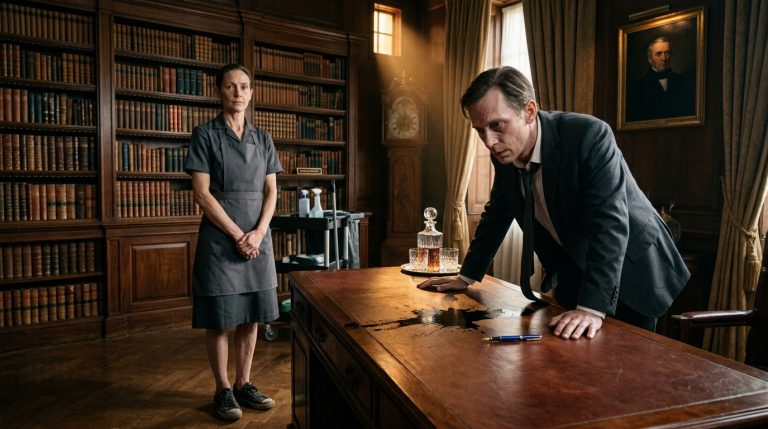
The Ledger of Betrayal: How a Mother Reclaimed Her Stolen Voice and Saved Her Child’s Future
CHAPTER 1: SHATTERED ROUTINE
The knife slipped through the crisp skin of the red apple, striking the wooden cutting board with a dull, rhythmic thud. I kept my thumb pressed against the flat of the blade, letting the familiar routine anchor my hands before the dinner rush began. The kitchen smelled of roasted garlic and the faint, chemical tang of the countertop polish I used to scrub away the dust of a long, exhausting week.
The phone screen on the marble island lit up, vibrating aggressively against a ceramic coffee mug.
JOLIE: Mom, the bank portal just locked me out. It says insufficient funds for the tuition deposit.
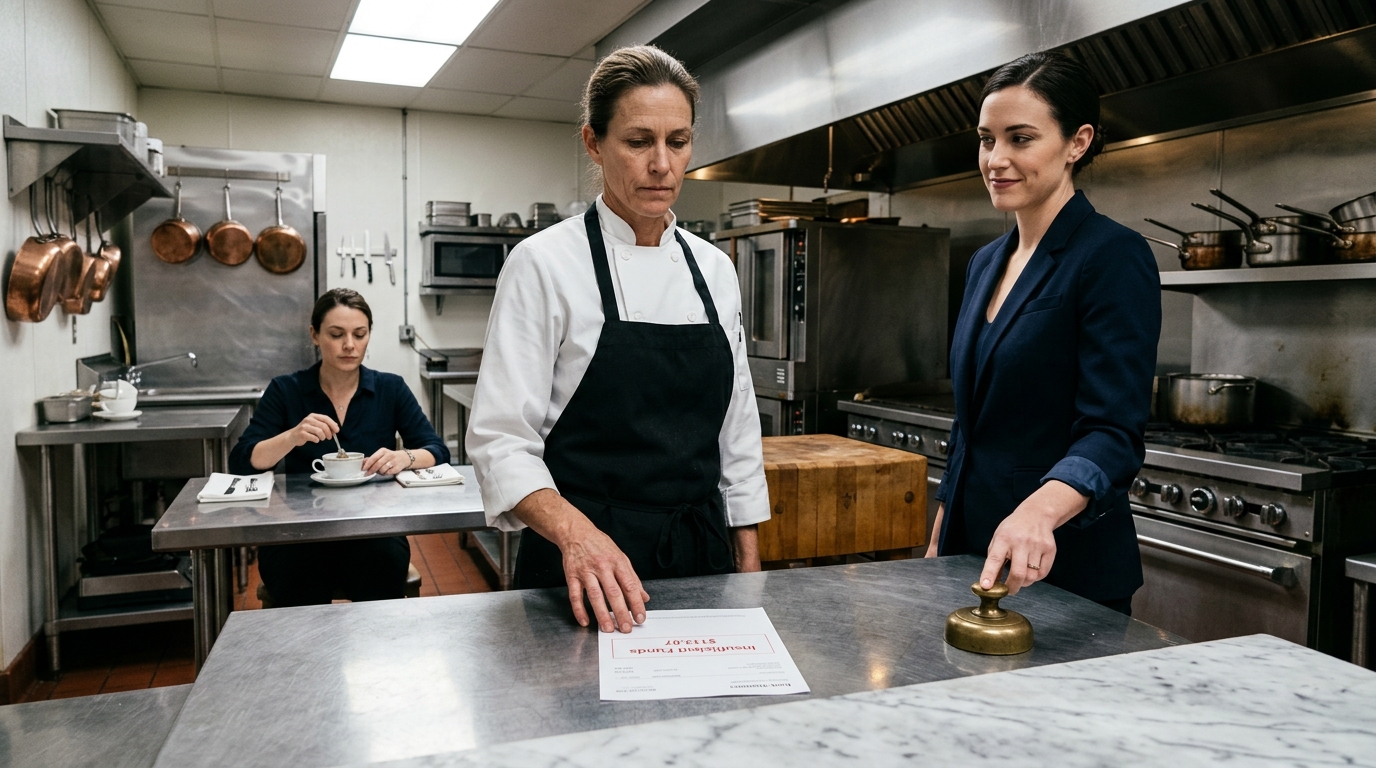
My hand froze midway through the final slice. I wiped my palms against my apron, picked up the device, and logged directly into the joint account portal with fingers that suddenly felt like lead. The red text on the screen didn’t blink, but it cut deeper than any blade.
Balance: $112.07.
The double doors of the dining room swung open before I could even process the missing commas. Kalista stepped into the kitchen first, her blazer sleeves rolled neatly to her elbows, holding a bottle of expensive vintage wine I hadn’t asked for. Behind her came Eleanor, moving with that fragile, slow cadence she adopted whenever she wanted to avoid witnessing a mess.
“You’re behind schedule with the roast, Taran,” Kalista said, setting the bottle down directly over the printed bank statement I had just pulled from the printer drawer. She glided past me to take our father’s old chair at the head of the table, smoothing her skirt with absolute, terrifying poise.
I didn’t scream. I didn’t let my breath hitch. I simply picked up the vintage bottle, slid the white paper out from beneath it, and laid the sheet flat between her silver fork and the linen napkin.
“Did you move the money from Jolie’s college fund into the company reserve account?” My voice was flat, empty of the panic clawing at my throat, channeling only the weary weight of a mother who had run out of patience.
Kalista didn’t blink. She reached out, her fingers brushing the solid edge of the vintage brass paperweight she had taken from Dad’s desk, rotating it exactly ninety degrees until the polished side caught the overhead light. “Good morning to you, too, sister. That money was never just yours. It was part of the family pool, reallocated to ensure corporate stability before the quarterly audit.”
“Family pool?” I stepped forward, the physical friction of my sneakers against the linoleum loud in the quiet kitchen. “I funded that account for twelve years while you traveled. That is my daughter’s future.”
Eleanor quietly stirred her tea, her spoon clicking against the porcelain with absolute neutrality. “Your sister is trying to stabilize what your father built, Taran. You always did get so emotional about the paperwork.”
Kalista smiled then—not with warmth, but with the chilling satisfaction of someone who knew the locks had already been changed. “The board realigned the assets on Wednesday, Taran. We did what was necessary because you couldn’t.”
CHAPTER 2: DENIED ACCESS
The silence in the kitchen solidified around the soft, rhythmic clicking of Eleanor’s spoon. My sister sat in our father’s chair, her posture perfect, completely unbothered by the fact that she had just admitted to siphoning my daughter’s entire future.
“You always were too soft for the operational side, Taran,” Kalista said, setting her glass down on the marble island with a sharp click. “Dad knew it. The board knows it. We need liquid assets to finalize the restructuring, not money sitting idle for a kid who might not even get into Stanford.”
The sheer audacity of the phrase hit like a physical weight, but I didn’t give her the satisfaction of a reaction. I pulled my hand back from the granite counter, my voice dropping into a quiet, dangerous register. “We’re done talking in this kitchen.”
I turned on my heel and walked out, leaving the roast cooling on the counter and the two of them trapped in their own manufactured smugness.
The lock clicked as I pressed the key fob, the early morning fog still clinging to the glass facade of Hollowell & Co. Two days of cold calculation had brought me here, to the building I had spent ten years opening before the sun even cleared the horizon. My fingers held the leather key strap tightly, the familiarity of the weight grounding my movements.
I stepped through the heavy glass doors into the lobby. The polished brass plaque bearing my name near reception caught the light, but the girl sitting behind the desk wasn’t the regular receptionist.
She was young, dressed in a sharp, corporate gray blazer that looked brand new, and her smile didn’t reach her eyes as she held out a manicured hand. “Can I help you find someone, ma’am?”
—I don’t need help finding my own office.
I pulled my corporate badge from my purse and swiped it against the security turnstile. A harsh, double-beep echoed through the empty lobby, the small LED light flashing an angry, solid red.
“I’m sorry, Ms. Hollowell,” the girl said, her voice dripping with practiced, legal politeness as she slid a printed sheet across the counter. “The executive chair issued a security update at 6:00 a.m. Access credentials for non-active stakeholders have been suspended pending the realignment session.”
I looked down at the agenda. Under the section labeled primary stakeholders, my daughter’s name, Jolie Drayton, was listed next to a corporate tax code I didn’t recognize.
“Legacy matters,” a voice whispered from behind me.
Marcus, a junior board member who owed his entire career to my father’s early investments, stepped out of the elevator bank holding a catered coffee cup. He gave me a thin, defensive smile, his eyes darting toward the security desk before he leaned closer. “We assumed she’d be stepping in eventually, Taran. The transition paperwork Kalista filed makes it clean.”
The elevator doors split open with a soft chime at the top floor. The boardroom was already half full, the air smelling faintly of citrus cleaner and thick, unyielding tension. The heavy mahogany table, which I had chosen piece by piece during the 2020 expansion, had been rearranged—my usual seat at the head had been pushed to the side, replaced by a fresh, engraved nameplate.
Kalista Hollowell. Acting Executive Chair.
Kalista stood by the projector screen, her fingers lightly tapping the vintage brass paperweight she had brought from the house, her eyes locked on me as I took a side seat. She didn’t offer a greeting; she simply clicked the remote, lighting up the screen with clinical, icy precision.
“To ensure a sustainable vision,” Kalista began, her voice echoing off the glass walls without a hint of hesitation, “we propose an immediate, mandatory transition in executive leadership, effective upon the closing of this vote.”
The junior board members nodded in unison, their eyes fixed on their tablets, their hands moving in a rehearsed choreography that made it clear the decision had been bought and paid for hours ago. I clutched the armrest, my nails digging deep into the leather as the room filled with the quiet, devastating sound of five minutes of silence destroying ten years of work.
CHAPTER 3: THE BROKEN TRUST
The plastic edges of the badge dug deep into my skin, leaving a sharp, red impression across my palm. The corporate realignment wasn’t a sudden response to a bad quarter; it was a clinical, calculated eviction. I threw the deactivated card into the trash bin, took a deep breath of the citrus-scented air, and walked straight out to my car.
The lock on my home office door clicked shut twenty minutes later. I pulled up the shared corporate server interface on my personal laptop, entering the administrative credentials I had used for nearly a decade. The screen flashed instantly with three words that sealed the deal.
Access Denied: Revoked.
My phone rattled against the wooden desk surface, the screen displaying a text notification that turned the baseline frustration into absolute ice.
—Mom, the financial aid office just called me in. They think we lied on the FAFSA.
Jolie’s voice cracked over the speaker line when I dialed her back, the background noise of school lockers slamming adding to the visceral strain. “They flagged the account activity, Mom. They said the withdrawals look like an illegal asset transfer to hide taxable income. I told them I didn’t know anything, but the officer looked at me like I was a thief.”
“You didn’t do anything wrong, Jolie,” I said, my knuckles locking hard around the phone casing as I stared at the blank login screen. “I am fixing the numbers right now. Go to your next class.”
I hung up, my fingers flying across the secondary backup system—a private cloud database Kalista didn’t know existed, mapped strictly to my original financial ledger copies. As the spreadsheets populated the screen, my eyes locked onto an unlisted hardware sub-log entry from six months ago. A blinking digital token tag sat right next to three unauthorized siphons coded as ‘Project Alpha Reserve.’
The metadata didn’t lie. The access key used to authorize the destruction of Jolie’s fund belonged to my old profile, but the physical MAC address linked directly to the laptop sitting in Kalista’s office. She hadn’t just stolen the cash; she had left my digital signature on the grease trail.
I didn’t waste time on an emotional spiral. I opened my encrypted contacts list, scrolled past the family ties that had just frayed into nothing, and hit the dial button on a name I hadn’t called since the firm’s initial incorporation.
—Rachel, I need a financial forensics consult. Private, immediate, and fully documented.
“Give me seventy-two hours,” Rachel’s voice cut through the line, plain and dry, lacking any Hollywood theatrics. “If she moved that money through shadow entries, the digital print is already etched in the tax ledger. Don’t touch the live database again; let her think you’re locked out in the cold.”
CHAPTER 4: THE COUNTERSTRIKE
The man standing on the porch wore a cheap gray suit and didn’t bother checking my ID. He simply thrust a thick paper envelope into my chest, turned around, and walked back down the concrete steps without uttering a word. The air felt heavy, damp with the smell of wet grass and incoming rain.
I stepped back inside and dropped the weight of the document onto the table. The bold print at the top of the first page didn’t take a lawyer to decipher.
Notice of Civil Suit: Defamation, Corporate Sabotage, and Financial Misconduct.
Kalista was trying to tie my hands in a courtroom before Rachel could complete the forensic analysis of the bank metadata. I reached for my phone and dialed Eleanor’s home phone, hoping some shred of maternal instinct remained.
“Taran, I can’t get in the middle of this,” Eleanor said, her voice trembling slightly, though her tone remained completely detached from the reality of the fraud. “Your sister says the company is fragile. You’re tearing the family apart with these accusations.”
—You’ve been in the middle your whole life, Mother. You just choose to close your eyes.
I pressed the end call button before she could offer another vacant observation. The phone immediately rang in my palm, Rachel’s name flashing against the screen.
“I found three unauthorized transfers buried deep under an old reserve sub-category Kalista renamed six months ago,” Rachel said, her voice coming through with clean, clinical precision. “She used your grandfathered administrative access token, but the active metadata log explicitly tracks the transaction execution back to the physical docking station inside her private executive office. It’s a clean signature match.”
I looked down at the defamation paperwork, my fingers sliding over the cold surface of the folders containing my counter-claim documents. “Is the paper trail enough to survive a motion to dismiss?”
“It’s enough to blow the corporate veil wide open,” Rachel replied, a rare edge of professional satisfaction cutting through her dry delivery. “But if you file this counter-suit, the evidence goes into the public record. There is no quiet resolution after that.”
“I spent ten years being quiet while she erased me from the corporate history,” I said, my thumb tracking the unyielding edge of the paper weight on my desk. “Filing the documents tomorrow morning. We fight loud.”
CHAPTER 5: THE VELVET TRAP
The room was packed with polished brass fixtures and tables draped in expensive white linen. Huge banners hung from the ceiling, celebrating the annual “Women of Ethical Leadership” honors. Right at the center table, Kalista sat raised on the multi-tiered platform, laughing politely with the very institutional investors who had rubber-stamped my removal.
I bypassed the registration desk completely, the heavy friction of my heels striking the parquet floor drawing a few sharp glances from the auxiliary staff. Marcus, the junior board member from Tuesday’s alignment session, choked slightly on his salad as I walked directly up to the main stage microphone.
—Taran? What are you doing here? You aren’t on the guest roster.
Kalista’s voice cut across the room, tight with an unyielding entitlement that immediately silenced the ambient chatter. She stood up from her leather chair, her fingers instantly locking around the small pearl necklace at her throat, her face tightening as she weaponized the high-society setting. “This is a private, curated event for stakeholders. Security, please remove this disruption.”
“I am the primary stakeholder,” I said, my voice projecting clearly through the live audio feed as I laid the forensic bank ledger printouts flat across the main podium. “And this room needs to see exactly how my sister stabilized our father’s legacy.”
The projection screen behind her, which had been displaying a looping slideshow of her corporate achievements, flickered violently as Rachel executed the remote cloud override from our private terminal. Instead of a curated portrait, the display filled with three unedited metadata logs detailing the $230,000 siphon, mapped explicitly to Kalista’s private executive office hardware token.
A heavy, suffocating silence dropped over the ballroom as the investors leaned forward, their forks suspended mid-air.
Kalista’s face lost every ounce of its practiced composure, a single bead of sweat instantly cutting through her expensive makeup as she glared at the screen. “These metrics are entirely fabricated—a desperate, emotional stunt by a former employee who couldn’t handle a standard restructuring.”
—Look at the device signature on line four, Kalista. That isn’t an emotion. That’s a federal tax fraud audit trail.
She didn’t surrender; she doubled down, her knuckles turning bone-white as she slammed her palms against the linen table. “You are completely destroying this family name for a petty grudge! I saved this firm from your absolute incompetence!”
The older board members at the front table didn’t look at her face; they looked at the undeniable financial metadata blinking on the screen. The trap had closed, and Kalista was left standing on her own stage, trapped completely by the cold numbers she thought she had hidden in the shadow ledger.
CHAPTER 6: THE CLEAN SLATE
The anchor’s professional voice filtered through the quiet house, flat and clinical. “Following an emergency session of the primary stakeholders last night, Kalista Hollowell has stepped down from her role as interim executive chair to focus on personal matters, effective immediately. The board has confirmed a comprehensive third-party forensic audit is officially underway.”
My phone buzzed once against the granite island. The screen lit up with a single text string from Eleanor.
—You won. I hope you know what it cost all of us.
I stared at the black text for three seconds, letting the cold weight of her displacement register. I didn’t frame a calculated diplomatic response; I didn’t call her back to plead for a spot at a family table that had never really belonged to me. I simply swiped the notification left and hit delete, erasing the message into the digital dark.
The front door clicked open, and Jolie stepped into the kitchen, dropping her heavy debate practice backpack onto the floor with a dull, echoing thud. She looked exhausted, her blazer slightly wrinkled around the collar, but the tense fatigue that had locked her shoulders for weeks was entirely gone. She didn’t say a word as she slid a fresh, crisp envelope across the marble island toward me.
The university logo at the top was bold and clear, stripped of any red financial holds or compliance warnings.
“I need a new backpack,” Jolie said, a faint, sharp smirk cutting across her face as she reached for a glass from the cupboard.
—You earned the one you have.
We didn’t launch into a tearful display or a dramatic family speech. The silence sitting between us was deep, solid, and entirely clean. The bank accounts were locked under a new, private legal trust, the corporate bylaws had been purged of Kalista’s consolidated power structures, and the names on the stock charter had been restored to the baseline ledger my father originally intended.
I picked up my coffee mug, walked over to the large bay window, and drew the heavy curtains completely wide. The morning sun poured across the newly painted floorboards, sharp and uncompromising, illuminating a fresh notebook waiting on the desk. The story didn’t end with fireworks or an artificial celebration; it ended right here, on my own terms, in the quiet reality of a house that finally felt like home.