A Hundred Years of Silence: How One Veteran Dismantled the Suburban Empire Built on Stolen Soil
CHAPTER 1: THE COLD FIRE
The air in the neighborhood usually smells of cut grass and expensive fertilizer, but today it is thick with the scent of raw, bleeding timber. I stand at the edge of my lawn, my boots pressing into the mulch where the giants used to shade the house. The wood chipper sits at the curb, its mechanical maw still smoking, a bright, garish orange beast against the deepening green of the yard.
Karen is still here. She stands three feet away, clutching her clipboard to her chest like a vestment. She looks like a filing cabinet turned into a woman—stiff, organized, and utterly devoid of anything resembling humanity. Behind her, the compliance crew is packing up their saws. They don’t look at me. They are mercenaries who don’t care about the saplings of the First World War; they only care about the check waiting at the end of the day.
“Compliance is the bedrock of a successful community, Mr. Thorne,” she says. Her voice is clipped, high, and utterly devoid of apology. She taps her laminated badge, which catches the afternoon sun like a cold, glass eye. “Those trees obstructed the sightlines. Mr. Henderson needed his satellite, and Mrs. Gable’s petunias were suffering. It was a majority vote.”
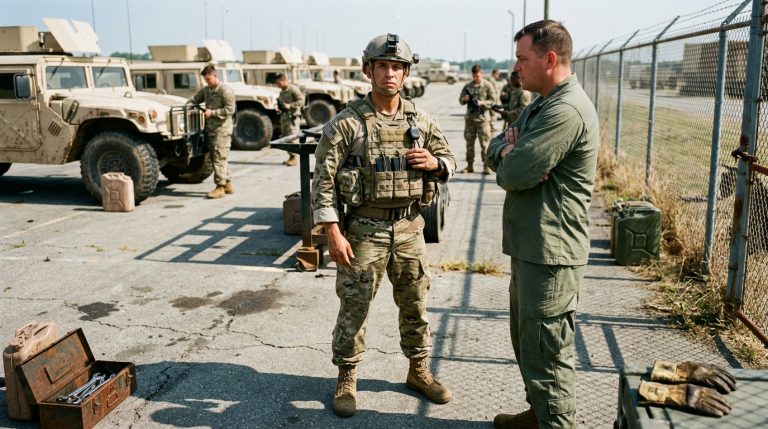
I don’t speak. I don’t move. I am a Marine, and for twenty years, I have lived by a simple rule: never show the enemy the weapon until you are ready to use it. I look at the stumps. The wood is pale, exposed, and vulnerable, like an open wound. My father’s hand once rested on that bark. My grandfather’s spirit is woven into those roots.
“You didn’t just trim,” I say, my voice a low hum that vibrates deep in my chest. I keep my hands at my sides. If I clench them, I might break something, and I need these hands to be steady for what comes next. “You amputated.”
A flicker of uncertainty—just a ghost—passes over her face. She expected a scream. She expected a man in a camouflage jacket to lose his mind, to throw a punch, to give her the ammunition she needs to file a restraining order and seize the property. She wants a scene. She wants me to be the monster so she can play the victim.
“It’s in the bylaws you signed,” she snaps, her voice hitching, desperate for the ground to remain level beneath her feet. “Section 14, subsection C, paragraph 2. You have thirty days to remove the stumps, or we assess the cost of the cleanup as a special levy against your property.”
I look past her, to the house next door. My gaze is not angry; it is analytical. I am looking at the architecture of her ego. I am counting the risks. I am calculating the trajectory of her downfall. She thinks she has won because the trees are flat. She has no idea that the war has just shifted from the lawn to the fine print.
She takes a step back, her boots scuffing on the concrete, and her eyes widen for a split second. She sees it then—the shift. She sees that the quiet man who keeps to himself has reached the end of his patience, and there is nothing more dangerous than a man with nothing left to lose.
I don’t look at her again. I turn my back on the butchered oaks and walk toward my front door. As I reach for the handle, a realization cuts through the haze of my rage: she never filed the architectural review. There is no paperwork.
She just walked onto my land and cut down my history.
And she’s about to pay for every inch of it.
CHAPTER 2: THE ANATOMY OF A DEATH SENTENCE
I walk into the kitchen, the hardwood floor feeling unnervingly stable under my boots. My hands are still steady, but there is a tremor in the back of my mind—a residual twitch from a life spent in places where destruction was the primary language. The smell of the house is home, but it is currently fighting a losing battle against the phantom scent of diesel fuel and raw, splintered wood clinging to my clothes.
Sarah is by the island, a dish towel clutched in her hand, her knuckles white. She doesn’t ask. She doesn’t have to. She sees the flatness in my eyes, the way my movements have become economical, devoid of wasted energy.
“Marcus,” she starts, her voice a fragile thing.
“Don’t,” I say, my voice raspy. I walk past her to the mudroom, stripping off my jacket. I hang it on the peg. It’s a clean motion, practiced, efficient. I need to move. I need to keep the gears turning before the rage finds a way to liquefy my bones. I pull out my phone and dial Ben Carter. He answers on the first ring, as if he’s been waiting by the phone.
“I’m coming over,” I tell him. “Bring everything. The scope, the soil kits, the measuring tape. I want a report that would stand up in a federal court.”
“I’m already in the truck,” Ben replies. His voice is a low rumble of gravel. “I’ll be there in twenty.”
I hang up and walk back to the living room. Sarah is standing in the doorway. She isn’t crying anymore. The fear that was there moments ago has been replaced by a grim, hard-edged curiosity. She’s a smart woman; she knows that when a Marine stops shouting, the real fight has just begun.
“She didn’t just want the trees gone, did she?” Sarah asks.
“No,” I reply, walking toward the window. I look out at the lawn. The setting sun casts long, skeletal shadows of the butchered maples across the grass. They look like claw marks. “She wanted to see if I’d snap. She needed a reason to mark me as a liability. This isn’t about HOA aesthetics. It’s about property value, and according to her, I’m the part of the property that’s depreciating the neighborhood.”
I feel the cold fire again. It’s not a hot, reckless rage; it’s a surgical, sub-zero precision. I go to the dining room table, pull out the chair, and sit. The table is bare, save for a bowl of fruit and a stack of junk mail. I pull the stack toward me. I have never paid attention to the HOA notices, usually tossing them into the bin without a glance. Now, I spread them out like a deck of cards.
The weight of the paper is heavy. It’s cheap, recycled stock, but the words printed on them are precise, cold, and calculated.
Ben pulls into the driveway exactly twenty minutes later. His truck is an older model, battered and reliable, with a bed full of equipment that looks more at home in a forensic lab than a suburban garage. He walks up the steps, his gait uneven, a souvenir from his own time in the service. He doesn’t offer a greeting. He just sets a heavy, padded case on the dining room table.
“You said it was bad,” Ben says, opening the case. Inside are calipers, a laser distance measurer, and a specialized botanical scope. “But the photos you sent don’t capture the brutality. They didn’t just trim; they stripped the vascular system. These trees are effectively on life support.”
“I need to know if they can be saved,” I say.
Ben shakes his head, his face a mask of grim professional appraisal. “We aren’t talking about saving them, Marcus. We’re talking about diagnosing the cause of death. You want me to prove this wasn’t an accident. I need to see the cuts.”
We spend the next hour in the fading light, walking the perimeter of the stumps. The air is cool, biting at my skin. Ben moves with a slow, deliberate intensity, his fingers tracing the shredded, jagged edges of the bark. Every time he touches a wound, I can feel a phantom ache in my own chest.
He stops at the largest oak. He pulls a flashlight from his belt, the beam cutting a harsh white path through the gathering dusk. He runs the light along the cambium layer.
“Look at this,” he whispers. “This isn’t a standard ‘topping’ cut. See the angle? It’s designed to trap moisture and rot, not to promote growth. Whoever did this was trained in horticulture, but they used their knowledge to kill.”
I stare at the stump. The precision is terrifying. It’s not the work of a sloppy landscaping crew; it’s the work of a professional executioner.
“Can you testify to that?” I ask.
Ben looks at me, his eyes reflecting the sharp, white light of the torch. “I can testify that this was a conscious, deliberate act of destruction. It’s not an accident. It’s an assassination.”
I nod, the cold fire in my gut hardening into a solid, impenetrable core. I walk back to the house, leaving Ben to finish his measurements. As I reach the porch, I stop and look down the street. Karen’s house is perfectly manicured, a monument to the very standard she enforces. A single light shines in her upper window.
She thinks she’s holding a clipboard, but she’s actually holding a target. She thinks she’s protected by a set of bylaws, but she’s built her fortress on a foundation of sand. She has brought a bureaucratic knife to a tactical war, and she has no idea how deep the blade is about to go.
I open the door, and the sound of the house settles back over me—the hum of the refrigerator, the tick of the wall clock. It sounds like a countdown. I walk into the study and pull out a blank notebook. I don’t write down ‘revenge’. I don’t write down ‘anger’.
I write down: Phase One: Intelligence.
The hunt has begun.
CHAPTER 3: THE BURIED CLAUSE
The study is quiet, save for the occasional pop and groan of the house cooling in the evening air. My notebook lies open, the page marked with the heading Phase One: Intelligence. I sit at the dining room table, the documents I’ve gathered spread out in a semi-circle. It is a messy, sprawling architecture of deceit. I’ve spent the better part of the night reading the Covenants, Conditions, and Restrictions—the CCRs—of Oak Haven Estates. They are written in that impenetrable, soul-crushing legalese designed to discourage anyone but a lawyer from ever understanding their own property rights.
I reach for a mug of black coffee, but it has gone cold. I don’t care. The caffeine is still there, coursing through my veins, keeping the tactical coldness of my focus from wavering.
I reach for the section I’ve circled in red: Article 8, the Architectural Review. It’s supposed to be the gatekeeper, the mandatory process that keeps the neighborhood uniform. My finger traces the dense, black ink. Any alteration to private property requires a formal architectural review application signed by the homeowner and approved by the board.
I flip back through the files I’ve pulled from the online portal. There is a lot of paper here—minutes from meetings where they discussed the color of mailboxes, the height of fences, and the audacity of unapproved holiday lights. There are invoices for trimming hedges and spraying for pests. But there is nothing for my trees. No application. No signature. No record of a review, formal or otherwise.
It is a void.
I pull my laptop toward me, the screen casting a pale, sickly light over the room. I start a search query for the specific board meeting dates mentioned in the earlier warnings Karen sent me. I need to see the minutes. I find the file for last month’s meeting—a dry, sanitized document of bureaucratic motions. I scroll down, my eyes tracking the list of new business. Nothing. The destruction of five massive, century-old trees, one of which stood only feet from the front door of the board president’s primary antagonist, isn’t even mentioned in the official record.
The lack of documentation isn’t just an oversight. It’s a tactical gap.
I hear a soft footfall on the stairs. Sarah. She doesn’t speak, just walks into the room and sets a fresh, steaming mug of coffee on the table. She looks at the stacks of paper, the red ink, the laptop screen. She knows me well enough to see that I’m not just reading; I’m hunting.
“You’re looking for the authorization,” she says, her voice barely a whisper in the quiet house.
“I’m looking for the hole in her armor,” I reply. I look up at her. Her expression is drawn, tired, but there is an underlying steadiness that anchors me. “She’s arrogant, Sarah. She thinks the rules are a weapon she can wield, but she’s forgotten that a weapon is only effective if you’re the one holding the handle. If she didn’t file the review, she didn’t just break the rules. She broke the contract.”
“If she didn’t file it, where is the record of the crew?” Sarah asks. “Someone had to authorize the payment. Someone had to sign off on the work order.”
“That’s exactly what I’m going to find out.”
I stand up and walk to the window. Outside, the night is dark, the silhouettes of the stumps looming like tombstones. I think of the men in the orange vests, the silence of the chainsaws, and the cold, smug certainty on Karen’s face as she tapped that clipboard. She hadn’t been acting as an administrator; she had been acting as a judge, jury, and executioner. But a judge needs a courtroom, and a courtroom needs a record.
I return to the laptop. I start a deep-dive search on the company name I’ve seen on the invoices I managed to intercept over the last few weeks: Compliance Solutions LLC. I search the state business registry. My hands feel like they are moving in slow motion, every keystroke deliberate.
The search result pops up, a clean, official state record. Registered agent: Frank Peters. The address is a residential lot two streets over from Karen’s house.
I stare at the screen for a long time. The connection is so brazen, so transparent, it feels almost insulting. She didn’t just circumvent the process; she monetized it. She took a public mandate and converted it into a private revenue stream, using the neighborhood’s own dues to pay for the “remediation” of her own enemies.
I lean back in my chair, the wood creaking in the silence. The cold fire in my gut settles, turning into a low, steady hum of resolve. This isn’t just a dispute over landscaping anymore. This is a pattern of behavior, a deliberate, calculated effort to consolidate power and wealth. And every pattern has a weakness—a point where the pressure applied is too great for the structure to hold.
I hear the distant sound of a car passing on the main road, the hum of tires against asphalt. It reminds me of how small this street is, how fragile the illusion of order can be. Karen thinks she’s at the center of the world, but she’s just at the center of a very small, very brittle bubble.
I pull the notebook toward me again. I write down one name: Frank Peters. Then, underneath it, I write: Follow the money.
I am not going to win this with a shout. I am going to win this with an audit. I am going to peel back the layers of her bureaucracy until there is nothing left but the raw, naked truth of her greed. I look at the pile of documents. I have everything I need to start, but I need a way to verify the money trail. I need a source—someone who sees the checks as they come in, someone who knows where the bodies are buried in the books.
I look at the list of board members. The names are familiar, but they are just names. I need to talk to them. Not as a complainant, not as a victim, but as a man who knows exactly where the flaws in the armor are. I stand up, walk to the closet, and pull out my jacket.
“Where are you going?” Sarah asks.
“I’m going to see Glenn,” I say. “He’s been the treasurer for three years. If there’s a ledger, he’s seen it.”
“It’s almost midnight, Marcus.”
“Then it’s the perfect time to catch a man off guard,” I say, my voice devoid of malice, just pure, cold logic. I walk to the door, the cool night air hitting my face as I step onto the porch. The neighborhood is asleep, unaware of the war that is being waged in its backyards. I walk toward the garage, the crunch of gravel under my boots sounding like a steady, rhythmic march.
I have a map. I have the motive. And now, I have the target. The silence of the night feels less like a void and more like an opportunity.
CHAPTER 4: THE THRESHOLD OF COLLUSION
The light is blinding, a harsh, sodium-vapor glare that turns the driveway into a stage. I freeze, my hand hovering over the door handle of my truck. The sensor has tripped, likely triggered by a stray cat or a shift in the wind, but it feels like an indictment. I stand there for a heartbeat, my pulse steady, eyes scanning the darkness between the houses. Everything is still. The neighborhood, usually so carefully manicured and obedient, feels like a sleeping predator.
I climb into the truck. The engine turns over with a growl that seems far too loud for the hour. I don’t pull out immediately. I sit in the cab, the smell of stale coffee and old upholstery grounding me. My route to Glenn’s house is simple, but the logic behind it is complex. Glenn Albright isn’t a mastermind; he’s a sycophant, a man who built his life on the hollow promise of local influence and the petty thrill of enforcing rules on his neighbors. He’s the enforcer who didn’t ask why, just how fast.
I pull onto the road, the streetlights passing overhead like rhythmic pulses. My mind is a processor, ticking through the possibilities. If I go to his door at midnight, I am the aggressor. That’s what Karen wants. She wants the “volatile veteran” narrative. I have to flip that. I don’t go to his door to threaten him. I go there to offer him an out. I go there as a man who knows, not as a man who accuses.
Glenn’s house is a colonial structure, gray paint peeling slightly at the edges—the first sign of a life being neglected in favor of the board’s hollow pursuits. I park two houses down, leaving the engine to tick and cool in the silence. I step out. The gravel under my boots feels like walking on shards of glass.
I don’t go to the front door. I walk to the side, toward the detached garage where I know he keeps his workshop. If he’s awake, he’ll be there. If he’s asleep, I’ll wait. The garage light is off, but a faint, yellowish glow bleeds through the edges of the window. He’s there.
I walk to the side door and knock. Not a pounding, demanding strike, but three steady, measured raps. I wait. The silence inside is absolute. Then, the sound of a latch sliding back. The door opens a crack, and Glenn’s face appears, puffy with sleep and irritation, his glasses hanging crookedly on his nose.
“Thorne?” he hisses, the name sounding like an accusation. “What the hell are you doing here?”
“I need to talk to you about the board, Glenn,” I say, my voice low and level. “About the recent remediation project.”
He tries to slam the door, but I keep my palm flat against the wood, stopping the motion before it can gain momentum. It’s a subtle act, but it puts my full weight behind the intent.
“Don’t,” I say. “If you close this door, the next person to knock won’t be me. They’ll be from the state investigators, and they won’t be interested in your version of the story.”
The color drains from his face. He’s an insurance salesman; he knows the smell of a claim being denied. He knows when the liability is too high to cover. He backs away, opening the door wider. I step into the workshop—a space filled with the smell of sawdust and old paint. It’s a stark contrast to the sterile, “compliance-driven” world he helps enforce.
“I didn’t have anything to do with the trees, Marcus,” he stammers, his hands trembling. He grabs a rag and starts wiping down a workbench, an aimless, nervous gesture. “It was Karen. She handled the vendors. She handled the legal side. I just signed the minutes.”
“You signed them,” I repeat, watching his eyes dart toward a stack of papers on the desk—the official records he’s been maintaining. “Which makes you an accomplice. You signed a document that authorized work on private property without a review. Do you have any idea what that looks like in a deposition?”
He stops wiping. His eyes meet mine, and for a moment, the bravado of the HOA enforcer is completely gone. He looks small, tired, and profoundly stupid.
“She told me it was all in the bylaws,” he whispers. “She showed me the section about common areas and sightlines. She said if we didn’t act, the property values would tank. She used the community as a threat.”
“And the money?” I ask, stepping closer. “The Compliance Solutions invoices. Did you ever wonder why the same company got every single contract?”
“She said they were the only ones who could meet the HOA’s strict standards,” he says, but his voice lacks conviction. He knows. He’s always known, but he’s chosen to look the other way because it was easier than fighting the queen.
“I’m not here to destroy you, Glenn,” I say, and for the first time, I let a hint of tactical empathy creep into my tone. It’s a tool, like anything else. “I’m here to give you a chance to stop digging. I have enough evidence to bury the whole board. But I don’t care about you. I care about the truth.”
He looks at me, really looks at me, and he sees the resolve—the steady, unwavering coldness that I’ve carried since the saws first touched my trees. He realizes that I am not just a neighbor; I am a force of nature that he cannot calculate against.
“What do you want?” he asks.
“The original notes,” I say. “The ones from the meeting where you voted on my property. Not the minutes you posted to the portal. The raw files. The draft copies. Everything.”
Hehesitates, his gaze flicking toward the desk again. That’s where the truth lives. In the mess, in the drafts, in the unedited reality that Karen tried so hard to prune away.
“If I give them to you,” he says, his voice a tremor of fear, “she’ll destroy me.”
“She’s going to destroy you anyway,” I reply, my voice turning to steel. “The only question is whether you want to go down as her accomplice or as the man who helped bring down the racket.”
He looks at his hands, then at the desk, and finally at me. He reaches out, pulls the drawer open, and begins to sift through the chaos of his files. I stand there, motionless, watching the light catch the dust motes dancing in the air. The clock on the wall ticks—a slow, steady reminder that time is a limited resource.
He pulls out a manila folder, thick and worn. He holds it for a second, then slides it across the workbench toward me. I don’t touch it yet. I look at it. The folder is the weight of the war.
“There’s a lot in here,” he says, his voice barely audible. “More than just your trees.”
“I know,” I say. I reach out and take the folder. The texture of the paper is rough, worn, and heavy. It feels like the most valuable thing I’ve ever held.
I turn and walk toward the door. I don’t look back. I don’t thank him. I walk out into the cool night air, the folder tucked under my arm like a tactical advantage. The motion-sensor light on his garage flickers off as I reach my truck, plunging the world back into a comfortable, tactical darkness.
The war hasn’t ended. But as I start the engine and pull away from the curb, I know one thing for certain: the queen has just lost her first pawn. And the checkmate is only a matter of time.
CHAPTER 5: THE PUBLIC RECORD
The clubhouse is a beige, windowless box that smells faintly of floor wax and stale coffee. It is the heart of the HOA’s manufactured order, a place where petty tyranny is given the veneer of governance. As I step inside, the fluorescent lights flicker overhead, casting a jagged, strobe-like effect on the faces of the half-dozen homeowners already scattered in the folding chairs. Their expressions are tight, masks of performative civility. They aren’t here for the budget report; they are here because the neighborhood feels like it’s holding its breath, waiting for a storm.
Karen is already at the head table. She sits with her posture rigid, her hands folded over a fresh stack of papers. She doesn’t look at me as I walk down the aisle, but I see her frame stiffen. Beside her sits Glenn, who stares at the table with the intensity of a man studying a map of a minefield. His eyes are bloodshot, his movements jerky. He hasn’t slept, and he knows that the folder I’m carrying contains the ruin of his weekend, his board seat, and his reputation.
I take a seat in the front row. I don’t sit in the back anymore; that was the luxury of a man who thought he could stay out of the fray. Sarah takes the seat beside me, her presence a silent, cooling anchor. I place the folder on the floor by my feet, the edge of it brushing against my ankle. It’s a physical reminder of the tactical ground I’ve secured.
“Welcome,” Karen says, her voice sounding thin and brittle in the large room. She hits the gavel against the podium—a sharp, percussive sound that ripples through the silence. “We have a full agenda tonight. Before we begin, I want to remind everyone that this is a professional setting. We will adhere to the time limits for public comments, and there will be no outbursts.”
Her eyes scan the room, lingering on me for a fraction of a second too long. There is a hunger in her gaze, a desperate, predatory need to assert control. She thinks she’s winning because she’s still holding the gavel. She has no idea that the foundation is already crumbling.
The meeting drones on—a list of minor grievances about trash bins, lawn heights, and unapproved paint colors. It’s a pantomime of authority, a performance of order. Every word out of her mouth is designed to reinforce her position, to remind everyone that she is the gatekeeper of their property values. Glenn tries to speak about the reserve funds, but his voice breaks mid-sentence. He clears his throat, his hands trembling as he shuffles his notes.
I watch him. I don’t lean forward. I don’t smile. I just observe. He’s the first domino.
When the open forum finally begins, Karen doesn’t look at the room. She looks at her watch. “The floor is open for comments. Remember: two minutes.”
I stand up. The movement is slow, deliberate. I don’t rush. I let the silence hang for a moment, letting the tension in the room build until it is thick enough to choke on. I walk toward the microphone, the sound of my footsteps echoing against the linoleum.
“Madame President,” I begin. My voice is steady, a low-frequency hum that cuts through the artificial buzz of the lights. “I have a question about the board’s fiduciary duties regarding the recent remediation project on Patriot Way.”
Karen’s hands grip the edge of the podium. “Mr. Thorne, we have already addressed that matter. The project was completed according to established community standards.”
“Established standards,” I repeat. I reach down and pick up the folder. The sound of the plastic tab dragging against the floor is like a dry, scratching rasp in the silence. I place the folder on the podium. “I’ve spent the last few days reviewing the board’s records—the actual records, not the sanitized summaries posted to the portal. And I’m curious, Karen. If the process was so transparent, why are there no architectural review applications for the work performed on my property?”
The room goes dead quiet. The hum of the lights seems to amplify, a sterile, buzzing backdrop to the sudden, suffocating tension.
“I don’t need to justify internal board procedures to you,” she snaps, her face flushing a dark, blotchy red. “If you have a grievance, you can submit it in writing to the management company.”
“I don’t have a grievance,” I say, my voice rising just enough to carry to the back of the room. “I have a discovery. I have evidence that this board has consistently bypassed its own requirements, steering thousands of dollars in contracts to Compliance Solutions—a company owned by your husband, Frank Peters.”
The reaction is instantaneous. A ripple of gasps, a dozen people turning to whisper to their neighbors. The mask of civility has been ripped off, revealing the ugly, panicked reality underneath. Glenn actually pushes his chair back, his face a ghostly white. He looks like he’s ready to bolt, to run out the side door and never look back.
“That is a lie,” Karen shouts, her voice cracking. She bangs the gavel, but the sound is weak, a frantic, desperate protest against a reality she can no longer suppress. “You’re making wild accusations because you’re a disgruntled, unstable resident who refuses to follow the rules!”
“I’m a resident who followed the rules and got a chainsaw through his family’s legacy,” I say. I reach into the folder and pull out a copy of the unedited meeting minutes. I hold it up. The light catches the page, the ink stark and clear. “I have the notes from the meeting where you decided to ‘make an example’ of me. I have the records of the invoices. And I have the timeline of the transfers.”
I look at the room. People aren’t looking at Karen anymore. They are looking at me, then at the board members, their eyes wide with the slow, dawning realization that they have been played. The petty tyranny that had governed their lives for years is suddenly revealed for what it truly is: a racket.
“This meeting is adjourned!” Karen screams, her voice a high, jagged edge of panic. She sweeps her papers off the podium, her movements frantic and uncontrolled. “I will not be intimidated by this… this harassment!”
She turns to bolt, but the door at the back of the room opens. It isn’t a resident. It’s a man in a plain, nondescript jacket, moving with a calm, methodical purpose that is completely at odds with the chaos in the room. He walks through the crowd, his eyes fixed only on the woman at the podium.
He stops at the head table. The room falls into a deathly, expectant silence. He reaches into his jacket, pulls out a thick envelope, and places it on the desk in front of Karen.
“Karen Peters?” he asks. His voice is calm, a stark, professional contrast to the shrieking in the room.
She stares at the envelope, her mouth opening in a silent, jagged gasp. She doesn’t reach for it. She just stands there, her world visibly fracturing. The queen has been checkmated in the middle of her own throne room, and for the first time, she looks at the room and realizes that there is no one left to defend her.
CHAPTER 6: THE DISMANTLING
Karen doesn’t move. She remains anchored to the podium, her eyes locked on the document the process server left behind. It is a thick, official-looking stack of paper, the font stark and clinical, yet to her, it must look like a death warrant. The room is so quiet I can hear the hum of the fluorescent lights and the ragged, shallow breathing of the board members behind her. Glenn has turned a shade of gray that suggests he’s seconds away from collapsing, his hand gripping the edge of the table as if it’s the only thing keeping him tethered to the floor.
I don’t leave the podium. I stay where I am, my presence a constant, immovable point of pressure. I watch the way her shoulders slump, just an inch, before she catches herself. The arrogance that once radiated from her like heat has vanished, replaced by a frantic, jagged desperation. She looks out at the room, at the people she has spent years fining, threatening, and molding, and for the first time, she sees them not as subjects, but as a jury.
“This,” she whispers, her voice cracking, “is a stunt. It’s theater.”
“It’s a lawsuit,” I reply, my tone devoid of the satisfaction I felt in the garage. It is purely clinical. “And it’s supported by every signature you’ve put on a work order for the last five years. You didn’t just break the bylaws, Karen. You broke the law.”
The room erupts again, but this time it isn’t just noise; it’s a focused, directional roar. Homeowners are on their feet, their faces lit with the sudden, sharp clarity of betrayal. A man from the back—a contractor I recognize from the neighborhood—shouts, “I paid two thousand dollars in fines last year for ‘unauthorized modifications’ to my porch. Where did that money go, Karen?”
The question hangs in the air, a blunt instrument that strikes home. Karen doesn’t answer. She can’t. Every syllable she speaks now is a liability, every defense a potential perjury. She looks toward the side door, perhaps hoping for an exit, but the room is packed, a wall of people who were once her silent, fearful audience.
I walk toward the head table. I don’t look at Karen. I look at Martha, the secretary. She is sitting with her hands clasped tightly in her lap, her eyes wide, terrified. She was the record-keeper; she knows that when the audit starts, she will be the one holding the missing pieces of the paper trail.
“Martha,” I say, my voice low but carrying easily in the hushed room. “The unedited meeting notes you were keeping—the ones you thought were lost. They’re already with my attorney. The truth isn’t just in the portal anymore. It’s in the court record.”
Martha lets out a small, sharp sound, something between a sob and a gasp. She looks at Karen, a flicker of betrayal passing through her eyes, before she hides her face in her hands.
Karen finally finds her voice, a harsh, brittle sound. “You think you’ve won? You’ve only made yourself an enemy of the association. You’ve destroyed the stability of this neighborhood!”
“Stability is just another word for silence,” I say, stopping inches from the table. “You bought your stability with other people’s money and their dignity. That wasn’t a neighborhood you were running, Karen. It was a fiefdom. And the lease is up.”
I turn away from her, not out of fear, but out of a complete and total lack of interest. The moment she tried to frame my service as a liability, she lost the right to my attention. I walk back toward the door, the crowd parting to let me through. People reach out, hands brushing my arm, faces looking for a sign of what comes next. I don’t offer platitudes. I just move with the measured, steady pace of a man who has finished the objective.
Sarah is waiting for me by the exit. Her eyes are bright, reflecting the flickering lights, and she takes my hand. Her grip is firm, a grounding sensation that cuts through the adrenaline currently flooding my system.
“Is it done?” she asks as we step out into the cool, damp air of the parking lot.
“The board is finished,” I say, looking back at the clubhouse. Through the glass doors, I can see the chaos—the shouting, the pointing, the way the board members are slowly being hemmed in by their own neighbors. “But the legal battle is just starting. This wasn’t about the trees, Sarah. It was about the power to dictate reality. And that’s the hardest thing to break.”
We walk to the truck. The silence of the night feels different now—less like a waiting game and more like the calm that follows the first volley. I pull out my phone and check the screen. A message from David Miller: ‘The petition to compel is granted. They have five days to surrender the records. The class action filing is prepped and ready for the morning.’
I slide the phone back into my pocket and look at the trees lining the street. They are skeletal, gnarled, and scarred, but they are still standing. They are the silent witnesses to the whole thing.
“We need to get home,” I say. “There’s more work to do.”
As I turn the key, the engine roars to life. Behind us, the clubhouse lights flicker one last time, a sudden, dying strobe, and then they stabilize. Inside, the noise continues, a sound of dismantling. Karen is still inside that building, but the reality she created has already dissolved. The war has moved from the streets to the records, and I am the one holding the pen that will write the final entry. I put the truck in gear and pull out of the lot, not looking back at the wreckage. There is no joy in it, only the grim, cold satisfaction of a job performed to standard.
CHAPTER 7: THE CRACK IN THE ARMOR
The morning of the deposition, the sky is a flat, unyielding gray, the color of a dull blade. I sit in the conference room of Miller’s downtown office, the table a sprawling expanse of polished mahogany that feels less like a workspace and more like an arena. The air is recycled, cold, and carries the faint, sterile scent of disinfectant. David Miller sits across from me, his fingers steepled, his eyes fixed on the empty chair at the far end of the room where Karen will sit in less than an hour.
“She’s scared, Marcus,” David says, his voice a low, steady drone. “She’s been served, the board is effectively dissolved, and her husband is currently being questioned by the attorney general’s team regarding the Compliance Solutions contracts. She has nowhere left to run.”
“She’ll try,” I say, staring at the blank notepad in front of me. “She’s not the type to surrender. She’ll try to pivot the blame onto the board, onto the management company, onto anyone but herself.”
“Let her,” David says, a predatory glint appearing in his eyes. “The more she talks, the more evidence we generate for the trebled damages. I want to watch her try to justify the ‘unreasonable’ obstruction of sightlines on the record.”
When Karen arrives, she looks like a ghost of the woman who held court in the clubhouse. She is dressed in a dark, severe suit, her hair pulled back tightly, but the composure is hollow. She walks with a rigid, unnatural stiffness, as if she is afraid that if she lets her guard down for even a second, she might simply shatter. She doesn’t look at me. She doesn’t look at David. She keeps her gaze strictly on the chair, moving toward it with a mechanical, jerky gait.
“We are here for the deposition of Karen Peters,” David begins, his voice carrying the calm authority of a man who knows he holds all the cards. “Mrs. Peters, you are under oath. You will answer all questions truthfully.”
The proceeding begins, and it is a slow, methodical dissection of a life built on control. David walks her through the neighborhood’s history, the bylaws, the architectural reviews, the fines. He is surgical, precise. He doesn’t go for the kill immediately; he builds a wall of factual contradictions that she cannot bypass. He asks about the trees, and she recites the script—the sightlines, the satellite dish, the community standards.
But then, he changes the tempo.
He pulls out a ledger. It’s a document we recovered from the clubhouse during the chaotic aftermath of the board’s removal. It’s not an official record; it’s a personal log of fines collected and vendor payments made.
“Mrs. Peters, can you explain why the entry for the ‘Patriot Way Remediation’ matches the invoice sent to Compliance Solutions for the exact same amount, down to the cent, despite the work order for that project being dated three days after the payment was cleared?”
The room goes silent. Karen’s face pales, the blood draining away until she looks like she’s made of parchment. She looks at the ledger, then at David, her lips trembling.
“I… I don’t recall the exact sequence,” she stammers, her voice failing. “The management company handled the day-to-day invoicing.”
“The management company has already testified, Mrs. Peters,” David says, his voice sharpening. “They’ve provided emails—emails you sent yourself—explicitly directing them to prioritize payments to Compliance Solutions above all other vendor obligations. Including the emergency repair work on the common area lighting.”
She begins to fray at the edges. The rigidity of her posture gives way to a restless, agitated energy. She starts tapping her fingers on the mahogany table—a rhythmic, neurotic stutter of sound. I sit back, watching, my hands locked in my lap. I am looking for the crack, the moment where the persona collapses.
“Mr. Thorne was a threat to the community,” she suddenly bursts out, her voice rising in pitch. “He was constantly challenging the rules, constantly undermining the board. The trees were a problem. They were unkempt. They were a violation of the aesthetics we spent years cultivating!”
“So you decided to remove them without the homeowner’s consent?” David asks.
“I decided to remediate the situation!” she shouts. “It was for the good of the neighborhood!”
“Is that why you billed Mr. Thorne for the privilege of your remediation?”
She falls silent. The question is a stone dropped into a deep, dark well. She looks around the room, her eyes wide, searching for a defense that doesn’t exist. She isn’t looking for a legal argument anymore; she’s looking for a way to rewrite reality, but the room is cold, the paper is real, and the record is absolute.
I lean forward. “You didn’t care about the trees, Karen. You cared about breaking me. You thought that if you could show the neighborhood that even the most ‘resilient’ among them could be brought to heel, you would be untouchable.”
She turns to look at me then, really look at me. For the first time in this entire war, her eyes aren’t guarded by the armor of her clipboard. They are vacant, hollowed out by the realization that she has destroyed herself in the pursuit of a petty victory.
“You don’t understand,” she whispers, her voice barely audible over the hum of the air conditioner. “You don’t understand the effort it takes to keep everything in line. To keep it perfect.”
“I understand,” I say, my voice cold, detached. “It’s a hollow goal. And you’ve paid a high price for a perfection that never actually existed.”
She looks away, shrinking into the chair. David doesn’t push her further. He doesn’t need to. The admission is there, hanging in the stagnant air of the conference room. She has admitted the malice; she has admitted the targeting. The treble damages are no longer just a legal strategy—they are a mathematical certainty.
As the deposition concludes, she stands up, her movements unsteady. She doesn’t look at us. She walks out of the room, her shadow stretching long and thin across the sterile, gray carpet. She is a woman who has lost everything, not because she was defeated by an outside force, but because the structure she spent her life building was never designed to hold the weight of the truth. I remain in the chair for a long moment, the silence of the room returning. It’s not a victory. It’s just the end of the argument.
CHAPTER 8: THE PRICE OF COMPLIANCE
The house is quiet, the kind of stillness that you only find after a storm has passed, leaving the air washed clean and the earth turned over. I step inside, the house feeling less like a fortress and more like a home again. Sarah is in the kitchen, the soft sound of a kettle whistling providing a domestic rhythm that feels like a foreign language after the last few months of tactical silence.
The final settlement documents are splayed out on the kitchen island—a massive, finalized pile of paper that represents the end of the legal war. The numbers are staggering, a total that makes the air feel thin, but as I touch the edge of the signature page, I feel nothing. No surge of victory, no triumph. Just the heavy, solid finality of a task completed.
“It’s done, then?” Sarah asks, turning from the stove. Her eyes search mine, looking for the man who existed before the chainsaws.
“It’s done,” I say. “Karen is selling the house. The board has been purged. The restitution fund is active.”
I walk past her and out onto the back porch. The sun is setting, casting a long, amber glow over the neighborhood. The new trees—the red oak, the maples, the dogwood—are already beginning to take hold, their branches swaying in a gentle, rhythmic breeze. They aren’t the giants that once stood there, but they have their own integrity. They have their own path to climb.
I think of Karen, sitting in the passenger seat of that beaten-down sedan as they drove away, her face a hollowed-out mask of nothingness. She had built her identity on the idea that she was the architect of our lives, the arbiter of what was ‘compliant’ and what was ‘rot.’ But in the end, she hadn’t been the architect at all; she had been the debris, the very thing she claimed to be clearing away. She lost everything—the house, the authority, the husband—all because she couldn’t tolerate a single thing in her world that she didn’t personally prune.
I walk down the steps and onto the grass. I find the stump of the largest oak, the one they butchered first. I run my hand over the rough, weathered surface. It’s scarred, yes, but it’s still here. It’s a marker. I pull a small gardening tool from my pocket and begin to clear away the weeds that have gathered at its base, the rhythmic, scraping sound grounding me.
This was the core truth, the thing that remained hidden under all the legal posturing and the financial fraud. They didn’t want the satellite signals or the sun for the petunias. They wanted to strip me of the one thing that made me unpredictable—my history. They wanted to force me into a mold of compliant, suburban uniformity. But they hadn’t realized that the more you prune a root system, the deeper it sometimes learns to grow.
Tom Miller, from the swing set family, walks by on the sidewalk, his toddler running ahead of him. He stops, sees me at the base of the stump, and offers a quiet, respectful nod. I nod back. No words are needed. We are neighbors again, not adversaries or victims. The fear that once hung over the street like a fog has lifted, leaving behind something more durable: a community that knows its own value, and more importantly, its own strength.
I finish clearing the base of the stump and stand up. My joints ache, a sharp reminder of the months of grinding stress, but it’s a good ache. It’s the feeling of a body that has survived the fire. I walk back to the porch and sit in the rocking chair, the wood creaking softly. Sarah joins me, sitting in the chair beside mine. She takes my hand, her fingers interlaced with mine, and we just watch the light fade.
“We have to start thinking about the long term,” she says, looking out at the yard. “With the settlement, with everything…”
“I know,” I say. “But not tonight. Tonight, we just sit.”
The house is quiet, the neighborhood is peaceful, and for the first time in a year, the silence isn’t a weapon. It’s a rest. I look at my hands—calloused, worn, and tired. They have pulled the triggers, they have carried the gear, and they have cleared the wreckage. But now, they are finally, blissfully, empty of everything but the work of growing something new. The war is over. The price was high, the damage was real, and the scars will remain, but the ground is ours again. And that is enough.