Cold Rain, Unspoken Truths, and the Gritty Rise of a Cast-Off Daughter
CHAPTER 1: THE MIDNIGHT VERDICT
The rain rattled the double-hung windows like a fistful of gravel. Downstairs, the grandfather clock struck eight, its brass chime dull against the rising wind.
I kept my eyes fixed on the chemistry textbook open across my knees, tracing the bold black ink of a balancing equation with the dull tip of a wooden pencil. The graphite snapped.
“Olivia!”
My father’s voice didn’t carry from the bottom of the stairs; it slammed through the floorboards. It was the sharp, flat tone he reserved for unpaid contractor bills or dented lawnmower blades.
I set the broken pencil on the desk blotter. My socks slid slightly on the polished oak steps as I went down.
In the living room, the yellow lamp light cut heavy shadows across the rug. My sister, Madison, sat huddled in the corner of the floral sofa, her knees pulled tight to her chest. Her face was flushed dark red, eyes swollen, a wet paper towel clutched in her right hand. My mother stood over her, stroking her hair with short, rigid strokes.
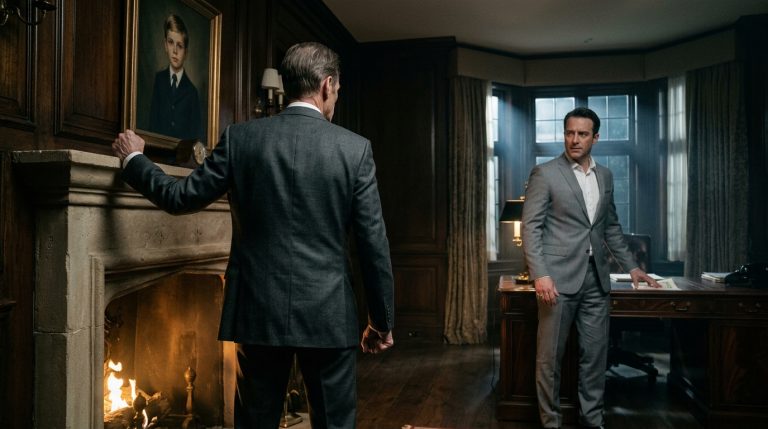
Father stood by the cold brick hearth. He didn’t have his jacket on. His white dress shirt was unbuttoned at the collar, revealing the thick, reddish skin of his neck.
“Explain this,” Father said. He didn’t raise his hand, but he thrust his arm forward, holding Madison’s phone three inches from my nose.
The screen glowed blue. It showed a group messaging thread—my name and profile picture at the top, followed by three blocks of text calling Madison a lazy, fake-crying leech who deserved every piece of bad luck coming her way.
“I didn’t write those,” I said. My voice came out too flat, stripped of speed. “I don’t even have that app on my phone.”
“Don’t start,” Mother snapped without turning her head. Her fingers dug deeper into Madison’s shoulder. “Her whole class saw it. Her teacher called your father at six o’clock.”
“Someone cloned the screen name,” I said, stepping toward the hearth. “You can do that on any desktop in five minutes. Ask her where my phone was at four o’clock. It was on the kitchen counter.”
Madison let out a wet, gasping sob. She rolled her sleeve back, exposing her forearm to the lamplight.
A thick, dark purple mark stretched across the pale skin above her wrist. It looked fresh, the edges inflamed and swollen.
“She grabbed me,” Madison whimpered into Mother’s neck. “By the locker bay. Because Jake asked me for my notes instead of hers.”
“You haven’t touched chemistry notes in three weeks,” I said, staring directly at the bruise. The shape was wrong. It wasn’t five fingers; it was a uniform, heavy bar, like the edge of a mahogany stair rail. “She did that herself.”
Father took one heavy step forward. The leather of his dress shoe crushed the edge of the oriental rug.
“Enough,” he rasped. “You don’t get to call your sister a liar in this house. Not after the fifty dollars from your mother’s purse. Not after the science fair.”
“I won the science fair!” The words burst out before I could stop them, hot and bitter in my throat.
“And you made your sister feel like garbage for a month because you couldn’t stop bragging about a plastic ribbon!” Father pointed a thick finger at the front door. “I’m sick of the malice, Olivia. I am sick to death of watching you poison this family because you can’t stand seeing anyone else get an ounce of comfort.”
“It’s storming,” I said. My chest felt tight, the air in the room suddenly thick with the smell of damp wool and unburned gas from the fireplace pilot light.
“You’re fifteen,” Father said. His voice dropped an octave, turning cold, hard, and final. “You’re old enough to learn that actions have boundaries. Go to your room, pack one bag, and get out. You can stay at your friend Sarah’s until Monday.”
“Sarah’s family is in Ohio for the weekend,” I said softly. “You know that. You talked to her dad on Tuesday.”
Father didn’t blink. He reached over, grabbed my rain jacket from the brass hook by the door, and shoved it into my chest.
“Then you’d better start walking toward the library overhang,” he said. “Because you are not sleeping under this roof tonight.”
Mother didn’t look up. Her hands kept moving through Madison’s hair, rhythmically, as if I had already left the room. Madison’s left eye peeked over Mother’s shoulder.
There were no tears in it.
I pulled the jacket on, zipped it to my chin, and turned the heavy brass doorknob. The wind caught the exterior door, slamming it back against the house frame with a sound like a gunshot. Cold water sprayed across my face before I even took the first step onto the porch.
The door clicked shut behind me. The deadbolt slid home with a heavy, metallic crunch.
CHAPTER 2: THE ASPHALT AND THE SHADOW
The streetlights were yellow smudges in the downpour, drowning in sheets of gray water. Every breath burned in my chest, smelling of ozone, wet asphalt, and the metallic tang of fear.
I didn’t head toward Sarah’s house. I knew her porch light was off and her driveway was empty. Instead, my soaked canvas shoes dragged along the edge of Elm Street, heading toward the bright, red neon sign of the twenty-four-hour gas station three blocks past the bypass.
The wind ripped through my jacket, plastering the thin polyester to my arms until my teeth chattered so hard my jaw felt bruised.
A heavy splash echoed behind me—the sound of tires plowing through standing water at thirty miles an hour.
I didn’t turn around. I just pulled my hood lower, squinting through the stream of water running down my forehead. The white glare of high beams flooded the asphalt around my feet, casting my shadow long and thin across the drowned pavement.
The engine roared, too close. A horn sounded—a high, frantic blare—followed by the sharp, metallic screech of locked brakes on slick road.
I tried to jump toward the grassy embankment, but my left sneaker slipped in the mud.
The bumper caught my hip first—a solid, sickening thud that threw me sideways. The world tilted violently. The hood of the dark sedan smacked my shoulder, sending me skidding across the wet pavement like a thrown stone.
My head hit the asphalt. White heat exploded behind my eyes, immediately fading into a dull, terrifying hum.
Rain poured directly into my open eyes. I couldn’t move my legs. I couldn’t feel the cold anymore—just a deep, heavy numbness settling into my ribs.
Footsteps slammed against the wet road, splashing wildly.
“Oh my god! Oh god, don’t move!”
A woman knelt beside me. Her coat was expensive—dark gray wool that immediately soaked up the muddy water on the street. Her hands were trembling, but when she touched my neck, her fingers were precise, firm, and surprisingly warm.
“Can you hear me?” she demanded. Her voice had an edge of fierce, disciplined authority, even through the panic. “I’m calling an ambulance. Keep your eyes on me. What’s your name?”
“Olivia,” I forced out. My throat tasted like copper.
She pulled a silver penlight from her coat pocket, clicking it once. The beam hit my left eye, sharp and deliberate.
“Concussion,” she muttered to herself, her thumb tracing my jawline to check for alignment. “I’m Dr. Eleanor Smith. I’m a professor at the state university, Olivia. You’re going to be fine. Why were you out in this weather without a flashlight? Where are your parents?”
I closed my eyes against the glare of her light. “They don’t… they don’t want me.”
The doctor’s hand froze on my shoulder. The steady rhythm of her breathing hitched for a fraction of a second.
“What did you say?” she asked, her tone dropping into an icy register that made the storm feel distant.
“I’m sick,” I whispered, the word tasting filthier than the rain on my lips. “Dad said… I’m a sick daughter.”
Eleanor didn’t answer with words. She stripped off her heavy wool coat in one fluid motion, draping it over my soaking chest. Beneath the coat, she wore a simple silk blouse pinned with a heavy brass broach shaped like a weighing scale. She didn’t care about the mud ruining her clothes.
Sirens wailed in the distance, their red lights cutting through the sheets of rain.
“Nobody is calling you sick while I’m breathing,” Dr. Smith said, her fingers tightening around my cold hand until the circulation returned. “Hold on, Olivia. Just hold on.”
In the ambulance, the paramedic opened my jacket to attach heart monitors. As he cut through my soaked shirt, something dropped out of my inner pocket and hit the metal floor of the rig with a small clack.
It was a small, plastic SD card casing, wiped clean of mud, wrapped inside a folded scrap of lined notebook paper. It hadn’t come from my jacket. Madison had worn this exact coat two days ago.
Dr. Smith leaned down, picked up the tiny plastic square, and tucked it into her own dry pocket without saying a word to the paramedics. Her eyes met mine—sharp, calculating, and totally focused.
CHAPTER 3: THE PAPER ARMOR
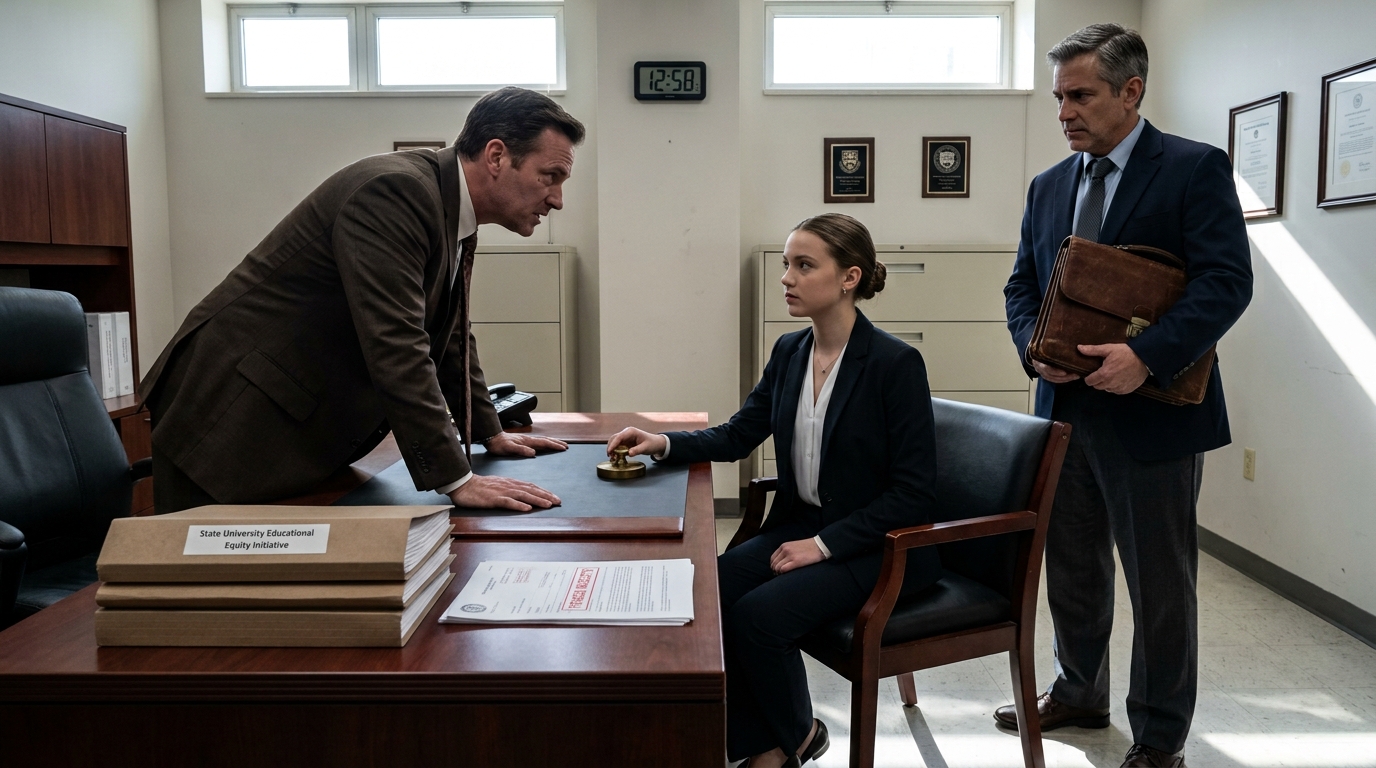
The black ink filled the fountain pen’s reservoir with a smooth, metallic suction. Across the polished desk surface lay three thick, navy-blue expansion folders labeled State University Educational Equity Initiative.
“He’s been sitting in the lobby for twenty minutes, Olivia,” Dr. Eleanor Smith said, leaning her shoulder against the doorframe. She wore her administrative spectacles low on her nose, holding two ceramic mugs of black coffee. “He brought his attorney.”
“Let him sit,” I said, laying the pen flat against the blotter. “The lobby chairs are solid oak. They build character after half an hour.”
“He thinks this is a standard grant review,” Eleanor remarked, setting one mug down beside my files. Her hand brushed mine—a quick, grounding gesture built over eight years of shared dinners, late-night research sessions, and legal battles. “He has no idea the regional audit board handed you full sign-off authority on municipal educational funding last Tuesday.”
“He knows I hold the pen,” I said, tapping the brass barrel against the wood. “That’s enough to bring Richard Sterling out of his sanctuary.”
My father didn’t knock when my assistant finally signaled the release. He pushed the door back far enough for his shoulder to clear, stepping into the room with the measured, heavy stride of a man who owned every room he entered.
He had grown grayer at the temples. His suit was tailored, dark charcoal wool, but the skin around his collar looked slightly loose. Behind him stood a younger man in a sharp navy blazer, clutching a leather briefcase like a shield.
“Olivia,” my father said. His voice still carried that low, resonant baritone meant to shut down debates before they started. “Your assistant said you had ten minutes before your committee hearing.”
“Nine now, Mr. Sterling,” I said, staying seated. I didn’t offer him a chair. “State your institutional business.”
The attorney cleared his throat, taking a step forward. “I’m Arthur Vance, representing the Sterling Municipal Foundation. We’re here regarding the hold placed on our secondary education grant renewal.”
“The hold is administrative,” I replied, opening the top navy folder. “Your foundation’s compliance records from eight years ago contain a discrepancy in municipal outreach funding.”
“Eight years ago?” Father’s brow furrowed, his fingers twitching toward his coat pocket before he caught himself. “That was a minor clerical reclassification during my city council campaign. It was fully resolved.”
“It was buried,” I corrected, turning a page to reveal a scanned document stamped in red ink. “A fifty-thousand-dollar allocation meant for youth shelter transport was diverted into a private digital communications contract. Specifically, a firm that specialized in local IP masking and chat-log management.”
The room went dead silent. The wind outside rattled the high casement windows of the administration building, but inside, neither man moved.
Father’s jaw tightened. A tiny muscle below his left eye twitched—the precise physical tell he used to hide when a contractor caught him underbidding on a job site.
“That has nothing to do with this grant,” Vance interjected smoothly, opening his leather briefcase. “We have full compliance certificates signed by the district supervisor.”
“The supervisor who resigned two months before my father took office?” I asked, looking directly at Richard Sterling. “I don’t need a public stage to audit a public ledger, Dad. I just need the authority to withhold the signature.”
Father stepped in front of his attorney, leaning both hands flat against the front edge of my mahogany desk. The smell of his expensive bay-rum cologne hit me—the exact same scent that had filled the hallway the night he threw my wet jacket onto the porch mat.
“You think you’re being clever, Olivia,” he whispered, his voice dropping into a ragged, dangerous register. “You think you can drag old family garbage into a state funding board?”
“I don’t need to drag anything,” I said softly, picking up the heavy brass paperweight from my blotter and turning it over in my fingers. “The paper trail is already stamped. And Madison’s name is on three of those forged receipts.”
CHAPTER 4: THE CLOSED DOOR MEETING
The heavy bronze overhead lights hummed above the mahogany conference table, throwing sharp highlights across the six leather-bound folders laid in an immaculate row.
Father didn’t sit immediately. He stood at the head of the table, slowly smoothing the lapels of his charcoal suit coat, projecting the practiced calm of a seasoned municipal figurehead addressing a routine inquiry. His attorney, Vance, remained poised with his pen resting on an open legal pad.
“We are here today to address an administrative administrative hold,” Father began, his voice deep, gravelly, and commanding. “A hold placed arbitrarily on a hundred-thousand-dollar educational grant by a director whose personal bias is a matter of documented record.”
Dr. Eleanor Smith sat at the opposite end of the table, her hands folded neatly over a blue folder. “The hold was placed due to an accounting anomaly in the 2018 municipal youth transport fund, Mr. Sterling. The director is enforcing standard compliance.”
“Compliance?” Father let out a dry, breathy chuckle, turning to face the three independent board auditors sitting along the side wall. “Eight years ago, my home was subjected to an unprovoked domestic disruption. My eldest daughter left our care during a personal crisis. I made a private financial arrangement to manage digital security and shield my family from public scandal.”
He reached inside his leather portfolio, withdrawing a thick document wrapped in a translucent plastic cover.
“I have here a certified affidavit,” Father continued, sliding the paper across the mahogany toward the head auditor. “It details the mental instability of Olivia Sterling at age fifteen. It outlines three separate incidents of aggressive behavior toward her younger sister, Madison. The funds in question were allocated for private security consulting—consulting required to protect our household.”
I didn’t flinch. I reached into my coat pocket and pulled out a thin, creased manila folder, setting it squarely in the center of the table.
“You paid fifty thousand dollars from a public youth fund to a digital reputation management firm,” I said, my voice dropping into a quiet, unwavering register. “Not to protect your household. You paid them to scrub the IP logs of the household tablet two hours before the police arrived at the hospital.”
Vance perked up instantly, his pen hovering over his legal pad. “That is an unsubstantiated accusation against a former public official—”
“The tablet was registered to Richard Sterling’s personal council office,” I interrupted, flipping open my folder to reveal two printed sheets of server metadata. “The logs show six messages sent to Madison’s high school group chat at 7:15 PM on October 12th. They were routed directly through his office server, using his administrative credentials.”
Father’s left hand twitched, his thumb digging hard into the seam of his trousers. The color began to drain from his ears, leaving his neck blotchy and red.
“You knew Madison forged those messages,” I said, leaning forward until my forearms rested on the table. “You knew she wasn’t being bullied. But your council appointment was up for confirmation that Thursday, and you couldn’t afford a scandal involving a unstable younger daughter fabricating police reports.”
“That is a lie!” Father snapped, his fist slamming onto the mahogany with a heavy, dull thud that made the water glasses rattle. “You were a disturbed child! We gave you a home, we gave you every opportunity, and you destroyed your sister’s peace out of sheer spite!”
“I have the wax-sealed dispatch log from the precinct,” I said softly, sliding a yellowed envelope across the wood until it hit his knuckles. “It contains your signature, Dad. You signed a non-disclosure request at 11:45 PM while I was still in the emergency room.”
The head auditor picked up the envelope, breaking the red wax seal with a quick, crisp tear.
Father didn’t reach for it. He stood frozen, staring down at my hands on the table, his jaw working silently as the air in the boardroom grew thick and suffocating.
CHAPTER 5: THE UNRAVELING
The brass doors of the elevator slid shut behind her with a soft, pneumatic hiss. Madison looked sleek—tailored cream blazer, polished pumps, hair pulled back into a tight, professional knot—until her eyes hit mine across the white tile corridor.
Her knuckles turned white around the plastic rim of her folder.
“You shouldn’t be in this wing, Olivia,” she said. Her voice lacked the breathy, wavering cadence she used at home; it was dry, sharp, and practiced. “This is a closed-door trustee review.”
“The doors aren’t locked for the board director,” I said, stepping away from the wall.
She took a half-step back, her left heels clicking sharply against the tile. “Dad told me what you’re trying to do. You’re dragging up a old family dispute because you couldn’t stand seeing me finish my degree without dropping your name.”
“I didn’t bring you here, Madison,” I said, pointing toward the frosted glass pane of the committee door. “Your father did. He listed you as the primary beneficiary on the municipal grant application.”
Her face went rigid. “That was an administrative filing for my internship stipend. It’s completely standard.”
“It’s a misdemeanor,” Dr. Eleanor Smith said, stepping out of the side stairwell with a manila envelope resting under her arm. She didn’t raise her voice, but her presence cut right through Madison’s posture. “A conflict of interest filed under a municipal council seat held by your father.”
“You don’t have any standing here!” Madison rounded on Eleanor, her hands flying out, her voice rising into an echo against the corridor tile. “You’re just the driver who picked her up off the shoulder! You have no right to meddle in our family affairs!”
The boardroom door swung open. Father stepped into the hallway first, his face gray and blotchy, followed closely by the three independent board auditors and Vance.
“Madison,” Father rasped, his hand reaching out to grab her elbow. “Keep your voice down. We’re leaving.”
“No, Dad!” Madison yanked her arm out of his grip, her face contorting into a familiar, red-rimmed glare. She turned back toward the auditors, her chin trembling as she tapped the plastic folder against her palm. “She’s lying! She forged those server logs! Olivia’s been obsessed with ruining my reputation since high school!”
The head auditor didn’t blink. He pulled a pair of reading glasses from his breast pocket and looked at the rolled folder in her hand. “Is that the original digital access log from the 2018 municipal tablet, Ms. Sterling?”
“Yes!” Madison shouted, thrusting it forward. “It proves she accessed my private account from her own laptop!”
Vance reached out, his hand practically diving to catch her wrist. “Madison, don’t—”
“Let them look at it!” she shrieked, backing toward the elevator wall. “She was jealous! She was always jealous! She made up the whole storm story just to get attention from social services!”
The head auditor took the folder from her hands, unrolling the printed sheets. He scanned the header, then turned to Vance.
“This printout carries a timestamp from forty-five minutes ago,” the auditor said quietly. “Printed from the council office printer downstairs using Mr. Sterling’s administrative code.”
The hallway went dead silent except for the hum of the ice machine down the corridor.
Madison’s eyes darted from the auditor to Father, then to me. Her mouth opened, but no sound came out. The tears welled up in her eyes—the exact same heavy, dramatic tears she had used on the sofa eight years ago.
Nobody moved to comfort her. Father stood with his chin sunk into his collar, staring down at the tile floor. Vance slowly snapped his briefcase shut and took two steps back toward the stairwell, effectively removing himself from the table.
“The review is concluded,” the head auditor declared, turning back toward the boardroom. “The grant is permanently denied, and the municipal board will be filing a formal audit request with the state prosecutor’s office by four o’clock.”
Madison dropped her hand to her side. The cream blazer looked suddenly two sizes too large for her shoulders. She looked at me, her chest heaving, her lip trembling violently.
“Olivia,” she whispered, her voice cracking into a small, frightened squeak. “Please.”
I pulled my coat tight around my chest, turned my back on them, and walked down the corridor beside Eleanor.
CHAPTER 6: THE QUIET NORMAL
The steam rose in a slow, steady coil from the dark surface of the mug, carrying the deep, rich aroma of roasted chicory. Outside, a light summer breeze rustled the oak leaves in the yard, setting small patches of gold dancing across the pine table.
My phone sat face-down beside my plate. It hadn’t buzzed in three hours.
The state prosecutor’s office had formally opened its review at nine o’clock yesterday morning. By noon, my father had resigned from his municipal seat, issuing a terse, two-sentence press release citing personal health considerations. Vance had withdrawn his firm’s legal representation before the ink on the filing was dry.
Eleanor walked into the nook wearing her worn green cardigan, holding a small plate of buttered toast. She set it between us without a word, taking her usual seat across the corner of the table.
“The regional board confirmed your appointment extension this morning,” she said quietly, picking up her own cup. “Full authority over the next three grant cycles.”
“I saw the email,” I replied, tracing the smooth, cool rim of my ceramic mug with my thumb. “No appeals filed.”
A heavy envelope lay unopened near the fruit bowl—a white business mailer with a hand-written return address from my mother. It had arrived in the afternoon post. No return postage, no official letterhead, just three lines of tight, trembling cursive requesting a private dinner at the diner near the bypass.
I didn’t pick it up. I didn’t open it.
“They’re going to keep reaching out, Olivia,” Eleanor said, her voice soft, pragmatic, and entirely devoid of pressure. “When the dust settles, people like Richard Sterling always try to negotiate a quiet exit.”
“There is nothing left to negotiate,” I said.
I picked up the white envelope, folded it once down the middle without breaking the seal, and slid it into the small metal trash bin under the sink. The lid closed with a quiet, decisive clink.
The front door chimed as the morning paper hit the porch mat. I stood up, walked to the entryway, and picked up the folded newsprint. On the local municipal page, buried beneath a report on road repairs, sat a four-line notice announcing the complete cancellation of the Sterling Foundation’s outreach contract.
There were no headlines. No dramatic public confrontations. No podiums or microphones. Just plain black ink on newsprint, stating cold, unyielding facts.
I walked back into the kitchen, set the paper on the counter, and took my seat beside Eleanor. The coffee was still hot. The room was warm, filled with the steady, quiet rhythm of a house built on truth, patience, and eight years of hard-earned peace.
I took a slow sip from my mug, set it back down on the pine table, and enjoyed the silence.