The Concrete Threat Stopped Cold: How a Retired Army Engineer Used History and Law to Crush an HOA Tyrant
CHAPTER 1: THE LINE IN THE DIRT
The damp Virginia air hung heavy against my skin as I stood at the edge of the crushed-stone driveway. My fingers curled around the scarred wooden handle of a pocketknife in my pocket, opening and closing the blade just enough to keep my breathing steady. Across the property line, pristine white sneakers hovered inches from my grass, desperate not to touch anything authentic.
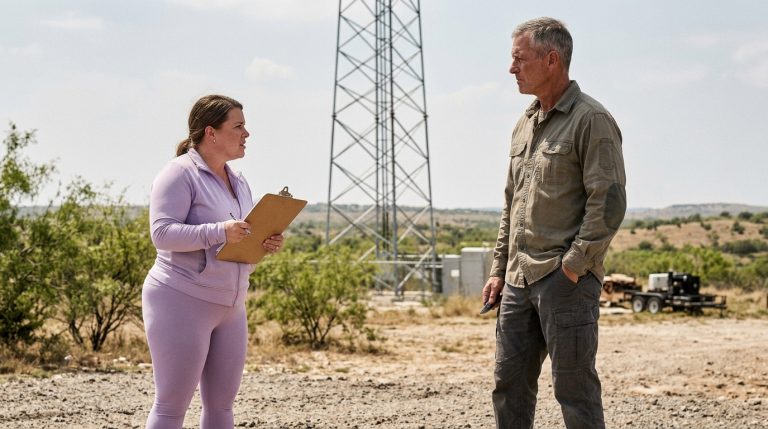
Karen Miller pointed a stumpy, manicured finger straight at the fieldstone entrance of the old root cellar. Her clipboard shook with manufactured outrage as she delivered her ultimatum about filling a century of history with five thousand dollars worth of concrete. I didn’t raise my voice, and I didn’t step forward. Training taught me that when an opponent exposes their flank out of pure arrogance, you let them stretch as far as they can before you pull the rug.
“That cellar was built before your entire subdivision was a blueprint, Karen,” I said, keeping my tone flat and level against the hum of her waiting golf cart. She waved a dismissive hand, wrapped entirely in her self-righteous bubble of suburban authority. History meant nothing to a woman who measured human worth by the uniformity of lawn paint.
She gave me fourteen days to comply with a demand built entirely on hot air and unearned power. I watched her turn on her heel, her pastel pink tracksuit rustling with every stiff stride as she climbed back into her sterile vehicle. The dust settled over the gravel, but the silence she left behind wasn’t empty; it was the exact moment the battle lines were drawn.
CHAPTER 2: THE THREEINCH PAPER TRAP
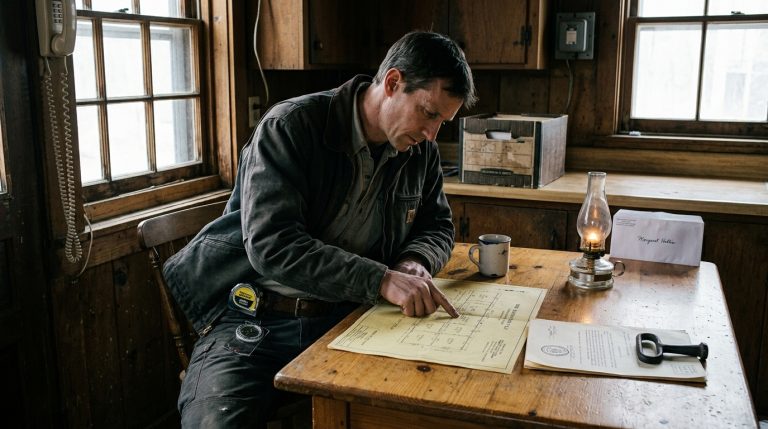
For three solid days, the old farmhouse attic smelled of dry yellow paper, damp Virginia earth, and aging printer toner. I sat at my grandfather’s desk, using digital engineering software to cross-reference foundation cross-sections with 19th-century German immigrant masonry techniques from the Shenandoah Valley. Every photograph, every soil stability report, and every pest control certification was slotted into plastic protector sheets with surgical precision.
The three-inch binder became a physical weapon, weighing heavier than any brick in their subdivision. When I finished compiling the index tabs and historical summaries, the thickness alone was enough to make a bureaucrat sweat.
I walked it straight into the Meadows at Liberty Crossing clubhouse, where the air reeked of artificial potpourri and misplaced authority. Karen sat behind the laminate counter flanked by Brenda and a pompous man named Gary who wore a tucked-in polo shirt like a suit of armor.
I dropped the heavy binder onto the counter with a flat, echoing thud that made the plastic pen holder rattle.
Gary picked it up, grunting under its sheer weight while flipping blindly through engineering schematics he lacked the technical vocabulary to understand.
“This is a lot,” Gary mumbled, his forehead wrinkling.
“I’m a thorough man,” I replied, staring past him directly into Karen’s tightening eyes. “I look forward to the committee’s fair and impartial review at the next meeting.”
I turned my back on them and walked out into the afternoon sunlight, leaving the unexploded ordinance right where they could stare at it. They thought they were dealing with an isolated old veteran ready to fold under the threat of a fine, but every piece of paper in that binder was another nail driven into their little administrative coffin.
CHAPTER 3: THE SHOW TRIAL IN THE BEIGE BOX
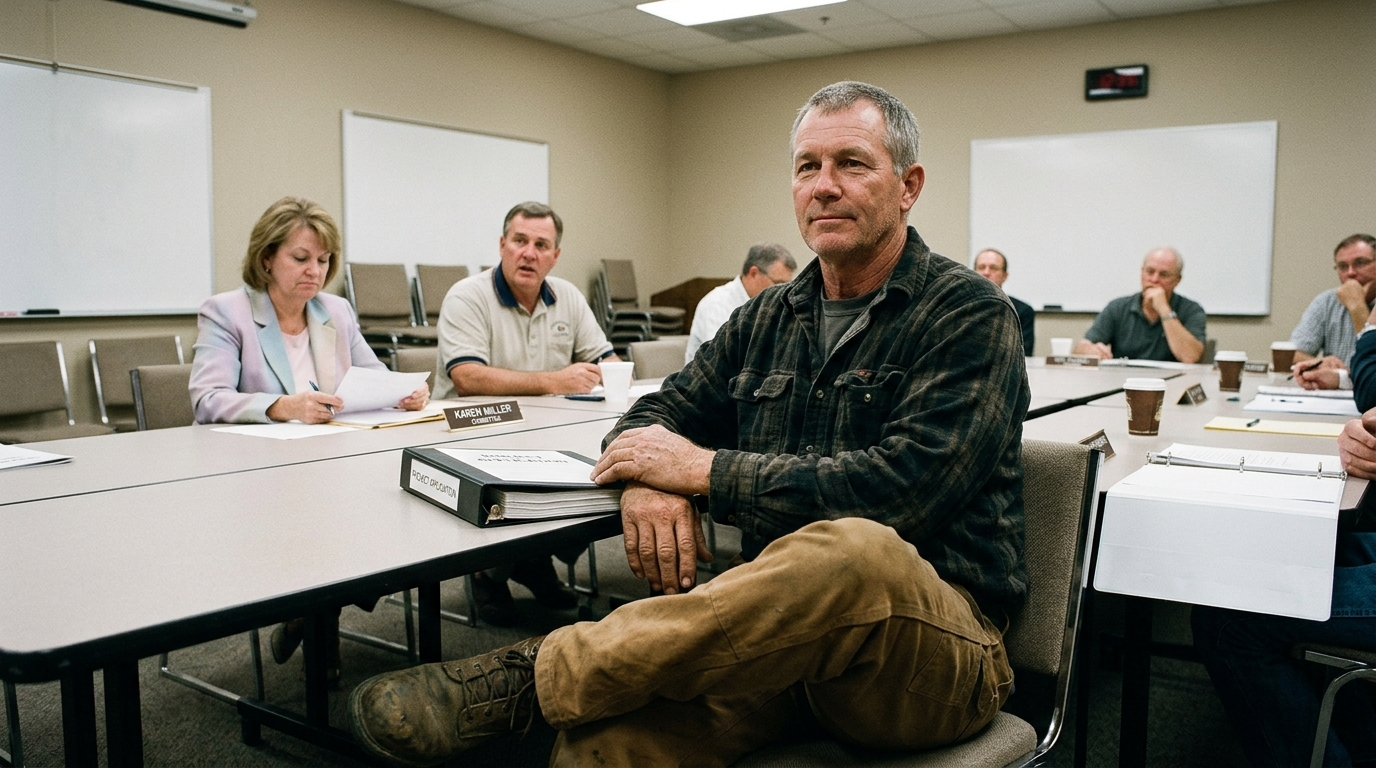
The air in the clubhouse conference room reeked of cheap lavender disinfectant and stale coffee. My three-inch application binder sat squarely in front of me on the edge of the table, closed and completely ignored by the committee members seated at the far end.
Karen adjusted her pastel blazer, her face set into a permanent mold of superiority. Beside her, Gary cleared his throat and picked up a single loose sheet of paper, looking anywhere except directly at my eyes.
“The committee has reviewed the situation,” Gary began, his voice faltering slightly under the heavy silence of the room. “And while we appreciate the level of detail—”
Karen snatched the narrative away before he could finish digging himself out of the hole.
“The structure is a clear violation of aesthetic standards,” she declared, striking the laminate with an open palm. “It does not conform to the visual harmony of the meadows. It is old, it is dilapidated, and it is an eyesore. The committee’s position is unchanged.”
I didn’t blink, keeping my voice low and level across the polished table. “Did the committee review the structural engineering report confirming its stability, or the historical analysis detailing its significance?”
Karen waved a dismissive hand through the air as if brushing away a gnat. “We don’t need to read a novel to know what we see with our own eyes, Mr. Caldwell; a primitive hole in the ground does not fit our vision.”
The other board members nodded in unison like clockwork toys, completely detached from logic or fact. I let the silence hang heavy between us, knowing their absolute refusal to look at the evidence was the final piece of rope they needed.
CHAPTER 4: THE ATTIC TRUNK AND THE FEDERAL CERTIFICATE
The iron latches snapped open with a sharp, echoing metallic click that cut straight through the silent shadows of the rafters. Inside lay decades of farm ledgers, tied bundles of old letters, and a manila folder marked with my grandfather’s neat handwriting.
My index finger slid inside the folder, dragging out a thick card stock certificate embossed with an official gold seal from the United States Department of the Interior.
National Park Service. Registered Historic Place. October 1978.
The quiet humility of a man who never bragged about his contributions to history hit me harder than any physical blow. My grandfather hadn’t just built a root cellar; he had preserved a station on the Underground Railroad, securing federal protection over forty years ago without ever uttering a single boastful word.
“You missed a spot, Karen,” I muttered to the empty rafters, a cold grin forming across my face as I turned the heavy paper over in the dim light.
Tucked behind the certificate was a secondary folder of correspondence detailing local land surveys and architectural covenants from decades prior. It exposed a neat, unbroken trail of administrative bullying and financial kickbacks tied directly to the board’s preferred landscaping contractors. Layer one was cracked wide open, and the toxic leak of Layer two was already seeping onto the floorboards.
CHAPTER 5: THE YELLOW CONCRETE TRUCK MEETS THE BADGE
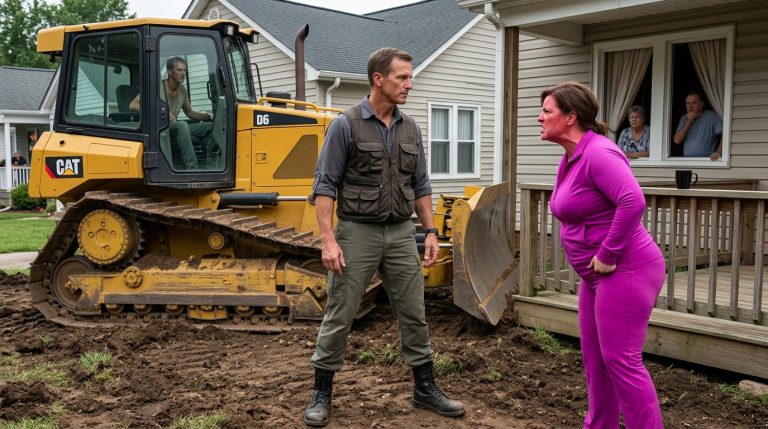
The diesel engine rumbled with a deafening, metallic growl before the air brakes hissed like an angry dragon right in front of my fence. Karen emerged immediately from her pristine white SUV, striding forward in a fuchsia power suit that practically vibrated with aggressive entitlement.
She pointed a manicured finger toward the historic root cellar as her hired driver stepped down from the cab.
“Get the chutes out and fill that dirt hole right now,” Karen barked, her voice shrill against the morning quiet.
I didn’t flinch, stepping directly into the path of the extension arms. “Touch that stone and you are violating federal law under United States Code Title 54,” I said, my voice carrying cleanly across the asphalt.
The driver froze instantly, his hand hovering over the metal clamp while panic flickered across his face.
Karen’s face mottled into an ugly shade of violet as she shrieked—”He is lying, do your job!”
I opened the three-inch binder, sliding the National Register certificate right under her nose for the entire neighborhood to see.
“Federal prison comes with a quarter-million-dollar fine per person,” I added, looking past her toward Gary and Brenda, who instantly shrank back into the crowd.
Cornered and desperate, Karen lunged for her phone and punched 911, screaming into the receiver that she was being accosted by a dangerous criminal. It was the ultimate, fatal miscalculation. Within ten minutes, two county sheriff cruisers rolled up quietly, their red and blue lights dark.
Sergeant Miller stepped out, surveyed the massive yellow mixer, and walked straight over to where I stood holding my evidence. I handed him the binder containing the federal seal and state preservation notices.
The veteran officer flipped through the pages, his expression hardening as he turned back to face the HOA president.
“Ma’am, the only criminal offense about to happen here was ordered by you,” Sergeant Miller said, his voice flat and authoritative. “Send this truck away immediately or prepare to spend your afternoon in handcuffs.”
Karen stood completely paralyzed as public humiliation washed over her like ice water. The driver didn’t wait for a second invitation, climbing back into his cab and throwing the rig into reverse. The war was over, and the wreckage belonged entirely to her.
CHAPTER 6: THE NEW FOUNDATION AND THE DEDICATION PLAQUE
The lawsuit settlement checked every box, securing legal protection, financial restitution, and a permanent ban preventing the ousted board members from ever holding office again.
Arthur Abernathy stood beside me near the edge of the stone path, watching children laugh and run across the grass where the concrete truck had once idled in anger.
“You know,” Arthur said, clapping a heavy hand onto my shoulder with a warm smile, “in a way, we all owe Karen a debt of gratitude.”
I raised an eyebrow, looking down at the heavy granite block supporting the bronze casting. “How do you figure that, Arthur?”
“Her obsession with destroying that little piece of history forced all of us to discover it, cherish it, and come together to protect it,” he replied softly. “You didn’t just save an old root cellar, Mark. You saved the soul of this community.”
The tyranny that once sought to crush our individuality had instead backfired, forging a tight-knit neighborhood that could never be bullied again. I let out a long, easy breath, feeling the last lingering tension smooth out from my mind.
I rested my hand flat against the cool metal of the marker one last time, turning my back to the road as the sun dipped low over the Virginia hills. The work on the homestead was done, the boundaries were secure, and for the first time in three years, the quiet was completely our own.