The Iron In The Ground: How A Retired Engineer Turned Suburban Tyranny Into A Lessons In Gravity
CHAPTER 1: THE LINE IN THE DIRT
The cheap perfume hit my nose before her shadow even crossed the split-rail fence.
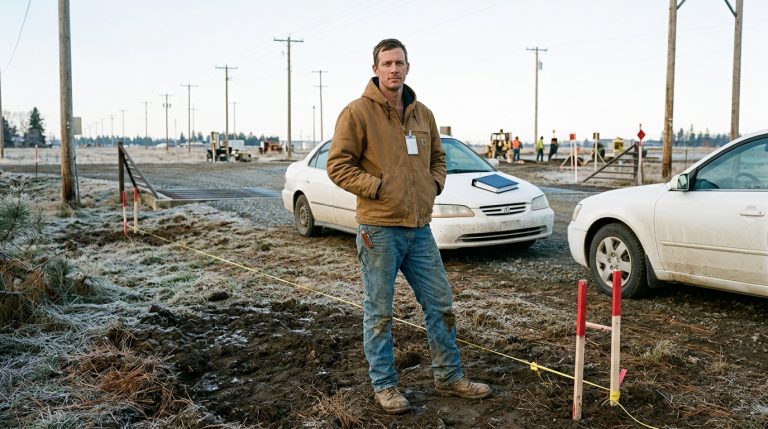
I didn’t turn around. My thumb stayed pressed against the cold, pitted steel of the lower lattice strut, feeling the faint vibration of the sucker rod sliding through its sleeve. Thump. Creek. Thump. Seventy years of continuous pull, pulling cold artesian water out of the granite two hundred feet down.
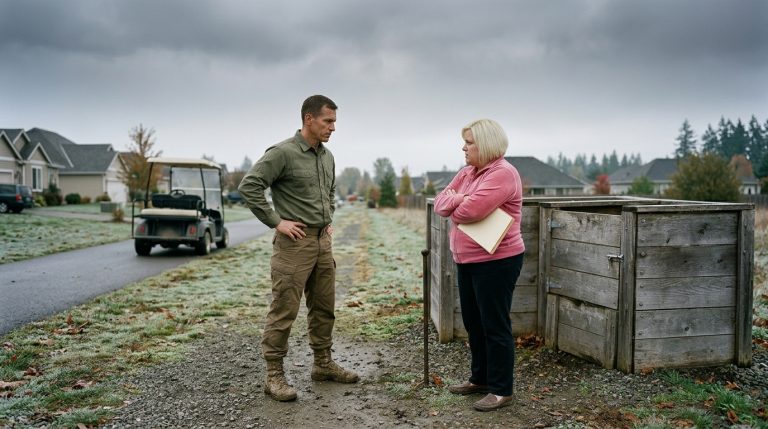
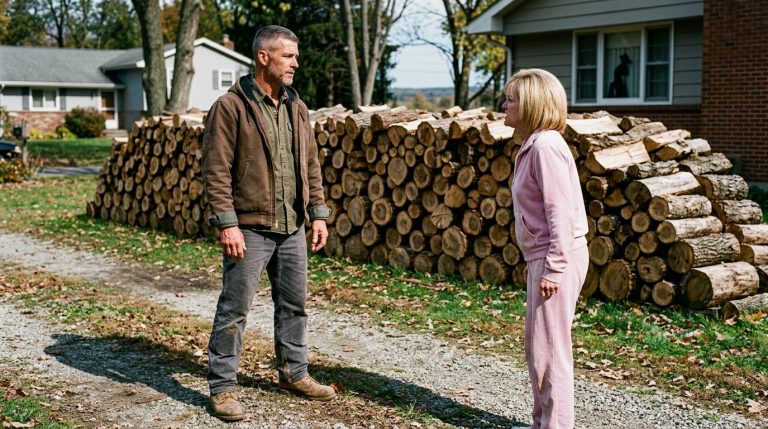
“That rustic monstrosity has thirty days, Jack,” Karen’s voice tore through the quiet morning like gravel dragged across a windshield. “Thirty days to hit the scraper, or the daily fines will look biblical on your statement.”
I turned slowly. She stood right at the property line, her crisp white tennis shoes hovering an inch off my gravel lane as if the bare dirt might stain them. Behind her, Barb and Janice adjusted their oversized sunglasses in synchronized approval, clipboard clamped to Barb’s chest like armor.
“Morning, Karen,” I said. I wiped a smudge of axle grease from my palm onto my canvas work trousers. “Covenants apply to structures erected after 1978. Page four, section B.”
“This neighborhood has standards now,” she said, taking one step forward, her lip curling as she looked up at the sixty-foot tower. “Not farm scrap. The board voted. The notice is in the mail.”
I didn’t argue. I didn’t point toward the green lawns rolling past her driveway, or the misting sprinkler heads already clicking on along the cul-de-sac. I just let my hand drop to the heavy leather-bound folder resting on the hood of my truck. The brass latch gave a dull, dry clack under my knuckles.
“Thirty days,” I repeated softly.
“Thirty days,” she spat, turning on her heel. “Not a morning more.”
I watched the three of them march down the asphalt. Beneath my boots, deep in the casing pipe, the rod kept beating its steady rhythm. I opened the folder, my fingers tracing the yellowed linen paper of Deed Book 412, Page 88. The notary seal from 1978 was still raised on the corner.
She wanted it down. I was going to give her exactly what she asked for.
CHAPTER 2: THE PAPER WALL
The brass latch felt cold against my thumb, the yellowed folder resting heavy under my palm on the hood of the truck.
I didn’t open it again until I reached the roll-top desk in the study. The paper inside was thick, crisp despite forty-eight years of dark storage. Deed Book 412, Page 88. The stamp was dark purple, slightly blurred at the edge where the deputy county clerk had pressed his thumb into the wax back in ’78.
“Permanent utility easement,” I read aloud to the empty room. My voice didn’t carry. It didn’t need to. “Granting perpetual right-of-way and water draw to Lots 1 through 10, serviced by the primary artesian head.”
I opened a fresh manila folder, fed three sheets of heavy bond into the flatbed scanner, and watched the green light pass over the ink. Ten public deeds retrieved from the county portal confirmed it—every single lot on the cul-de-sac carried the exact same rider attached to its title. Karen’s home at Lot 4 included.
A certified letter arrived seventy-two hours later. The envelope was thick, off-white paper embossed with the Oakridge Estates logo—a stylized oak leaf that looked like a corporate tax-shelter mark.
I sliced the top with a steel letter opener. Article 9, Section 4. No structure of a temporary or non-permanent character shall be erected without prior written approval. It gave me thirty days to file a demolition schedule or incur a daily fine of two hundred dollars, retroactive to the date of notice. She’d misspelled her own surname above the signature line.
I pulled a sheet of plain white paper and typed three paragraphs. No anger. No legal threats. Just a precise, mechanical inquiry asking for the architectural review board’s official engineering assessment that classified a sixty-foot, deep-foundation steel tower as a “temporary structure.”
I drove to the main post office on 5th Street, paid for certified mail with return receipt requested, and tucked the green tracking slip into the front sleeve of the leather folder.
That evening, I walked down the gravel drive toward the cul-de-sac island. Marcus was standing in his open garage, a blue shop rag in hand, carefully wiping down the intake manifold of an old tractor engine. He looked up, his jaw set, and nodded once toward the corner of my boundary line.
“She’s calling a meeting for Thursday,” Marcus said, his voice a low rumble above the quiet hum of his garage radio. “Brought clipboard flyers to every mailbox herself.”
“Let her call it,” I said, leaning against the doorframe.
“She thinks you’re going to fold, Jack,” he said, turning the rag over in his hands. “She spent twenty minutes telling Mrs. Gable that your tower drops property values by fifteen percent.”
“Property values don’t mean much when the tap runs dry, Gunny,” I said.
Marcus paused, his eyes narrowing slightly as he looked past me toward the tall steel lattice turning slowly against the orange sunset. “That well feeds the whole line?”
“Every drop,” I said. “And on Thursday, she’s going to tell the whole street how much she wants it gone.”
CHAPTER 3: THE TRAP AT THE ISLAND
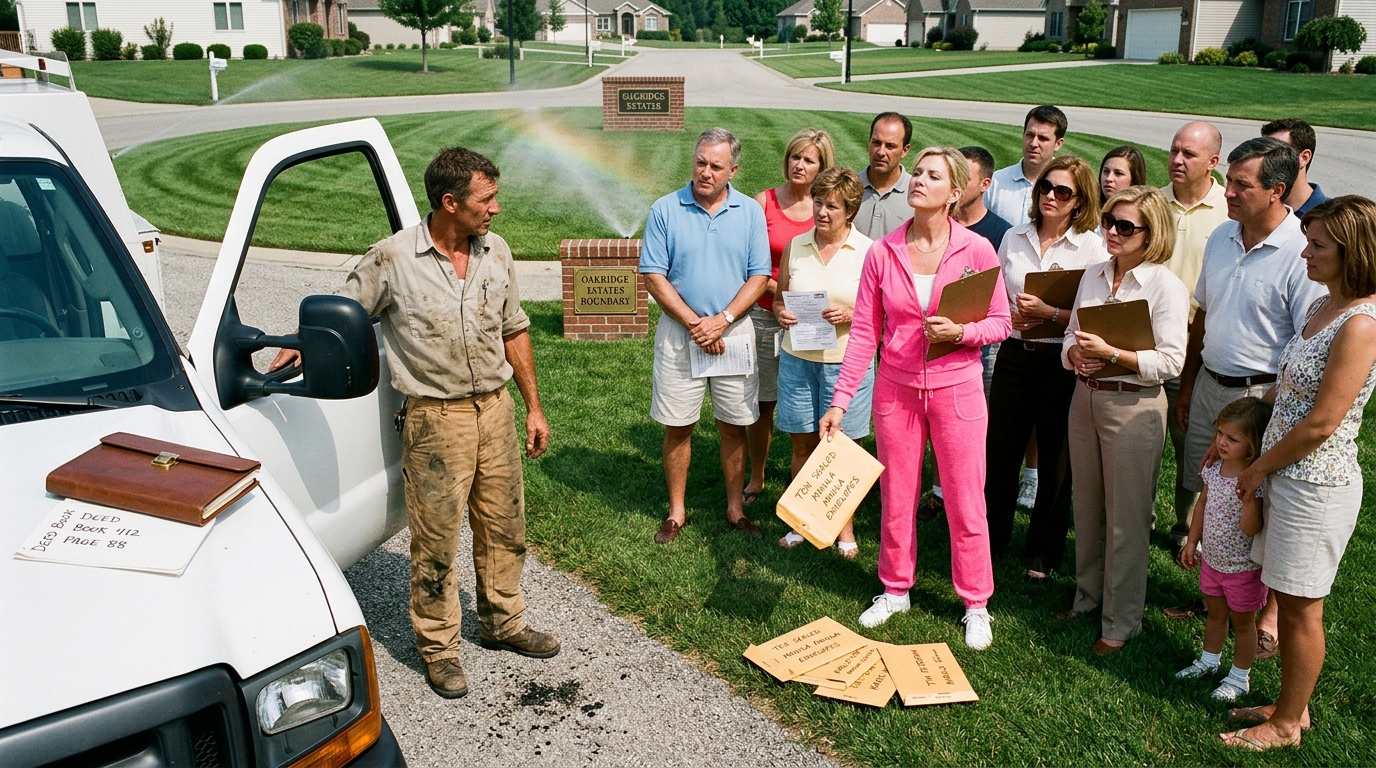
Standing at the edge of the cul-de-sac island, the manila envelope tucked under my arm felt light against my ribs while Karen raised her clipboard high like a gavel.
“We are here today to protect every single homeowner’s equity on this street,” Karen’s voice boomed across the fifteen neighbors gathered on the grass. She smoothed down the front of her neon pink tracksuit. “For too long, certain individuals have assumed that historical sentimentality overrides active aesthetic covenants.”
I stayed on the curb, thumb hooked into my belt loop, watching Barb and Janice hand out printed copies of the violation notice.
“Article Nine, Section Four is explicit,” Karen continued, tapping the top aluminum clip of her board. “Unapproved temporary industrial blight lowers adjacent valuations by up to twelve percent. The board has issued its final notice, and compliance is non-negotiable.”
Tim Peterson shifted his weight near the back, his young daughter clinging to his pant leg. “Karen, my kid’s plastic slide got us a two-hundred-dollar fine last month. That tower’s been back there since the Bicentennial. How is a seventy-year-old steel structure temporary?”
“A violation is a violation, Tim,” Karen snapped, her lips pressing into a thin line. “We follow the written bylaws, not urban legends.”
“It’s not a rumor,” Marcus said. His voice didn’t rise, but the low rasp stopped Barb mid-stride. He stepped off his porch, hands jammed into his work jeans. “It’s in the county property filings. Signed by Henderson in ’78.”
“The current board operates on active bylaws, Marcus,” Karen said, her chin tilting upward as she adjusted her posture. “Old paper doesn’t supersede current board authority. If we let one person flout the rules, where does it stop?”
I pulled the ten sealed manila envelopes from under my arm and stepped onto the grass.
“Deed Book 412, Page 88,” I said, handing the first packet directly to Tim Peterson. I passed the second to Marcus, then walked down the line of neighbors, dropping one into every open hand. “Filed with the county clerk before this subdivision was surveyed.”
Karen’s brow furrowed as she watched the envelopes open. “Whatever unapproved propaganda you’re distributing won’t overturn a legal board vote, Jack.”
“It isn’t propaganda, Karen,” I said, holding out the final packet toward her. She refused to reach for it, letting it drop to the grass at her white sneakers. “It’s the utility easement tied to your deed. Page three specifies the primary water line.”
“This meeting is adjourned,” Karen said sharply, her fingers digging into the edge of her clipboard until her knuckles turned white. “The fine schedule begins in ten days, and removal remains mandatory!”
She turned and marched toward her driveway, her two lieutenants hurrying behind her.
Tim looked up from the open sheet in his hands, his eyes widening as he read the highlighted seal. “Jack… is this saying what I think it’s saying?”
“Don’t waste your tap water this week, Tim,” I said softly, turning back toward my gravel drive. “Fill a few buckets.”
CHAPTER 4: THE SURGICAL CUT
Standing beside the red thirty-ton crane in the driveway at 9:58 AM, watching the crew adjust the rigging cables, I checked my wristwatch as the second hand ticked toward the twelve.
Across the asphalt, Karen stood near her folding donut table in a yellow sun hat, holding her smartphone up to record the scene. Barb and Janice sat in lawn chairs beside her, sipping coffee from paper cups like spectators at a parade.
“Rigging is set on the upper hub, Jack,” Mike called down from his ladder harness. He held a fourteen-inch socket wrench in his right hand. “Holding tension.”
“Disengage the drive shaft linkage,” I said. “Four housing bolts. Leave the tower intact.”
Mike leaned into the housing casing. A sharp metallic crack echoed over the quiet street as the first bolt broke torque, followed by the dry drop of heavy steel into his tool bucket. Clank. Clank. Clank.
At 10:00 AM, Mike braced his foot against the platform rung and jammed a steel pry bar into the coupling gap. A harsh, grinding screech of iron against iron cut through the air as the gearbox drive shaft popped free from the pump rod linkage.
The long steel sucker rod inside the well casing dropped a half-inch with a heavy, subterranean thump that shuddered through the gravel under my boots. High above, freed from the water resistance two hundred feet below, the windmill blades began to spin silently in the breeze.
The rhythmic thump-creek-thump vanished.
Across the grass, Barb stood up abruptly, pointing toward her front yard. “Karen, my sprinkler heads just dropped into the grass.”
“My hose lost pressure!” a neighbor yelled from two doors down, wiping suds off his windshield. “Hey, what’s going on with the water?”
“It’s just a momentary line bleed,” Karen called out, her smile tightening as she lowered her phone. “Someone call the municipal water authority. They must have a main break down the road.”
“There is no municipal line, Karen,” Marcus called out from his porch railing, holding a mug of dark coffee. “Never was.”
Gary, another neighbor, jogged out of his front door, his face pale. “Karen, the toilets aren’t refilling. None of them.”
Karen’s head snapped toward my driveway. Her face drained of color as she looked at the free-spinning blades, then down at the gravel where the sucker rod had dropped cold into the casing.
“The Oakridge Estates line runs off my grandfather’s artesian well,” I said, stepping to the edge of the driveway with my hands behind my back. “The one driven by the equipment you demanded I dismantle. You ordered the power source disconnected.”
A heavy, suffocating silence fell over the cul-de-sac, broken only by the quiet hum of the idling crane engine.
CHAPTER 5: THE PUBLIC TRIAL
Standing on the library meeting room floor, David Chen beside me in his charcoal suit, facing the crowd of angry homeowners, I let the fluorescent lights hum against the heavy silence.
Karen sat behind the folding head table, her knuckles white against a yellow legal pad. Her eyes darted toward the back room where two local TV news crews were adjusting their tripod mounts.
“This board acted within its perceived architectural mandate,” Karen said, her voice strained, pitch rising as she pointed a manicured finger at me. “He deliberately staged an infrastructure outage to sabotage community leadership! He knew the well was tied to those lots!”
“You signed the certified receipt for the 1978 easement copy three weeks ago, Karen,” Tim Peterson shouted from the third row, slamming his open palm onto his chair armrest. “My six-month-old hasn’t had bath water in thirty-six hours!”
“The board lawyer was never consulted!” Barb blurted out from the side table, backing away from Karen by two full feet. “She told us it was a routine aesthetic cleanup! She said there was zero legal risk!”
David stepped forward, resting one hand flat on the podium. He didn’t raise his voice, but the sharp precision of his tone cut through the shouting instantly.
“Under Section 4 of county property law, reckless interference with a recorded utility easement creates direct personal liability for board members acting outside legal counsel,” David said, sliding a four-page contract draft across the table. “An emergency municipal connection through the granite bedrock will take six months and cost each lot twenty-five thousand dollars in special assessments.”
A collective groan rippled through the room. Neighbors turned toward Karen, their expressions shifting from irritation to cold, focused fury.
“We demand a vote of no confidence,” Marcus said, standing up in the aisle, his broad shoulders blocking the side exit. “Right now.”
Karen looked at the camera lens pointed at her face, her jaw trembling as she reached for her water glass, her fingers slipping against the wet glass surface. “You can’t just—”
“All in favor,” Marcus barked, raising his hand.
Every single arm in the room went up. Barb and Janice kept their hands down, staring at the floor in silence.
“The motion carries,” Marcus said flatly. “You’re off the board, Karen.”
David tapped the contract on the table twice. “Mr. Miller is willing to execute a temporary utility agreement to restore pump power tonight. On three conditions: a formal acknowledgment of his grandfather’s easement, full indemnification, and a monthly service fee paid directly by the association.”
Tim Peterson stood up first. “Sign it. Sign it right now.”
Karen grabbed her handbag, her chair screeching violently against the linoleum as she bolted toward the side door without looking back.
CHAPTER 6: THE QUIET CREEK
Standing on the front porch with a mug of hot coffee, listening to the rhythmic thumping of the windmill gearbox in the morning air, I watched the sun hit the top lattice of the sixty-foot tower.
Down at Lot 4, a yellow rental box truck sat idling in the driveway. Dennis, Karen’s quiet husband, carried the last armful of folded lawn chairs toward the rear ramp, his head low, avoiding eye contact with the street.
Karen stepped out onto her front porch one last time, holding a ring of house keys. She didn’t look up at the windmill. She didn’t look down the cul-de-sac toward Marcus’s workshop. She climbed into the passenger side of the truck, slammed the door, and stared straight through the windshield as Dennis backed down the gravel drive.
The sound of their tires faded past the main entrance sign, leaving only the quiet wind rustling through the oak trees.
Marcus walked across the property line carrying a steel grease gun and a clean shop rag. He set the grease gun on the bench near the pump house door and leaned his shoulder against the timber frame.
“Interim board approved the final utility service contract twenty minutes ago, Jack,” Marcus said, wiping a thumb across his brow. “Dues cover the power draw and monthly maintenance reserve. Clean and clear.”
“That works, Gunny,” I said.
Across the lane, Tim Peterson walked out to his lawn, turned his garden hose nozzle, and let a clean, clear stream of water fill a bright blue toddler pool on the grass. His daughter laughed, splashing her boots into the water as it filled.
I took a sip of dark coffee, feeling the warm steam rise off the rim.
Deep under the gravel, the artesian well held its steady head pressure, feeding ten homes quietly through two hundred feet of solid granite.
The old steel blades turned above us with a slow, steady creek-thump, creek-thump.
No arguments. No fines. Just the simple weight of iron in the ground doing its work.