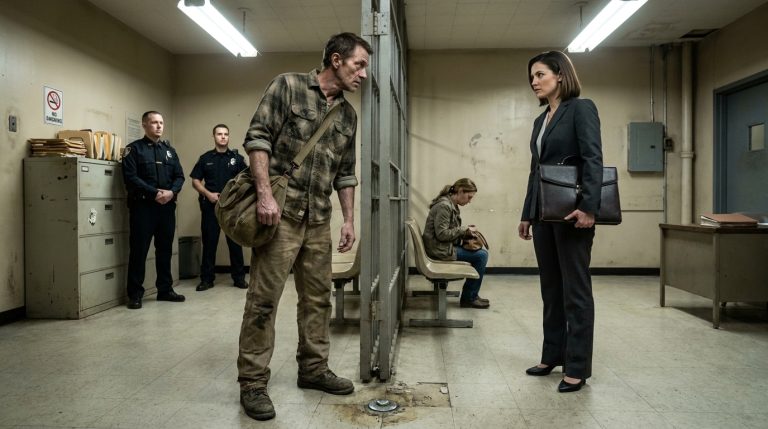
The Paperwork Siege: A Tactical Dismantling of a Tyrant’s Petty Empire in Oakidge Meadows
CHAPTER 1: THE WEIGHT OF THE EMBOSSED WORD
The fine notice sat on the mahogany surface of my desk, a rectangle of white cardstock that felt colder than the air conditioning in the room. Twelve hundred dollars. The figure was typed in a font so precise, so devoid of human empathy, it felt like an insult directed at my marrow. I didn’t reach for it with my hands. I stared at the embossed Oakidge Meadows Homeowners Association logo, the gold foil catching the late afternoon sun, reflecting a sliver of light that cut through the shadows of my office like a blade.
I didn’t need to read the fine print to know what it said. “Persistence of debris,” “Egregious violation,” “Failure to maintain aesthetic harmony.” The language of the petty dictator. The storm had left eight inches of water in its wake, and the mud on my driveway wasn’t a failure—it was a watermark, a signature of the violence the earth had visited upon this five-acre patch of ground.
My hand finally moved, slow and deliberate, reaching for the letterhead. It was heavy, a tactile reminder that Karen Bishop didn’t just send mail; she issued edicts. I traced the edge of the paper. It was sharp enough to draw blood if I gripped it tight enough.
In the kitchen, the hum of the refrigerator filled the void of the house. I kept my breathing steady, the same cadence I used when prepping for a bridge inspection under heavy fire. My mind wasn’t in the house anymore; it was on the driveway. I saw the brown slurry, the way the sediment had pooled in a perfect fan shape against the slope of the gravel. It wasn’t natural runoff. I knew the geometry of the land—I had built the drainage systems that defined it.
The mud had come from the back, from the direction of the creek, and it had been directed with a precision that bordered on the sadistic.
I looked back at the letter. If she wanted a war over twelve hundred dollars, I was going to provide her with a war of attrition. I didn’t grab a pen to write a rebuttal. I didn’t reach for the phone to call her and scream. I reached for the ledger on the corner of my desk, my fingers resting on the spine of the property survey.
The front door clicked, the sound muffled by the heavy drapes. Sarah was home. She walked into the room, her presence a soft interruption in the static of my focus. She looked at the letter, then at my face, her eyes narrowing as she read the stillness in my posture.
“Mark?” she whispered, the question hanging in the air like smoke.
I didn’t answer. I just pushed the letter toward the center of the desk, its shadow darkening the map of my own land. “She’s testing the structural integrity of this neighborhood, Sarah,” I said, my voice cold, the edges of it filed down to nothing. “She thinks I’m a variable she can solve with a fee. She doesn’t realize that when you dam a river, you don’t stop the water. You just wait for the pressure to break the bank.”
I stood up, the chair scraping against the hardwood with a sound like grinding teeth. I didn’t need a shovel. I needed to see the point of origin, and I needed to be certain of who had held the spade.
CHAPTER 2: THE ANATOMY OF A SCAR
The silence of the house had teeth. It was a sterile, controlled quiet that felt like an intrusion, pressing against the windows from the outside as if the neighborhood itself were leaning in to listen. I didn’t look back at Sarah. I didn’t need to explain the mechanics of what I was doing, because she understood the language of my silence. When I left the office, the leather portfolio felt like a holster against my side.
I stepped out into the damp, heavy air of the evening. The storm had passed, but it had left the world bruised. The ground beneath my boots felt wrong—spongy, uncooperative, and yielding in places where the earth should have been packed tight by years of natural settling. I stood on the porch, the porch light casting a weak, jaundiced glow over the driveway.
There it was. The smear of brown clay, fanned out like a warning.
I walked down the steps, each footfall deliberate. My eyes were calibrated to detect anomalies—a slight shift in gradient, the unnatural displacement of topsoil, the way water didn’t just flow, but intended. I wasn’t just a homeowner looking at a mess. I was looking at a hydraulic failure. I crouched, my fingers brushing the edge of the muck. It wasn’t just rain-washed soil from the road; it was thick, sediment-heavy clay, the kind that only surfaces when deep layers are disturbed by heavy machinery.
The memory of the creek—the way it used to meander, a gentle, whispering artery along the eastern boundary—flashed through my mind. It was a sharp, phantom pain, like a severed nerve. I could see the original path in my mind’s eye, the way it hugged the roots of the ancient oaks, feeding the seasonal marshland. Now, there was only the sharp, agonizing geometry of the new runoff.
I started to walk. I didn’t head for the garage to grab a rake or a pressure washer. I moved toward the eastern boundary, my boots sinking into the saturated turf. The smell of pine was masked by the pungent, metallic tang of raw earth. The deeper I went, the more the silence of the woods felt charged.
As I crested the small rise that overlooked the undeveloped county land, the landscape changed. It wasn’t the forest I had maintained for years. It was a battlefield of broken timber and raw, red gouges. I saw the treadmarks first—wide, deep, and aggressive. They were fresh enough that the rain hadn’t yet smoothed their jagged edges. Someone had brought a tractor, maybe a backhoe, into a space where no heavy equipment should have ever set a pivot.
The “beautification” Karen had boasted about was a lie written in mud.
I pulled my phone from my pocket, the light of the screen momentarily blinding in the darkness. I didn’t just take a photo. I took a measurement. I walked to the new channel—the straighter, faster, crueler path that had been carved into the ground. It was an engineering amateur’s nightmare. By straightening the creek, they hadn’t just changed the flow; they had increased the velocity of the water, turning a seasonal trickle into a precision-engineered fire hose aimed directly at my foundation.
My chest tightened, a cold, calculated fury rising in my throat. I recorded the GPS coordinates, the angle of the bank, and the distinct lack of proper shoring. This wasn’t negligence. Negligence implies a lack of care. This was an active, deliberate intervention.
I stopped at the point of origin. A crude berm, a chaotic pile of rock and dirt, stood like a tombstone to the original creek. It was ugly, functional, and undeniably malicious. I could see the work of a man who knew how to push dirt but had no concept of the forces he was manipulating. It was the mark of someone who had been paid to do a job quickly, cheaply, and without questions.
I knelt by the berm, my hand resting on a jagged chunk of limestone that had been shoved into the earth to hold back the water. The rock was cold, slick with a fine film of silt. I looked at the way the water had bypassed the natural path, the force of it tearing at the roots of the trees I had spent years nurturing.
A twig snapped behind me.
I didn’t turn around instantly. I froze, my muscles locking into a state of heightened awareness. The sound was too heavy for a deer, too deliberate for the settling of the woods. I waited, my heartbeat steady, the logic of the defense hardening in my mind. I was on the edge of my property, within my rights, but I was also on the precipice of a much deeper truth.
The wind shifted, carrying the faint, distant scent of exhaust. It was a subtle, almost imperceptible detail, but it was out of place in the sterile, rain-washed air of the HOA commons. Someone had been here recently. Someone was watching the work they had done to make sure it was holding against the current.
I stood up, turning slowly, my face composed into a mask of indifference. I didn’t see anyone, just the shifting shadows of the trees that seemed to lean in, curious about the intruder in their midst. I looked back at the berm, then at the path leading back toward the neighborhood. I had the coordinates, the photos, and the physical proof of the breach.
I didn’t need to confront them tonight. I needed to document, to analyze, and to build the pressure. The mud on my driveway was just the first note in a symphony of consequences. I walked back toward the house, my footsteps rhythmic and heavy, the cold air biting at my skin. The war wasn’t in the mud anymore; it was in the intent. And I had just found the first link in a chain that led straight back to the clubhouse doors.
I reached the porch, the light once again hitting the embossed letterhead in my pocket. I wouldn’t be paying that fine. I would be using it to ensure the HOA couldn’t afford to pay anything else.
CHAPTER 3: THE CLUBHOUSE JUDGMENT
The drive to the Oakidge Meadows clubhouse was short, but every mile felt like a calculated ascent toward a summit. The neighborhood was quiet, the houses looming behind manicured lawns like silent spectators. In the passenger seat, the leather portfolio contained the geography of a disaster—my disaster, which I had reclaimed and re-engineered into theirs. I didn’t turn on the radio. I didn’t need the distraction of news or music. I needed the clarity of the plan.
I pulled into the parking lot. It was nearly full. Karen’s vanity project—the Patriots Perch picnic area—wasn’t the draw tonight. Fear was. I watched through the windshield as residents exited their vehicles, their expressions guarded, their conversations hushed. They knew something was wrong, even if they didn’t know the specifics. They felt the instability in the neighborhood, the pervasive, creeping sense that the rules they lived by were being enforced by a broken machine.
I checked the time on the dashboard: 6:59 PM. I waited until the second hand ticked over to the top of the hour before I stepped out of the truck.
The air outside was crisp, smelling faintly of the nearby creek. I could hear the faint, erratic movement of water in the distance—the sound of a system under stress. I walked toward the clubhouse entrance, my stride measured. I wasn’t there to make a scene; I was there to deliver a verdict.
Inside, the room was a sterile, beige expanse that smelled of industrial lemon cleaner and stagnant, recycled air. Karen Bishop stood at the front, draped in her usual air of unearned authority, her hands resting on the long table like talons. Gary, the nervous board member, sat to her left, his eyes darting toward the door with every entrance. Brenda sat to her right, her jaw set in a line of forced resolve.
I didn’t take a seat in the back. I walked down the center aisle, the sound of my boots on the thin, commercial-grade carpet acting as a metronome. The conversations around me died out, replaced by a sudden, sharp stillness. I caught Karen’s gaze as I approached. For a split second, her composure flickered—a hairline fracture in her mask. She had expected me to send an angry email or perhaps show up with a loud, disorganized protest. She hadn’t expected me to arrive with the presence of a man who held the blueprints to her destruction.
I stopped at the front row, directly in her line of sight, and placed the portfolio on my lap.
“Mr. Henderson,” Karen said, her voice thin but attempting a veneer of practiced indifference. “You’re just in time for new business.”
“I am,” I replied. My voice wasn’t loud, but it projected, carrying the weight of professional certainty. I didn’t offer a greeting. I didn’t offer a platitude.
She began the meeting with the rehearsed efficiency of a despot. She spoke of maintenance, of compliance, of the sanctity of the community guidelines. She gestured toward the screen behind her, showing slides of perfectly trimmed hedges and compliant paint swatches. It was a performance designed to reinforce her authority through the mundane. She was trying to frame the narrative before I could introduce the reality.
When she finally turned to the outstanding violations, she picked up a folder with a flourish. “We have several matters to resolve regarding property maintenance,” she announced, her eyes snapping toward me. “Specifically, the ongoing violation concerning the sediment accumulation at the Henderson property. As the owner has failed to rectify this despite previous warnings, the board is prepared to authorize a lean on the property to cover the costs of community-ordered cleanup.”
The room exhaled. It was a collective sigh of discomfort. I felt the gaze of my neighbors on my back, a mix of pity and fear. They were waiting for me to break. They were waiting for me to lash out, to raise my voice, to provide the spectacle that would justify her punishment.
I stood up slowly.
The movement was deliberate, stripping the tension from the room and re-concentrating it on me. I didn’t raise my voice. I didn’t look at the board with anger. I looked at them with the detached, analytical focus of an engineer reviewing a failed structural component.
“That’s an interesting proposal, Karen,” I said, the stillness of my posture contrasting with the agitation on the board. “But it relies on a faulty premise. You’re billing me for the symptom, but you’ve conveniently ignored the source.”
I walked toward the table, the portfolio held steady in my hands. I saw Gary shift, his chair scraping against the linoleum, and I knew then that the internal pressure of the board was already failing. He was the weak point.
“I have the property survey here,” I said, opening the portfolio on the table directly in front of them. “And I have the topographical maps that show exactly how the hydraulics of this land have been altered in the last three weeks.”
I laid the first photograph on the table. It was a high-resolution, aerial shot of the redirected creek, the jagged, ugly scar of the new channel standing out in stark, unnatural contrast to the surrounding forest. The room went cold.
“This,” I continued, my voice even, “is not a landscaping improvement. This is an unpermitted diversion of a state waterway. And it was performed on HOA common land, under the direction of this board.”
I didn’t wait for her to object. I didn’t give her the oxygen. I laid down the next document—the crude, hand-drawn sketch of the creek diversion, the one I had found in the records. I knew the board hadn’t seen it, and the sight of it, in all its amateur, unprofessional ugliness, sent a visible ripple of shock through the room.
“When you decided to build your picnic area,” I said, leaning in, my voice dropping to a level that forced everyone in the room to lean forward, “you hired a contractor to alter the natural drainage system of this property. You didn’t file for a permit. You didn’t conduct an impact study. And you didn’t consider that by straightening that creek, you turned a natural feature into a hydraulic weapon aimed at my foundation.”
Karen’s face was a study in controlled collapse. She gripped the edge of the table, her knuckles white. “This is irrelevant,” she snapped, though the authority was gone from her tone. “The rules state that the board has the right to manage common area drainage—”
“The law states,” I interrupted, my voice sharp enough to cut the air, “that no one, not even an HOA, has the right to divert a waterway in a way that causes damage to downstream properties. That is a liability. It is a tort. And in this case, it appears to be a pattern of gross negligence.”
I looked at the gathered homeowners. They were no longer spectators. They were witnesses. I saw the realization dawning on their faces, a collective awakening. They weren’t just watching a fight; they were seeing the mechanisms of their own community being exposed.
“I’m not paying the fine, Karen,” I said, turning back to her, my gaze absolute. “And I’m not waiting for a lean. I’m here to formally request an audit of the expenditures related to this project. I want to see the contract, I want to see the permit applications, and I want to see exactly who authorized the diversion of common funds into this destruction.”
The room was silent. So silent that I could hear the hum of the overhead lights. Karen had no counter-move. She was stuck in the loop of her own arrogance, unable to acknowledge the error, unable to pivot, and unable to see the trap I had already closed around her. She looked at Gary, then at Brenda, and for the first time, she looked entirely alone.
I stood my ground, my hands resting on the edge of her table. The paperwork was just the beginning. I had the facts, I had the law, and now, I had the audience. The war had moved out of the woods and into the light.
CHAPTER 4: THE PAPER TRAIL OF GREED
The walk back to my truck was a blur of adrenaline and the cold, sharp clarity of a hunter who has finally found the scent. I didn’t acknowledge the whispers behind me as I left the clubhouse. The sound of the door clicking shut behind me was the final note of that scene; I was already moving to the next. The keys felt heavy in my palm as I unlocked the Polaris, the engine’s idle vibration traveling up through the frame and into my boots.
I didn’t drive home. I drove to the county records office, a place of fluorescent lights and the smell of stale coffee and trapped time. I had the FOIA request pending, and I had the internal knowledge of what I needed to find: the financial link between the HOA’s “improvement” project and the company that had executed it.
The office was largely empty, save for the hum of a server in the back and the weary clerk at the front desk who looked at me with the kind of practiced disinterest that only years of public service can instill. I didn’t waste time with pleasantries. I leaned over the counter, my presence anchoring the space, and laid out the specific request numbers I had compiled.
“I’m here for the invoices on file for the Oakidge Meadows HOA common area upgrades, specifically the Patriots Perch picnic project,” I said. My voice was a steady, low-frequency hum that cut through the silence.
The clerk didn’t look up immediately. She tapped a few keys, the clacking sound sharp in the quiet. “That’s a large file, sir. It might take some time to—”
“I have the tracking numbers,” I countered, sliding a sheet of paper across the laminate counter. “I’m prepared to wait.”
She glanced at the numbers, then up at me, sensing the lack of wiggle room. She disappeared into the back stacks, and I remained, standing perfectly still. My internal clock was ticking. I knew Karen would be scrambling. By now, she would be on the phone with her lawyer, or perhaps her brother-in-law, trying to shore up the foundations of a house of cards that was already leaning in the wind.
When the clerk returned, she didn’t just have a folder; she had a heavy, bound stack of xeroxes. I took the stack to the nearest laminate table and sat down. I didn’t flip through them randomly. I used the strategy of a structural engineer analyzing a building failure—I looked for the stress points.
The invoices were messy, filled with the kind of sloppy, unprofessionally rendered data that usually indicates an attempt to bury a truth under a mountain of banality. I found the K&G Landscaping header—a crude, poorly printed logo. I started comparing the line items against the market rates for excavation and drainage remediation. The numbers were inflated, bloated by nearly forty percent, but that was just the appetizer.
Then, I saw the signature.
I took a breath, the air in the room suddenly feeling thin. The signature on the authorization form wasn’t just Gary’s; it was Karen’s. And below that, in a slightly different ink, was the countersignature of a ‘Kevin Gable.’ I pulled out the copy of the conflict-of-interest disclosure form I had kept in my portfolio. I placed it side-by-side with the invoice.
The discrepancy wasn’t just in the names. It was in the handwriting. The address listed for K&G Landscaping was a PO Box in a neighboring county, but the bank account routing number on the bottom of the check copy I had recovered was listed under a personal account name—one that matched the surname Bishop.
My pulse didn’t quicken. It slowed, locking into a state of absolute, icy focus. It wasn’t just incompetence. It was an extraction.
I felt the physical weight of the paper, the texture of the toner, the grain of the cheap, off-white copy paper. It was a mundane object, but in the context of the damage to my land, it was a weapon. I began to photograph each page, the flash of the camera reflecting off the glass of the table, illuminating the room for a split second every time the shutter clicked.
“Everything alright here?” the clerk asked, her voice hovering just behind my shoulder.
“Perfect,” I said, not looking up. “I’m just documenting the progress of a collapse.”
I packed the files back into my portfolio, the weight of the truth sitting securely against my ribs. I had the missing link. The drainage project wasn’t just a failed attempt to stop a soggy lawn; it was a siphon, a mechanism designed to drain the HOA’s treasury into the private accounts of the president’s family.
I stood and walked out of the records office, the automatic doors sliding open to the cool, dark night. The parking lot was empty now. I had what I needed to trigger the escalation. My truck waited for me, a sturdy, utilitarian machine that had never failed me, much like the logic I was now applying to this situation.
I didn’t start the engine right away. I sat in the driver’s seat, the darkness of the cabin acting as a sensory deprivation chamber. I replayed the meeting in my mind, the way Karen’s hands had trembled, the way she had looked at the board members as if they were nothing more than props in her play. She was cornered now. She was already flailing, and she had no idea that I hadn’t even shown her the true scope of the evidence I possessed.
My phone buzzed in the center console. A text from an unknown number. “You’re playing a dangerous game, Henderson. Stop looking.”
I looked at the screen, the blue light illuminating the interior, and a grim, humorless smile touched my lips. She was desperate. And desperation is the one variable that always leads to the most spectacular structural failures. I didn’t reply. I started the truck, the engine roaring to life with a mechanical finality. I wasn’t playing a game. I was conducting a controlled demolition. And the next stage was about to begin.
I drove out of the lot, the path ahead clear, my headlights cutting through the darkness of the road. I wasn’t heading home yet. I had one more stop to make—a stop that would ensure the Board of Directors couldn’t hide behind their own ignorance any longer. The collapse was underway, and I was going to be there to see it hit the ground.
CHAPTER 5: THE COLLAPSE OF THE BEIGE EMPIRE
The steering wheel felt like a cold, metal ring under my grip as I navigated the final stretch of the neighborhood road. The clubhouse came into view, and for a moment, I didn’t recognize it. It was swarmed. A sea of headlights, hushed voices, and the distinct, agitated motion of people who had been lied to for too long. They weren’t there for a social hour; they were there for an accounting.
I parked the truck at the edge of the lot, the tires crunching over the gravel. I sat for a heartbeat, watching the scene. The air was charged with a static intensity, the kind that precedes a major structural failure. I grabbed the portfolio—the dead weight of Karen’s corruption—and stepped out. The damp, cool air hit my face, grounding me. I felt the grit of the earth beneath my soles, a reminder of the raw, unpermitted work that had started this.
As I walked toward the clubhouse, the crowd parted. There was a shift in their posture; they weren’t looking at me with the cautious distance of the last meeting. They looked at me with expectation. I caught the eye of Mr. Miller, the elderly neighbor who had been fined for his paint. He nodded once, a brief, sharp gesture of acknowledgement.
I climbed the steps. The door stood slightly ajar, spilling a jaundiced, flickering light onto the landing. Inside, the room was beyond capacity, the walls themselves seemingly straining to contain the collective frustration of the room. Karen was at the table, but she was diminished. She looked like a bird in a cage, her movements jerky, her eyes darting between the exits. Gary and Brenda were slumped in their chairs, their previous loyalist facades stripped away by the sheer weight of the documents I had already circulated through the committee.
I didn’t wait for her to start the meeting. I walked to the front, the weight of the portfolio pressing against my side. I set the documents down, not with a flourish, but with the heavy, definitive thud of finality.
“Karen,” I said. My voice wasn’t aggressive; it was simply factual, the tone of a lead engineer confirming a critical failure. “The county investigator from the Department of Environmental Protection is outside. He’s here because the creek diversion isn’t just a landscaping project anymore. It’s an unpermitted alteration of a natural waterway. And he’s also here because he’s interested in the financial trail that led to this.”
Karen’s face went white. It wasn’t the red blotchiness of anger; it was the color of a person who has just realized the ground has vanished from beneath their feet. She reached for the gavel, but her hand stalled mid-air, trembling.
“You don’t know what you’re doing,” she whispered, her voice cracking. “You’re destroying this community.”
“No,” I replied, my voice steady, rising just enough to be heard by the room. “I’m cleaning it. There’s a difference.”
I turned to the room, my gaze sweeping over my neighbors. “The Patriots Perch project was never about community beautification. It was an extraction. Forty-five thousand dollars of your dues were funneled into a project that destroyed the creek, destabilized your properties, and benefited only one party: Karen Bishop’s family, through K&G Landscaping.”
A low murmur rose from the crowd, turning into an angry, collective swell. I didn’t let the momentum drop. I pulled out the copy of the check and held it up. “This check was signed by the president and the treasurer, and it was paid to a company whose financial identity was masked to avoid public disclosure. That isn’t mismanagement. That is a breach of fiduciary duty.”
Karen’s chair screeched against the floor as she stood, her eyes wide with a desperate, frantic panic. She tried to speak, but the room wouldn’t let her. The sound of her voice was drowned out by the sudden, sharp demand for answers from the back of the room.
Then, the door opened. A man in a county-issued polo shirt stepped into the clubhouse. The room went silent. The investigator scanned the room, his eyes lingering on the maps and documents I had laid out on the table. He didn’t look at Karen. He looked at the evidence.
“I believe I was asked to attend,” the investigator said, his voice flat and bureaucratic. “I understand there’s been an unpermitted alteration to a local waterway.”
Karen sat down hard, her breath leaving her in a sharp, painful hiss. The shift in the room was palpable; the air felt lighter, the tension transitioning from the fear of the unknown to the cold, hard satisfaction of justice. I stood back, my role in the immediate chaos finished. I had provided the blueprints for this collapse; now, the reality was doing the rest.
I looked at the board members. Gary was already packing his things, his head bowed, his hands moving with the frantic, useless motion of a man trying to scrub himself clean of a stain. Brenda just stared at the ceiling, her mouth set in a hard, bitter line. They were already discarded, the collateral damage of their own poor choices.
I turned away from the table, stepping back into the throng of my neighbors. The smell of the room was different now—no longer the stale scent of lemon cleaner and desperation, but the clean, sharp ozone of a storm that had finally broken. I hadn’t destroyed the neighborhood. I had stopped it from cannibalizing itself.
Outside, the first few drops of rain began to fall. It was a gentle, natural rain, the kind that feeds the earth rather than scourging it. I looked toward the woods, toward the creek that was already planning its reclamation of the scarred landscape. The war was over. All that remained was the process of waiting for the rubble to stop falling.
CHAPTER 6: THE PRICE OF THE BEIGE MASK
The rain moved from a light patter to a steady, rhythmic drumming that seemed to isolate the clubhouse from the rest of the world. I didn’t move away from the edge of the crowd. The investigator stood near the front table, his notebook open, but he wasn’t looking at the maps anymore. He was watching Karen. She had slumped completely, the imperious posture that had defined her reign for years now collapsed into a trembling, fragile heap of expensive fabric and broken pride.
I stepped forward, the floorboards creaking under my weight. The silence in the room had shifted. It was no longer the heavy, suffocating silence of fear; it was the sharp, expectant silence of a verdict.
“The DEP investigation is one thing, Karen,” I said, my voice carrying clearly through the room, unforced and cold. “But it wasn’t enough to explain why you were so aggressive about the fines. Twelve hundred dollars isn’t enough to buy a lifestyle, but it is enough to hide a hole in a balance sheet.”
I reached into the portfolio, bypassing the engineering documents and the contracts, and pulled out a single, bank-stamped summary that Dave had forwarded to me just an hour ago. It was a forensic trace of the HOA’s reserve funds.
“I wondered why you were so protective of the reserve fund,” I continued, walking toward her. She didn’t look up. Her eyes were fixed on a spot on the carpet, as if she were trying to memorize the weave. “I thought it was just the usual power trip. But when I looked at the timeline, the story changed. You weren’t just mismanaging funds; you were siphoning them to cover personal debts that had nothing to do with this neighborhood.”
I placed the bank summary on the table next to the gavel. The numbers were stark—a cascading series of withdrawals, overdraft fees, and missed payments that mapped a trajectory of personal ruin. Karen wasn’t just a tyrant; she was a woman drowning in a sea of her own making, and she had tried to pull the entire community under with her to stay afloat.
“The Patriots Perch project,” I said, my voice dropping, “wasn’t meant to beautify the common area. It was meant to create an invoice that would allow you to write a check to your brother-in-law, who would then kick back the majority of those funds to cover your mounting arrears.”
The room erupted. It wasn’t the roar of a mob, but a sharp, unified gasp of realization. The pettiness of the fines, the obsessive control over garden gnomes and paint colors—it hadn’t been about standards. It had been about creating a revenue stream. Every fine, every late fee, every legal threat was a desperate grab for liquidity.
Karen finally looked up. Her eyes were vacant, the sharp, calculating intelligence that usually defined her replaced by a hollow, terrifying clarity. She didn’t try to defend herself. She didn’t even try to lie. She just stared at me, the beige mask finally, completely shattered.
“I just wanted to keep the house,” she whispered, the words so quiet that only those in the front row could hear them. “I just wanted to stay in the house.”
The poetic justice of it was almost too clean. She had destroyed the integrity of the neighborhood to save the facade of her own. And in doing so, she had lost everything.
The investigator stepped forward, his expression neutral. “Mrs. Bishop, I’m going to have to ask you to come with me. We have a few questions regarding the financial discrepancies you’ve just inadvertently verified.”
He didn’t need to use handcuffs. She stood up, her movements fluid and devoid of resistance, and followed him out into the rain. I watched them go, the heavy door swinging shut behind them, cutting off the sight of the neighborhood she had once owned.
The room began to clear, but not with the haste of the previous meetings. People stayed, talking in quiet, measured tones. The air felt different—thinner, lighter, cleaned by the rain. I walked over to the front table and retrieved my portfolio. My hands were steady. I felt a profound, quiet exhaustion, the kind that comes after a long, grueling project has finally reached completion.
I left the clubhouse, the cool, wet air of the night greeting me. The rain had slowed to a gentle mist. I walked to my truck, the gravel crunching beneath my feet. I didn’t head straight home. I stopped at the edge of the common area, where the earth was still raw and churned, waiting for the restoration to begin.
I knelt, picking up a handful of the damp soil. It was rich, dark, and indifferent to the ego that had tried to command it. I let it slip through my fingers, watching it fall back onto the ground. The damage was done, but the land was resilient. It would heal. It would return to its natural curve, the creek would find its way back, and the scars would fade into the pattern of the landscape.
I walked the rest of the way to the truck, the silence of the neighborhood returning to its natural state—peaceful, orderly, and entirely human. I unlocked the door and climbed in, the scent of the rain following me into the cabin.
I reached into the glove box and pulled out a small, weathered stone I had carried with me since the first day I had started the survey. It was smooth, worn down by years of the creek’s touch. I placed it on the console. It was a small thing, a simple piece of the geography I had fought to protect.
I looked back at the house I had defended—not just the walls, but the life inside them. The house where Sarah was waiting, where the lights were warm and steady. I had done what I had set out to do. The tyrant was gone, the damage was being accounted for, and the system—that complex, rigid, and ultimately fair system of laws and consequences—had functioned exactly as it was designed to.
I started the engine, the low hum of the motor a soothing counterpoint to the quiet night. I turned the truck around, my eyes scanning the road ahead. There were no more files to organize, no more inquiries to draft, no more traps to set. The world felt quiet, a blank page waiting for the next, more honest chapter.
I drove home, the path ahead clear. I didn’t look back at the clubhouse. I didn’t need to. I had done the work, and the truth, for once, was enough.