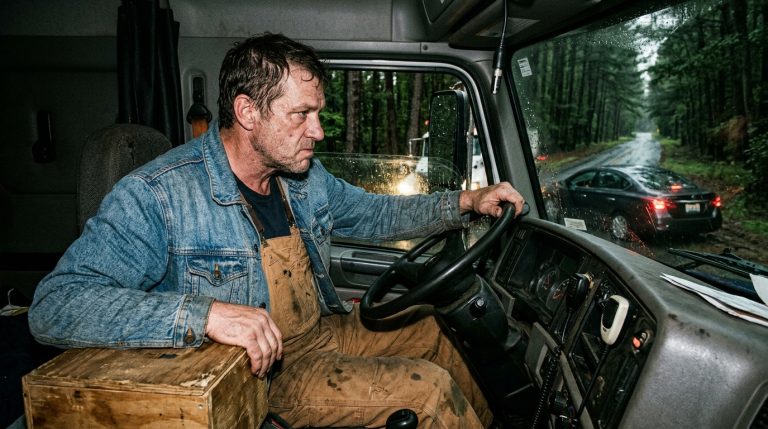
The Weight of Dust and Honor: Elias Thorne Navigates the Fractured Legacy of Operation Phoenix
CHAPTER 1: THE GEOMETRY OF BURDEN
General Vance’s office smelled of stale coffee and the metallic tang of old security clearance locks, a room built to contain, not to confess. He didn’t look at the files on his desk; he looked at the man sitting opposite him, the man who was never supposed to exist. Elias Thorne sat in the leather chair, his back straight, his hands resting on his knees. He was not waiting for an apology; he was waiting for the inevitable transaction.
The General sighed, the sound rattling in his chest like dry leaves. He tapped a single, unmarked manila folder. “The Captain is being disciplined, Elias. That is the least of my concerns tonight.”
Thorne looked at the folder, then at the window where the lights of the base blinked in the dark, rhythmic and precise. “You didn’t bring me here for a apology, General. You brought me here because the ghosts have started knocking.”
“They never stopped,” Vance replied, his voice a low, raspy whisper. “But they are getting louder. Your name hit the secure servers the moment you walked into that mess hall. There are people in Washington—people who occupy the chairs your superiors once sat in—who are asking why a man declared dead forty years ago is sitting in a public canteen.”
Thorne’s hands tightened on his knees. He could feel the friction of the fabric, the familiar, grounding texture of a uniform he had spent a lifetime trying to leave behind. He looked at the edge of the General’s desk. There, lying near a brass nameplate, was a pen. It was a high-end, modern instrument, sleek and balanced, but its clip was bent, slightly rusted, as if it had been forced into a pocket it didn’t belong in. It was a small, physical discrepancy, a detail that didn’t fit the sterile environment of a three-star general’s office.
“You’re not just worried about your career,” Thorne said, his gaze drifting to the bent clip on the pen. “You’re worried about what happens when they look too closely at the Phoenix files.”
Vance didn’t answer. He turned the folder toward Thorne. “I have spent twenty years trying to piece together the truth of that unit, Elias. My father left me his journals. He believed he sent you to a grave. He died with that weight.”
Thorne stood up. The movement was slow, his joints protesting, but his posture was that of a man preparing for a march. He looked at the folder, then at the General.
“My name is not Phoenix,” Thorne said quietly. “And that file won’t tell you why I walked out of that prison. You want to know the truth, General? You need to stop looking at the history books and start looking at the people you’re trusting to guard them.”
As Thorne reached for the door handle, he stopped. He looked back at the desk. The pen with the bent clip was gone, replaced by a clean, pristine one. The discrepancy had been corrected. But under the General’s desk, partially obscured by the heavy oak leg, lay a single, crumpled slip of paper with a handwritten date—the exact date of his extraction forty years ago, a date that should have been erased from every record in existence.
CHAPTER 2: THE ANATOMY OF A GHOST
Elias Thorne did not look back. He kept his stride steady, the rhythmic tap of his heels against the polished linoleum floor of the hallway sounding like a slow, deliberate countdown. The heavy oak door of General Vance’s office closed behind him with a soft, pressurized hiss, sealing away the man who claimed to want the truth. Thorne reached the end of the corridor, his hand brushing the cold, rusted surface of a steel fire door.
He didn’t open it immediately. He paused, his breath hitching in his chest, not from age, but from the sudden, sharp scent of ozone—the smell of old electrical wiring burning behind the walls. It was a sensory ghost, a memory from a bunker in a war that wasn’t supposed to have happened. His fingers traced the jagged edge of the door frame, finding the friction of peeling paint and oxidization.
He reached into his jacket pocket, his movements practiced and unhurried, and pulled out a small, bent silver lighter—a relic from the same era. He didn’t light it. He simply gripped it, the metal biting into his palm. The note he had seen under the desk—that date—burned in his mind’s eye with the clarity of a flare. June 14, 1986. It was the day the world had officially declared his team dead, the day his existence had been effectively scrubbed from the ledgers of reality.
“Sergeant Major?”
The voice was thin, reedy, and belonged to a young aide who had been standing at the end of the hall, clutching a stack of digital tablets. He looked at Thorne with a mixture of fear and confusion, his eyes darting toward the office door. “The General… he wants to know if you’ll be staying on base tonight. There’s a suite, sector four, if you need—”
Thorne turned. He didn’t answer right away. He studied the young man, noting the way his thumbs tapped a nervous rhythm against the glass of the tablet. V-3: The Butterfly Detour. The aide wasn’t just a messenger; he was a gatekeeper, and his hands were shaking. Thorne realized then that the General’s office wasn’t the only room on this base that contained secrets. The kid was holding a device that contained the movement logs for the entire command staff.
“I have my own accommodations,” Thorne said, his voice a low, gravelly rasp that seemed to pull the oxygen out of the hallway. “And you, son, look like you’re carrying more than just schedules.”
The aide blinked, his face flushing a deep, mottled red. He took a half-step back, his heel catching on a floor tile. “I don’t know what you mean, sir. I’m just—I’m just doing my job.”
“Your job is to be invisible,” Thorne corrected, stepping closer. He didn’t use force; he used the weight of his history, the way his presence seemed to warp the space around him. “But you’re vibrating. You’ve been tasked with a watch, haven’t you? Someone wants to know exactly where I sleep.”
The aide’s gaze dropped. He couldn’t sustain the weight of the old soldier’s eyes. “It’s not… it’s not like that. Security protocol. You’re a high-value guest, Sergeant Major. It’s just tracking.”
“Tracking ghosts,” Thorne murmured. He reached out, his hand hovering near the aide’s tablet. The young man flinched, but Thorne didn’t grab the device. He simply tapped the corner of the aide’s collar, straightening a misaligned badge. “If they want to know where I am, tell them I’m going to the library. I have a long night of reading ahead of me.”
The aide looked up, surprised by the dismissal. Thorne walked past him, his steps heavy and purposeful. He knew he was being watched, but the knowledge didn’t tighten his chest. Instead, it sharpened his focus. The base was a machine, and machines had parts. If he could find the friction, if he could locate the rusted gear where the truth was grinding against the cover-up, he would find his way into the heart of the machine.
He exited the building into the night air. It was cold, the kind of biting, dry chill that smelled of iron and dust. He walked toward the library, his eyes scanning the perimeter. Every shadow, every flicker of security lighting, was a piece of information. He was no longer a ghost; he was a hunter who had been brought back to the field against his will. The General wanted the truth? Fine. Thorne would give it to him, but it wouldn’t be the sanitised version the General’s father had left in his journals. It would be the kind of truth that left scars.
As he reached the entrance of the library, he saw a light flickering in the back—a lone, yellow glow in a sea of gray, industrial concrete. It was the same place where he had met Private Miller earlier. He felt the weight of the compass in his pocket, the one with the cracked face. He pushed open the heavy glass doors, the sound of the hinges echoing like a gunshot in the silent, tomb-like atmosphere of the stacks. He didn’t need a librarian to find what he was looking for; he needed the archives, and he knew exactly how to find the cracks in the system.
CHAPTER 3: THE BARRACKS ENCOUNTER
The library was a cavern of forgotten knowledge, smelling of damp paper and the metallic tang of old radiator pipes. Thorne didn’t go to the stacks. He remained near the entrance, his shadow stretching across the polished, wax-slicked floor. He could hear the low, rhythmic ticking of a wall clock, each beat a reminder that his presence on base was a ticking fuse. He wasn’t looking for books; he was looking for the blind spots.
A shadow detached itself from the row of cubicles near the exit. It was Captain Hayes. He didn’t carry the swagger he had worn in the mess hall. His shoulders were slumped, his uniform jacket unbuttoned at the collar, and his eyes were hollowed out by a frantic, jagged fatigue. He looked less like a soldier and more like a man who had spent the last several hours staring into a mirror and realizing the reflection was a stranger.
“I pulled your file,” Hayes said. His voice was brittle, lacking the sharp edge of the morning. “Every page. I had to bypass three different clearance gateways to even access the summary.”
Thorne didn’t turn around immediately. He kept his gaze on the darkened windows, where the perimeter floodlights cut through the night. “You’re breaking the law, Captain. That’s a dangerous habit for a man who values protocol so highly.”
“Protocol is for the living,” Hayes shot back, stepping into the dim pool of light cast by a desk lamp. “I read the after-action report for Phoenix. The one they kept in the sub-basement. It’s all redacted—black ink over every name, every coordinate, every failure. But there were margins. Notes written in pencil, dating back forty years.”
Thorne finally turned. He watched the Captain, noting the way Hayes’s hands were stuffed deep into his pockets, likely hiding the tremor. The Captain was a man who had built his entire identity on the foundation of the ‘current’ military—the efficiency, the clear lines of command, the infallibility of the system. Finding out that the system was built on a foundation of rot had not just offended him; it had broken his internal compass.
“You’re looking for a hero, Hayes,” Thorne said, his voice low and devoid of comfort. “You’re looking for a reason to forgive yourself for being an ass in the mess hall. That’s not what you’re going to find in those files.”
“I found your name,” Hayes whispered, ignoring the rebuke. “Not as a ghost. As an asset. They didn’t declare you dead to protect you, Sergeant Major. They declared you dead because you were the only witness to the ‘accidental’ deployment of experimental ordinance in the valley. My father’s records—the ones I wasn’t supposed to find—mention a unit that was ‘repositioned’ by a tactical strike from our own side.”
Thorne went perfectly still. The air in the room felt heavy, pressurized. The Captain had unearthed a piece of the puzzle that was supposed to have been pulverized decades ago. This wasn’t the decoy secret of a simple cover-up; this was the foundational sin of the administration.
“You’re playing with fire, Captain,” Thorne said. The steel was back in his voice, cold and absolute. “You keep digging, and you won’t just find ink-stained margins. You’ll find the people who ensure those margins stay blacked out. Do you think they’re going to let a Captain with a bruised ego jeopardize a legacy that has stood for half a century?”
Hayes walked forward, his expression shifting from desperation to a grim, dangerous resolve. “I don’t care about my career anymore. I care about the fact that I’ve spent my entire life worshiping a lie. If the mission was a sacrifice, if you were the bait… then I’m not the enemy here, Thorne. I’m the only one left on this base who can help you reach the archive you’re clearly looking for.”
Thorne studied him. He saw the flicker of genuine, unvarnished fear behind the Captain’s eyes—not fear of Thorne, but fear of what the Captain now knew. It was a shared burden. Thorne realized then that he couldn’t push Hayes away; the man was a node of information, a connection to the modern infrastructure he needed to navigate if he wanted to survive the next twenty-four hours.
“The archives are locked behind a biometric secondary,” Thorne said, his voice barely audible. “And they’re watched by sensors that trigger an alert to the Pentagon the moment an unauthorized user attempts a query. If we’re going to open them, we don’t do it through the terminal.”
“How?” Hayes asked, his voice steadying.
Thorne reached into his pocket and pulled out the compass, showing the cracked face to the Captain. “We stop looking at the records. We start looking at the people who were ordered to shred them. And we start by finding out who authorized the ‘repositioning’ strike. My guess? They’re still walking the halls of this base. They’re just older now. And much, much more afraid.”
Hayes nodded, his jaw set. As he turned to leave, the silence of the library was shattered by a muffled, distant alarm—a high-pitched electronic whine that didn’t belong in a quiet archive wing. Someone had tripped a silent sensor in the sub-basement. They were being watched, and the window for discovery was closing.
CHAPTER 4: THE ARCHIVISTS SHADOW
The sound was not an alarm in the traditional sense; it was a rhythmic, pulse-like throbbing that resonated through the steel foundation of the library, turning the floor into a tuning fork. Thorne didn’t run. Running was for men who expected to be chased; walking was for men who knew the terrain. He moved toward the back of the library, where the shelves gave way to a service door marked with a fading, yellowing stencil: Restricted Access – Internal Records.
Captain Hayes was right behind him, his breathing ragged. He kept glancing back at the main lobby, his hand hovering near his sidearm, though he clearly lacked the resolve to draw it. “That sensor,” Hayes hissed, keeping his voice low as he navigated around a stack of discarded magazines. “It’s connected to the base security hub. If they’re sending a team, we have three minutes before they seal this sector.”
Thorne pushed the service door. It resisted, the hinges protesting with a long, drawn-out grind of metal on metal—the sound of decades of neglect. He stepped into a corridor that hadn’t seen a janitor’s broom in years. The air here was thin, stagnant, and tasted of oxidized copper. “They won’t seal the sector,” Thorne said, his voice echoing against the bare concrete walls. “If they seal it, they admit the data is here. They’ll send a cleanup crew. Quiet, efficient, and deniable.”
They descended a flight of stairs, the steps steep and slick with a fine layer of gray dust. Thorne’s hand rested on the railing, feeling the cold, rough texture of iron, and he noted a small, jagged notch in the metal—a mark left by a tool, or perhaps a struggle, a long time ago.
At the bottom of the stairs, they found the archive bay. It was a labyrinth of sliding steel cabinets, their surfaces pitted with rust. Thorne navigated the rows with a familiarity that unsettled Hayes, who moved tentatively, as if expecting the floor to give way. Thorne stopped at a cabinet labeled 1980-1988: Operational Overlap.
“My father,” Hayes started, his voice barely a whisper in the vast, tomb-like silence. “He wasn’t an intelligence officer by accident. He was a clerk for the board that authorized the Phoenix extraction. I found his ledger, Thorne. He didn’t just record dates; he recorded deviations. He wrote down every time a unit was ‘repositioned’ for a purpose that didn’t appear on the official logs.”
Thorne opened the cabinet, the steel sliding with a heavy, satisfying thud. He began pulling out files, the paper yellow and brittle. “Your father was a collector of ghosts, then. But did he ever realize that recording the sin doesn’t absolve the sinner?”
Thorne’s fingers stopped on a file labeled Project Chimera – Internal Memo 06-14. He pulled it out, his eyes scanning the page. V-1: The Micro-Mystery. He noticed an entry in the ledger he had kept in his own memory for forty years. It was a manifest of supplies—medical equipment, food rations, and chemical stabilizers—marked with a stamp that shouldn’t have been there. It was the stamp of an logistics department that hadn’t existed until three years after the mission was completed. The date was wrong. The record had been retroactively inserted.
“Look at this,” Thorne said, holding the paper toward the dim light cast by Hayes’s flashlight. “This isn’t an archive of what happened. It’s an archive of what they wanted people to believe happened. Someone went through these files after the fact and added documents to patch the holes in the story.”
Hayes stepped closer, his eyes widening as he read the entry. “The chemical stabilizers. They weren’t for the troops. These amounts… this is for industrial-scale containment. If this was in the valley, they weren’t trying to ‘reposition’ anyone. They were trying to erase the site.”
“They were trying to bury the evidence of a failed transfer,” Thorne corrected, his voice hardening. “My unit wasn’t just a tactical team. We were the perimeter. And when the transfer went south—when the canisters started leaking—we were the ones they couldn’t allow to walk away.”
The weight of the truth settled over them, heavy and suffocating. The mission hadn’t been a suicide mission to stop a war; it had been a cover-up for a botched procurement of lethal chemicals that the administration had been moving under the table.
Before Hayes could respond, the sound of heavy boots echoed from the top of the stairwell—not a team of guards, but something else. A rhythmic, metallic tapping, like a cane striking concrete. Someone else was in the sub-basement, and they hadn’t come for the archives. They had come to see if the past had finally decided to talk back.
Thorne dropped the file into his jacket, his hand moving to the small, rusted compass in his pocket. He looked at Hayes, his expression unreadable, and gestured toward the far end of the aisle. The path they had come in was no longer an option.
CHAPTER 5: THE FIRST FRACTURE
The tapping stopped. In the sudden, dead vacuum of sound that followed, Thorne could hear the frantic, uneven pulse of Captain Hayes’s breathing. They were pinned between a shelf of crumbling logistical manifests and a wall of concrete that wept saltpeter. Thorne’s hand moved slowly, instinctively, to the heavy iron bolt of a sliding storage unit. He didn’t look at Hayes, but he could feel the younger man’s gaze on his back, a desperate demand for guidance that he wasn’t yet prepared to provide.
“Don’t move,” Thorne whispered, the words barely vibrating in the stagnant air.
Out of the darkness, a figure emerged. It wasn’t a guard team. It was a man in a rumpled, civilian-issue maintenance jumpsuit, his face obscured by the low brim of a utility cap. He held a cane in one hand—the source of the rhythmic tapping—and a small, heavy-duty flashlight in the other. He didn’t look surprised to find them there. He looked tired.
“You’re early,” the man said, his voice a raspy, tobacco-stained wheeze. He stopped ten feet away, the beam of his light cutting through the dust-choked air to hit Thorne directly in the chest. “General Vance said you’d be poking around, but I expected you to wait until the midnight shift, when the sensors are easier to bypass.”
Thorne didn’t flinch. He recognized the gait, the slight, stiff tilt of the shoulders. It was a posture forged by decades of carrying weights that weren’t visible. This was a man who had spent his life submerged in the same gray water as Thorne.
“Who are you?” Hayes stepped out from behind the shelving, his hand still near his sidearm. “Identify yourself.”
The man laughed, a dry, rattling sound. “I’m the ghost of the archives, Captain. I’m the man who’s been shredding the things you’re trying to find for thirty-five years. And right now, I’m the only reason you’re not currently being escorted to the brig by a security team that doesn’t believe in trials.”
Thorne moved forward, his eyes locked on the maintenance man. V-4: The Unreliable Perception. For a fleeting second, the man’s face seemed to flicker in Thorne’s mind, morphing into the face of a man he had left behind in the valley, a man he had watched die. He shook the thought away, the cold logic of the present moment slamming back into place. This man was real. He was a piece of the architecture of the cover-up.
“You’re one of the ones who sanitized the Phoenix files,” Thorne said, his voice hard, devoid of the weary empathy he’d shown the private earlier. “You’re the one who added the industrial-grade stabilizers to the manifest to turn a tactical blunder into a ‘containment’ narrative.”
The man didn’t deny it. He clicked his flashlight off, plunging them into a deeper, more suffocating darkness. “I’m the one who ensured that people like you got to go home and fade away, Elias. You think the truth is a virtue? The truth is a bomb. You drop it in the middle of a peace, and you don’t get justice. You get a crater.”
“My team is dead,” Thorne said, the words heavy with the force of his long-suppressed grief. “And you spent forty years drawing black ink over their names.”
“I spent forty years keeping their families from being ruined by the scandal,” the man retorted. He limped closer, the sound of his cane striking the concrete floor now soft, almost rhythmic. “You want the truth? The chemical leakage wasn’t the worst part. It was who authorized the transport. It wasn’t a general. It was a board of trustees. Men who are currently sitting in boards of directors for the defense contractors that supply this very base.”
He reached into his jumpsuit and pulled out a small, metallic data drive—not a modern, sleek version, but a heavy, blocky relic from the late nineties. He tossed it through the dark. Thorne caught it, the weight of the cold metal grounding him.
“Vance is playing his own game,” the archivist whispered. “He wants to use you to leverage his way into that board. If you give him the truth, he won’t bring justice to your unit. He’ll trade the information for a seat at the table. If you want the truth to actually matter, you have to find the source. The site, Elias. The valley.”
The archivist turned and began to walk away, his cane tapping a steady, fading rhythm against the floor.
“Wait,” Hayes called out, but Thorne held up a hand.
“Let him go,” Thorne said. He looked down at the data drive in his palm. It felt like a stone, heavy and unforgiving. The archivist’s words felt like a betrayal of his own memory, a shifting of the landscape he had navigated for forty years. He looked at Hayes, his face etched with a newfound, sharp-edged pragmatism. “He didn’t give us the truth. He gave us a bait. He’s trying to send us into the valley because he knows if we go there, we won’t come back.”
The silence returned, but it was no longer empty. It was filled with the crushing realization that the decoy secret—the idea of a simple military cover-up—was now shattered. What remained was a larger, more complex trap. Thorne gripped the drive, his knuckles white, and turned to look at the rows of rusted steel. They had to move. The alarm was still pulsing through the floor, and the “cleanup crew” would be arriving any second.
CHAPTER 6: THE RENDEZVOUS
Thorne didn’t look back at the archive bay. He moved with a silent, feline economy, his body accustomed to navigating the architecture of shadows. He pressed his back against the rough, cold concrete of a service conduit, the metal of the data drive digging into his palm. Hayes followed, his movements clumsy, a sharp contrast to the deliberate precision Thorne maintained. Every time Hayes’s shoulder brushed against a hanging conduit or a patch of exposed rebar, a metallic scrape echoed down the narrow tunnel, sounding like a klaxon in the absolute stillness of the sub-basement.
“Keep your head down,” Thorne murmured, his voice barely a breath. “The air currents will carry sound further than you think.”
“Where are we going?” Hayes asked, his voice tight, bordering on a tremor. He looked back toward the archive entrance. “That archivist… if he’s gone to security, we’re walking into a dead end.”
“He didn’t go to security,” Thorne said, his eyes scanning the maze of overhead pipes for a junction box. “He’s been hiding in that basement for decades because he knows the board doesn’t trust him anymore than they trust me. He gave us the drive because he wants someone else to pull the trigger. He’s too scared to finish the job himself.”
They reached a service junction, a small, dark space where the ventilation ducts converged. Thorne knelt, his hands working the rusted screws of a maintenance panel. His fingers were steady, finding the tension in the metal, the way the screws had been fused by time and moisture. It was a mechanical puzzle, a simple, tactile problem that required nothing more than patience and force. Hayes crouched beside him, his gaze darting toward the distant light of the archive entrance.
“If that drive contains proof of the chemical transfer,” Hayes whispered, “if it confirms the board authorized the strike, we can’t just turn it over to General Vance. He’s looking for leverage, not justice. We need an outside channel.”
Thorne stopped. He looked at Hayes, noting the man’s sudden, quiet clarity. The Captain had moved beyond his initial shock, beyond the desperate need to hold onto the ‘protocol’ of his former life. He was starting to think like a man who knew he was already condemned. “You know someone,” Thorne said, not as a question, but as a realization.
Hayes hesitated, then tapped his wrist, where a small, concealed interface port sat beneath his watch strap. “My father left me a digital key. It’s a direct uplink to an independent military watchdog, one that bypasses the base firewall. He spent his final years setting it up, waiting for the day he could dump the files he’d been hiding.”
Thorne nodded, a slow, grim acknowledgement. “Then we don’t go to the rendezvous the archivist suggested. We find a secure terminal—a real one, not a base-synced node—and we upload the data before they know it’s gone.”
They navigated the remaining length of the conduit, the air growing warmer, more metallic. Thorne’s mind was a closed loop, calculating the distance to the nearest auxiliary server room. He felt the weight of the past pressing against him, the memory of his team, the silence of the valley. He wasn’t doing this for the board, and he wasn’t doing it for Vance. He was doing it because the debt of forty years had to be paid.
They emerged into a narrow utility hallway near the back of the base’s logistics wing. It was deserted, lit by the flickering, sickly yellow glow of a dying fluorescent light. Thorne checked his watch. The pulse of the alarm had faded, replaced by the low, distant hum of the facility’s main generator. They were close.
Thorne moved to the server room door, his hand finding the edge of the panel. He didn’t use a keycard; he used a small, thin strip of metal he had scavenged from the service duct, wedging it into the latch mechanism. It was a skill he hadn’t used in a lifetime, but it returned to him with the clarity of a reflex.
“When we get inside,” Thorne said, his voice flat, “you have thirty seconds to upload. If the handshake fails, we pull the drive and we go dark. No second chances.”
Hayes nodded, his face a mask of focus. He was no longer the arrogant Captain Hayes from the mess hall; he was a man holding the key to a truth that could level the base. Thorne pushed the door open, the hinges giving way without a sound. Inside, the room was a hive of cool, sterile air and the soft, rhythmic blink of server lights—a sharp, digital contrast to the rusted, dust-choked world they had just left behind.
Thorne stood guard at the entrance, his eyes scanning the corridor. He felt the cold iron of the wall against his shoulder, a familiar, grounding texture in a world that had suddenly become fluid and dangerous. He was a sovereign protector of a secret that was finally about to be set free, and for the first time in forty years, the weight of the burden felt almost manageable.
CHAPTER 7: THE INTERROGATION OF MEMORY
The terminal screen pulsed with a steady, amber warning: System Integrity Compromised. Trace Active.
Hayes didn’t flinch. His fingers were flying across the interface, his face illuminated by the harsh, clinical light of the server array. Thorne stood at the doorway, the iron frame of the entrance cold against his shoulder blades. He listened—not to the digital whine of the cooling fans, but to the hallway beyond. The footsteps had returned, but they were no longer aimless. They were purposeful, heavy, and accompanied by the sharp, metallic click of a weapon’s safety being disengaged.
“How much longer?” Thorne demanded, his voice a low, gravelly vibration that barely rose above the server hum.
“Sixty percent,” Hayes grunted, his brow beaded with sweat. “This isn’t just a watchdog link. It’s a mirror-dump. The architecture is older than the base, built to circumvent the very security Vance uses.”
A sudden, sharp memory flared in Thorne’s mind. V-2: The Psychological Phantom. The smell of pine needles mixed with burning fuel—the exact sensory signature of the valley floor forty years ago. For a heartbeat, the server room vanished. He wasn’t in a sterile logistics hub; he was kneeling in the dirt, the weight of a dying man’s hand on his shoulder. He felt the phantom pressure of that grip, the weight of a secret that had been burned into his skin by the fire. He shook it off, the cold, hard reality of the server room rushing back like a physical blow. He wasn’t back in the valley. He was here, and the past was a weapon being pointed at his chest.
“They’re in the hallway,” Thorne said, shifting his grip on the rusted compass in his pocket. He didn’t have a weapon, but he had the room. He reached down and ripped the cover off a floor-level cable conduit, exposing a thick knot of power lines.
“Forty percent,” Hayes said, his voice straining. “Don’t pull it, Thorne. If the power drops, the handshake breaks.”
Thorne didn’t pull the lines; he prepared them. He used his pocket tool to strip the insulation on two high-voltage leads. It was a calculated risk. If the security team breached the door, he would create a localized surge that would fry the doorway’s electronic lock, locking them in—or locking the world out.
“They’re here,” Thorne warned.
The door shuddered under a massive, synchronized impact. The frame groaned, the metal screeching in protest against the force. A voice boomed from the hallway, sharp and devoid of empathy: “Captain Hayes, stand down from the terminal. You are in violation of multiple direct orders. Step away or we are authorized to secure the asset.”
Hayes didn’t look up. “Thirty percent. Thorne, I can’t stop the upload. If I stop, the registry wipes.”
Thorne watched the door. He could see the handle beginning to twist, the internal gears forced by an override tool. He didn’t see Hayes as a subordinate anymore; he saw him as the final, desperate hope for the ledger of the dead. Thorne stepped to the center of the room, his stance wide, his balance anchored by decades of survival. He wasn’t protecting a man; he was protecting a truth.
The door burst open with a deafening crash, showering the room in slivers of aluminum and paint. Two figures in tactical gear flooded the threshold, their weapons leveled. Thorne didn’t wait. He drove his hand into the conduit, shorting the lines against the steel floor.
A shower of white-hot sparks erupted, blinding and violent. The server room plunged into darkness, followed immediately by the scream of the backup generators kicking in. The surge didn’t just lock the door; it surged through the floor’s grid, forcing the security team to scramble as their own gear malfunctioned, their helmet lights flickering and dying.
“Five percent!” Hayes shouted in the dark.
The security team lunged forward, but Thorne was already in motion. He didn’t fight with the violence of the young; he fought with the economy of a man who knew exactly where the human body was weakest. He caught the first attacker’s lead hand, using the momentum of the man’s own strike to drive him into the edge of the server rack. The sound of impact was sickening—a dull, heavy thud of bone against metal.
The second man hesitated, his vision swimming in the strobe of the flickering emergency lights. Thorne didn’t hesitate. He stepped into the man’s reach, his hand finding the throat, forcing him backward into the conduit pit he had prepared. The man tumbled into the crawlspace, his shout cut short as he hit the concrete below.
“Done!” Hayes’s voice cracked. “It’s gone, Thorne! It’s in the clear!”
Thorne stood over the fallen attacker, his breath coming in shallow, controlled bursts. The server room was quiet again, save for the hum of the cooling fans returning to life. He looked at Hayes, who sat trembling in the chair, the screen in front of him finally showing the green light of a successful transfer. They had succeeded, but the cost was now etched in the blood on the floor.
“We need to move,” Thorne said, his voice steady, though his hands—the hands that had just silenced a professional soldier—were shaking. “The data is out, but we’re still inside the machine. And the machine is now officially hunting.”
CHAPTER 8: THE SIEGE OF SILENCE
The night air was a shock of freezing needles against Thorne’s face. He and Hayes didn’t pause; they vaulted over a low concrete barrier, landing hard on the gravel of the maintenance yard. The base’s siren—the real one, this time—began its undulating wail, a sound that sucked the warmth from the air.
“They’ve locked the main gates,” Hayes panted, his hand pressed against his side where a stray piece of server casing had gouged his jacket. He looked toward the perimeter fence, where the floodlights were scanning the yard in slow, mechanical sweeps. “The entire sector is cycling into lockdown. If we don’t clear the fence in ninety seconds, we’re trapped in the kill zone.”
Thorne didn’t respond. He was watching the fence. V-3: The Butterfly Detour. Instead of the electrified mesh he expected, a maintenance vehicle—a heavy, flatbed truck—sat idling near the gate, its headlights cut but its engine block still radiating a faint, dull heat. The gate mechanism had been partially dismantled, the heavy iron gears exposed and glistening with a fresh application of industrial grease.
“Someone else is moving,” Thorne muttered, his eyes narrowing. He saw a shadow dart behind the flatbed, moving with a familiar, stiff-legged limp. The archivist.
“He’s not helping us,” Hayes whispered, his hand drifting toward his sidearm. “He’s closing the loop. He’s leading us into the breach so they can pin us down.”
“He’s leading us to the only way out,” Thorne corrected, already moving toward the truck. He didn’t run; he slipped through the shadows, his presence a void in the wash of the floodlights. He reached the flatbed and looked underneath. There, wired directly into the fence’s ground loop, was a bypass unit—a crude, analog device that was actively bleeding the current from the mesh.
As Thorne moved to disconnect it, a figure emerged from behind the truck. It was the archivist, his face a map of resignation. He didn’t hold his cane now; he held a remote ignition trigger.
“You’re a stubborn man, Elias,” the archivist said, his voice barely audible over the rising wind and the distant, grinding sound of heavy tires on asphalt. “I told you, the truth is a bomb. You’ve sent your data to the watchdog, haven’t you? You think you’ve won.”
“I think I’ve done what you were too afraid to do,” Thorne said, his hand closing around the bypass unit.
“You’ve given them a target,” the archivist retorted, pointing his trigger toward the main gate, where a black transport vehicle was slowly rolling into view, its headlights cutting through the rain like search beams. “They don’t care about the file. They care about the fact that you’re still breathing. They aren’t going to stop the leak. They’re going to burn the entire base to hide the source.”
Thorne felt the cold, hard reality of the archivist’s warning. This was the failure—the moment Layer 1 shattered. The data wasn’t the goal; it was the catalyst for a total, scorched-earth purge. The General wasn’t the architect; he was just another layer of the wall.
“If we move now,” Thorne said, his gaze shifting to the flatbed, “we can breach the gate before they arrive. But the bypass won’t hold the weight of the truck.”
“The truck isn’t for us,” the archivist said, his voice softening into something almost regretful. “It’s for the gate. I’ve wired the engine block to the ignition. You’ll have to drive it into the mesh, then get out before the fuel line detonates.”
Thorne looked at Hayes, then back at the archivist. He saw the flicker of the same ghost that had haunted his own memory forty years ago. The archivist wasn’t a villain; he was a relic of a failed resistance, a man who had been breaking his own soul for decades just to wait for someone like Thorne to walk through that library door.
“Get out of the way,” Thorne said.
“I’m done with the shadows, Elias,” the man replied, turning his back on them. “You go. I’ll make sure the security team is looking at me when the gate goes down.”
Thorne didn’t argue. He signaled for Hayes to climb into the cab. As the flatbed groaned to life, the roar of the engine seemed to tear the night apart. The vehicle lurched forward, gaining speed, the steel bumper of the truck aimed squarely at the iron mesh. The floodlights converged on them, a dozen beams of white light pinning them to the metal, and for a moment, the world was nothing but noise, rain, and the cold, unyielding friction of iron against iron. Thorne slammed his foot down on the pedal, his eyes fixed on the gap, his heart beating a rhythm that echoed the metallic tapping of the archivist’s cane. They weren’t just leaving the base; they were ripping the mask off forty years of silence.
CHAPTER 9: THE FINAL RECKONING
The flatbed groaned, its chassis twisted and smoking as it skidded across the rain-slicked pavement of the external access road. Thorne didn’t wait for the vehicle to reach a full stop. He slammed the door open, the heavy iron handle biting into his palm, and rolled out onto the asphalt. The impact was jarring, a symphony of grit and freezing rain against his uniform, but he scrambled up instantly, his eyes scanning the horizon. Hayes was already out, his pistol drawn and aimed at the darkness behind them, where the burning wreckage of the gate illuminated the base like a funeral pyre.
“They won’t stop for the fire,” Hayes said, his voice straining against the roar of the wind. “They’re dispatching a secondary intercept. I can hear the rotors, Thorne.”
Thorne didn’t look back at the base. He reached into his pocket and pulled out the small, rusted compass, its needle spinning erratically in the electromagnetic interference of the burning gate. He didn’t need the needle; he knew the path. He looked at the road ahead, a ribbon of broken pavement leading toward the valley—the site of the original sin, the place where the chemical canisters had been buried under the guise of national security.
“We don’t need to run,” Thorne said, his voice calm, devoid of the panic that currently radiated off Hayes. “We just need to make them follow us. If they want to erase the truth, they’ll have to do it where the evidence is still buried. They aren’t going to hunt us down on the open road; they’re going to meet us at the site.”
They didn’t have a vehicle, but the terrain here was familiar. Thorne led the way toward a line of rusted, abandoned machinery—relics of the construction work that had ceased decades ago. They moved with the silent intensity of men who had accepted their role as the architects of their own destruction. Thorne felt the grit of the road under his boots, the smell of damp, ozone-rich earth filling his lungs. He was back in the cycle, but this time, he wasn’t the pawn; he was the primary.
As they reached the tree line, a radio signal crackled to life on Hayes’s wrist-mounted interface. It was a clear, digitized broadcast—a command from the base’s tactical hub. “Phoenix assets confirmed. Priority: Total Erasure. Authorized force, lethal compliance.”
Hayes looked at Thorne, his face pale in the light of the distant fire. “They know it’s us. They’re coming to kill us, not just capture us.”
“Good,” Thorne replied. He pulled the data drive from his pocket. He didn’t just have the files; he had the coordinates of the supply cache, the shipping manifests that had been signed by the current board of trustees. He looked at Hayes, a ghost of a smile touching his lips—not of joy, but of a grim, final satisfaction. “If they want to bury the truth, we’ll make sure they do it in front of the whole world. We’re going to the center of the site. We’re going to wake up the ground.”
They moved into the darkness, leaving the road behind. Thorne led the way, his steps sure, his eyes scanning the trees for the perimeter markers of the old camp. He could hear the low, rhythmic thrumming of a helicopter, a sound that stirred the mud under his feet and the iron in his blood. He remembered the valley not as a grave, but as a vault. And he knew, with the clarity of a man who had already been dead for forty years, that it was time for the vault to be opened.
The forest here was thick, the undergrowth tangled and hostile. Thorne pushed through, the branches scraping against his field jacket, the sound of the rain blending with the rising roar of the pursuit. He felt the cold iron of the compass in his hand, a weight that had guided him through every shadow of his life. He was nearing the center. He could smell it—not just the rain and the earth, but the faint, metallic scent of the chemicals they had been ordered to guard, a smell that had haunted his dreams for a lifetime. He was ready.
CHAPTER 10: THE EQUILIBRIUM
Thorne stood in the clearing, the rain drenching his field jacket until it felt like a suit of lead armor. Before them, the earth was scarred—not by nature, but by the jagged, unnatural geometry of a massive, collapsed containment vault. Hayes stumbled to a halt beside him, his pistol lowered, his gaze fixed on the scorched, dead soil that stretched out toward the valley floor. The helicopter roared closer, its searchlight cutting through the storm, but it didn’t land. It hovered like a predatory insect, the downwash churning the mud into a freezing slurry.
“They aren’t here to negotiate,” Hayes said, his voice stripped of hope.
“They’re here to witness the burial,” Thorne replied. He stepped onto the edge of the collapse. He reached into his pocket and pulled out the rusted compass—the last tangible piece of his unit’s history. He looked at the cracked face, then at the dirt. He dug his heel into the soft, chemical-tainted soil, peeling back a layer of silt to reveal the glint of a corroded canister, half-buried and weeping a pale, oily sheen. This was the payoff: not justice in a courtroom, but the cold, undeniable physical reality of the cover-up, laid bare under the glare of the General’s own searchlights.
The helicopter door slid open, and General Vance descended, not in combat gear, but in a dress uniform that looked absurdly pristine against the rot of the valley. He was accompanied by two men in suits—the Board’s enforcers. They didn’t speak. They didn’t need to. The General stepped onto the solid ground, his face a mask of calculated regret.
“You should have stayed buried, Sergeant Major,” Vance said, his voice amplified by the rotors. “This could have been a legacy. Instead, it’s a suicide.”
“It’s not a suicide, General,” Thorne said, his voice rising, cutting through the wind with a resonance that surprised even him. He held up the data drive, then dropped it onto the canister. “It’s a record. You wanted the link to the Board, and now you have it. The moment I activated that handshake, the watchdog didn’t just get the files. They got a live ping to the coordinates of this vault. The world is watching, General. They see everything.”
The General’s mask cracked. He glanced up at the sky, his eyes scanning for the invisible witnesses Thorne had summoned. The two enforcers looked at each other, their professional veneer disintegrating into raw, animal panic. The Poetic Justice wasn’t a bullet; it was the total, irreversible collapse of their control. The cover-up they had spent forty years maintaining had just become the very thing that would destroy them.
Thorne turned away from them, leaving the General to face the consequences of a betrayal that had finally outrun him. He walked toward the edge of the valley, where the trees began to thin. The cool down of the scene was total; the noise of the helicopter seemed to fade into a dull, unimportant background hum. Thorne reached into his pocket and pulled out the compass again. It was broken, damaged by the years of friction and the trauma of the escape. He didn’t toss it away. He knelt in the mud, finding a small, flat rock, and used the edge of his pocket tool to pry open the back casing. He began to clear the grit from the gears, his movements slow, deliberate, and meditative. It was a small act of repair—the Symbolic Closure for a life spent in the service of a lie.
Hayes approached, his face weary but his eyes clear. He stood beside Thorne, looking out over the valley. “What now?”
“We wait,” Thorne said. “The world has a way of balancing its own books.”
Thorne finished the repair, the needle finally trembling, then settling, pointing true north for the first time in four decades. He stood up, the ache in his bones no longer a weight, but a reminder of his survival. The storm began to break, the clouds parting to reveal a single, cold star. He didn’t look back at the General, who was now frantically arguing into a satellite phone, or the enforcers, who were retreating toward the aircraft. He looked at Hayes, and in that quiet, broken man, he saw the future—a generation that finally had a chance to own its history, provided they were willing to listen to the silence that followed.
They walked into the trees together, two ghosts who had finally found the path home. The equilibrium of the valley was restored; the truth was no longer a secret, it was a foundation. And for the first time, Elias Thorne simply breathed—a long, ragged, peaceful inhale—and let the cold air settle the dust of his life.