A Shadow in the Marble: Daario Moretti and the Weight of an Unfinished Promise
CHAPTER 1: THE WATCHER AT THE GATE
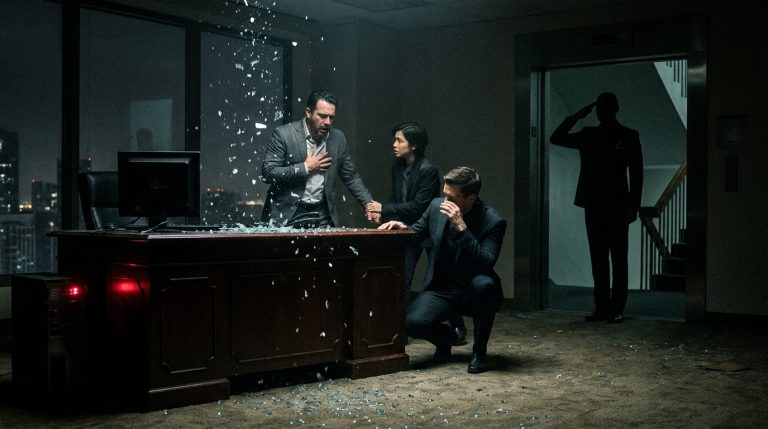
The glass erupted in a diamond spray of lethal shards. Daario didn’t scream; he didn’t even flinch. His hand, calloused by decades of holding the weight of a city’s sins, clamped onto Sophia’s shoulder, yanking her into the footwell before she could even register the sound.
“Keep your head down,” he barked, his voice stripped of everything but the cold, hard necessity of survival.
The van across the street—a nondescript, matte-black slab of metal—peeled away from the curb, its tires screaming against the slick asphalt. Daario didn’t follow. He couldn’t. His priority was the breathing, terrified weight pressed against his knees. He slammed the car into gear, the engine roaring in a violent, guttural response to his command, and swerved into the alleyway behind the home, the heavy steel gate groaning as his bumper sheared through the latch.
“Is he gone?” Sophia’s voice was a tremulous reed, barely audible over the thrum of the engine and the frantic pounding of his own heart.
Daario checked the side mirror. The street was empty, save for the rain pooling in the craters of the road. He drove for six blocks, weaving through the labyrinthine backstreets of the industrial district until he was certain no one had followed. He didn’t stop until he reached the heavy, reinforced bulkhead of the garage connected to his safe house.
He didn’t speak. He checked the perimeter, his eyes tracing the shadows, searching for the telltale glint of optics or the heat signature of an ambush. He moved with the fluid, terrifying grace of a predator who had spent his entire life expecting an attack. When he finally cut the engine, the silence that flooded the car was heavy, thick with the smell of gasoline and ozone.
He turned to look at her. Sophia was shivering, her face pale, her hands gripped so tight around the stuffed rabbit that the fabric was fraying.
“You did good,” he said, his voice softening, though it remained jagged. “You stayed low. You didn’t panic.”
She looked up at him, her eyes wide, glassy with unshed tears. “They aren’t going to stop, are they?”
Daario reached over, his hand pausing before he placed it firmly on her small, trembling shoulder. He didn’t lie to her. He didn’t offer empty comforts. “No. They won’t.”
He turned to the center console, grabbing his encrypted burner phone, his thumb hovering over a contact list that contained names that could topple the city’s government. His gaze fell upon the small notebook Sophia had clutched throughout the chaos—a corner of it had torn during the scramble, revealing a flash of a date and a name in Isabella’s elegant, precise handwriting.
He froze.
Isabella had written ‘Marco’ next to a date three days before her death, accompanied by an account number Daario recognized. It was the account he used for his most sensitive, untouchable operational expenses—the ones only his most trusted lieutenant was allowed to manage.
A cold, hollow sensation opened up in his gut, wider and deeper than any wound he’d ever sustained. He looked at the notebook, then at Sophia, and realized the danger wasn’t just in the van that had tried to kill them. It was already inside his own walls.
CHAPTER 2: THE SAFE HOUSE PROTOCOLS
The silence in the garage was absolute, yet it shrieked. Daario sat behind the wheel of the idling Mercedes, the engine’s low hum a steady, rhythmic pulse that did nothing to soothe the tremor of realization clawing at his chest. He looked at the notebook again. The entry wasn’t just a name; it was a series of encrypted ledger codes that only he and Marco had ever shared. Isabella had been tracking his own lieutenant.
Sophia sat in the passenger seat, her small frame pulled into a knot. She was watching his face, her eyes reflecting the dim, flickering overhead light of the garage. She didn’t ask what he had found; she simply waited, her presence a silent testament to the danger she had lived with every day of her life.
“Get out,” Daario said, his voice flat. He reached into the glove box and pulled out a sidearm, checking the chamber with a rhythmic metallic click that echoed off the concrete walls. “Stay behind me. If I tell you to run, you don’t look back. You head for the secondary exit, through the laundry room, and into the woods. Do you understand?”
“I understand,” Sophia whispered.
He didn’t offer her a reassuring smile. He was done with the illusion of safety. He stepped out of the car, his boots crunching on a bit of shattered glass from the rear windshield, the sound sharp and grating. The safe house was a fortress, but tonight, it felt like a cage.
As they moved through the heavy steel door into the main living area, the air hit him—a sharp, sterile scent of bleach and ozone. It was the exact smell of the clinic where Isabella had spent her final weeks before the accident. The phantom sensation of that white room, the sound of the heart monitor’s steady, rhythmic beep, flooded his senses. He gripped the pistol tighter, his knuckles white, his internal compass spinning wildly. The memory was a vulnerability, a crack in his armor that he couldn’t afford. He shook it off with a physical snap of his jaw.
Focus. The threat is in the house.
He navigated the hallway, his eyes sweeping every corner, every shadow, every potential choke point. The layout was familiar, a space he had designed for survival, yet now every feature felt like a liability. Marco was likely watching the perimeter feed from the monitoring station in the den.
Daario pushed the door open to the den. It was empty. The screens were glowing, displaying multiple angles of the perimeter, but the chair was pushed back, abandoned. A half-finished cup of coffee sat on the desk, the steam long gone.
“Daario?” Vincent’s voice came from the communication array on the wall. “Marco just pulled out of the driveway. He said he was going to verify the security sweep for the midnight meet at the pier. Should I have stopped him?”
Daario felt a cold, jagged spike of adrenaline. Marco wasn’t securing the perimeter; he was reporting back to the people who were currently hunting them.
“Vincent, lock down the house. Nobody leaves, nobody enters,” Daario ordered, his eyes tracking the monitor feeds. “And disconnect the internal audio from the master link. Now.”
“On it,” Vincent replied, his tone shifting from professional to urgent.
Daario turned his attention to the secure server cabinet tucked behind a bookshelf. He needed to verify the ledger entries in Sophia’s notebook against the company’s real-time financial traffic. He moved with a calculated, heavy gait, his senses tuned to the subtle shifts in the air pressure of the room—the settling of the house, the hum of the cooling fans.
Sophia stood by the desk, her hand hovering near the edge of the monitor. “He wasn’t the only one,” she said, her voice small but steady.
Daario froze, his fingers hovering over the keyboard. “What do you mean?”
“The man with the snake scar,” Sophia said, her eyes tracking the movement of a security camera on the screen. “He said Marco was the bridge. That without Marco, the ‘Premium’ wouldn’t reach the pier.”
Daario felt the weight of the room press against his skull. The betrayal was absolute. His most trusted lieutenant wasn’t just a mole; he was the primary contractor for the very people who had orchestrated his daughter’s death. Every order he had given Marco, every secret he had entrusted to him, had been a direct gift to Nikolai Koff.
He began to input the override codes into the server, the screen glowing a sickly, pale green against his face. He wasn’t just searching for financial data anymore; he was searching for the blueprint of his own undoing. If Isabella had found this, she had likely been digging into the very heart of the organization’s logistics.
A red alert flashed on the server console: Unauthorized Access Detected.
Someone was remote-wiping the internal logs. Marco hadn’t just left; he had left a virus in the system to scramble their trail. Daario’s teeth gritted together, the friction of it pulsing in his temples. He was being outplayed in his own house.
He didn’t panic. He shifted his stance, turning toward the door, his ears picking up the distinct, muffled sound of a heavy vehicle door slamming shut outside. He signaled Sophia to move toward the backup room, his movements precise and economical.
“They’re back,” he said.
The security monitor flickered. The camera facing the front gate went black, then returned, but the view had changed. The gate was hanging open, and a black SUV was creeping up the gravel driveway. The war hadn’t waited for midnight. It had arrived early, and it was demanding an immediate, brutal admission of truth.
Daario holstered his weapon, his mind already calculating the variables of the siege. He had six rooms, four exits, and one child to protect. He had been the master of this underworld for thirty years, and he would be damned if he let his own house be his tomb. He moved toward the armory, his footsteps silent, deliberate, and final. The predator had stopped being hunted; he was now the one setting the trap.
CHAPTER 3: SHADOWS IN THE REARVIEW
Daario didn’t look back at the monitors. He knew the layout of the drive better than the back of his own hand. The gravel path was designed with a deliberate bottleneck—a sharp turn behind a thicket of overgrown oaks that forced any vehicle to slow to a crawl. He grabbed two tactical vests from the rack, tossing one to Vincent, who had emerged from the communication hub with his face ashen.
“Sophia, behind the reinforced shelving,” Daario commanded, his voice a low, steady anchor in the rising chaos. “Do not move until I call your name. Understood?”
She didn’t hesitate. Her trust was a heavy, cooling weight on his conscience, but he forced it aside. There was no room for anything but the arithmetic of survival. As she scrambled into the dark, protective recess of the storage room, Daario pulled a high-intensity flashlight from his belt, its beam cutting through the gloom of the armory like a blade.
“Vincent, take the east flank,” Daario ordered. “They’re expecting a static defense. We give them movement.”
They emerged from the garage into the biting cold of the late-night air. The SUV had stopped just beyond the reach of the perimeter lights, its engine ticking in the silence—a mechanical sound that seemed entirely too loud against the backdrop of the rustling woods. Daario felt the familiar, cold clarity of battle settle over him. It was a sensation he had spent years trying to suppress, but tonight, it felt as natural as breathing.
He moved along the perimeter fence, his steps silent despite the gravel. He wasn’t tracking them; he was positioning himself to force an error. He watched the headlights swivel, the beams searching the house, hunting for the soft spots he had built himself.
Paranoia is just observation in high definition, he reminded himself, though his hands felt uncharacteristically tight. He saw a shadow detach itself from the driver’s side of the SUV. Then another. They were moving in a disciplined, practiced formation—Koff’s people. They weren’t just muscle; they were professionals who knew exactly what they were looking for.
Daario reached a point of elevation near the woodline. He could see their silhouettes against the reflected light of the house. He raised his weapon, the stock pressed firmly into his shoulder. His breath hitched—a momentary, phantom stutter of the heart that he quickly crushed. He was misreading the distance; the darkness played tricks, making the shapes look further away than they actually were. He forced himself to exhale, the air frosting in front of his face, and recalibrated his aim.
“They’re split,” Vincent whispered through the comms. “Two on the porch, two flanking the west side.”
“Let them get close,” Daario replied, his voice barely a breath. “If they want into my house, let them pay the entrance fee.”
He waited. He watched the shadows stretch and compress, his mind dissecting the architecture of their movement. He felt the cold iron of the fence against his palm, the vibration of the house’s generator in the soles of his boots. He wasn’t the man he had been three months ago. He was no longer fighting for profit or territory. He was fighting for a legacy that had been nearly erased.
The two men on the porch reached the door, their movements slick and efficient. They didn’t knock. They moved toward the lock with a set of tools that hummed with a high-frequency vibration.
Daario didn’t hesitate. He didn’t wait for them to breach. He fired once—a controlled, singular report that fractured the night. The sound was deafening, a sharp crack that silenced the crickets and turned the night into a theater of tactical response. The man at the door collapsed, not dead, but wounded in a way that screamed for attention.
Chaos erupted. The remaining three figures scattered, diving for cover behind the SUVs and the landscape features of the front lawn. Daario had lost the element of surprise, but he had gained the initiative. He moved laterally, his boots finding purchase on the slick grass, transitioning to a new vantage point.
His phone buzzed in his pocket—a text from the unknown sender. You just broke the treaty, Moretti. Now it’s not just about the girl. It’s about the house.
Daario didn’t respond. He checked his magazine, his eyes sweeping the darkness. He could see the flash of a muzzle opening up on the porch, rounds chewing through the wooden trim of his front door. The house was screaming, but he was silent. He crawled toward the edge of the terrace, his gaze locked on the remaining shadows. They were trying to draw him out, to force him into a firefight where the numbers were against him.
“Vincent, now,” Daario commanded.
On the west side of the house, a sudden, blinding strobe light triggered from the perimeter array, flooding the lawn with harsh, unforgiving white light. The intruders were caught in the open, their silhouettes exposed against the glare. Daario didn’t waste a second. He stood, his form rigid and precise, and delivered a sustained volley that drove them back, forcing them to retreat toward the tree line.
They were retreating, but not fleeing. They were regrouping. Daario retreated into the shadows of the eaves, his heart hammering against his ribs like a trapped bird. He had defended the first wave, but he knew the tactical reality of the situation: he was currently under siege in a location the enemy now knew, and they had the resources to tear it down stone by stone.
He returned to the interior, the air inside smelling of burnt powder and the metallic tang of fear. He moved toward the storage room, his hand trembling just enough to make him catch it in a fist. He opened the door. Sophia was there, huddled, her eyes wide, holding the rabbit close to her chest.
“They’re not gone,” Daario said, his voice as cold as the winter air outside. “And we aren’t staying here.”
CHAPTER 4: THE GHOST IN THE LEDGER
The crawl space was a tight, suffocating vein of concrete and rebar that snaked beneath the foundation of the safe house. Daario led the way, his movements rhythmic and strained, his pulse a steady thrum in his ears. Every exhale was a gamble against the silence. Behind him, Sophia moved with a quiet, terrified efficiency that hurt his chest more than the physical exertion. She didn’t complain; she didn’t stumble. She just followed, a small shadow in the dark.
“Stay low,” Daario whispered, the words swallowed by the damp earth and the distant, muffled sounds of the house being torn apart above them.
They emerged into the brush a hundred yards from the main structure, the cold rain hitting them like a volley of needles. Daario scanned the tree line, his eyes adjusting to the low-light chaos. The headlights of the SUVs cut through the trees like searchlights. He didn’t head for the car he had planned to use; he knew the perimeter was already compromised. He led them toward the old service entrance of the abandoned municipal drainage system—a relic of the city’s industrial past that no one in his organization, not even Marco, had ever deemed worthy of mapping.
Once they were deep within the concrete belly of the tunnel, far from the prying eyes of the surveillance state, Daario finally stopped. He slumped against the curved wall, his breath hitching in a jagged, painful rhythm. He pulled the flashlight from his belt, its beam weak and flickering.
“Are we safe?” Sophia asked, her voice barely a tremor. She was drenched, her hair matted against her forehead, but her gaze remained locked on his.
“For now,” Daario said, though the words tasted like ash. He reached into his coat and retrieved Isabella’s notebook. He needed to be sure. He needed to understand why Marco had been so eager to recover this specific item.
He unfolded the plastic protection, his fingers tracing the spine of the book. As he turned the pages, searching for the entry he’d seen earlier, his thumb caught on a thickness in the binding that shouldn’t have been there. It felt like a small, rigid shard of glass embedded in the leather. He pulled a folding knife from his belt and carefully sliced the stitching along the bottom.
Out popped a tiny, circular device—a high-grade transponder, no larger than a button.
Daario stared at it, the coldness of it seeping into his skin. The notebook wasn’t just a record of evidence; it was a beacon. Isabella hadn’t been just keeping notes; she had been tracked, perhaps even led, by someone who knew exactly how she thought. The realization hit him with the force of a physical blow. She hadn’t been building a case; she had been fed a map, and she had walked right into the kill zone.
“Daario?” Sophia’s voice was closer now. She was watching his face, and in the dim light, she seemed to recognize the weight of what he was looking at.
He didn’t speak. He crushed the device under his heel, grinding it into the concrete until it was nothing more than plastic dust. The implications were a labyrinth of terror. If they were tracking the book, they were tracking him. And if Marco had been the one to provide this ‘evidence’ to Isabella, then the entire investigation was a fabrication—a shadow play designed to keep them occupied while the syndicate purged the loose ends.
“We can’t use the original plan,” he muttered, his voice cold, stripping away the remnants of his old life like dead skin. “We need to move off the grid. Completely.”
“Where do we go?” Sophia asked.
“To the place they don’t look,” Daario replied. “The place where the laws don’t apply because they don’t even believe it exists.”
He stood, his joints protesting, and began to walk deeper into the darkness of the tunnel. He didn’t know where he was going, not really. He was improvising, a skill he had honed in the gutters of his youth and then buried under layers of wealth and authority. Now, he was digging it up. He felt the cold iron of the wall, the dampness of the air, the absolute isolation of their current reality.
He heard a sound then—a distant, rhythmic splash in the water further down the tunnel. He stopped, holding up a hand to signal Sophia to silence. He killed the light, plunging them into a suffocating, absolute black.
The sound came again. Closer. It wasn’t the sound of water dripping. It was the sound of footsteps—deliberate, measured, and coming from the direction of the exit he had intended to use.
They predicted the path.
Daario’s heart didn’t race. It steadied. The panic was a luxury he couldn’t afford. He shifted his grip on his weapon, his senses hyper-tuned to the friction of the air, the scent of the stagnant water, the faint metallic tang of someone else’s presence. He realized then that the trap hadn’t just been in the house; the trap was the entire city.
“Stay behind me,” he whispered, his voice a ghost of a sound. “Whatever happens, you move when I move. No questions.”
He could see the faint glow of a beam reflecting off the moisture on the walls up ahead. A hunting party. He reached out and found Sophia’s hand, pulling her toward a small alcove in the concrete wall, a forgotten maintenance hatch that barely looked wide enough for a child.
“In there,” he commanded.
She slid into the narrow space, her eyes never leaving his. He pressed the hatch shut, the rusted metal groaning in protest, and stood back. He was the distraction. He was the anchor. He felt a strange, detached peace in the realization. The syndicate thought they were hunting a broken man, a relic of a dying empire. They didn’t realize that by taking his daughter and threatening the last piece of her, they hadn’t broken him; they had simply stripped away everything that made him hesitate.
He raised his weapon, his aim fixed on the curve of the tunnel, and waited for the light to turn the corner.
CHAPTER 5: THE PIER AT MIDNIGHT
The light didn’t just appear; it cut through the damp, stagnant air of the tunnel like a physical blow. It was harsh, white, and centered. Daario crouched, the muscles in his legs coiling, his back against the slick, cold concrete. He didn’t fire. He watched the beam dance across the moss-covered brick, tracking the movement of the silhouette behind it.
“Moretti,” a voice echoed, distorted by the curvature of the tunnel. It was cold, devoid of human warmth. “The girl has information that doesn’t belong to you. We can end this right here, or we can make it complicated.”
Daario didn’t answer. He waited until the beam swung past the alcove where Sophia was hidden. He needed the man to commit. He needed him to step fully into the throat of the tunnel where the light would blind him to the shadows of the maintenance hatch.
“I’m not interested in negotiations,” Daario projected his voice, but not from where he actually stood. He threw a spent shell casing against the far wall. The metallic clink drew the beam instantly to the opposite side of the tunnel.
As the light swung away, Daario moved. He didn’t run; he surged, a blur of motion in the darkness. He closed the gap in three long, silent strides, slamming the heel of his palm into the wrist of the man holding the light. The weapon clattered to the ground, followed by the light, which spun and settled on the tunnel floor, casting long, distorted shadows up the walls.
The struggle was brief, brutal, and silent. Daario didn’t use a weapon. He used the leverage of his thirty years in the city’s underbelly—a short, sharp strike to the solar plexus, a follow-up with the butt of his pistol to the base of the skull. The man collapsed without a sound.
Daario snatched the light, checking the unconscious figure for a radio. He found a high-frequency transmitter tucked into the man’s tactical rig. He didn’t smash it. He tuned it to the frequency the others were using.
“Target neutralized,” Daario said, mimicking the man’s inflection—a flat, professional growl. “Setting up the perimeter at the access point.”
Silence followed, then a crackle of static. “Copy. The vehicle is arriving at the pier. Bring the asset to the rendezvous point.”
Daario clicked the transmitter off. He turned back to the alcove and signaled to Sophia. She stepped out, her eyes wide but her face set with a resolve that mirrored his own. She saw the man on the ground and didn’t even flinch. That was the most painful thing of all—this child was becoming as accustomed to the violence as he was.
“We have to go to the pier,” he said, his voice hard. “They think we’re bringing you to them. We’re going to use that.”
They exited the drainage system into the damp, heavy fog of the harbor. The pier was a graveyard of rusting shipping containers and rotting timber, illuminated by the distant, sickly orange glow of the city’s skyline. A black sedan was idling near the edge of the dock, its exhaust billowing into the night air.
Daario kept to the shadows of the containers, his eyes scanning the horizon. This was the meeting point, the final destination of the syndicate’s logistical chain. He felt the cold, sharp air biting at his face, the smell of brine and diesel fuel filling his lungs. It was an environment he knew well, but tonight, it felt alien. Every shadow looked like a threat, every gust of wind like a whisper of betrayal.
He positioned Sophia behind a stack of rusted metal crates, his hand hovering over her shoulder. “Stay here. Don’t move until I call for you. If you hear anything, go back into the drainage pipe and don’t come out.”
“Daario,” she said, her voice catching. “What if they have more men?”
“Then I’ll be the one to deal with them,” he said. He knelt down, locking eyes with her. “You have the notebook?”
She patted her jacket.
“Good. If anything happens to me, you go. You get that information to the people who can use it. Do not wait for me. Do not look for me.”
He didn’t wait for her to agree. He stood and moved toward the sedan, his silhouette blending into the dark. He wasn’t walking into a meeting; he was walking into the mouth of the beast. He had no plan for the extraction, no safety net. He only had the cold, tactical necessity of the moment.
The sedan’s driver door opened. A man stepped out, a tall figure in a sharp, tailored coat that looked entirely out of place on the decaying dock. He looked at Daario, his face a mask of predatory calm.
“You’re late, Moretti,” the man said.
Daario didn’t stop until he was within striking distance. “The traffic was heavy,” he replied, his hand resting on the weapon at his side. “And I don’t like to be rushed when I’m handling something this ‘premium’.”
The man laughed—a thin, dry sound that had no humor in it. “Is that what you call her? ‘Premium’?”
“She’s a bargaining chip,” Daario lied, his voice flat. “And I want to know exactly how much you’re willing to pay for her.”
The man took a step forward, his eyes searching Daario’s. “We aren’t here to pay, Daario. We’re here to clean up the mess your daughter started.”
Daario felt the air turn sharp, the final piece of the puzzle sliding into place with a sickening click. This wasn’t about an operation. It was about erasure. He looked past the man, toward the dark water, and saw the silhouettes of two more men stepping out from behind a container, weapons raised.
The betrayal wasn’t just Marco. The syndicate had been purging from the top down, and he had been the final target on the list.
CHAPTER 6: THE BETRAYAL UNVEILED
The first shot didn’t hit the metal; it chipped the concrete just inches from Daario’s foot, sending a spray of grit into his eyes. He didn’t blink. He pivoted, grabbing Sophia by the back of her coat and yanking her into the blind spot created by the sedan’s heavy, armored door.
“Go,” he growled, pointing toward the labyrinth of rusted shipping containers that formed a steel canyon leading toward the water’s edge. “Don’t stop for me. If I’m not behind you in ten seconds, you find a place to hide and you stay there.”
“I’m not leaving you!” she hissed, her voice vibrating with a desperate, sharp defiance.
He grabbed her shoulders, forcing her to look at him. His face was a mask of cold, hard focus, the rain plastering his hair to his forehead. “You aren’t leaving me. You’re surviving. That’s what you do.”
He shoved her toward the darkness of the containers. She sprinted, her small frame vanishing into the gloom. Daario stood, his back to the sedan, his weapon raised. The three men were advancing now, their movements synchronized and lethal. They were ignoring the sedan entirely, eyes locked on the space where he stood.
He fired two rounds—not at the men, but at the overhead halogen lamp hanging from a sagging utility pole above the dock. The glass shattered, plunging the area into a flickering, shadowy twilight.
As the light died, the sedan’s engine sputtered and died—the damage from the initial volley finally taking its toll on the fuel line. Daario didn’t wait for them to close the distance. He turned and sprinted, his boots finding no purchase on the slick, oil-stained asphalt. He moved with a heavy, driving intensity, his lungs burning with the cold, wet air.
He plunged into the shipping container maze, the atmosphere here heavy with the scent of saltwater and ancient, decaying freight. It was a tactical nightmare—every corner a potential ambush point, every gap a potential line of sight. He navigated by sound, the rhythmic slap of his own boots echoing back to him with a slight delay that told him he was being hunted by someone who knew the terrain.
He skidded around a corner, the metal of the container cold and abrasive against his palm, and pulled his radio from his tactical vest.
“Vincent,” he whispered into the channel. “I’m at the north docks. I have company. Send the extract to the secondary coordinate. Now.”
Static. Then, a voice—not Vincent’s. It was smooth, calm, and chillingly familiar.
“Vincent can’t help you, Daario. He’s currently dealing with the little problem I left for him at the safe house.”
Marco.
Daario stopped, his back pressed against the rusted corrugation of a container. The betrayal was no longer a theoretical threat; it was the voice in his ear, the hand guiding the blade. He felt a surge of pure, freezing rage, the kind that didn’t cloud the mind but sharpened it.
“Where is he, Marco?” Daario’s voice was a low, dangerous vibration.
“He’s exactly where you are—irrelevant,” Marco replied. “You think you’re protecting the girl. You think you’re unraveling a conspiracy. You’re just cleaning up the edges of a board we’ve already cleared.”
Daario scanned the area. He saw movement—a shadow shifting between the containers twenty yards ahead. He wasn’t just being hunted; he was being herded. They wanted him to run. They wanted him to lead them to Sophia.
He didn’t run. He turned back, moving silently in the opposite direction. He had to find her before they did. He moved through the maze with the surgical precision of a man who had built his life on knowing exactly where the enemy expected him to be. He reached the end of the container row, the dark, churning water of the harbor visible in the distance.
He heard a sharp, muffled cry.
It was Sophia.
Daario’s control shattered. He didn’t check the perimeter. He didn’t count the targets. He lunged around the final container, his weapon raised, only to find the corridor empty.
But it wasn’t empty. In the center of the walkway, lying on the wet asphalt, was the stuffed rabbit.
A cold, hollow void opened in his chest. He approached the toy, his movements slow and mechanical. He picked it up. It was damp, heavy with the rain, and smelled of the sterile, suffocating air of the children’s home.
The sound of a heavy door slamming echoed across the pier—the door to the harbor master’s office.
Daario looked up. The office was an elevated structure, a glass-encased cage overlooking the loading bay. Inside, he saw a flickering silhouette. Sophia.
He didn’t care about the trap anymore. He didn’t care about the men behind him. He sprinted toward the office, his focus narrowed to the single point of the illuminated window. He reached the stairs, his breath coming in ragged, painful gasps, his vision swimming with the exertion and the sheer, blinding weight of the truth he was finally beginning to understand.
They hadn’t just used the notebook to track them. They had used Isabella to trap them, and now, they were going to use him to finish it. He kicked the door, the wood splintering under the weight of his rage, and burst into the room.
It was empty, save for a single chair in the center of the floor and a phone sitting on the desk. The phone was ringing.
Daario stared at it, the sound of the ringtone a sharp, rhythmic spike in the silence. He didn’t want to answer it. He knew exactly what he would hear, and he knew that once he heard it, there would be no going back.
He picked up the receiver.
“You’re a predictable man, Daario,” Marco’s voice came through, clear and amplified. “You always come for the girl. And that’s exactly why you were the perfect choice to lead us to the rest of the files.”
Daario felt the room tilt. The office wasn’t a trap; it was a vault. And he had just delivered the key.
CHAPTER 7: THE DISMANTLING OF THE THRONE
Daario let the receiver hang by its cord. It swayed, a rhythmic pendulum against the gray wall, clicking softly. He didn’t look at the phone again. His eyes were fixed on the desk—on a stack of papers that had been left there, not as evidence, but as a deliberate insult. He stepped toward it, his boots heavy on the linoleum, the sound sharp and alien in the quiet office.
He shuffled through the documents. They were bank authorizations. They were signatures. They were authorizations for the very “premium” shipments that had defined his organization’s last decade—only the signatures weren’t his. They were Isabella’s.
The physical reality of the page under his fingers was absolute, but it made no sense. His daughter had died attempting to adopt a child, attempting to build a life away from the blood and the shadows, and yet here, in black and white, she was authorizing the logistics of her own destruction. He traced the signature, the curve of the ‘I’, the sharp angle of the ‘a’. It was hers. It was perfect.
A cold sweat broke across his brow, a sharp contrast to the biting rain leaking through the window frame. He was being force-fed a narrative, and the pieces of that narrative were designed to shatter him. He looked up at the window, out toward the pier. The SUVs were still there, their engines idling, a low-frequency rumble that he could feel in his teeth.
They weren’t coming for him. They were waiting for him to break.
He didn’t break. He grabbed the documents, his movements frantic and precise, and stuffed them into his coat. He checked his sidearm again, the metal biting into his palm. He needed to find Sophia. The phone call had been a lure, a distraction meant to hold him here while they closed the net.
He turned toward the door, his heart a steady, violent drum. He wouldn’t let the weight of the past dictate the next ten seconds. He stepped out of the office, his gaze sweeping the loading bay. It was a cavernous space, filled with crates, pallets, and the heavy, metallic smell of rot.
He saw a shadow—a flicker of movement near the rear exit.
“Sophia?” he called out, his voice a low, gravelly rasp.
No answer. Only the rhythmic drip of water from the ceiling.
He moved forward, his tactical training overriding his internal storm. He kept to the shadows, his weapon trained on the darkness ahead. He saw a second shadow, then a third. They were closing in. They weren’t just men; they were extensions of a corporate machine that had decided he was a liability, and they were executing the cleanup with mechanical, soul-less efficiency.
He didn’t wait for them to reveal their intent. He fired a suppression volley into the darkness, the muzzle flash illuminating the crates and the wet concrete in brilliant, strobe-like bursts. He sprinted, his boots sliding on a slick patch of oil, his shoulder slamming into a pallet. He didn’t feel the impact. He felt only the necessity of the next step.
He reached the rear exit. It was locked from the outside.
He didn’t try the handle. He didn’t waste the time. He turned, the shadows coalescing into figures. He was pinned. There were three of them, spread out in a V-formation, blocking the only path forward.
“You’re finished, Daario,” the voice came from the middle man, a sharp, metallic sound. “The files you think you have? They’re just the receipts for the life you already spent.”
Daario leveled his weapon. He looked at the man, but he wasn’t seeing the shooter. He was seeing the system—the cold, unyielding reality of an empire that thrived on the disappearance of people like him, and people like his daughter.
“I didn’t come here to save my life,” Daario said, his voice quiet, steady, and entirely devoid of fear. “I came here to make sure you have nowhere left to hide when I pull this down.”
He didn’t shoot at the men. He shot at the pressurized steam line running along the ceiling above them.
The pipe ruptured with a deafening roar. A geyser of white, superheated steam filled the corridor, blinding, burning, and chaotic. Daario dove beneath the spray, his skin prickling with the heat, his senses locked onto the sounds of his enemies’ confusion. He moved through the white fog, a ghost in the machine, his weapon a rhythmic instrument of necessity. He didn’t need to see; he needed only to feel the displacement of the air, the heavy, panicked footfalls of the men as they scrambled for a target that was no longer there.
He hit the floor, rolled, and rose in one fluid motion, emerging behind the middle man. He didn’t hesitate. He took the man down, not with a bullet, but with the cold, hard force of his own desperate resolve.
He searched the man’s vest and found a key—a master key to the pier’s internal communications array. He looked at it, the metal warm from the man’s body. He had the means to communicate, the means to expose, and the means to finally, truly, burn it all down.
He didn’t head for the pier. He turned back toward the warehouse, his eyes searching for the one place he hadn’t checked. The loading dock’s security office. If they were playing a game of mirrors, he was about to break the glass.
He moved through the steam, his pulse slow, his breath controlled. He was no longer the hunted. He was the architect, and he was about to demolish everything he had ever built.
CHAPTER 8: THE SIEGE OF THE COMPOUND
Daario’s hands were steady as he plugged the drive into the port. He wasn’t looking for redemption. He was looking for the weight of the truth. As the progress bar filled, the office around him felt smaller, the walls constricting, the shadows lengthening in the flickering light of the servers. He had moved from the warehouse office to the internal server hub, a restricted, climate-controlled bunker beneath the loading dock. It was a place of sterile, humming order, an island of cold machinery in the middle of a war zone.
The download finished with a soft, digitized chime. He opened the file.
The screen bloomed with names, timestamps, and geolocation tags. It was a structural map of the syndicate’s reach, and it was significantly deeper than the notebook had suggested. This wasn’t just a trafficking operation; it was a state-sponsored infrastructure of human disposal. And there, at the top of the chain, was not just Nikolai Koff, but a series of encrypted access codes linked directly to the office of the Chief Justice—the same man Daario had once considered an ally, the man who had authorized the “accident” report regarding Isabella.
The room went cold. The fan’s hum seemed to drop an octave, turning into a low, rhythmic growl. He was holding the evidence that would burn the entire city to the ground, but he was holding it inside the very heart of the enemy’s logistical brain.
He heard the heavy, metallic thud of a security door unlocking in the corridor above. They were inside.
He didn’t panic. He pulled the drive, tucked it into his inner pocket, and checked the corridor’s feed on the secondary monitor. Four tactical teams, moving with the precision of a clock. They weren’t coming to talk. They were coming to sanitize the site—him, the server, and every scrap of evidence that had dared to exist.
He moved toward the exit, his movements fluid and economical. He wouldn’t take the main stairwell. He reached behind a rack of primary drives and pulled a manual release for the fire suppression system.
“If I can’t hold it,” he whispered to the silence, “no one will.”
He triggered the alarm. A deafening, piercing wail erupted throughout the bunker. Halon gas began to vent from the ceiling—an odorless, colorless killer that would suffocate the fire and everything else in the room within seconds. He pulled his own rebreather mask from his belt, the rubber cold and stiff against his face, and stepped into the vent.
The corridor was already filling with the first wisps of the gas. The tactical teams were masked, their silhouettes looming like monsters in the thickening haze. They saw him. They didn’t shout. They leveled their rifles.
Daario dove. He slid along the polished floor, his momentum carrying him beneath the sweep of their fire. He didn’t fire back. He was moving toward the primary electrical junction box. He knew the building’s circuitry; he had installed it himself, a decade ago, as a fail-safe against exactly this kind of breach.
He jammed his knife into the secondary busbar.
The spark was violent—a blue-white flash that arced across the corridor, blowing the power to the entire sub-level. The lights died. The suppression systems hissed into total darkness. In the sudden, absolute void, he was the only one who knew where the exits were.
He moved in the dark, his hands tracing the familiar geometry of the walls. He heard the chaotic shouts of the team, the confused clatter of weapons hitting the floor, the frantic hiss of masks being checked. He bypassed them, moving toward the primary coolant duct that led to the surface.
He was breathing hard, the mask filtering the air, his vision limited to the flickering ghosts of heat signatures he could track through the tactical goggles he’d swiped from the man at the pier. He was a shadow among shadows.
He climbed the ladder, the metal biting into his hands, the ascent feeling endless. As he reached the surface level, he saw the outside world—a rain-slicked, chaotic tableau of flickering emergency lights and the silhouettes of more vans arriving. He was in the middle of a storm, and he was the eye of it.
He pushed the manhole cover aside, emerging into the biting, wet air behind the main shipping terminal. He was out, but he was surrounded. He checked his radio. It was dead. He looked toward the bay, toward the water, where a lone, small craft sat waiting in the dark.
He realized then that he hadn’t just discovered the truth. He had become the catalyst. By taking the drive, he had made himself the only person in the city with the power to end the syndicate’s cycle of violence. But the price of that power was his own life.
He didn’t regret it. He looked toward the warehouse, where the lights of the tactical teams were now concentrated, their fire directed at a target that was no longer there. He had one path left, one final move in a game he had been losing for years. He turned toward the water, his eyes fixed on the horizon, his hand clutching the drive against his chest.
The siege was over, but the end had only just begun.
CHAPTER 9: THE SERPENTS END
Daario didn’t look back. The sound of boots on the asphalt behind him was a frantic, rhythmic drumbeat, but his focus was entirely on the dark, churning expanse of the harbor. The pier stretched out before him, a long, lonely finger of rotting timber reaching into the black void. He reached the edge of the dock, his breath hitching in his chest, his eyes searching the water for the small craft he had signaled earlier.
There. A shadow, darker than the night, detached itself from the underside of the pier. It was the boat.
“Moretti!” The shout came from behind, jagged and sharp, cutting through the ambient roar of the ocean. “Stop! Or we fire!”
Daario didn’t stop. He vaulted the edge of the dock, his feet finding purchase on a rusted ladder, and descended with a reckless, bone-jarring speed. He hit the deck of the boat just as the first rounds shattered the wood above him, splintering the air into a chaotic storm of debris.
He didn’t fire back. He crawled toward the wheel, his hand finding the ignition. The engine groaned, a mechanical protest against the cold, then roared into life. He shoved the throttle forward. The boat surged away from the pier, the wake boiling behind them.
He kept his head low, his eyes fixed on the navigation console, his pulse a steady, violent thrum. He had the drive. He had the truth. He had survived the purge. But as he looked up, he saw the searchlights from the pier sweep the water, seeking, hunting, desperate.
He had to get to the mainland communications hub—the only place left where he could bridge the data to the central network and dump the syndicate’s entire infrastructure into the public domain. It was a suicide mission, but it was the only move left.
He steered toward the low-light blur of the industrial coastline. His hands, gripping the wheel, were slick with rain and sweat. He was cold, his body screaming for rest, but the adrenaline held him together. He knew that the moment he touched land, the chase would accelerate. He wasn’t just running from the syndicate; he was running from the weight of his own history, from the realization that his empire had been built on the very foundation he was now trying to demolish.
He neared the shore, the hull of the boat scraping against the sand of a hidden cove. He killed the engine. The silence that followed was heavy, broken only by the distant, mournful wail of a siren—the sound of the city reacting to the chaos at the pier.
He stood, his knees trembling, and jumped onto the sand. He didn’t look at the boat. He didn’t look at the sea. He looked at the city—a sprawl of lights that promised nothing but pain, yet held the only hope for a truth he had spent his life burying.
He felt the drive in his pocket, a small, cold object that felt heavier than a stone. He started running. His stride was long, pained, and determined. He knew exactly where the hub was; it was inside the basement of the very courthouse he had once bribed his way into. The irony was a bitter, metallic taste in his mouth.
He reached the perimeter fence, the chain-link cold against his skin, and began to climb. His fingers were raw, his muscles burning, but he didn’t falter. He dropped down on the other side, landing hard on the concrete, the impact vibrating through his entire frame.
He was inside.
The courtyard was bathed in the dull, rhythmic pulse of security lights. He moved through the shadows of the monumental columns, a ghost haunting the halls of justice. He reached the heavy, brass-bound doors of the service entrance. They were locked, but he didn’t need a key. He inserted the drive into the external override port he had discovered while reviewing the server blueprints in the bunker.
The system hesitated, the interface flickering, then accepting the command.
He watched the screen—the bar rising: 20%, 50%, 80%.
He heard the sound of heavy footsteps behind him. He didn’t need to turn to know who it was. The rhythm was unmistakable—the precise, cold, professional tread of the syndicate’s lead executioner.
“You’re not going to finish this, Daario,” the voice said, echoing in the courtyard.
Daario stood, his back to the door, his hands in his pockets. He waited for the end, his eyes fixed on the rising bar on the screen: 95%, 99%…
“It’s already done,” Daario whispered.
The screen flashed: UPLOAD COMPLETE.
The truth was out. The cascade had begun. He turned, his gaze finally meeting the barrel of the weapon held by the man who had been sent to erase him. He didn’t flinch. He didn’t beg. He simply smiled—a cold, final, and liberated expression that made the man behind the gun hesitate for the first time in his life.
The world went white.
CHAPTER 10: THE UNFINISHED BLOOM
The world didn’t end in white light. It ended in the dull, rhythmic thud of a boot against concrete and the sharp, clinical smell of industrial cleaner. Daario opened his eyes. He was slumped against the service entrance of the courthouse, the cold stone biting into his shoulder. The man who had been sent to erase him lay nearby, his weapon skittering across the pavement, his chest rising and falling in shallow, ragged bursts of unconsciousness.
Daario checked his side. There was a dull, burning ache, but no blood. The bullet had caught the thick, reinforced leather of his holster. He was alive.
Inside the courthouse, sirens were already wailing—not for him, but for the entire structure of the city’s governance as the data dump triggered a systematic collapse of the syndicate’s facade. He pulled himself up, the movement agonizing. Every joint, every muscle, screamed in protest, but he kept moving. He had a promise to keep.
He navigated the back alleys, avoiding the growing chaos of police cruisers converging on the courthouse. His goal wasn’t the sanctuary of his old life; it was the safe house he had arranged for Sophia before the pier. It was a modest, unassuming apartment on the edge of the industrial district, a place that held no history and no enemies.
He reached the door, his heart hammering against his ribs. He knocked—a slow, deliberate rhythm. The door opened, revealing Sophia. She was wrapped in a thick, oversized blanket, her face pale, but her eyes held a spark that hadn’t been there when he first found her at the cemetery.
“You came back,” she whispered, her voice a fragile, hopeful sound.
Daario stepped inside, the apartment a small, warm oasis in the freezing, ruined night. He reached into his pocket, his hand shaking as he pulled out the fragment of marble he’d carried from Isabella’s tomb. He held it out to her.
“I told you I would,” he said, his voice raw.
He walked to the window. Below, the city was changing. He could see the lights of the police precinct, the movement of armored vehicles, the slow, agonizing dismantling of the system that had taken Isabella from him. The evidence he had provided was already working. The Chief Justice was in custody, the syndicate’s financial nodes were being seized, and the names he had exposed were vanishing from the public record, replaced by the weight of their own crimes.
He sat on the edge of a chair, the exhaustion finally pulling at his bones. The silence of the room was heavy, but it was no longer the silence of the dead. It was the silence of a life being reclaimed.
“Is it over?” Sophia asked, sitting at his feet.
“The war is over,” Daario said, his eyes fixed on the horizon, where the first hint of gray dawn was beginning to bleed through the clouds. “But the work of living… that’s just beginning.”
He looked at her, then at the marble fragment in his palm. He took her hand and pressed the stone into it. It was cold, jagged, and marked by time—a piece of the tragedy that had defined his grief.
“Isabella wanted to teach,” he said softly. “She wanted to build things that would last. I spent my life breaking things, thinking that was the only way to be safe.”
He looked around the room, at the sparse, clean lines of their new life, and for the first time in thirty years, he felt the heavy, rigid armor he’d worn against the world begin to crack. The pain of the loss was still there—a sharp, persistent ache in the center of his chest—but it was no longer a weight he had to carry alone.
He leaned back, the tension in his shoulders finally beginning to bleed away. Outside, the city was waking up to a different reality, a place where the shadows no longer held absolute power. He had destroyed the empire he helped build, he had faced the men who had orchestrated his daughter’s death, and he had emerged on the other side with something he had never expected to find again: a reason to stay.
He took a slow, deep breath, the air clean and cold. He was a man who had lived in the dark, a man of violence and calculated secrets, but as the sunlight hit the floorboards of the apartment, he felt a strange, quiet transformation. He wasn’t the man who walked into the cemetery three months ago. He was something new, something tempered by the fire he had walked through.
Sophia leaned her head against his knee, her breathing steadying into the rhythm of sleep. Daario sat in the quiet, the marble cold in her hand, the city moving on beneath them. He didn’t know what the next day would bring, what trials would follow the collapse, but he knew one thing with absolute certainty: for the first time in his life, he was exactly where he was supposed to be. He closed his eyes, and in the silence of the room, he finally allowed himself to bloom.