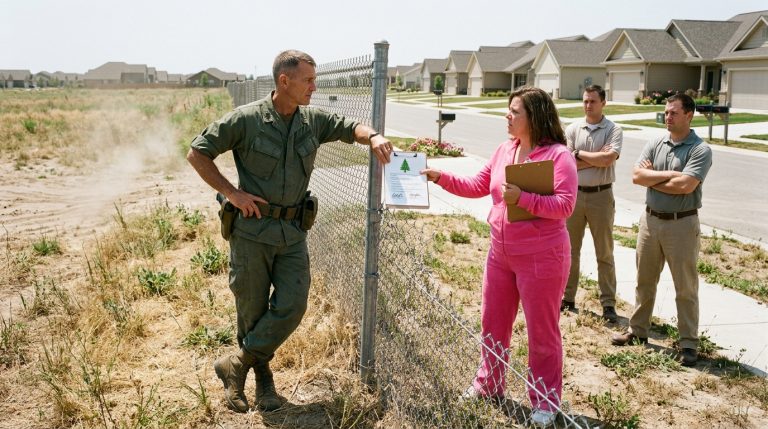
The Silent Perimeter: A Veteran’s Tactical Dismantling of a Suburban Empire Built on Deception and Fraud
CHAPTER 1: The Perimeter Breach
The digital clock on the bedside table pulsed with a harsh, clinical red: 4:17 a.m.
Before my eyes could even adjust to the darkness, the front door of my home—the same door I had reinforced three days after moving in—shuddered under a violent, unnatural impact. It wasn’t the sound of an intruder trying to be quiet; it was the sound of someone who believed they owned the very wood they were destroying.
I was out of bed before the wood frame finished groaning. Muscle memory, etched into me over twenty-three years of keeping genuine threats at bay, took the wheel. I moved in silence, my feet finding the floorboards that didn’t creak, leaving Carmen sleeping in the soft, heavy warmth of the blankets.
In the hallway, Rex and Luna were already standing like statues. Their ears were pinned back, hackles raised, low rumbles vibrating deep within their chests. They didn’t growl; they were professional. They were waiting for a command.
I entered the foyer just as the door swung wide. Bethany Crowe stood on my porch, silhouetted by the eerie, pale streetlamps. She was wearing silk pajamas that probably cost more than my first service pistol, and she was waving a piece of jagged metal in the air like a scepter.
“I have master key authority!” her voice cracked, shrill and piercing in the dead silence of the morning. “Your filthy muts woke the entire neighborhood, and I’m done with you military types acting like you’re above the rules, Soldier Boy!”
She looked at me, not with the fear of someone breaking into a home, but with the hollow, manic entitlement of a dictator watching a subject refuse to kneel.
I didn’t speak. I didn’t reach for my phone. I reached for the light switch.
The sudden blast of the foyer light caught her off-guard, but it was the movement behind me that broke her. I snapped my fingers twice.
Rex and Luna moved.
They didn’t charge in a chaotic scramble; they moved in a synchronized, lethal pincer motion. They stopped three feet from her, their posture rigid, eyes locked on her throat. The sudden, absolute presence of ninety pounds of trained K9, teeth bared, drained the color from her face instantly. The master key slipped from her fingers, clattering onto the marble floor.
She shrieked—a high, jagged sound—and scrambled backward, her expensive stiletto heels catching on the threshold. She fell into the dirt of my garden, gasping for air.
I stepped into the light, my hands visible, my posture relaxed but calculated. I looked at the key on the floor, then at her. My mind was already pulling back, analyzing the geometry of the room, the camera angles, and the exact moment this escalation stopped being a neighborhood dispute and started being a federal liability.
“You’re on private property, Bethany,” I said, my voice low and devoid of emotion.
She looked up at me, her eyes darting between my face and the dogs, her lip curling in a mix of terror and pure, unadulterated hate. “This… this isn’t over. You’re a threat. Everyone knows it.”
She scrambled to her feet and sprinted toward her BMW. As she peeled away, the screech of tires echoed through Willowbrook Estates.
I didn’t move. I stared at the key she’d dropped. It wasn’t a master key. It was a blank, filed down to look like one.
I reached down and picked it up. The metal felt cold and cheap. It was a prop. She was running a play, and she had just handed me the final piece of evidence I needed to start the demolition.
Behind me, the house was silent, but the air felt heavy. The game had shifted. I wasn’t fighting a neighbor anymore. I was fighting a ghost, and I was going to make sure she was the one who vanished.
CHAPTER 2: The Architecture of Deception
The silence that followed Bethany’s departure wasn’t peaceful; it was the heavy, pressurized quiet that settles over a combat zone before the artillery begins. I stood on the porch, the porch light casting long, jagged shadows against the siding. The fake key felt cold and abrasive against my skin, a stark contrast to the genuine, heavy iron keys I had carried for over two decades.
I looked down at the dogs. Rex was pacing the perimeter of the porch, his movements stiff and rhythmic, his nose working the air. He caught the scent of the perfume Bethany had left behind—a sickening, sugary vanilla that seemed to linger in the humid night air like chemical fallout. I signaled to him, a subtle downward gesture of my hand. He stopped, sat, and watched the driveway with the focus of a sentinel.
I didn’t head inside to sleep. I headed to the garage.
The garage had become my sanctuary—or rather, my command center. It was clean, organized with the kind of clinical precision that would have made a logistics officer weep. I pulled the overhead door down, engaging the manual lock, and moved toward my workbench. Under the harsh, fluorescent glow of the shop lights, everything had sharp edges. The metal tools, the stacks of organized paperwork, the tactical gear I hadn’t touched since leaving the service—they all offered a sense of stability that the chaotic world of Willowbrook Estates lacked.
I placed the forged key on a clean piece of white paper. I grabbed a high-intensity magnifying lamp and switched it on. Under the magnified light, the jagged edges of the key became obvious. It hadn’t been stamped in a machine; it had been filed by hand. The metal was soft, cheap, and entirely useless for any lock in the neighborhood.
A memory surfaced, unbidden and cold—the taste of iron and the smell of burning plastic from a checkpoint in Kandahar. It was a phantom, a psychological trap. I forced the memory away, focusing instead on the geometry of the key. It was a symbol, not a tool. She wanted me to know she thought she had access to my life, that she believed she could breach the perimeter whenever she saw fit. She was playing a game of intimidation, but she hadn’t realized that the person she was playing against didn’t know how to fold.
I walked over to my desk, where a dual-monitor setup sat. I fired up the security software. The screen bloomed with eight quadrants of 4K video feeds. I navigated to the recorded footage from 4:17 a.m. I watched the playback, frame by frame. Bethany’s movements were erratic, her posture unstable. She wasn’t just angry; she was desperate.
I pulled up a spreadsheet I had titled Willowbrook Operational Parameters. It was mostly empty, a skeleton of the case I was building. I added a new line item: 04:17 A.M. Incident. Evidence: Forged prop key. Intent: Psychological coercion.
I began to cross-reference her behavior with the notes I had been taking for the past week. She wasn’t acting alone. Her calls, her timing, the way she seemed to know exactly when I was in the yard—none of it was random. She was conducting a reconnaissance mission, and she was reporting back to someone.
I reached into the small wall safe tucked behind a pegboard and pulled out the physical copies of the HOA bylaws I had requested—or rather, the ones I had obtained through a formal, albeit frustrating, request process. I opened them, the paper crisp and smelling faintly of a dusty archive.
The document was an insult. It was riddled with spelling errors, inconsistent formatting, and clauses that contradicted themselves. It looked less like a legal charter and more like a high school creative writing project. I tapped my pen against the desk. If the foundation was this brittle, the entire structure had to be hollow.
I looked at the cameras again. Bethany was back in her house by now, probably pacing, probably planning her next move. She thought she was the predator, circling a threat she didn’t understand. But as I traced the digital breadcrumbs she had left behind—the unauthorized “violation” notices, the erratic neighborhood patrols, the attempt to leverage animal control—I felt the familiar, cold clarity of a mission briefing.
I started an audio recording, my voice low and steady. “Initial assessment: The subject is unstable but highly motivated. The psychological campaign is a distraction from the structural weakness of her authority. Phase One: Discredit the mechanism of power. Verify the legal standing of the board, cross-reference state filing records, and map the financial trail.”
I didn’t go to bed. I spent the next three hours mapping the neighborhood’s web of influence. Every name Bethany had mentioned, every family she had harassed, every vendor she had quoted—it all started to form a pattern. It wasn’t just a neighborhood spat. It was a system of control designed to harvest equity.
As the sun began to bleed into the horizon, casting the first gray light of morning across the garage, I finally leaned back, my eyes gritty with exhaustion. I had enough here to begin. I wouldn’t go to the authorities—not yet. I would wait, watch, and let her continue to provide the rope she was using to hang herself.
The door to the house opened, and Carmen stood in the entryway, wrapped in a thick robe, holding two mugs of coffee. She didn’t ask questions. She just looked at the wall of screens, the maps, and the forged key sitting on the bench.
“She’s scared, isn’t she?” she asked, her voice soft but steady.
“She’s cornered,” I corrected, taking the mug. The warmth of it was the first real thing I’d felt in hours. “And she doesn’t even know it yet.”
I turned back to the screens. Bethany’s BMW was already pulling out of her driveway. The morning shift had begun. I hit ‘Record.’
CHAPTER 3: The First Feint
The dawn light hitting the garage floor was thin and gray, the kind of light that revealed every speck of dust in the air. I was midway through transcribing a sequence of timestamps from the previous evening when the low-frequency rumble of a heavy engine vibrated through the concrete slab.
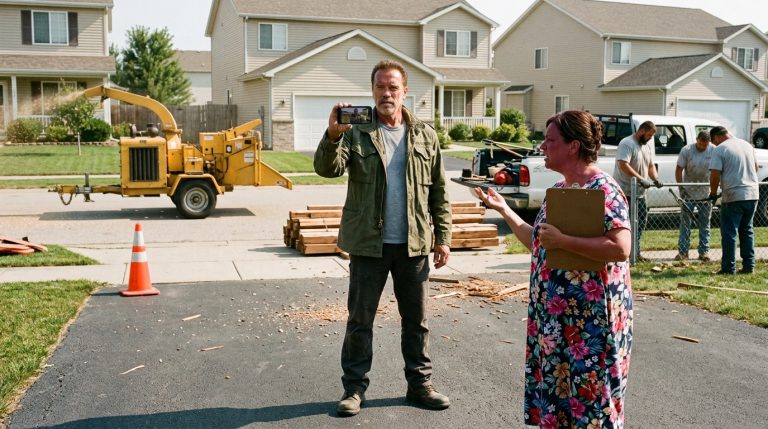
I stood, my back popping as I moved toward the side window. A white city-marked truck with an amber light bar strobing on the roof was idling in the center of my driveway, blocking the path to the street. The side of the truck bore the seal of the municipal Animal Control department.
My pulse didn’t quicken. It slowed. This was the first move in the game of psychological attrition I knew Bethany would play. She hadn’t just called in a noise complaint; she’d weaponized the municipal bureaucracy, likely feeding them a script about “aggressive, high-risk assets” that needed immediate evaluation.
I checked the security feed on the monitor. The driver—a man in a standard-issue uniform—was stepping out, checking a clipboard, and scanning my front yard. Rex and Luna were inside the house, currently sleeping in the den, oblivious to the encroaching threat. They were calm. I needed to keep it that way.
I exited the garage and walked toward the man, keeping my pace steady, my hands open and clearly visible. The air was cool, biting against my skin. The man looked up, his brow furrowed as he saw me. He wasn’t a tactical threat, just a civil servant caught in the crossfire of a suburban war.
“Mr. Thornton?” he asked, his voice professional but guarded. He held the clipboard like a shield.
“That’s me,” I said, stopping ten feet away. I didn’t smile, but I didn’t scowl. I kept my face as neutral as a slab of granite. “I assume this is about the complaint from the neighborhood president.”
He looked surprised that I had bypassed the pleasantries. “I have a report regarding the aggressive behavior of two large canines. I need to conduct a standard welfare and temperament assessment.”
“Understood,” I said. “They’re service animals, currently in a training cycle. I have all the federal certifications and vet records in the house. You’re welcome to see them.”
I didn’t argue. I didn’t act defensive. I knew that in this, as in everything, the truth was my most potent weapon. I led him toward the front door. As we walked, I noticed his eyes scanning the yard, looking for signs of the “property damage” I was sure Bethany had described in her report. There were none, of course. My landscaping was meticulous, and the fence was reinforced, not damaged.
I opened the front door, and the man stepped into the foyer. Rex and Luna rose from the den as we entered. They didn’t bark. They stood perfectly still, their posture disciplined. They were retired K-9s; they knew the scent of a uniform, and they knew how to hold a line.
“These are the subjects?” the officer asked, stepping back slightly.
“These are the dogs,” I corrected firmly. “Rex and Luna.”
He approached them with caution, his hands extended, but the dogs simply watched him, tails wagging once or twice in a polite, controlled greeting. They didn’t lunge. They didn’t show teeth. They waited for my signal.
“Sit,” I commanded, my voice barely a whisper.
They sat.
The officer spent the next twenty minutes going through the motions. He checked their tags, reviewed the certifications I had laid out on the kitchen island, and watched as I took them through their basic obedience protocols. He wasn’t looking for a problem anymore; he was looking for an out.
“Everything seems to be in order,” he said, finally closing his clipboard. He hesitated, looking toward the window at the quiet, tree-lined street. “Look, Mr. Thornton, I’m just doing my job. The report I received… it sounded like there was a full-scale riot going on here.”
“I’m sure it did,” I said. “But as you can see, the situation is quiet.”
“I’ll mark it as a ‘no evidence of violation,'” he replied, tucking his pen away. “But keep in mind, if the complaints keep coming, my department is obligated to investigate every time. It’s a waste of everyone’s resources.”
“I appreciate your professionalism,” I told him, walking him to the door.
As he climbed back into his truck and drove away, I didn’t go back to the garage. I stood on the porch and watched the house across the street. Bethany’s curtains moved just a fraction—enough to know she was watching. She had failed to get the dogs removed, but she had achieved something else: she had forced me to spend time defending my position instead of advancing my investigation.
She was testing my response time. She was measuring how long it took for me to pivot, how I reacted to the pressure of the system, and how I handled a threat to my family’s stability.
I walked back into the kitchen, the silence of the house once again feeling like a tactical vacuum. I sat down at the table and opened my laptop. I didn’t just need to stop her; I needed to anticipate her next vector. If she was using the city, she was likely looking for municipal leverage. I pulled up the city’s zoning department records, my fingers dancing across the keys.
There was a vulnerability in her plan: the more she used official channels to harass me, the more she created a digital paper trail of her own obsession. Every time she called Animal Control, every time she filed a report, she was proving that she was the one creating the disturbance.
I wasn’t just building a case for a court of law; I was building a monument to her hypocrisy. And as I started digging into the historical permit records for the neighborhood, I found something that made my stomach turn—not in fear, but in recognition.
The HOA records weren’t just messy. They were completely absent from the county’s public archives.
I sat there, the light of the screen reflecting in my eyes, and realized the scope of what she had done. She hadn’t just been playing at authority; she had effectively created a shadow government within the neighborhood, a phantom structure she used to extort her neighbors.
The weight of the realization was heavy. I looked over at Rex, who had returned to his spot under the oak tree in the yard. We were in the early stages, but the shape of the mountain I had to climb was finally becoming clear.
I wasn’t just a veteran defending his home anymore. I was a scout, and I had just found the breach in the enemy’s perimeter. I began to map out the connections between the “HOA” fees and the local shell companies, my focus sharpening into a single, crystalline point of intent.
The war wasn’t going to be won on the front porch. It was going to be won in the details. And I had all the time in the world.
CHAPTER 4: The Void in the Records
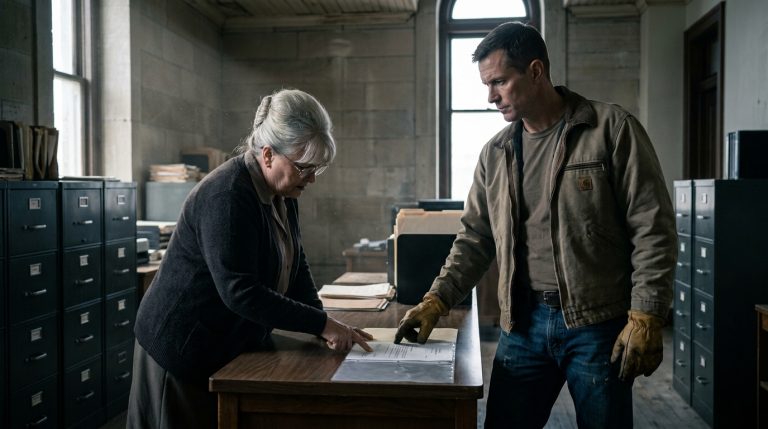
The digital silence of the county archives was far more deafening than the morning chaos of Willowbrook Estates. I sat in the dim light of the garage, the screen of my laptop reflecting in my glasses. I had spent the last three hours trying to locate the foundational incorporation documents for our homeowner’s association. It should have been a matter of public record, a simple request for filing numbers and dates. Instead, I had hit a wall of empty folders and “file not found” errors that didn’t feel accidental.
I tapped the desk, the rhythmic sound echoing against the concrete walls. If the HOA didn’t officially exist in the eyes of the county, then every dollar Bethany had collected in “dues” was technically not an association fee, but something else entirely. Something closer to theft.
I reached for the burner phone I had purchased—a necessary precaution for a man who didn’t want to be tracked by a suburban dictator with delusions of grandeur. I dialed a number I had secured through a contact from my days in the MP corps—a retired clerk in the county recorder’s office who still owed me a favor.
“Ezra?” The voice on the other end was a raspy whisper. “You’re digging in places that don’t like to be looked at.”
“I’m looking for the incorporation papers for Willowbrook Estates, Frank,” I said, leaning back. “I’m getting ghost entries. Are they missing, or were they never there?”
There was a long silence on the other end, punctuated only by the sound of shuffling paper. “I checked the physical manifests, Ezra. They were pulled three years ago by a request logged under ‘Administrative Maintenance.’ The signature on the request form… it’s not an official seal. It’s a personal stamp. ‘B. Crowe.'”
“She pulled the records,” I muttered, the pieces clicking into place. “She didn’t just hide the files; she made them inaccessible to prevent any official audit.”
“She’s smart, Ezra,” Frank warned. “If she’s operating without a legal mandate, she’s not just a nuisance. She’s a criminal. Be careful. People who pull records like that have friends in high places, or they’re blackmailing the ones who do.”
I hung up, the weight of the phone feeling heavier than it should have. I looked over at Rex. He was watching the driveway again, his ears twitching at the sound of a distant lawnmower. The illusion of the “Association” was the lynchpin of Bethany’s control. If I could prove the association was a fiction, her ability to levy fines, dictate property modifications, and intimidate my family would evaporate.
I stood up and walked to the wall where I had pinned my initial intelligence map. I took a red marker and circled the hole where the incorporation documents should have been. It wasn’t enough to know she was a fraud; I had to show the neighbors. But the neighbors were terrified. They saw Bethany as the architect of their property value, the person who kept the neighborhood from slipping into decay. They didn’t see the theft; they saw the manicured lawns.
I needed to see what she was hiding in her own house. If she was keeping the physical records, the true “master” documents, she wouldn’t trust them to a bank or a lawyer. She would keep them close, in the heart of her fortress.
The sun was beginning to dip, casting long, sharp shadows across the driveway. I pulled on a light jacket, the fabric brushing against the holster I had tucked into the small of my back. It was a tool, like any other, and I only carried it when the objective required it. I didn’t plan on breaking into her home, but I did need to see the physical layout of her “office.”
I stepped out of the garage, the evening air feeling crisp and biting. I walked toward the back of the property, keeping to the shadows of the hedges. Willowbrook Estates was designed for privacy, but that design worked both ways. The tall, manicured shrubbery created a series of winding, dark corridors behind the houses that were rarely traveled.
I reached the perimeter of her property, a sprawling Mediterranean monstrosity that looked even more gaudy in the fading light. Every window was shut, the curtains drawn tight. I circled the perimeter, my feet silent on the grass. My goal wasn’t the front door; it was the side access point—a set of French doors that led directly into what I suspected was her home office.
As I moved, I saw her. Bethany was standing in the window, her back to me, talking on a phone. She was pacing, her gestures sharp and frantic. I ducked behind a trellis, holding my breath. I couldn’t hear the words, but the tone was unmistakable—it was the tone of someone losing control of a narrative.
I waited, my patience hardened by years of field operations. After several minutes, she stopped pacing and sat at her desk. She opened a drawer, pulled out a stack of documents, and began writing—not typing, but writing with a fountain pen, the kind of deliberate, slow action that indicated she was signing something important.
She stood up and walked toward a safe built into the wall, tucked behind a portrait of herself. She leaned in, turned the dial, and the heavy metal door swung open. Inside, I saw shelves packed with binders—blue, black, and red. They were organized, labeled with years and house numbers. It was the complete, documented history of every fine, every threat, and every forced buyout she had orchestrated.
It was the archive of her empire.
My pulse quickened, not with the heat of anger, but with the cold, steady focus of a predator. I had the confirmation I needed. The decoy secret—the “unauthorized pet structure” violation—was a cover, a petty distraction she used to keep people looking at their own lawns instead of at her ledgers.
I stepped back, moving into the deeper shadows of the neighbor’s yard. I had seen enough. The ledger wasn’t just a collection of notes; it was a roadmap to her downfall. But as I turned to leave, a motion sensor light at the corner of the house suddenly flared to life, flooding the area with a blinding, white glare.
I froze, pressed into the side of the house, my heart rate steadying as I counted the seconds. Had she seen me? I waited for the shout, the sound of a door opening, the arrival of police. Nothing happened. The light stayed on for thirty seconds, then clicked off, plunging the yard back into darkness.
I turned and moved back toward my property, my steps light, my mind already working through the next phase. I knew where the heart of the monster was. Now, I just had to decide how to reach in and pull it out.
The house was dark when I returned. I slipped through the back door, the scent of Carmen’s dinner still hanging in the air. I went straight to the kitchen, where I had stashed the encrypted hard drive I had been building. I didn’t turn on the lights. I sat in the darkness, the faint glow of the refrigerator the only illumination.
I was no longer just defending my perimeter. I was preparing to dismantle hers. And tomorrow, I was going to start by making a few phone calls that would make her life a living hell.
CHAPTER 5: The Midpoint Trap
The blue light of the laptop screen cut through the kitchen darkness, illuminating the email subject line like a flare in a night sky: URGENT: FINAL NOTICE REGARDING UNAUTHORIZED STRUCTURES.
My finger hovered over the trackpad. It was 11:30 p.m. Most people were sleeping, but Bethany Crowe was clearly still in the thick of it, firing off automated intimidation missives. I opened the message. It was a masterpiece of passive-aggressive legalese, demanding I dismantle the “unauthorized” dog-training equipment in my backyard within forty-eight hours or face a “special community enforcement intervention.”
I leaned back, the plastic of the kitchen chair groaning under the shift in my weight. She was pushing. The restraining order I had already begun drafting, along with the evidence of the shell company fraud I had uncovered, were ready to go, but I wasn’t ready to pull the trigger. Not yet. I needed her to overextend. I needed her to put her signature on something so blatantly illegal that the authorities wouldn’t have a choice but to act.
A memory flickered—a failed negotiation in a dusty village square overseas. I had tried to talk reason to a local leader who had already decided the outcome. I had walked away with nothing but a lingering sense of my own tactical naivety. I wouldn’t make that mistake here. Bethany wasn’t a peer to be reasoned with; she was a variable to be removed.
I began typing. I didn’t send a response; I sent an invitation. I crafted a formal, polite reply requesting an “emergency audience” to discuss the violations, citing a desire to “resolve these concerns in a manner conducive to neighborhood harmony.” It was a trap, coated in the kind of submissive, conciliatory language she couldn’t resist. It fed her ego, painting me as the cornered veteran finally ready to surrender.
I hit send. Then, I turned to the real work.
I spent the next two hours finishing the audit of the “Willowbrook Enhancement Solutions” accounts. Carmen walked into the kitchen, the soft click of her nursing clogs muffled by the rug. She set a cup of tea down on the table, her face drawn with the exhaustion of a double shift at the VA. She looked at the screen, her eyes tracing the line items—the inflated landscaping fees, the mysterious administrative costs.
“She’s moving money faster than she’s spending it,” Carmen noted, her voice steady. “This looks like a classic pump-and-dump. She’s trying to inflate the cost of living here to drive people out.”
“Exactly,” I said. “And if she holds an ’emergency board meeting’ to discuss my ‘violations,’ she’ll have to provide a record of expenses to justify the enforcement costs. If she brings those books, she’s bringing her own indictment.”
Carmen sat down, her hands wrapping around the warm mug. “You’re going to bait her into a public audit.”
“I’m going to make her believe that if she manages to force me out, she can seize the equipment and liquidate it as a ‘community asset.’ It’s the kind of profit-driven move she can’t ignore.”
The house was still, the only sound the faint, rhythmic ticking of the wall clock. I felt the sharp edges of my resolve deepening. Every interaction I had with her, every email, every move, was now calculated for maximum friction. I wasn’t fighting a war of attrition; I was conducting a surgical strike on the very foundation of her power.
I stood up and walked to the window. The street was empty, a row of identical houses sleeping under the amber glow of the streetlights. Somewhere in that stretch of road, Bethany was probably waiting for my compliance. She was probably already drafting the next violation.
I reached out and adjusted the blinds, narrowing the view to the driveway. I needed her to think she had won the first round. I needed her to be arrogant. Arrogance was a blind spot, and in a fight like this, a blind spot was exactly where the kill shot was placed.
My phone chimed again. A reply. “An emergency board meeting has been scheduled for Wednesday at 2:00 p.m. at the community center. Your presence is required.”
I smiled, a thin, humorless line. It was perfect. She had taken the bait, and she had chosen the location herself. I closed the laptop, the screen going black, leaving the kitchen in deep, comforting shadow.
“Tomorrow,” I said to the quiet room, “we start the audit.”
Carmen nodded, her expression grimly satisfied. We were ready. The tactical planning was done; the psychological trap was set. Now, all that was left was to walk into the lion’s den and watch the beast tear itself apart. I walked to the hallway, checking the locks—not out of fear, but out of habit.
The perimeter was secure, but the real battle was moving into the center of the neighborhood. I went to bed, but I didn’t sleep. I lay in the dark, my mind running through the sequence of events like a slide deck, refining the timing, adjusting for the variables, and waiting for the sun to rise on the most important meeting of my civilian life.
CHAPTER 6: The Financial Thread
The morning sun didn’t offer warmth; it offered clarity. I spent the early hours finalizing the digital packet for the meeting, my fingers moving with a mechanical, rhythmic efficiency. The evidence of embezzlement—the inflated invoices from Willowbrook Enhancement Solutions, the non-existent safety consulting fees—was layered with a precision that would be impossible for any auditor to overlook. If Bethany brought the ledgers, she was walking into a self-constructed guillotine. If she didn’t, the discrepancy alone would be enough to trigger an immediate external review.
By noon, the house was a hive of quiet, focused energy. Carmen was in the den, reviewing the timeline of her own findings from the previous board meeting—the inconsistencies in meeting procedure, the lack of a legal quorum. We were a two-person intelligence unit, operating with a tactical synchronization refined over years of shared crises.
“She’s already at the community center,” Carmen said, not looking up from her screen. She had a localized surveillance feed on one of our tablets—a connection to a neighbor who was still loyal to the truth. “She’s got the lights on, the PowerPoint loaded. She looks… frantic, Ezra. Pacing, checking the doors every thirty seconds.”
“She knows something is off,” I replied, standing up to check my gear one last time. I wasn’t carrying a weapon, but I was carrying the legal equivalent of a tactical loadout. My briefcase was organized with tabs, references, and color-coded summaries. “She’s expecting a fight, but she’s expecting it on her terms. She thinks I’m going to beg for a waiver on the dog structure fees.”
“And if she realizes what you’re actually bringing?”
“Then she’ll try to shut down the meeting before the first motion is called.” I looked at Carmen, and for a moment, the tension shifted. There was a flicker of something raw in her eyes—not fear, but the sharp, protective love of a woman who had seen too much to ever be surprised by malice again. “If she shuts it down, we force the disclosure. We don’t need a formal vote to put the evidence into the record.”
I left the house at 1:45 p.m. The walk to the community center felt like a patrol through hostile territory. Every driveway I passed, every trimmed hedge, felt like a potential point of surveillance. The neighborhood was quiet, unnaturally so. It was as if the very air was holding its breath.
When I reached the community center, I didn’t go through the front. I stayed to the perimeter, scanning the windows. The room was already packed. I saw Mrs. Patterson, the Hendersons, and several other families—people I had exchanged polite, stiff nods with over the last six months. They looked nervous, their eyes shifting constantly toward the podium where Bethany was currently adjusting a microphone.
I walked in through the main doors at exactly 2:00 p.m.
The sound of the door clicking shut behind me was like a hammer strike. Every head in the room turned. Bethany froze, her hand gripping the edge of the podium. For a second, the manic energy that had been fueling her for days seemed to dissipate, replaced by a cold, sharp shock. She hadn’t expected me to arrive alone, calm, and prepared.
“Mr. Thornton,” she said, her voice strained, a jagged edge of insecurity cutting through her practiced tone. “You’re late. The agenda for today’s emergency session is focused on community security violations.”
“I’m here to discuss community assets, Bethany,” I said, my voice steady, carrying clearly across the silent room. I didn’t sit. I remained standing at the back, a position that allowed me to maintain a view of every exit and every participant. “And the legal status of the board itself.”
She visibly recoiled. Her face flushed, a deep, ugly red that she tried to cover with a tight, brittle smile. “That is not on the agenda. We are here to talk about your animals, and your failure to adhere to the property standards this community depends on.”
“The animals are compliant, as verified by Animal Control this morning,” I continued, feeling the collective shift in the room. The neighbors were listening now, their attention pulled away from her PowerPoint and toward the center of the room. “The real issue is the financial health of the residents who have been paying dues to an entity that, according to the county archives, does not officially exist.”
The room erupted into a low, buzzing murmur. People were looking at each other, the confusion on their faces turning into something much more dangerous: doubt.
Bethany gripped the podium so hard her knuckles turned white. “You have no idea what you’re talking about. This is a private, organized association with full legal authority!”
“Then produce the incorporation papers,” I challenged, stepping forward. “Produce the current year’s audited financial reports. If the board is legitimate, you’ll have no problem showing the residents exactly where the $47,000 in ‘consulting fees’ went last year.”
She gasped, the sound sharp and desperate. She reached for the remote, her fingers trembling, and tried to click to the next slide in her presentation—a slide that was supposed to show a doctored photo of a scratched fence. But the computer hesitated, the screen flashing a loading icon for a second too long.
In that second of silence, I realized she was losing them. The neighbors weren’t looking at her charts; they were looking at their own bank statements. The seed of suspicion had been planted, and it was growing faster than she could contain.
“I will not be bullied by a… a malcontent who refuses to follow the rules!” she shrieked, the mask finally slipping. The polite, polished HOA president was gone. In her place was a woman screaming at shadows, her authority dissolving in the harsh, unflattering light of the room. “Security! Remove him!”
There was no security. There was only a room full of people who were beginning to realize that the person they had been listening to for years hadn’t been protecting their property values—she had been holding them hostage.
I held my ground, my hands at my sides. “I’m not leaving, Bethany. And neither is the evidence.”
I reached into my briefcase and pulled out the first page of the financial summary. I didn’t throw it. I didn’t shout. I simply held it up, a single piece of paper that held the power to bring her entire, fraudulent world down.
CHAPTER 7: The Legal Noose
The silence in the community center was absolute. Even the shuffling of feet had ceased. Fifty pairs of eyes were fixed on the single sheet of paper in my hand. Bethany, trapped behind the podium, looked like she was trying to calculate the trajectory of a bullet that hadn’t been fired yet. Her mouth opened, closed, and opened again, but the rehearsed justifications died in her throat.
“This,” I said, my voice cutting through the vacuum of the room, “is a summary of the ‘consulting’ expenditures from last fiscal year. Nearly fifty thousand dollars paid to a company that shares the same registered business address as a vacation rental property in coastal Florida. A property, I might add, which is currently owned by an LLC managed by Ms. Crowe.”
I didn’t need to yell. The facts were doing the heavy lifting. I could see the neighbors—Mrs. Patterson, the Hendersons, the people who had signed those manufactured lies—literally leaning away from Bethany, as if her proximity had become a physical hazard.
“That’s a fabrication!” Bethany finally managed to shriek, her voice cracking like dry timber. “He’s a stalker! He’s using his military training to fabricate evidence! Security, why isn’t anyone doing anything?”
“There is no security, Bethany,” I said, stepping toward the center aisle. I wasn’t moving toward her; I was moving toward the crowd. I needed to bridge the gap between their fear and the reality I was presenting. “There’s just the truth. I’ve spent the last six months documenting everything—every threat, every violation, every dime of community money that’s been siphoned away from our families. This wasn’t about property values. This was about clearing out residents who were capable of asking questions.”
I looked directly at Mrs. Patterson. She was clutching her purse, her knuckles white. “She told you I was dangerous, didn’t she? She told you my dogs were a threat to your children. She told you that because she knew I had the background to look at these numbers and see exactly what she was doing.”
The realization dawned on the room like a cold front. It wasn’t an explosion of anger; it was an implosion of belief. The people who had been intimidated, the people who had been lied to—they were finally seeing the architect of their misery for exactly what she was: a desperate, cornered grifter.
Then, the door at the back of the hall opened.
It wasn’t a neighbor. Two men in dark, nondescript windbreakers entered, their gait efficient and purposeful. They didn’t look at the crowd; they looked straight at Bethany. The shift in the room was instant. The air grew dense, charged with a sudden, overwhelming sense of finality.
“Bethany Crowe?” the taller of the two asked. His voice was flat, devoid of theatricality. He reached into his jacket, and the metallic flash of a badge caught the harsh fluorescent light. “I’m Special Agent Miller. I have a federal warrant for your arrest regarding charges of wire fraud, mail fraud, and conspiracy to commit housing discrimination.”
The room seemed to drop another ten degrees. Bethany didn’t scream this time. She just went limp. The podium seemed to be the only thing keeping her upright. She looked at me—not with hate, but with a sudden, horrifying clarity, as if she were seeing the reality of her own choices for the first time.
“You,” she whispered.
“I didn’t bring them here, Bethany,” I said, my voice low enough that only she could hear me. “Your own paper trail did that. You never learned the most basic rule of intelligence: never leave evidence behind that you can’t control.”
The agents moved with clinical speed. They reached the podium, the sound of handcuffs clicking echoing through the center like a gavel. She was led away, her designer suit now rumpled, her composure shattered beyond repair. She didn’t fight. She walked out with the dazed, hollow expression of someone whose entire identity had just been stripped away.
When the doors clicked shut behind them, the silence returned, but it was different now. It was the silence of a fever breaking.
I looked at the crowd. They were still frozen, but the fear had been replaced by a tentative, confused relief. I stepped up to the podium, placing my briefcase on the surface where Bethany had stood only moments before.
“The HOA doesn’t exist,” I told them, my voice projecting with the practiced cadence of a command officer. “But our community does. We have a lot of work to do to untangle the fraud, but we’re going to do it together. And this time, we’re doing it with transparency, with audited records, and with the collective respect of the people who actually live here.”
I looked at the neighbors, meeting their eyes one by one. I saw the shame, the realization of how easily they had been manipulated, and the nascent spark of a genuine community forming in the debris of the old one.
“Starting tonight,” I continued, “this neighborhood belongs to the residents. We’re going to secure the records, we’re going to initiate a formal audit, and we’re going to make sure that no one ever has to fear their own home again.”
The applause didn’t start all at once. It began with one person, then another, until the room was filled with the sound of people waking up from a long, bad dream. I turned off the microphone. The job wasn’t done—the legal fight for the embezzled funds and the restructuring of the community was just beginning—but for the first time in six months, the air in Willowbrook Estates didn’t taste like ozone and panic.
It tasted like a fresh start.
CHAPTER 8: The Desperation Spiral
The silence in the community center was no longer a vacuum; it was a weight. The agents had been gone for less than a minute, but the departure had left a void in the center of the room. People were still standing, their faces caught in a state of suspended animation, the adrenaline of the arrest slowly giving way to the cold, creeping reality of what had just happened.
I didn’t move. I kept my hand on the briefcase, the hard, textured leather a grounding anchor. Behind me, Mrs. Patterson was sobbing quietly into a handkerchief, the sound thin and discordant. Beside her, others were murmuring, their voices rising in an uncoordinated, frantic chatter.
“She’s gone,” someone said. It wasn’t a question. It was a realization.
I stepped away from the podium and walked toward the center of the room, my movements deliberate and measured. I was watching them, gauging their reactions. There was a specific kind of confusion that followed the removal of a tyrant; the sudden, terrifying freedom of a space where the rules had been suspended.
“We need to secure the files,” I said, my voice steady, cutting through the murmuring. I directed my focus toward Jennifer Santos, the neighbor who had helped with the forensic accounting. “Jennifer, you were tracking the financial access points. Do you have the login credentials for the primary account? If she’s been arrested, the banks will lock the assets within the hour. We need to freeze them before the shell companies liquidate.”
Jennifer looked up, her expression a mix of shock and resolve. She nodded, pulling out her tablet. “I have the administrative portal access. I can initiate the freeze, but I’ll need a board resolution to override the current user credentials.”
“Consider it done,” I replied. “We have enough people here to establish a temporary quorum.”
The transition from conflict to logistics was the only thing keeping the room from spiraling. I was leveraging the vacuum, filling it with structure before the chaos of fear could take root. But even as we moved toward the desk to begin the audit, I caught sight of Bethany’s daughter—a teenager standing in the back of the room, her face white as a sheet, her phone clutched in her hand like a weapon.
She was recording. She was streaming.
The realization hit me with the force of a physical blow. The arrest was only the beginning of the legal battle; the propaganda war was still raging, and it was being fought in the digital ether. She wasn’t just observing; she was gathering the narrative, feeding it into whatever echo chamber her mother had cultivated.
I didn’t approach her. I couldn’t. Any move I made would be interpreted as intimidation, a narrative anchor for her to use against me. I let her film, my face neutral, my posture relaxed.
“Mr. Thornton,” a voice called out. It was Mr. Henderson. He was holding his phone out, looking at me with a mixture of hope and deep, profound shame. “We didn’t know. About the shell companies. About the fraud. We just… we just wanted to keep our homes.”
I looked at him, seeing the erosion of the ego-defense that Bethany had used to keep them compliant. “I know,” I said. “Fear is a powerful motivator. But fear is a shitty foundation for a community. We’re moving forward now. If you want to help, we’re going to need people to catalog the actual association assets, starting tonight.”
The room began to reorganize. It wasn’t the spontaneous joy of a liberation; it was the tired, heavy labor of reconstruction. We spent the next three hours going through the drawers, the filing cabinets, the back-room storage—finding the paper trails of the fraud. It was a grim harvest. There were receipts for “consulting” that were clearly just invoices for high-end retail; there were letters of harassment, stored in alphabetical order by house number.
As we worked, the reality of what Bethany had done began to sink in. This wasn’t just a suburban dispute; it was a systematic, clinical extraction of wealth. I found a binder titled Target Acquisition, filled with files on the military families who had been forced out before us. The detail was sickening—notes on their habits, their finances, even their children’s school schedules.
I felt a phantom sensation—the weight of a rifle stock against my shoulder, the smell of cordite, the claustrophobic tension of a patrol in a hostile sector. It was the same logic. The same tactical cruelty.
“Ezra,” Carmen said, stepping into the back office. She looked drained, but her eyes were sharp. “We found something else. In the safe. The agents missed it because it was tucked behind the rear panel.”
She held out a USB drive, small, silver, and unremarkable.
“What is it?”
“The digital backup of the ’emergency interventions,'” she whispered. “Every call, every bribe, every conversation she had with the real estate firm in Florida. It’s all here.”
I took the drive, the metal cold and biting against my thumb. It was the final, totalizing proof. It was the end of the decoy narrative. I didn’t plug it in. I didn’t need to. I knew what it contained, and I knew what it meant.
The desperation of the last six months—the restraining orders, the animal control calls, the propaganda—it all fell away, leaving behind the stark, ugly architecture of a crime that spanned states. Bethany wasn’t just a neighborhood dictator. She was a foot soldier in a much larger, much colder war.
I looked at the drive, then at the room full of people trying to put their lives back together. The real work was just beginning. The arrest was the catalyst, but the truth… the truth was a fire that was going to burn for a long time.
CHAPTER 9: The Final Disassembly
The drive was warm. I kept it closed in my fist as I walked out of the community center, the night air hitting me with a sudden, sharp clarity. Behind me, the muffled sounds of the audit team—neighbors who had finally traded fear for accountability—echoed like distant, rhythmic heartbeats. They were doing the manual labor of cleaning up the mess, but the real work, the surgical removal of the malignancy that had infected Willowbrook, started with the information I was holding.
I didn’t head home. I walked toward the back of the property, toward the dark, sprawling silhouette of Bethany’s McMansion. The house was cold, silent, and abandoned, its windows staring back at me like dead eyes. The police tape was already fluttering in the wind, a bright, reflective ribbon against the dark masonry.
I bypassed the front entrance, moving instead to the side, to the French doors I had scouted days ago. The glass was unbroken, the locks still engaged, but the entire scene felt flimsy—the facade of a life built on paper. I didn’t need to break in. I needed the final piece of the puzzle: the physical correspondence, the original contracts, the hard copies that linked the local fraud to the national investment firm, Pinnacle Property Investments.
I didn’t break the glass. I used a tension wrench—a simple, elegant tool that served the purpose better than force. The door clicked open with a faint, metallic protest.
Inside, the house smelled of stale vanilla and ozone, the scent of a woman who had lived under the constant pressure of a self-imposed lie. I moved through the living room, my footsteps silent on the expensive, synthetic carpet. The house was too big, too empty, a monument to a greed that had never been enough to satisfy.
I went straight to the study. The portrait was still there, crooked now, hanging by a single hinge. I pushed it aside, the wall safe exposed. It was already open—the agents had been through it, but they had been thorough in a way that left the ‘confidential’ garbage behind. I scanned the floor. They had taken the binders, but they had left the shredded remains of a notebook—the pink, ridiculous thing she had used to track us.
I picked up the fragments. They weren’t just random musings. They were dates, names, and property values—a ledger of every family she had forced out. This was the raw evidence of the demographic cleansing, the physical proof of the gentrification scheme.
I sat at the desk, the room feeling like the center of a hurricane that had finally passed. I plugged the USB drive into my laptop. The files opened instantly: spreadsheets, audio recordings, emails. It was a digital map of the entire operation. I saw the emails from Pinnacle Property Investments, the directives to “increase the frequency of violations for target properties,” the promises of “referral bonuses” for every foreclosure she facilitated.
It was all there. The “HOA” was never a governance body; it was a front, a tactical unit designed to manipulate real estate through psychological warfare.
I sat there for a long time, the only sound the faint hum of the hard drive and the distant wind against the siding. The anger I had felt—the sharp, burning rage of the first few months—was gone. In its place was a cold, satisfied resolve. I had wanted retribution, but what I had found was something better: the absolute, irrevocable end of the threat.
I copied the data to a secure cloud server, then to a physical drive. I didn’t need to destroy the house, or the life she had built. The truth did that on its own.
As I walked out of the study, I paused at the fireplace. I took the shredded notes—the physical record of her terror—and tossed them into the hearth. A single match was enough to turn the evidence of her small, petty cruelty into ash.
I exited through the French doors, pulling them shut until they clicked into place. The house behind me was just a structure again, a pile of wood and stone that had lost its power to hold fear.
I walked back to my own home, the night air feeling cleaner than it had in years. I reached my front porch, the porch where the war had begun with the splintering of a door. I stopped, looking at the repaired wood. It was strong, solid, and real.
I opened the front door, and the sound of Rex and Luna’s breathing from the den washed over me. It was the sound of a house that belonged to us, not a board, not a dictator, not a corporation.
I took a deep, steady breath. The case was closed, the evidence was with the prosecutors, and the neighborhood was waking up. Tomorrow would bring the fallout, the legal proceedings, and the long, slow work of rebuilding trust. But for now, the silence was mine. And it was peaceful.
CHAPTER 10: The Quiet Denouement
The morning sun, when it finally breached the horizon, was different. It wasn’t the harsh, accusatory light of the surveillance days; it was the soft, golden warmth of a neighborhood beginning to breathe again. I stood on my front porch, a heavy wrench in my hand, staring at the frame of my front door. The wood was still scarred from the night Bethany had kicked it in, a jagged, splintered reminder of a time when my family’s sanctuary was under siege.
Carmen stepped out, a mug of coffee in each hand. She didn’t say anything, she just watched as I began to unscrew the strike plate, my movements slow and deliberate. The frantic pace of the last few weeks—the audits, the late-night data mining, the tactical maneuvering—had left me with a strange, lingering exhaustion, a physical weight that seemed to drain out of me with every turn of the bolt.
“You’re finally fixing it,” she said, her voice soft.
“It’s maintenance,” I replied. “Everything requires maintenance. People, homes, communities. You let it go, and the rot sets in.”
I pulled the damaged wood away, revealing the clean, hollow space of the frame. It was a simple, manual task. There were no cameras here, no hidden files, no strategies to counter. Just the honest, physical labor of making a home secure again.
Beyond the porch, Willowbrook Estates was beginning its day. Across the street, the Hendersons were out, not patrolling with notebooks, but walking their own dogs. They saw me, paused, and offered a simple, tentative nod. It wasn’t the stiff, defensive greeting of the past. It was an acknowledgment. The wall of manufactured animosity had crumbled, leaving behind only the reality of people living next to one another.
The work of the aftermath was already in motion. The federal investigators had finished their initial sweep of the community center, leaving behind a neighborhood that had to reconcile with its own complicity. There would be lawsuits, there would be public forums, and there would be the long, painful process of healing the families who had been forced out. But the fear—the paralyzing, suffocating fear that had defined our lives—was gone.
I attached the new, reinforced strike plate, the metal cool and heavy. I tightened the screws, listening to the solid, satisfying ‘thunk’ as the wood took hold. It was done.
Carmen came down the steps and stood beside me, the coffee steam rising in the quiet air. “The foundation is having their first meeting tonight at the new community center. The one where the McMansion used to be.”
“I heard,” I said. “They’re talking about the scholarship distribution. The first round of applicants is already in.”
“It’s good, Ezra. It really is.” She leaned her head against my shoulder. “But you can stop now. The war is over.”
I looked out at the street. The BMW that had sat in the driveway across the way, a symbol of everything that had been wrong, was gone. The house itself was being prepped for the foundation’s expansion—not a gaudy monument to greed anymore, but a place where therapy dogs were trained, where spouses found support, and where the echoes of the old regime were being replaced by the mundane, beautiful sounds of people helping one another.
I turned the key in the lock. The mechanism turned smoothly, without the friction it had carried since the night of the breach. I tested the door, feeling the solid, unyielding resistance of a secured threshold.
I thought back to the folder of notes, the shell companies, the hundreds of hours spent in the dark, and realized that the greatest victory wasn’t the arrest or the federal charges. It was the ability to stand on my own porch and feel nothing but the morning air.
“I’m not fighting,” I said, putting the wrench back into the toolbox. “I’m just securing the house.”
We walked inside, the door closing behind us with a firm, final click. I left the porch behind, the lingering scent of autumn and the quiet, steady rhythm of the neighborhood filling the space. For the first time in six months, I wasn’t looking at the street for threats. I was looking at my family.
The struggle had changed us—it had sharpened us, hardened us—but as I moved through the kitchen, checking the security logs one last time before clearing them, I knew it had also given us something we hadn’t had before. We had built a sanctuary that couldn’t be bought, forced, or intimidated. We had earned our peace, piece by piece, and now, we were finally, truly home.
I sat at the table, the morning sun painting the wall with a steady, tranquil glow. I put the laptop away, closing the lid on the last of the evidence, the last of the war. There were no more puzzles to solve, no more decoy secrets to unmask, and no more enemies to outmaneuver. Just the quiet, beautiful, and hard-won reality of a life that was finally entirely our own.