The Weight of Frozen Iron and the Cold Bureaucracy of Clear Haven Estates
CHAPTER 1: THE FROSTLINE ACCORD
The temperature dropped three degrees in twenty minutes. Standing at the sharp outer curve of Ridgeview Drive, I could smell the sharp, metallic tang of an impending freeze.
The road wasn’t going to wait. Every year, this specific stretch turned into an oil-slick mirror before midnight.
I rolled the brass tire-tread depth gauge between my thumb and index finger, feeling the knurled metal bite into my calloused skin. The knurling was worn smooth on one side—a habit from twenty years on industrial job sites.
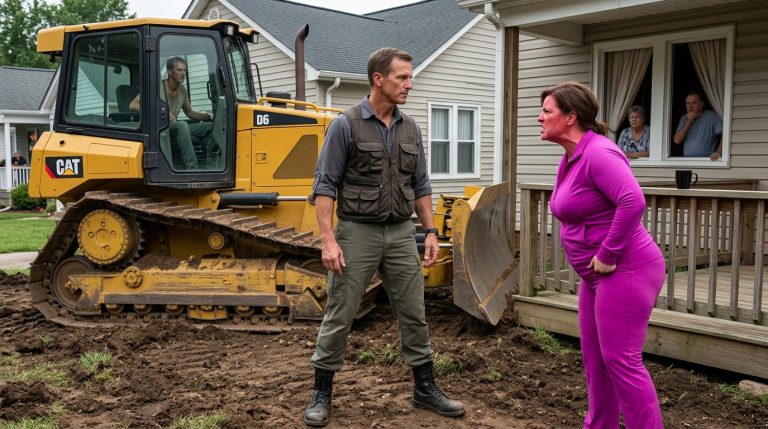
I hauled the steel-frame barricade out of the bed of my truck. I’d welded the braces myself out of two-inch square tubing. It wasn’t pretty. It carried the dull, dark gray finish of industrial primer, topped with high-visibility reflective yellow sheeting and stark black lettering: BLACK ICE AHEAD. REDUCE SPEED.
A set of headlights cut through the blue twilight, low and aggressive.
A white Porsche Panamera rounded the lower rise, its tires making a dry, whispering hiss against the asphalt. The brakes grabbed hard. The nose dipped.
Selena Hart rolled down her driver’s side window. The warmth from her climate-controlled cabin billowed into the freezing air, carrying the heavy scent of expensive vanilla perfume.
“Monroe,” she said. Her voice had the crisp, practiced edge of a corporate legal deposition. “Take that eyesore down.”
I didn’t move from the shoulder. My thumb kept rolling the brass gauge against my palm. “The temperature’s down to thirty-one. The runoff from the upper lot is already freezing across the crown.”
“I don’t care about your amateur weather reports,” she said, resting one manicured hand on the top of her leather-wrapped steering wheel. Her fingernails were painted a dark, dried-blood crimson. “Clear Haven Estates has strict visual standards. Section Four, Paragraph B. No unauthorized structures or signage on common roads.”
“This isn’t a sign, Selena,” I said, stepping closer to her door. “It’s two hundred pounds of steel meant to keep a two-ton car from sliding forty feet down the embankment into the culvert.”
“It’s an eyesore,” she repeated, her eyes narrowing. “And you don’t own this road.”
“The county owns the right-of-way up to six feet from the curb,” I said flatly. “I checked the plat maps this morning.”
A micro-expression flickered across her face—a quick, tightening contraction around her jawline before she masked it with a cold smile. She tapped her crimson nails against the leather wheel.
“Remove it by eight tomorrow morning, Caleb,” she said, her tone dropping into a quiet, weaponized whisper. “Or the board will have it impounded, and you’ll be billed for the labor.”
She didn’t wait for an answer. She jabbed the accelerator. The Porsche’s rear end gave a tiny, sickening twitch to the left as the rear tires hit the thin sheet of frost forming over the asphalt. She caught it quickly, the traction control light flashing orange on her dash for a fraction of a second, before she sped off into the dark.
I stood alone on the curve, the wind cutting straight through my canvas jacket.
I tapped the brass gauge against the steel barricade. The ring was solid, heavy, and unyielding.
She wasn’t worried about the sign’s appearance. She was worried about why the water was pooling on the curve in the first place.
CHAPTER 2: THE PAPER TRAIL ON ICE
The red glow of Selena’s taillights dissolved into the freezing fog at the bottom of Ridgeview Drive.
The wind didn’t just blow; it scraped along the asphalt, carrying sharp, needle-like grains of sleet that stung my neck. I knelt beside the two-inch steel tubing of the barricade, running my gloved fingers along the base where it rested on the gravel shoulder. The ground was already crusting over, a hard grey skin of ice binding dirt to steel.
I pulled my hand back, feeling the cold seep straight through the leather work gloves.
By six thirty the next morning, the sun hadn’t surfaced. The sky hung like a sheets of dirty slate over Clear Haven. I stood in my driveway, warming the truck’s engine, listening to the rhythmic, diesel-clack of the idle.
When I drove back down to the curve, the barricade was gone.
Not moved to the side. Not knocked over. Gone.
Where the heavy square tubing had sat, two clean, dark rectangles remained in the frosted mud—deep indentations where two hundred pounds of American steel had been lifted straight into the bed of a pickup. Beside those marks were the fresh, aggressive tread prints of a heavy-duty commercial tire. A county utility truck, or the HOA’s contracted maintenance rig.
I didn’t yell. I didn’t smash my knuckles against the steering wheel. That kind of anger is cheap, and it burns out too fast. Instead, I reached into my coat pocket, pulled out a small digital camera, and began taking photo after photo—the tire tracks, the indentations in the frozen mud, the unbroken sheet of black ice coating the apex of the turn.
My phone vibrated in my palm. The screen glowed with an automated broadcast email from the Clear Haven Estates Board of Directors.
Subject: Unauthorized Signage and Community Safety Protocol.
I clicked it open. Selena’s corporate prose was slick, stripped of any raw hostility, refined into pure bureaucratic muscle.
“Residents are reminded that all unapproved structures placed within common areas—including public right-of-ways—violate Article VI of the Community Covenants. Recent unauthorized installations on Ridgeview Drive have created visual hazards and disrupted the aesthetic harmony of our neighborhood. The Board has arranged for immediate removal. Furthermore, residents are cautioned against generating unnecessary panic regarding seasonal weather conditions, as our contracted municipal services remain fully capable…”
Attached to the bottom was a high-resolution photo of my steel barricade sitting in the back of a maintenance shed, stamped in bright red digital text: NON-COMPLIANT / RECLAIM FEES APPLY.
I locked the phone screen and slid it back into my pocket. My thumb automatically found the knurled edge of the brass tread gauge.
She thought she was playing a game of municipal chicken. She thought if she cited enough bylaws and slapped enough red stamps on my property, I’d retreat into my garage and complain over morning coffee like every other retiree in this development.
She didn’t know about the binder sitting on my kitchen table.
An hour later, I was sitting in the cold parking lot of the County Clerk’s Office, three miles outside the development’s gates. The truck’s heater blew lukewarm air over my boots.
On my lap lay three printed documents: the original plat map for Clear Haven Estates Phase II, a printout from the state highway administration detailing winter road classification, and a certified copy of the county right-of-way easement.
I tapped my pen against the margin of the easement document.
The HOA didn’t own the shoulder of Ridgeview Drive. The county did. The first eight feet from the curb fell directly under municipal jurisdiction—and under state law, any citizen had the right to place temporary hazard warnings on public property during documented severe weather events if local authorities failed to maintain the road.
I pulled out my phone and dialed the non-emergency line for the local sheriff’s precinct.
“Deputy Vance,” a voice answered after two rings.
“Vance, it’s Caleb Monroe.”
“Caleb. You calling about the freeze? We’ve already had two fender-benders down on Route 9.”
“I’m calling about Ridgeview Drive,” I said, my voice steady, cutting through the background chatter on his line. “I placed a steel safety barricade on the public shoulder at the S-curve last night. Sometime between midnight and five this morning, someone trespassed on county easement and removed it.”
A brief pause stretched over the line. “Selena Hart?” Vance asked, his tone shifting into something tired and familiar.
“She sent a neighborhood-wide email taking credit for it,” I said. “I have the timestamped email, photos of the tire tracks, and a copy of the county plat map showing the easement line. I’m filing an official interference report with the county roads supervisor by noon.”
“Caleb…” Vance sighed, the sound of heavy boots shifting on linoleum coming through the speaker. “The board considers that private property internal drama.”
“It stops being internal drama when her removal of that sign causes a two-ton vehicle to cross the centerline into oncoming traffic,” I said. “I’m not asking you to arrest her, Vance. I’m telling you that when the first car goes down the embankment into the runoff ditch, there’s going to be a paper trail showing the county was notified that a known hazard marker was illegally removed.”
Silence held for five seconds. In the background, I heard the faint clatter of a dispatcher typing on a keyboard.
“Send me the photos, Caleb,” Vance said quietly. “And keep your phone on.”
I hung up, looking down at the second sheet in my folder—a printed record from the regional drainage authority labeled Ledger-9. It was a maintenance log from five years ago detailing a structural failure in the subterranean storm culvert right under the S-curve. A failure that the developer—and subsequently the HOA board—had deferred repairing to save eighty thousand dollars before the final site release.
Selena hadn’t removed the barricade because it was ugly.
If people stopped to look at the ice on that curve, they’d look at the water pooling beneath it. And if they looked at the water, they’d realize the whole road was sitting on a collapsed pipe that was slowly washing out the foundation beneath their half-million-dollar homes.
I put the truck in gear and turned the wheel toward the HOA administrative hall.
CHAPTER 3: THE SINKING FOUNDATION
The truck’s tires hummed a harsh, dry rhythm against the freezing asphalt as I pulled into the lot of the Clear Haven Community Center.
The building was a sprawling, faux-timber structure built to mimic a mountain lodge. Its steep shingle roofs held a crust of dirty snow, but the wide concrete steps leading to the glass front doors had been meticulously salted—unlike Ridgeview Drive.
I grabbed the manila folder from the passenger seat, along with a heavy steel clip file containing the high-resolution prints of the tire tracks and the easement survey. My brass depth gauge rested in my right pocket, heavy and cool against my thigh.
Inside, the lobby smelled of pine-scented floor cleaner and stale coffee.
Behind the dark mahogany desk sat Jim Roar, the HOA board president. He was staring into a tablet, his wire-rimmed glasses resting low on his nose. A silver fountain pen sat clipped to his breast pocket. He didn’t look like a man who spent his time shoveling driveways; he looked like an actuary calculating the exact financial threshold where human lives became an acceptable business expense.
“Caleb,” Jim said without looking up. “I saw the broadcast email. I trust you’re here to pay the impound processing fee for your sign.”
I walked up to the mahogany counter and laid the printed plat map flat on the polished wood. I didn’t slam it. I let the paper rest right over his open ledger.
“That sign was sitting six feet off the asphalt, Jim,” I said, my voice low enough that it didn’t echo into the adjoining office corridor. “That’s county right-of-way. Selena ordered a private maintenance contractor to remove safety equipment from public land.”
Jim slowly removed his glasses, letting them hang from a black cord around his neck. He picked up his silver pen, rolling it between two fingers—the same twitch Selena had shown on the curve. “The board maintains a primary easement agreement with the county for all interior thoroughfares, Monroe. We have full jurisdiction over street aesthetics and temporary obstructions.”
“You don’t have jurisdiction over state weather emergency statutes,” I said.
I pulled out the second sheet: the extract from Ledger-9, stamped with a faded blue municipal seal from six years prior.
“And you definitely don’t have jurisdiction to cover up a collapsed storm culvert under Ridgeview Drive.”
Jim’s hand froze. The silver pen stopped moving between his knuckles. For two seconds, the silence in the lobby was absolute, save for the hum of the HVAC unit overhead kicking on.
“Where did you get that?” he asked. The dismissive corporate drone was gone from his voice. In its place was something dry, thin, and brittle.
“County archives,” I replied. “It took twenty minutes and twelve dollars for a public records copy. The drainage pipe under the S-curve buckled during the freeze of six years ago. The developer received a six-figure municipal payout to replace the subterranean casing. Instead, your board signed off on a surface patch and buried the rest of the funds in the general reserve.”
“That was a previous administration,” Jim said, his jaw tightening as he gripped the desk edge. His thumbs dug hard into the dark wood, the skin turning white beneath the nails—his composure cracking while his voice tried to hold the line.
“Selena was treasurer then, Jim. You were vice president.” I leaned down, putting my palms on the counter, bringing my face level with his. “You didn’t take down my barricade because it was an eyesore. You took it down because every time cars slow down on that curve, people notice the asphalt sinking. Water isn’t just freezing on the road; it’s pooling because the subterranean runoff system is completely blocked. The roadbed is hollow.”
“If you go to the county clerk with a formal audit request,” Jim whispered, his eyes darting toward the hallway doors, “the state will issue a immediate condemnation notice on the lower tier. Do you know what that does to property values? Every homeowner in Clear Haven will face a thirty-thousand-dollar special assessment to rebuild two hundred yards of civil infrastructure.”
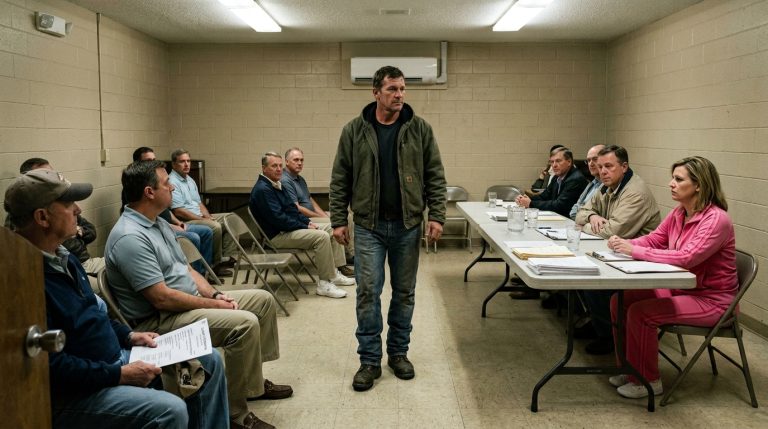
“Then you better call an emergency board meeting for seven tonight,” I said. “Because if I don’t see a public notice posted in the lobby by noon—stating that the barricade is restored and the road is flagged for emergency repair—I’m dropping this folder, along with the sheriff’s interference report, on the regional news desk.”
I didn’t wait for his answer. I picked up my plat map, turned on my heel, and walked out into the freezing wind, leaving him holding the silver pen so tight the metal groaned.
My phone rang as soon as my boots hit the icy gravel of the lot.
It was Deputy Vance.
“Caleb,” Vance said, his voice clipped over the radio static in his cruiser. “Where are you?”
“Just leaving the hall,” I said, opening my truck door. “Why?”
“You need to get back to Ridgeview Drive. Selena Hart just took her Lexus through the S-curve. She didn’t slow down.”
A cold spike of adrenaline hit my chest, hard and immediate. “Did she hit the ditch?”
“She didn’t hit the ditch, Caleb,” Vance said grimly. “The asphalt gave way under her front axle. The culvert collapsed. Get down here.”
CHAPTER 4: THE COLLAPSE AT THE SCURVE
The truck’s diesel engine howled as I dropped the transmission into second, the tires barking against the salted concrete of the lodge exit before catching the hard-pack snow on the main road.
Three minutes later, I rounded the crest above Ridgeview Drive.
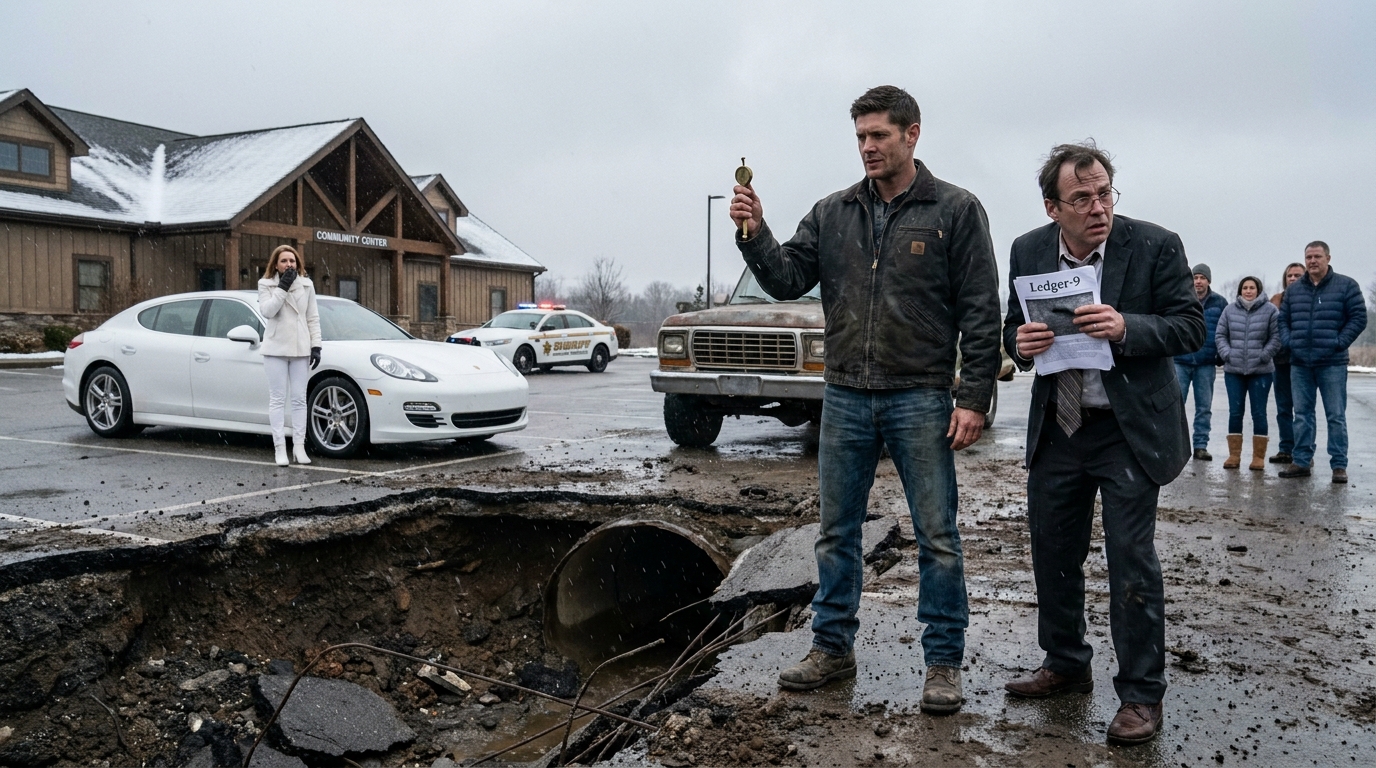
A yellow strobe cut through the fog. Deputy Vance’s cruiser sat angled across both lanes, its emergency lights painting the snowbound pine trees in rhythmic slashes of red and gold. Beyond his rear bumper, the road didn’t curve anymore. It simply ended.
A twelve-foot section of the outer lane had sheared off cleanly along the Frostline stress crease, collapsing four feet down into the subterranean drainage basin. The white Lexus Panamera sat nose-down in the crater, its rear wheels hanging two feet off the shattered asphalt edge, suspension struts creaking under the shifting weight.
The driver’s side door was jammed tight against a wall of frozen mud and broken corrugated pipe. Steam hissed from a ruptured radiator hose, smelling sweet and chemical in the sub-zero air.
I killed my ignition, pulled my leather work gloves tight over my knuckles, and grabbed the thirty-foot tow chain from the truck bed.
Vance was leaning over the lip of the asphalt break, his flashlight beam pinning Selena Hart inside the cabin. She wasn’t bleeding, but her white wool coat was smeared with black grease from the steering column air bag. She was hammering her manicured fists against the reinforced glass of the driver’s side window, her face pale, eyes wide and frantic.
“The frame is resting on the main storm conduit,” Vance barked over his shoulder as my boots crunched on the gravel. “The whole bank is sloughing off into the culvert. If that pipe gives, the car drops another eight feet into the creek bed.”
“Get back from the edge,” I said.
I didn’t yell at her. I didn’t hand her a speech about I-told-you-sos. I threw the heavy steel hook of the tow chain around the rear axle frame of my truck, then slithered on my belly over the frozen lip of the road break.
The cold soaked through my canvas jacket instantly, turning the skin of my chest numb. Beneath the crushed front fender of the Porsche, I could see the internal disaster: the corrugated pipe from Ledger-9 hadn’t just buckled. It was completely rotted through, a rusted shell holding up a cavern of empty air where three feet of compacted roadbed should have been.
And sticking out from a crack in the concrete header wall directly behind her front tire was a yellow plastic tag—an official municipal Audit-Key inspection seal from the state water authority, dated three months ago, marked with a bright red FAIL / IMMEDIATE HAZARD tag that had been painted over with black tar.
They hadn’t just ignored the damage. They had actively concealed a state-level structural condemnation notice to keep the refinance loans open.
I threw the lower chain loop around the Lexus’s rear forged-aluminum control arm and slapped the frame rail hard twice. “Vance! Winch it taut! Slow!”
The truck’s winch groaned, the steel cable popping and singing as it took the tension of the two-ton sedan. The metal frame of the Lexus shrieked against the raw edge of the broken asphalt, lifting an inch, then two.
Selena scrambled over the center console, kicking open the passenger door that was now elevated above the crater lip. She tumbled out onto the frozen shoulder, landing on her hands and knees in the salt and mud, gasping for air, her expensive leather boots caked in brown slush.
I pulled myself up from the mud, my breath ragged, wiping a streak of road dirt from my forehead with the back of my glove.
Jim Roar’s dark sedan pulled up behind Vance’s cruiser, his tires locking up on the ice before coming to a halt. He stepped out, his coat unbuttoned, holding a thick stack of emergency board meeting notices in one hand. His eyes swept over the collapsed road, the suspended car, and the yellow inspection tag hanging exposed in the crushed culvert wall.
He looked at Selena. Then he looked at me. The silver pen in his coat pocket caught the red flash of Vance’s strobe lights.
“The board…” Jim stammered, his voice stripped of every layer of corporate authority. “The board was going to address the road repairs in the spring quarter…”
“The spring quarter is under four feet of mud, Jim,” I said. I reached into my pocket, pulled out the brass depth gauge, and held it out toward him. The brass was smeared with black grease from under Selena’s car. “You’re calling the state roads supervisor right now. Or Vance attaches that photo of the painted-over Audit-Key tag to an arrest warrant for public endangerment.”
Jim looked at Vance. The deputy didn’t say a word. He just unclipped the leather strap on his holster and reached for his radio microphone.
Selena sat on the curb, shivering violently in her ruined coat, her eyes locked on the cavernous hole where her car had sat ten minutes ago. The silence that fell over the S-curve wasn’t just cold. It was the absolute, unyielding silence of a lie that had finally run out of ground.
CHAPTER 5: THE UNYIELDING GROUND
The microphone clicked back into Vance’s shoulder harness with a heavy, plastic snap.
“County road crews are dispatching an emergency timber-shoring rig,” Vance said. His voice cut clean through the idling clatter of my diesel engine. “State water inspector’s already on Route 9. He’s three minutes out.”
Jim Roar didn’t run. He couldn’t. His leather-soled shoes were glued to the slush on the shoulder, his thumb frantically twirling the silver pen in his coat pocket until the clip snapped off with a sharp crack.
“It wasn’t just Selena,” Jim blurted, his composure disintegrating under the glare of Vance’s spotlights. “She held the signing authority for the maintenance account, but the whole board knew about the Audit-Key status. The developer set up the offshore shell when the Frostline survey came back red six years ago. If we logged the failure under Ledger-9, the state would’ve frozen the construction bonds for Phase III. Every property in Clear Haven would’ve lost fifty percent of its appraised value before the first mortgage closed.”
He thrust a hand into his jacket, pulling out a folded sheaf of ledger transfers—the paper damp from his palms—and tried to hand them to Vance. “We were rolling the deficit over into the reserve fund. We were going to fix the pipe during the spring assessment!”
“You were going to patch the surface until the five-year statute of limitations expired,” I said. I stepped between him and Vance, the cold mud cracking beneath my boots as I took the folded paper from Jim’s fingers. “You buried the structural report, covered the state seal with black tar, and removed a heavy steel warning barrier from a public right-of-way because you were running out of time.”
Selena didn’t look up from her seat on the curb. She pulled her grease-stained coat tighter around her collar, her fingers digging into the wet wool. “We kept the neighborhood alive,” she whispered, her voice gravelly and stripped of its former legal precision. “Nobody buys a home in a development that’s sinking.”
“They don’t buy a home that falls into a ravine, either,” I said flatly.
A heavy diesel engine grumbled down the slope from the main highway. A orange county maintenance truck pulled onto the shoulder, followed closely by a state inspector’s sedan with flashing blue roof beacons.
The state inspector—a lean man in an orange high-visibility parka—didn’t offer any polite greetings. He stepped straight to the edge of the collapse, shone a high-powered beam directly into the crushed culvert wall, and stopped on the yellow plastic tag sticking out from the cracked header stone.
“That’s a State Water Resources violation,” the inspector said quietly, taking a photo with an industrial digital camera. “Falsification of a structural hazard marker on a primary runoff artery. Sheriff, seal this site. Nobody touches the board archives at the lodge until the state auditor arrives at eight tomorrow morning.”
Vance nodded once. “I’ll escort Mr. Roar and Ms. Hart to the district precinct to sign the initial scene statements.”
Jim didn’t argue. He walked toward Vance’s cruiser like a man who had suddenly aged ten years, his head bowed against the cutting wind. Selena stood up slowly, her knees shaking as Vance held the rear door open for her. She didn’t look back at the Lexus still hanging in the crater, nor at the steel tow chain resting in the mud.
By two in the afternoon, the sky had cleared to a pale, freezing blue.
The county road crew had deployed heavy timber mats and an excavator across the S-curve. The hydraulic arm hammered steel sheet-piling five feet into the solid limestone layer beneath the roadbed, securing the bank once and for all.
I stood on the shoulder of my driveway, watching the yellow arm of the excavator swing back and forth.
My hands were raw, the skin split around the cuticles from eight hours in the sub-zero air. I reached into my coat, pulled out the brass tire-tread depth gauge, and examined it under the clear afternoon light. The brass was nicked, stained with black grease from the underside of Selena’s chassis, but the knurling was intact.
I walked back to the garage, retrieved a small steel file from the pegboard, and set the gauge in the vise.
With slow, deliberate strokes, I cleaned the grease from the knurled metal, filing down the tiny burrs until the tool rested flat and true against the workbench. The steel frame of my original barricade was sitting in the corner of the shop, reclaimed from the HOA maintenance shed by the county crew an hour ago.
Emily stepped into the garage, two ceramic mugs steaming in her hands. She set one down on the workbench beside the brass gauge.
“County supervisor just left a message on the landline,” she said softly, watching the steady motion of my file against the brass. “They’re installing permanent high-visibility warning signage on the curve tomorrow morning. The HOA board’s been placed under temporary receivership by the state.”
“The road will hold now,” I said, laying the file down.
“And the neighborhood?”
I looked out the open garage door toward the curve. The heavy thud of the excavator bucket striking bedrock echoed across the valley—a sound that was brutal, grounding, and completely honest.
“They’ll have to pay for the repairs,” I said, picking up the hot mug and feeling the warmth bleed into my stiff fingers. “It’s going to cost them. But the foundation is finally on solid ground.”
I took a sip of the bitter coffee, watching the afternoon sun glint off the polished brass on the workbench. The winter wind still howled through the pines, but out on the road, the ice was finally giving way to sand, gravel, and steel.