The Iron Foundation: An Engineer’s Crusade Against Suburban Tyranny
CHAPTER 1: THE ACCUSATION
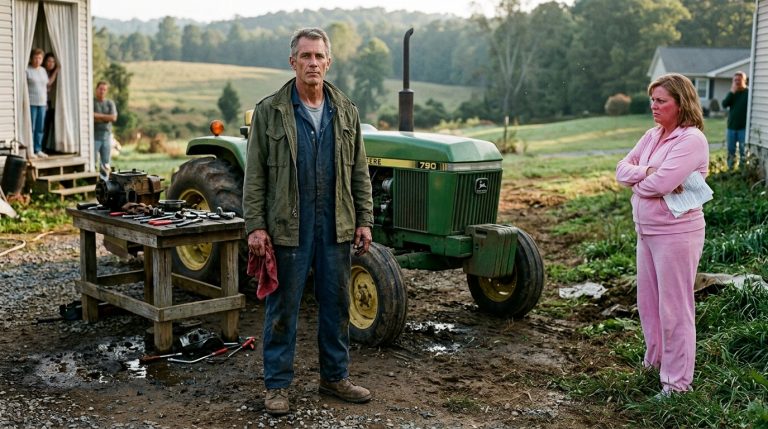
The torque wrench was cold, heavy, and smelled of carbon steel and low-grade machine oil. It felt steady in my hand, a solid counterweight to the thick, humid heat of the Virginia afternoon. I didn’t drop it. I didn’t even shift my grip. In my line of work, you don’t drop your tools when the ground starts to shift under your boots.
“That pile of junk is a violation, Mr. Davis,” the voice came, carrying the distinctive, self-satisfied drag of a person who had never had to mix their own concrete or calculate the structural load of a steel beam. “As of this moment, you are fined five thousand dollars for an abandoned structure. You have seventy-two hours to remove it. Or we will.”
I turned slowly. The movement was deliberate, a hard-earned habit from twenty-five years in the Army Corps of Engineers where sudden gestures in unstable zones usually led to structural failures or worse.
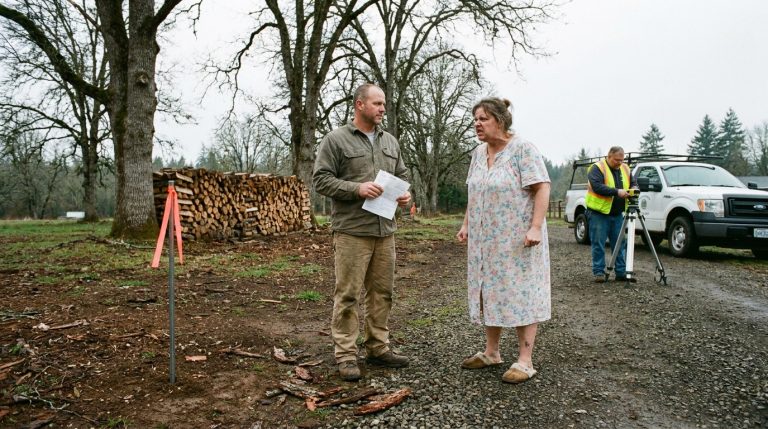
Karen Miller stood precisely on the boundary line where my Bermuda grass met the dusty, gravel-flecked curb. Her arms were locked across a vast, faded floral mumu that rustled in the dry breeze. She didn’t step onto my property—she knew the legal lines—but her shadow stretched long and dark across my freshly poured concrete footings. Behind her, Bob and Linda, her two golf-shirted board cronies, stood like weathered fence posts, their faces pinched with the small-town authority of people who ruled a world bounded entirely by vinyl siding and manicured setbacks.
Behind me, the galvanized steel ribs of my greenhouse rose into the heavy air, catching the glare of the sun like the exposed skeleton of some ancient, metal beast. Beside them sat the stacks of polycarbonate panels, still wrapped in their thick shipping plastic, grey with road dust.
“Abandoned?” I said. My voice was low, keeping the rasp of dry earth and old concrete out of it. “Ma’am, the concrete under these anchor bolts is still curing. The delivery manifest is stamped yesterday afternoon. How exactly does your board define the word ‘abandoned’?”
Karen sniffed, a sharp, metallic sound. “It’s an unfinished eyesore, Mr. Davis. It has been in this state for weeks. It violates the aesthetic harmony of Serenity Meadows. The board has voted. The fine stands. Seventy-two hours.”
She turned on her heel, her sandals kicking up a tiny cloud of dry, red Virginia clay from the curb. Her cronies followed, their steps synchronous, leaving only the smell of cheap exhaust and stale perfume in the heavy air.
I looked down at the base of the nearest steel rib. My gaze caught a physical discrepancy—a fresh, deep tire tread mark in the dry soil directly adjacent to my freshly poured concrete footing. It wasn’t from my wheelbarrow. It was wide, aggressive, and pointed straight back toward the driveway across the street.
I knelt, touching the dry earth where the tread had pressed. The dirt was still warm. The trap had already been set, and Karen had just given me the exact dimensions of her battlefield. I stood up, wiped the red dust from my hands, and walked toward the house. It was time to open the blueprints.
CHAPTER 2: THE RECONNAISSANCE
The aluminum latch of the back door gave way with a sharp, dry click, the ungreased hinges grinding slightly as I stepped across the threshold. The transition from the heavy, humid heat of the yard to the conditioned air of the kitchen was an abrupt shock to the skin. The sweat on the back of my neck cooled instantly, turning tight and stiff against my collar. I set the torque wrench down on the edge of the utility sink, the heavy metal clinking against the stained porcelain. A thin smudge of red clay and grease remained where the handle rested, a small reminder of the boundary line I had just crossed.
I walked down the narrow hallway toward the spare bedroom, my boot heels thumping rhythmically against the hardwood. When I opened the door to Elena’s sanctuary, the air changed again—thick, heavy with moisture, and smelling faintly of damp bark, moss, and the clean, mineral scent of charcoal filters.
Elena was sitting on a low stool near the window, a small, silver misting bottle balanced in her lap. The purple grow lights caught the edges of her hair, casting long, pale shadows across the rows of glass terrariums and slatted wooden baskets. In her hands was a young Cattleya orchid, its roots wrapping around a chunk of rough fir bark like grey, calcified fingers.
She didn’t look up immediately when the door creaked. Her fingers were steady, carefully checking the underside of a long, lance-shaped leaf for any sign of scale or blight. Stress was the unseen enemy in her system; it acted like an accelerant on her joints, turning a simple weather change into a week of agonizing inflammation. This room, with its automated humidifiers and strict temperature boundaries, was the only space where the variables were completely under our control.
“Karen was at the property line,” I said, my voice dropping into the quiet cadence of the room.
Her fingers paused on the leaf. She didn’t sigh, but her shoulders dropped a fraction of an inch, the fabric of her linen shirt tightening across her back. “The greenhouse?”
“She called it an abandoned structure. Five thousand down, two hundred a day after seventy-two hours.” I walked over to the small workbench, my thumb tracing the edge of an uninstalled polycarbonate sheet leaning against the wall. The plastic was smooth, cold, and entirely clear. “She’s relying on the aesthetic harmony clause. Bylaw 17.4.”
Elena turned her head slowly, her eyes reflecting the pale violet hue of the light overhead. There was no panic in her expression, only the deep, guarded weariness of someone who had spent years managing things that broken bodies couldn’t control. “Don’t fight them on their level, Mark. You know how she works. She wants the noise. She wants you to shout.”
“I’m not going to shout,” I replied, touching her shoulder briefly, feeling the slight tension in the muscle beneath the cloth. “I’m going to look at the foundations.”
I left the room, closing the door firmly behind me to preserve the humidity, and entered my small office at the end of the hall. The desk was a solid piece of salvaged oak, its surface scarred by old compass points and ink stains from my active-duty days. I reached into the lower drawer and pulled out the thick, blue-bound folder containing our property deed and the original Serenity Meadows HOA welcome packet—a document most people threw into a kitchen drawer and forgot.
Tucked into the back pocket of the folder was a fading, four-page community newsletter from three years ago, listing the newly elected board members and their approved utility contacts. My eyes ran down the page, past Karen’s name, past Bob’s development committee updates, until they hit the small print at the bottom under the maintenance directory. The official vendor for the neighborhood infrastructure was listed as CrystalClear Pool Services. Right next to it was a small phone number with a local prefix.
I opened a blank legal pad, the yellow paper clean and unlined under the desk lamp. I wrote the name down, the pencil lead dragging with a sharp, dry scratch against the grain of the paper.
Next, I opened the county planning portal on my monitor. Permit 734-B was still active on the screen, its status marked in solid green text: Approved/Compliant. The county surveyor had signed off on the setbacks three weeks ago, his digital signature a legal guarantee that the physical location of the greenhouse was entirely within state boundaries. Karen’s bylaw was a subjective shield, but shields had seams.
I logged into the state’s non-profit corporate registry, entering the formal registration number for the Serenity Meadows Homeowners Association. The screen flickered, loading a long column of annual reports, tax filings, and corporate renewals spanning the last decade. The data was public, cold, and entirely indifferent to who looked at it. I clicked the document link for the most recent fiscal year, the fan of the computer hummed in the quiet room, pulling up the first balance sheet.
I leaned forward, the smell of dust and warm electronics rising from the desk, and began to track the numbers.
CHAPTER 3: COALITION ON THE BORDER
The glowing grid of the state registry database threw a pale blue light across my yellow legal pad. I didn’t let my fingers linger on the keyboard. I wrote down the final row of numbers—the exact operating expenditures for Serenity Meadows over the past three fiscal cycles—and shut down the monitor. The silence that filled the office was heavy, broken only by the faint, rhythmic whirr of the humidifier in the next room where Elena’s orchids drew their moisture.
I stood up, the joints in my knees letting out a dull, dry pop. I grabbed my canvas field jacket from the peg by the door. The heavy cotton was stiff, smelling of cedar shavings and the metallic tang of the garage.
Walking out onto the front porch, the afternoon sun had begun its slow, desaturated drop toward the tree line, turning the sky the color of zinc. The heat had receded slightly, leaving behind the dry, parched scent of clay and exhaust. If you want to understand how a structure fails, you don’t just look at the blueprints; you walk the perimeter. You find where the ground is settling unevenly.
My boots crunched on the gravel along the curb as I walked toward the northern boundary of the development. This was where the communal property lines blurred into individual lots—the exact zone where Karen’s patrol routes were most active.
As I neared the path leading to the community commons, I stopped. The green wooden privacy fence that separated the public walkway from the private yards had a physical discrepancy. One of the cedar slats was clean, pale, and entirely unpainted. It stood out like a fresh bone against the weathered, moss-greened timber of the rest of the barrier.
I stepped closer, my fingers brushing the rough grain of the wood. The iron latch on the small maintenance gate directly beside the slat was scratched, the black protective paint scraped away to reveal a shiny, silver track of fresh iron underneath. Someone had forced this gate recently, and they hadn’t used a key. They had used a pry bar, leaving behind a tiny curl of shaved metal on the dry earth below.
“Mark?”
The voice was hushed, raspy with the weariness of a man who spent his nights breathing diesel smoke and soot.
I didn’t spin around. I turned slowly, my hand dropping into the pocket of my field jacket. Tom was standing on the opposite side of the fence, his thick forearms resting on the top rail of his yard gate. He was wearing his heavy turnout pants, suspenders hanging down around his thighs, a dark smudge of engine grease cutting across his jawline.
“You looking at that latch?” Tom asked, gesturing with his chin toward the scraped iron. “She did that. Two weeks ago. Claimed she needed to inspect my woodpile for termite violations under Section Nine. Didn’t even knock.”
“She didn’t have a warrant, and she didn’t have your permission,” I said, my thumb tracing the rough, unpainted edge of the new cedar slat.
“Karen doesn’t need permission,” Tom muttered, his voice dropping an octave as his eyes flicked toward the upper window of the brick house overlooking the lane. “Not when the board backs her up. I tried to argue the point about the basketball hoop last summer, Mark. She told me if I didn’t pay the thousand-dollar assessment, she’d file a lien. With the kid’s medical bills from the asthma clinic, I couldn’t risk the credit hit. I took the hoop down. Broke the weld on the base doing it, too.”
“The weld can be repaired,” I said, looking him straight in the eyes. The grit of dry concrete dust from my own yard seemed to settle in the back of my throat. “But you don’t fix a structural crack by ignoring it, Tom. I’ve been looking at the state non-profit filings. The numbers don’t balance.”
Tom’s jaw tightened, a small muscle twitching beneath the smudge of grease on his cheek. “What do you mean?”
“The landscaping expenditures. Sixty percent of the entire annual assessment is going to a registered limited liability company called Greenscape Solutions.” I leaned my hip against the weathered fence post, feeling the slight give in the timber. “The sole proprietor is listed as Gary Miller. Karen’s brother-in-law.”
Tom let out a dry, mirthless laugh that sounded like gravel sliding down a chute. “Gary? That explain why the entrance flowerbeds are full of crabgrass and thistle while we’re paying sixty grand a year? My god.”
“And that’s just the topsoil,” I said, my voice quiet, steady. “We need to look deeper. I’m going to need the rest of the street to stand with me if we’re going to force an audit. We start with the people who have been hurt by the same clauses.”
Tom looked down at his boots, then back up at the unpainted cedar slat between us. He reached out, his calloused palm slapping the top of the wooden gate post with a solid, echoing thud. “You build the frame, Mark. I’ll bring the team.”
CHAPTER 4: THE AUDIT TRAIL
Tom’s hand dropped from the post, leaving a faint, grease-smudged print on the gray, weathered cedar. I didn’t let the silence hang between us. I reached into my coat pocket, pulled out a small, steel tape measure, and ran the metal tongue along the gap of the forced gate latch. It snapped back into its casing with a sharp, spring-loaded hiss.
“We don’t move without paper, Tom,” I said, my voice cutting through the dry, late-afternoon air. “A complaint without documentation is just noise to people like Karen. She’ll paint it as a neighbor dispute. But an un-audited ledger is a legal choke point.”
“Where do we get the numbers?” Tom asked, his eyes still tracking the pale, unpainted wood of the replacement slat. “She keeps the HOA binder in her den. Nobody gets past her front foyer.”
“We don’t need her binder. Not yet.” I turned back toward the lane, my boots grinding against the loose gravel. “She’s running a registered corporation. The state demands public disclosures, and those disclosures have to be signed by a third party. I’m going back to the desk. Start talking to the Patels. See if they have the original invoices from their trim violation.”
“I’ll get them,” Tom said, his chin tightening. “They kept every scrap. They’re still paying off the assessment.”
I left him by the fence line, walking back toward my driveway with a steady, unhurried pace. The dry heat of the road seemed to rise through the soles of my boots, carrying the faint, iron smell of the old water mains buried beneath the subdivision’s asphalt. As I passed my own yard, my gaze lingered on the unfinished frame of the greenhouse. The galvanized ribs looked cold, stark, and entirely immovable against the graying sky. I would finish it, but the foundation had to be cleared of the rot first.
Inside, the house was quiet. I bypassed the kitchen and walked straight back to my office, the air-conditioning unit in the window humming its low, vibrating song against the glass.
I sat down at the oak desk, pulling the yellow legal pad toward me. I opened the folder containing the downloaded corporate registry documents. On the screen, the financial sheets for Serenity Meadows were laid out in rigid, black-and-white columns. To an untrained eye, they looked like standard, albeit dry, operating budgets. But twenty-five years of managing multi-million-dollar infrastructure projects for the Corps teaches you to look for the gaps—the places where the concrete was paid for but never actually poured.
I began to cross-reference the line items.
The entry for Common Area Remediation was flat-lined at twelve thousand dollars annually, but the Landscaping and Maintenance line had climbed by exactly fifteen percent every year for the past four cycles. Right beside those figures was the name of the primary service vendor: Greenscape Solutions LLC.
I opened a separate browser tab, pulling up the state’s corporate business database. I typed the vendor’s name into the search bar. The registration document was a single, scanned PDF. I zoomed in on the signature block at the bottom of the article of organization.
Gary Miller. Registered Agent.
I wrote the name on my pad, the pencil tip digging deep enough to indent the three sheets of paper beneath it. My thumb traced the carbon lines. This was the first layer of the decay. Karen was funneling sixty percent of the community’s collected dues directly to her brother-in-law’s shell company, while the communal drainage ditches remained choked with weeds and the perimeter fences rotted into the clay.
But as my eyes traveled down the ledger to the auxiliary facilities budget, another name caught my attention. Tucked under the swimming pool maintenance reserve was a recurring payment to an entity listed as CrystalClear Pool Services. The monthly retaining fee was three times the market rate for a neighborhood pool of our scale.
I tapped my pencil against the edge of the desk. The sound was sharp, rhythmic, like a fingernail clicking against a glass lens. CrystalClear was Bob’s company—the very same Bob who sat on the board and nodded along with every fine Karen issued.
This wasn’t just a heavy-handed homeowners association. It was a closed loop. A self-sustaining, private slush fund wrapped in the protective armor of community covenants. They weren’t just protecting the “aesthetic harmony” of the subdivision; they were protecting the margins of their own ledger.
The office door creaked open behind me, the small movement casting a long shadow across the yellow pad. I turned my head. Elena was standing in the doorway, a steaming mug of black tea in her hand. The scent of bergamot and dry leaves cut through the dust of the room. She didn’t say anything, but her eyes locked onto the names I had circled on the yellow paper.
“It’s a closed loop, isn’t it?” she asked softly.
“The foundations are completely cracked,” I said, taking the mug. The warm ceramic felt solid against my palms. “Now we just have to show the rest of the street where the structure is giving way.”
CHAPTER 5: THE SKELETON IN THE YARD
The heat of the ceramic mug soaked into my palms, the scent of bergamot momentarily cutting through the stale, dry paper odor of the files laid out across my desk. I took a slow sip, letting the hot, bitter liquid settle before setting the mug down precisely on the corner of the yellow pad. The white ring of steam slowly vanished from the dark wood.
“It’s a closed loop, isn’t it?” Elena’s voice was barely a whisper, her shoulder lightly brushing mine as she leaned down to study the names.
“The foundations are completely cracked,” I said, my voice steady. “Now we just have to show the rest of the street where the structure is giving way.”
I stood up, the chair scraping against the floorboards with a short, sharp rasp. I couldn’t resolve this from behind a desk. Strategic calculations are useless unless you verify the physical terrain. I walked down the short hallway, the soles of my boots heavy, and pushed open the rear screen door.
The air outside had chilled, but the humidity remained, trapping the smells of the neighborhood close to the ground. As I stepped off the porch, a sudden, sharp scent cut through the dry earthy smell of my garden plot—a harsh, chemical burn of concentrated chlorine, completely out of place in a backyard. It didn’t belong here. It belonged three streets over, at the community pool.
I walked toward the skeletal steel frame of the greenhouse. The galvanized ribs loomed in the dusk, throwing gray, curved shadows across the concrete footings. Near the rear foundation, where the unpainted cedar fence bordered the public walkway, the grass had been trampled.
I knelt, the dry dirt grimy against my knees. Right there, wedged between the concrete pier and the rusted iron latch of the maintenance gate, was a crumpled sheet of paper. It had been rained on, dried by the sun, and stained with the red clay of the subdivision.
I picked it up and flattened it against my thigh.
It was a carbon-copy work order. At the top, printed in a cheap, fading blue ink, was the name CrystalClear Pool Services. The date stamped on the top was from two seasons ago, but the handwritten notes in the margins were what made my chest tighten. No charge for VGB Compliance drain replacement—re-routed to grounds account per President’s instruction. Below it was Bob’s signature, messy and rushed.
They had billed the community for a critical safety upgrade that was never performed, shifting the funds into Gary’s landscaping account to balance the books. It was a paper trail left behind by sheer sloppiness.
“Mark?”
A soft, hesitant voice spoke from the shadows of the fence line.
I didn’t rise immediately. I folded the stained carbon slip and slipped it into the inner pocket of my field jacket. Then, I stood and turned toward the gate.
Mrs. Gable was standing there, her thin fingers gripping the weathered rail of her garden fence. Her face was pale in the fading light, her small frame swallowed by an oversized cardigan.
“I saw her,” Mrs. Gable whispered, her voice trembling like a dry leaf. “Karen was out here after you went inside. She was taking pictures of your foundations again. She had a man with her. A man in a blue uniform with a patch on the sleeve. I think… I think they’re going to try to tear it down, Mark.”
“They can’t touch it without a court order, Mrs. Gable,” I said, stepping closer to the fence, my voice low and grounding.
“But they don’t care about the courts,” she said, a tear catching the dim light as it ran down her lined cheek. “They didn’t care when they took my husband’s tree. They told me if I didn’t let them dig it up, they’d fine me until the house was gone. I was so scared.”
“We’re not going to be scared anymore,” I said, my hand resting on the rough, splintered top of the gate. “Tom is getting the others. We’re meeting in my yard tonight, under the frame. I want you there.”
She looked at me, her small jaw tightening slightly as she nodded. “I’ll be there. I still have the letters she sent me.”
I watched her walk back toward her small house, her steps slow but deliberate. The confrontation was accelerating. Karen wasn’t just defending her rules anymore; she was protecting her cash flow. And a cornered beast with a pen is just as dangerous as one with claws. I turned back to the greenhouse, the steel cold under my touch as I began to prep the site for the evening’s council.
CHAPTER 6: THE WAR COUNCIL
The thin, dark silhouette of Mrs. Gable faded into the shadows of the pine trees bordering her property, her back gate clicking shut with a dry, metallic rattle. I remained motionless under the steel ribs of the greenhouse, my palm pressed against the cold galvanized iron. The air-tight, sterile smell of the yard was rapidly being swallowed by the heavy, cool damp of the approaching night, but that faint, synthetic tang of chlorine still hung at the back of my throat like a copper coin.
I pulled my hand away, leaving a dark smudge of condensation on the metal.
The low rumble of an engine broke the quiet. Two beams of yellow headlights swept across the skeleton of my greenhouse, illuminating the silver ribs in a brief, stark flash before the vehicle died. It was Tom’s diesel truck, its exhaust ticking as it cooled in the drive. Two other car doors slammed down the street—soft, heavy thuds in the quiet suburban evening.
“Mark.”
Tom’s voice was low as he walked up the gravel path, his heavy boots crunching rhythmically. Behind him came the Patels—Amit and Sunita—their steps quick and anxious. Finally, David, our lawyer neighbor, stepped through the gap in the gate, a thick leather briefcase clutched under his arm like a shield.
“The block is quiet,” Tom said, his eyes scanning the dark perimeter of my yard. “But I saw Karen’s golf cart parked near the pool house. She’s watching.”
“Let her watch,” I said, stepping away from the steel frame and gesturing toward the dining room door. “We’re not hiding. We’re verifying the structure. Come inside.”
The air in the dining room was cool, but the atmosphere felt static, pressurized. I had cleared the dishes off the large oak table, replacing them with three manila folders, my yellow pad, and the crumpled, stained work order I had recovered from the dirt by the concrete pier.
David sat down first, his movements precise. He opened his briefcase and pulled out a stack of pristine, legal-sized documents. “I’ve drafted the formal demand letters, Mark. Under State Code Section 13.1, they have exactly ten business days to produce the general ledgers. If they refuse, we can file for a summary court order.”
“They will refuse,” I said, leaning over the table and flattening the crumpled CrystalClear Pool Services slip before him. The paper was stiff with dried red mud, the blue ink of Bob’s signature slightly blurred but legible. “They have to. Because the money isn’t just mismanaged. It’s being re-routed.”
David picked up the carbon copy, his fingers tracing the handwritten note in the margin. His eyes narrowed. “VGB Compliance… re-routed to grounds account. They’re claiming they replaced the main drain cover at the pool but paid for it out of the general landscape fund.”
“Only they didn’t replace it,” I said. The copper taste of the air from earlier seemed to sharpen. “The county health records are next. If Bob’s company billed for a VGB-compliant drain and Karen signed off on the payment while the flat-grid drain is still in the bottom of that pool, they aren’t just violating bylaws. They’re committing financial fraud and operating a public hazard.”
“The Virginia Graham Baker Act is a federal safety standard,” David murmured, his voice losing its formal legal detachment and turning cold. “If they lied about that compliance on their county filings, the civil liability is absolute. But we need the physical inspection records from the health department to prove the gap.”
“I filed the FOIA request this morning,” I said, my hand resting on the yellow pad. “Ten days. The county clerk is pulling the five-year history of the facility.”
Amit Patel leaned forward, his knuckles white against the edge of the table. “They fined us twelve hundred dollars for using ‘eggshell’ instead of ‘linen white’ on our trim, Mark. They threatened to lock our gate. If they’ve been taking our dues to pay for non-existent pool repairs…”
“We’ll know when the county files land,” I said, looking at each of them in turn. “Until then, we do not confront her. We let her think the seventy-two-hour clock is running on my greenhouse. Let her focus on the steel in my yard while we secure the paperwork that dismantles her board.”
Tom nodded, a grim, calculated expression settling over his face. “I’ll keep the street quiet. But we need those health reports, Mark. If that pool is a hazard, my kids are in it every weekend.”
“We’ll get them,” I said, my fingers gripping the edge of the table, feeling the solid, unyielding weight of the oak. “The county doesn’t ignore a VGB violation once it’s on paper. The cage is built. Now we just wait for the clerk to sign the files.”
CHAPTER 7: THE CRACKDOWN
“The cage is built,” I reiterated, my fingers remaining anchored to the edge of the oak table, feeling the cold, unyielding grain under my tips. “Now we just wait for the clerk to sign the files.”
The kitchen clock ticked behind us, a dry, rhythmic punch into the silence as the alliance members began gathering their coats, their faces set with the tight endurance of people who had finally seen the structural seams of their confinement.
The transition from that midnight council to the brilliant, blinding glare of the following Friday afternoon carried no soft adjustments. The clock didn’t skip. The seventy-two hours had run down, and the sun sat high in a desaturated sky that smelled of baking asphalt and stale grass seed.
I stood in my driveway, the heavy canvas sleeve of my field jacket pulled back just enough to clear my wrist as I adjusted a brass valve on the edge of the irrigation line. My boots were coated in the dry, chalky residue of concrete dust from the final anchoring pass on the greenhouse base. I wasn’t looking at the ribs today. My gaze was fixed three hundred yards down the lane, where the blue concrete basin of the community pool glittered behind its rusted chain-link enclosure.
The facility was full. The three-day holiday weekend had brought out the neighborhood; children were shouting over the high splash of the shallow end, and the dull thud of the low diving board echoed against the brick pump house.
From this distance, the floral mumu Karen wore was a violent smear of color against the bleached concrete deck. She was reclined in a vinyl webbed chair under a faded green umbrella, her two board allies standing flanking her position like rotten fence posts. She held a clipboard, her pencil tapping against the plastic casing in a slow, rhythmic calculation. She thought she was counting the hours until the equipment trucks came for my yard.
Then the rumble came.
It wasn’t the slow, rattling chassis of a local lawn service vehicle. It was the heavy, low-frequency hum of a county-issue utility cruiser. The white Ford Explorer came down the curb line with absolute purpose, its tires grinding the dry gravel at the shoulder before it swung hard into the pool lot, parking at a sharp forty-five-degree angle that blocked the main exit gate entirely.
The doors swung open. A man stepped out into the dry heat. He didn’t wear the soft, casual polo shirt of a standard suburban contractor. His uniform was a crisp, dark slate blue, the heavy leather duty belt creaking as he pulled a laminated inspection folder from the front seat. The silver badge on his collar caught the noon sun like a shard of iron.
It was Chief Inspector Evans.
I dropped the brass wrench into my pocket, the iron weight clinking against my house keys, and walked down the gravel margin of the road. My steps were even, unhurried, tracking the exact line where the neighborhood asphalt met the county dirt.
By the time I reached the perimeter fence, the shouting had already stopped. The water in the basin had gone flat, the small ripples lapping against the tiles with a wet, hollow slap. The children had huddled near the shallow steps, their shoulders wet and shivering under the dry breeze.
“Are you the individual registered as the responsible operating entity for this facility?” Evans’s voice didn’t rise, but it carried the flat, metric authority of an engineer who spent his life measuring the depth of structural decay. He stood at the edge of the green umbrella, his boots inches from the floral hem of Karen’s mumu.
Karen had struggled to her feet, her face turning the color of wet brick. The clipboard was locked against her chest. “I am the president of the board, Inspector. We have a certified contract with CrystalClear Pool Services. Everything is fully operational. If this is about that malicious complaint from—”
“I don’t care about the board, and I don’t care about your contracts,” Evans cut her off, his pencil marking a heavy stroke on his checklist. “I care about federal safety protocols. This facility was issued an explicit mandate for VGB Compliance twenty-four months ago. Your filed reports claim the installation was completed and inspected.”
He turned, his leather belt creaking as he strode toward the deep end of the pool. He knelt on the rough concrete edge, his slate-blue sleeve pulling back as he pointed a heavy flashlight straight down into the clear water toward the main drain.
“That’s a flat-grade suction grate,” Evans said, his voice dropping into a hard, stone-cold register that cut through the humid air. “It is the exact model that caused the structural failure in the Baker case. It has not been replaced. It hasn’t even been serviced. You’ve been running an active suction hazard over a twenty-four-month operational cycle while children were in the water.”
“That’s a clerical discrepancy,” Karen sputtered, her voice rising an octave, her hand shaking so hard the pencil slipped from her fingers and rattled against the dry concrete deck. “Bob handled the invoices. The funds were cleared under the aesthetic maintenance reserves—”
“The funds are a matter for the district attorney,” Evans said, rising to his full height. He pulled a heavy, red laminated closure notice from his folder. “This facility is non-compliant, unsafe, and officially condemned. Evacuate the deck immediately. The civil penalty for willful operational negligence stands at seventy-five thousand dollars for the primary drain violation, with an additional ten thousand for the unventilated chemical cell in the pump house.”
The silence that followed was absolute, broken only by the thin, metallic hiss of the chlorinator. Bob had backed away until his shoulders hit the chain-link fence, his face the gray color of wet mortar. Karen looked down at the red paper Evans held out, her mouth opening and closing as the structural reality of her little empire fractured cleanly down the middle. She looked out across the deck, but none of her neighbors were looking back with fear. They were looking at the seventy-five-thousand-dollar crack in the floorboards.
CHAPTER 8: THE REMEDIAL BUILD
The red paper of the condemnation notice remained pinned between Karen’s trembling fingers, the white edges fluttering like a dry leaf against her floral sleeve. Bob did not step forward to steady her. His boots scraped backward along the chain-link enclosure, leaving thin, gray marks on the concrete deck until his shoulders pressed flat against the warning signs. The silence on the pool deck was heavy, thick with the chemical stench of untreated chlorine and the heat of the midday sun baking the subdivision’s asphalt. Nobody moved. Nobody spoke. The myth of her absolute authority had cracked cleanly down the center, and the neighbors simply watched the fracture widen.
I did not wait for the crowd to disperse. Turning on the heel of my boot, I walked back down the gravel margin of the road, the brass valve wrench heavy in my pocket, clinking rhythmically against my keys. The operational phase of the reclamation was complete; the structural phase was about to begin.
Two weeks later, the middle school auditorium smelled of industrial floor wax, damp wool, and the dust of old chalkboards. The harsh fluorescent tubes overhead buzzed with a low, vibrating hum that set a baseline of quiet tension in the packed room. Over two hundred homeowners sat in the folding plastic seats, their shoulders pressed tight, their voices a low, rolling murmur that sounded like dry earth sliding down a chute.
On the stage, behind a long folding table that had been scarred by generations of student compass points, sat Karen, Bob, and Linda. They looked small under the high, theatrical lights. The folders in front of them were thin, their paper edges sharp and white under the glare.
I stood at the wooden lectern on the left side of the stage. Behind me, the projector cast a massive, bright grid onto the folding screen. It was the five-year balance sheet of the Serenity Meadows Homeowners Association, cross-referenced line-by-line with the corporate filings of Greenscape Solutions and CrystalClear Pool Services.
“The bylaws were never meant to be a protective barrier for the community,” I said, my voice carrying clearly through the microphone, flat and measured. “They were used as a screen. While this board issued thousands of dollars in arbitrary fines for paint variances and unpainted gates, they were routing sixty percent of your annual assessments to private family LLCs.”
I clicked the remote. The screen shifted, displaying the official inspection log signed by Chief Inspector Evans.
“The seventy-five-thousand-dollar penalty for non-compliance with the Virginia Graham Baker Act is not an administrative oversight,” I continued, looking directly at Karen. Her face was gray, the skin tight over her jaw as her fingers knotted in her collar. “It is the direct result of a calculated decision to shift the safety budget into landscaping maintenance contracts that were never performed. They gambled with the physical safety of your children to keep their own margins clear.”
A low, guttural roar rose from the floor. Tom was on his feet in the second row, his jaw set, his thick hand pointing toward the stage. Behind him, Mrs. Gable stood, her small frame straight, her fingers locked around a stack of her own historical violation letters.
“Vote!” someone shouted from the back of the room. The word was caught by twenty, then fifty, then the entire assembly, rising into a rhythmic, deafening chant that shook the metal rafters of the old building. “Vote! Vote! Vote!”
David stepped up to the second microphone, his leather briefcase open on the table before him. “Under Article Four, Section Two of the covenants, a quorum is present. The motion for immediate removal of the board of directors is on the floor.”
The count was a clinical demolition. When David called for those in favor, a sea of hands rose in unison—rough, calloused, ink-stained hands that had spent years maintaining properties under the shadow of a lie. When the call came for those opposed, only three hands remained in the air, lonely and rigid at the center table.
By nine o’clock the next morning, the silence that settled over our lane was different. It didn’t feel static or pressurized. It was the clean, quiet peace of a site after the old concrete has been cleared away.
I stood inside the completed greenhouse, the smell of damp fir bark, wet potting soil, and mineral water filling the warm air. The polycarbonate panels were fully installed, their clean surfaces diffusing the morning light into a soft, silver glow that took the sharp edges off the world outside. The automated misting system hummed, a tiny, steady valve release that coated the leaves of the orchids with a fine, sparkling dew.
Elena stood by the cedar bench, her fingers gently tying a support wire around the stem of a white Phalaenopsis. The lines of chronic pain on her face had softened, her movements slow and deliberate, matching the quiet rhythm of the room.
“You built it, Mark,” she said, her voice barely louder than the misting lines. “A real sanctuary.”
“The foundation was solid,” I said, my fingers brushing the cool, galvanized steel of the frame. “It just needed to be cleared of the weeds.”
Through the clear panels of the wall, I looked out at the street. Across the lane, Mrs. Gable was in her front yard, her knees resting on a foam pad as she smoothed the rich, dark soil around the base of a young dogwood tree. She didn’t look back toward her shoulder as if waiting for a golf cart to rumble down the curb. She simply worked, her hands in the earth, her shadow long and steady in the clean morning sun.
The old soldier’s temper had been balanced by the engineer’s rule. The mission was complete.