The Silt and the Steel: A Tale of Boundaries, Belonging, and the Price of Ground
CHAPTER 1: THE SILT LINE
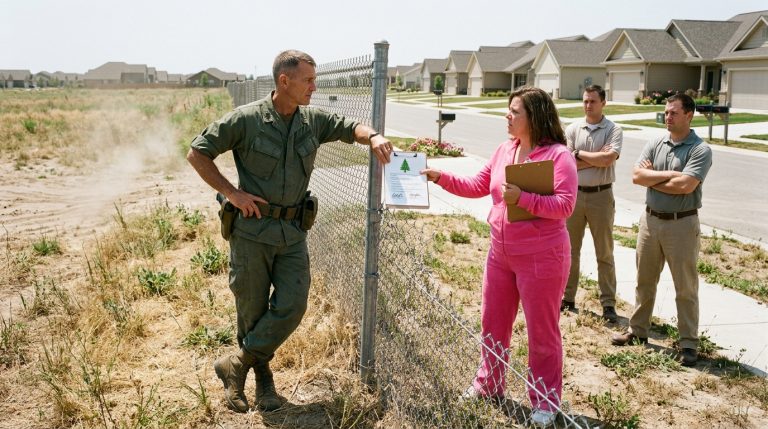
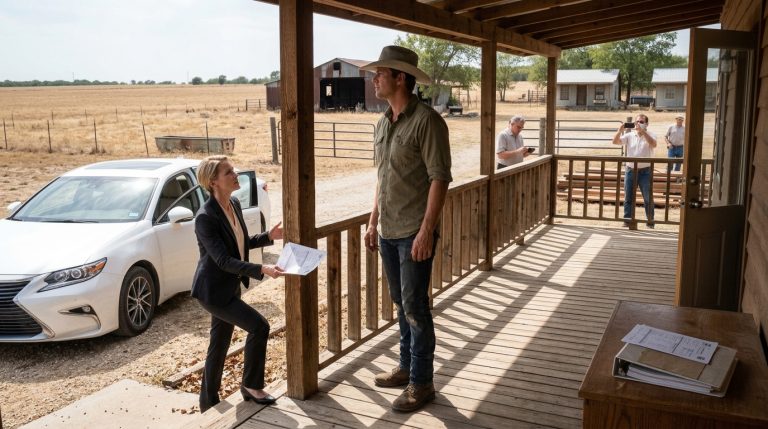
The cedar under my boots was still curing, bleeding sweet, resinous sap that smelled of high summer and hard work. But between us, the air carried only the flat, chemically sweet scent of Karen’s lavender perfume and the dry grit blowing off the gravel road. She stood at the joint where the gangway met the shore—exactly where the weeds turned to stone—clutching a blue plastic clipboard like a shield.
“The fine for unapproved construction is five thousand dollars,” she said. Her smile didn’t reach her eyes; it stayed trapped behind her teeth, small and sharp. “And we’ll be taking possession of the structure tomorrow morning. It’s now Azure Lake Community Dock number three.”
I didn’t reach for the paper she held out. Instead, I looked down at her feet. She was standing three inches past the rusted iron pin I’d driven into the shale yesterday morning—a benchmark aligned with the Clarion-Talbot Survey. The iron was already pitting, orange rust transferring to the white rubber edge of her trainer.
“You’re over the line, Karen,” I said. My voice was low, keeping the rhythm of a man who spent twenty years listening to the hum of diesel generators on concrete slabs.
“The rules are the rules, Jack,” she snapped, her thumb tapping the metal clip of her board with a rhythmic, plastic click. “The Homeowners Association holds title to the easement. Everything touching the water is common property. It’s in the covenants.”
I folded my hands behind my back, feeling the dry heat of the wood radiating through my soles. “The water isn’t yours.”
“We’ll see about that at eight tomorrow,” she said, turning on her heel. The rubber of her soles squeaked against the raw cedar, leaving a dark, greasy smudge on the pristine grain. I watched her go, her golf cart whining as it climbed the steep, shale-strewn bluff.
When the sound of her motor died, the silence of the cove settled back down, thick and heavy. I knelt at the edge of the gangway, tracing the dry, splintered edge of the shale bank. The lake was low this year. Six inches of gray silt lay exposed, baking in the sun until it cracked like old leather. My dock floated on forty-ton barrels, anchored not to the shore she claimed, but to the deep, cold mud of the ancient riverbed thirty feet below.
I reached into my pocket, pulled out the brass surveyor’s disc I’d salvaged from the old county road project, and rubbed my thumb over the stamped coordinates. The metal was cold despite the heat.
The HOA thought they owned the water because they owned the dirt at the top of the hill. But they didn’t know about the riverbed. They didn’t know about the silt. And they certainly didn’t know what lay buried beneath the reservoir’s surface. I stood up, walked to the end of the dock where the water turned from green to black, and cast my eyes toward the far shore. The war was coming, but it wouldn’t be fought with shouting. It would be fought in the quiet archives, yard by yard, until the ground she stood on turned to dust.
CHAPTER 2: THE PAPER TRAIL
The hum of the electric golf cart died at the crest of the bluff, leaving only the dry rasp of cicadas in the poplars and the heavy, metallic scent of the drying lake bed. The brass surveyor’s disc in my hand had gathered the midday heat, its stamped letters—Clarion-Talbot Survey, 1926—pressing cold then hot against the meat of my palm. I didn’t pocket it. I kept my fingers wrapped around the heavy wedge of metal, feeling the gritty oxide scale flaking off its underside.
If Karen wanted to play at eminent domain on my cedar planks, she was going to need a sturdier footing than a pink velour tracksuit and three pages of stapled HOA bylaws.
I climbed the steep wooden stairs I’d cut into the clay bank, each riser secured with half-inch galvanized lag bolts that bit deep into the gray, shale-choked soil. My knees didn’t creak, but they felt the grade. At the top, the air was different—thicker, carrying the smell of cut grass and the faint, sour tang of the neighboring septic fields. My cottage sat quiet behind a screen of unpruned hemlocks, its peeling cedar shakes the color of wet slate.
Inside, the kitchen was cool and dark, smelling of old pine and the black coffee still sitting in the glass carafe of the Bunn maker. I cleared the greaseproof paper wrappers from the pine table and laid the brass disc down with a heavy, solid clack.
My hand went straight to the green metal filing cabinet in the corner—an olive-drab surplus unit from my days with Navy Mobile Construction Battalion Four. The drawer slid open with a dry, metal-on-metal screech that sounded like a dry-docked hull. I pulled the blue card-stock folder marked Deed & Plat: Lot 7B.
The paper inside was old, but not original. It was a 1982 title insurance policy, printed on thin, waxy stock that had yellowed at the margins. I smoothed it across the oilcloth table runner, my fingers tracing the boundary description. “…thence northwesterly along the meander line of Azure Lake…”
I shook my head. A meander line wasn’t a boundary; it was a line of convenience drawn by a surveyor who didn’t want to get his boots wet in 1928.
I reached for my reading glasses, the plastic frames gritty with cedar dust from the dock. I began to compare the typed legal description with the hand-drawn coordinates of the Clarion-Talbot Survey map I had pinned to the wall. There was a gap. A physical discrepancy of forty-seven feet between the old county road easement and the modern HOA boundary line. According to the original county road records, the old highway had been decommissioned and flooded, but the easement itself—the actual physical dirt—had never been vacated by the state.
A low knock rattled the screen door, three short taps that didn’t sound like Karen’s loud, administrative thuds.
I left the papers on the table, walked across the squeaking fir floorboards, and pushed the screen open. It was Mr. Henderson from two doors down. He was holding a rusted wire basket containing three pale, split tomatoes. His knuckles were stained dark with weed juice, and his old gray work shirt was damp at the collar.
“Afternoon, Jack,” he said, his voice dry, his eyes darting toward the gravel road behind him before settling on my boots. “Saw the pink chariot down by your water.”
“She’s setting a boundary, Henry,” I said, stepping aside to let him in. The screen door hissed shut on its spring.
“She’s setting more than that,” Henderson muttered, setting the wire basket on the counter. He didn’t sit down. He stood with his hands tucked into his back pockets, his eyes scanning the maps on the table. “She had the maintenance boys out by my patch this morning. Said my heirloom vines are a hazard to the utility easement. Said if they aren’t out by Friday, she’s hiring a bush-hog and sending me the bill. Five hundred dollars, plus a hundred-dollar-a-day non-compliance fee.”
“The utility easement is twenty feet wide, Henry,” I said, pointing to the plat map on the table. “Your patch is twenty-five feet from the transformer. I measured it when we ran the line for your pump.”
“Doesn’t matter to her,” Henderson said, his shoulders dropping with a slow, heavy sigh. “She’s got that new map. The one they printed on the glossy paper for the annual meeting. It shows the easement extending all the way to my porch.”
I reached out, my fingers touching the cold brass of the Clarion-Talbot disc on the table, sliding it until it sat directly over the section of the map labeled Section 9 Flowage Easement.
“Her map is wrong, Henry,” I said. “And I’m about to prove it.”
CHAPTER 3: GATHERING THE RUST
The heavy brass disc felt cold under my knuckles, absorbing the ambient heat of the kitchen while the silence between Henry and me stretched, taut as a wire-line under load. In the corner, the old refrigerator kicked on with a dry, metal rattle that smelled of ozone and scorched copper windings. For a split second, that sharp, electrical odor dragged my mind back to the dry docks of Subic Bay, forty years ago—the sudden, violent snap of an over-tensioned cable, the smell of burnt generator brushes, and the realization that a single structural calculation error could crush a three-thousand-ton hull like a tin can.
I blinked the memory back into the dark. Here, the scale was smaller, but the structural rot was just as real.
“Her map shows whatever she wants it to show, Henry,” I said, my voice cutting through the refrigerator’s hum. “But ink on paper doesn’t shift the iron in the dirt.”
Henry rubbed his stained palms against the coarse denim of his thighs, the sound dry as locust wings. “She’s got three of the other board members nodding along with whatever she says. Young people, mostly. Afraid of getting a lien on their deeds, or just tired of the letters. She targets the ones who can’t afford the legal fees to fight back.”
“She’s counting on the cost of friction,” I said, leaning forward so my shadow fell across the yellowed map. “Most folks would rather pay a hundred bucks to paint a mailbox than spend five grand on a lawyer to prove they had the right shade of eggshell. She collects the paper, piles up the fines, and uses the cash to lease her official HOA golf cart. It’s an extraction operation.”
Henry nodded slowly, his gaze drifting to the waxy print of the 1982 title policy. “I can’t lose that garden, Jack. Martha planted the first row of those heirloom tomatoes before she went. If they run a bush-hog through that patch…” His jaw tightened, a thin muscle twitching beneath his sun-cured skin.
“They won’t touch it,” I said. “Not legally. And not physically if I’m standing there. But we need more than my word and your tomatoes. We need a record. A clean, chronological paper trail that showing her selectively targeting specific lots while leaving her friends’ properties alone.”
I stood up, the old fir floorboards groaning under my boots. I walked over to the kitchen counter, past the wire basket of split tomatoes, to the wall phone. The black plastic receiver was cold against my ear as I dialed Sarah’s number. I didn’t wait for her to apologize for the delay or explain why she had been painting her mailbox in the rain; I simply told her to bring her notices and meet us at the edge of the old county road bed in ten minutes.
When I hung up, I looked at Henry. “Grab your notices, Henry. The actual letters. Not the summaries. I want to see the postmarks.”
He didn’t ask questions. He just gave a brief, stiff nod and stepped out into the humid glare of the afternoon, his boots crunching softly on the shale driveway.
I waited three minutes, letting the house settle back into its quiet. I picked up the brass disc, slipped it into my canvas pocket alongside a fifty-foot steel tape measure, and grabbed my clipboard. As I stepped out onto the porch, the heat hit me like a physical wall, thick with the smell of baking pine needles and the distant, sulfurous tang of the lake’s receding shoreline.
I walked down the slope toward the property line, my boots digging into the dry, crumbly clay. The ground was littered with rusted bottle caps, fragments of old iron slag from the long-abandoned foundry upriver, and dry hemlock cones that crushed under my soles with a crisp, hollow pop.
Sarah was already there, standing near the unpainted cedar post of her mailbox at the edge of the gravel lane. Her hands were tucked into the pockets of her oversized gray sweater, and she had a thick manila folder tucked under one arm. Her face was pale, her eyes darting toward the road where the tire tracks of Karen’s golf cart had left twin grooved lines in the white limestone dust.
“Jack,” she said, her voice dropping to a guarded whisper as I approached. “She sent another one this morning. A certified letter. It says if I don’t pay the outstanding balance for the ‘aesthetic disharmony’ violation by Friday, they’re going to restrict my access to the community boat ramp.”
“Did she sign it?” I asked, stopping two feet from her, my clipboard resting against my hip.
“Yes. Personally.” Sarah handed me the folder. The paper inside was crisp, white, and carried the embossed HOA logo, but the envelope was postmarked from the county seat twenty miles away, not our local branch.
“She’s using a private mail drop to hide the origin of her correspondence,” I muttered, tracing the inked stamp with my thumb. “Standard trick to avoid local records requests. But look here.” I pointed to a tiny, faded blue stamp on the reverse side of the envelope. It was a routing mark from the county clerk’s office—the very office where the old water rights and the defunct 1928 Reservoir Act documents were stored.
Henry appeared from the shadow of the hemlocks, carrying a stack of faded envelopes held together with a thick kitchen rubber band. He didn’t speak; he just handed them to me, his gaze fixed on the gravel road as if he expected the pink golf cart to round the bend at any second.
“This is our base of fire,” I said, laying Sarah’s letter over Henry’s stack on my clipboard. “We’ve got the dates, we’ve got the selective enforcement, and we’ve got the discrepancy in the boundary lines. She thinks she’s building a case to foreclose on my dock. But she’s actually building the scaffold for her own board.”
Before Sarah could answer, the distant whine of a high-frequency electric motor echoed from the top of the bluff, growing louder, vibrating through the dry, iron-rich earth under our feet.
CHAPTER 4: THE MEASURING OF THE DEPTHS
The electric whine grew high and thin, vibrating against the dry grit under our boots. From the bend in the gravel road, the golf cart came into view. It wasn’t Karen’s usual pink vehicle, but a heavy-duty, gray utility model carrying two men in orange surveyor vests. They stopped at the boundary where my property meets the county lane.
The air had turned cold over the last few seconds, a sudden thermal drop off the water pushing a wall of heavy lake mist up the bluff. The white fog rolled across the dry weeds, smelling of sulfur, wet clay, and old iron. It clung to the hemlocks, shrinking our world to a narrow circle of gray shale and damp wood.
“They’re starting early,” Henry muttered, his fingers tightening around the rubber band holding his stack of faded envelopes.
I adjusted the clipboard under my arm, the cold metal bite of the clip pressing against my ribs. “Let them set their tripods. We have our own line to run.”
The passenger in the utility cart—a young man with a modern GPS pole and a ruggedized tablet—hopped down onto the shoulder. His boots slid on the loose limestone gravel. He didn’t look at us. He was focused on the screen, his thumb tapping the plastic casing with a dry, rhythmic click. On the side of their utility bed, a faded magnetic stencil read: Precision Geomatics. Below it, in smaller, weathered lettering, was the reference code: Ref: Clarion-Talbot Survey.
“You Jack Riley?” the driver asked, stepping out of the cart. He had a sun-weathered neck and carried a heavy wooden tripod with brass-capped legs that were scratched and dulled by years of dirt.
“I am,” I said, my boots solid on the shale bank.
“We’re here to run the water lines for the HOA’s proposed common access expansion,” the driver said, his voice flat, transactional. He set the tripod down on the gravel with a hollow, metallic clink. “Got a work order from the Azure Lake Estates Board. Need to establish the baseline points from the county road to the water’s edge.”
Sarah shifted beside me, her knuckles white inside the pockets of her oversized gray sweater. “The water’s edge isn’t theirs to survey.”
The young surveyor with the tablet looked up, his brow furrowing as he squinted through the shifting gray mist. “According to the digital county plat we were sent, the HOA boundary is the mean high-water mark. That includes the dock access point.”
“Your digital plat is a conversion copy,” I said. I pulled the steel tape measure from my canvas pocket, the brass end-hook clinking against the surveyor’s disc. “It was digitized in ninety-six. They omitted the exclusions from the original nineteen-twenty-six deed. You’re using a corrupted file.”
The older surveyor paused, his hand resting on the brass locking nut of his tripod. He looked at me, then down at the old brass disc I was holding, then at the thick manila folder under Sarah’s arm. “We only run the lines they pay us to run, mister.”
“I know,” I said quietly. “And I don’t want to waste your time. But if you set your base station on that shoulder, you’re referencing a benchmark that was relocated three feet south when they paved the county road in eighty-two. If you run your loop from there, your error budget is going to exceed the tolerance of your contract before you even reach the water.”
The young man with the tablet tapped the screen twice. “He’s right, Frank. The elevation delta on the virtual station is showing a three-tenths variance from the active county monument. It’s not checking out.”
Frank let out a low grunt, the smell of his stale thermos coffee mixing with the damp scent of the riverbed. “Great. A shifted monument.”
“The original brass pin is forty-seven feet north,” I said, pointing through the gray haze toward the hemlocks near my cottage. “Stampted under the Clarion-Talbot Survey. I have the coordinate sheets right here.”
I stepped toward the utility cart, my boots crunching the wet limestone dust. I laid my clipboard on the hood of their vehicle, showing them the waxy pages of the 1982 title policy and the hand-drawn coordinate margins from my files. The young surveyor leaned over, the screen of his tablet casting a pale blue glow on the weathered paper.
“Look at this entry,” I said, my finger tracing the faded ink of the original survey notes. “Section Nine Flowage Easement. The easement didn’t terminate at the pool line. It was locked to the historic channel bed because of the nineteen-twenty-eight reservoir authority.”
The surveyor stared at the notes, his thumb pausing on the tablet. A silent realization passed between the two men as the gray lake mist grew thicker, dampening the paper on my clipboard until the old ink began to show dark against the gray fibers.
CHAPTER 5: THE DEEP TRAP
The young surveyor, Dave, wiped a bead of condensation from the glass face of his ruggedized tablet, his fingernail clicking against the casing. “If the road monument is shifted forty-seven feet south, and the pool line is governed by the nineteen-twenty-eight reservoir authority… Frank, our entire setup loop is shooting into dead space.”
Frank spat a dark stream of tobacco into the gray shale, the liquid sizzling softly against the hot, dry earth. He didn’t look at his partner. He was staring down at the ancient, hand-drawn margins of the Clarion-Talbot Survey map on my clipboard, his heavy leather glove tracing the faded, elegant script of the old county boundaries.
“The reservoir authority didn’t just flood the valley,” Frank murmured, his voice gravelly, dry as the dust we stood on. “They bought the fee-simple title to the bottom. I remember my old man talking about the dry-land sales when they closed the sluice gates. The state reserved the channel bed.”
“That means the HOA’s deed is a paper tiger,” I said. My fingers tightened on the cold steel barrel of my fifty-foot tape measure, the rusted spring winding inside the casing with a dry, internal scrape. “They can’t claim common property over ground they don’t hold title to. They’re trying to foreclose on a dock that technically sits inside a federal reservation.”
“Wait a minute,” Sarah said, her voice dry, her throat catching as she stepped closer to the hood of the utility van. “If the HOA doesn’t own the lake bed under Jack’s dock… what about the rest of the cove? What about the community boat ramp?”
“It’s the same dirt, Sarah,” I said, looking through the rising gray mist that was now rolling off the water in thick, sulfurous sheets. “They’ve been charging us ‘access maintenance fees’ for twenty years on a concrete ramp that sits directly inside the Section 9 Flowage Easement.”
The realization hung in the damp air, heavy as the scent of wet iron and rotting water-weeds. Frank slowly turned his head, his eyes narrowed as he looked up the bluff, where the vague, ghostly outline of Karen’s white colonial house loomed through the hemlocks like a bleached skull.
“This isn’t just an error,” Frank said, his hand dropping from his tripod. “If this gets recorded with the county clerk… the title insurance companies are going to pull the plug on every single mortgage in Azure Lake Estates. A cloud on the title of three hundred homes.”
“Exactly,” I said, my chest tightening with a calculated, cold focus. “But Karen’s not going to let this survey finish if she realizes what you’re finding. She’s going to pull your work order.”
“She already tried,” Dave said, pointing his pen at the blinking blue light on his tablet. “I’ve got three missed calls and an email from the HOA management office marked ‘High Priority.’ They want us to suspend the physical mapping and return to the office for a ‘contractual review.'”
“Don’t do it,” I said, stepping closer, the iron smell of the wet shale rising up to meet us. “If you pull your gear now, she’ll hire another outfit that won’t ask questions. She’ll bury the discrepancy, file the lien on my property, and force the foreclosure before the county records can be corrected.”
Frank looked at Dave, then back at me. He reached down, his calloused thumb rubbing the rusted iron pin I’d driven into the shale at his feet—the physical anchor of my dock’s boundary. “We have a professional obligation to the county surveyor’s office once we’re on-site. We don’t pull our tripods for a private board. But we need a clean shot of the deep channel marker. And the fog is coming in too fast.”
“I have a boat,” I said. “And I have the coordinate sheets from the nineteen-twenty-six survey. We can run a direct-line sounding using the old bridge piers as a back-sight.”
Sarah took a slow step backward, her hand resting on the rough, weathered post of her mailbox. “Jack… if she sees you out on the water with their survey team, she’ll call the sheriff. She’ll claim you’re interfering with their contract.”
“Let her call,” I said, my voice flat, devoid of the heat that was rising in my gut. “The sheriff’s deputy is the one who has to sign the trespass warning. And he’s not going to sign a warrant on federal water.”
I turned toward the gangway, my boots sliding slightly on the damp, weed-slick planks of the ramp as I headed toward the dock. Behind me, I heard the dry scrape of Frank’s wooden tripod legs being collapsed, the metal fittings rattling in the fog like old bones.
CHAPTER 6: THE SUMMIT AT THE SILT
The raw cedar planks of the dock were damp under my boots, slick with the cold residue of the rising lake fog. Behind me, the metallic rattle of Frank’s collapsed wooden tripod cut through the heavy, muffled stillness of the cove. Dave followed, cradling the ruggedized tablet against his chest as if to shield the fragile screen from the sulfur-tinged dampness rolling off the reservoir.
“Watch your step on the lower float,” I said, my voice flat, absorbed by the thick mist. “The timber’s still weeping sap, and the silt makes it like grease.”
“We’re pushing our luck with this visibility, Jack,” Frank muttered, his heavy boots making a deep, hollow thud-thud on the floating platform. “If we can’t get a laser return off the concrete abutments of the old highway bridge, the county clerk won’t accept the loop. We need three reference points to tie down the Clarion-Talbot Survey.”
“The old bridge piers are concrete,” I said, pointing out into the gray blankness where the deep channel ran. “They were poured in nineteen-twenty-six. The state didn’t blast them when they flooded the valley; they just cut the steel spans and let the water rise. They’re still down there, thirty feet below. They don’t move.”
I knelt at the edge of the floating deck, my hand reaching for the heavy nylon mooring line tied to the cleat. The rope was stiff, encrusted with dried green algae and the white, chalky scales of freshwater clams. I hauled on the line, pulling the flat-bottomed aluminum workboat close against the cedar fender. The aluminum hull scraped the wood with a dry, metallic shriek that sounded like a rusted gate.
“We don’t need a clear line of sight through the fog,” I said, looking up at Dave. “We need a physical contact point. Hand me the lead-line from the locker.”
Dave reached into the boat’s center console, his hand emerging with a spool of heavy braided wire wrapped around a tarnished brass spindle. At the end of the wire hung a five-pound cylindrical weight, its lead surface pitted and dark from decades of contact with the lake bed.
“This is old-school,” Dave said, his thumb running over the stamped increments on the wire.
“It’s accurate,” I replied. “Unlike the digitized plats the HOA bought. This wire doesn’t drop its signal when the trees get too thick.”
Before Frank could step down into the boat, the dry, rhythmic crunch of gravel echoed from the top of the bluff. It was a sharp, rapid step—not the slow, heavy stride of Henry or the hesitant walk of Sarah.
I stood up slowly, the cold nylon line still wet in my palm.
Through the shifting gray curtain of the fog, a shape emerged at the head of the gangway. It was Karen. She wasn’t in her pink tracksuit. She wore a dark, heavy rain coat that rustled like dry leaves as she walked, her face white and pinched against the cold mist. She didn’t have her golf cart; she had walked down the steep clay path on foot, her leather shoes caked with the gray, sticky shale mud.
“Frank,” she called out, her voice thin but sharp, cutting through the damp silence like a blade. “I told your office to suspend this work. You are on community property without authorization from the board.”
Frank stopped with one foot on the boat’s gunwale. He turned slowly, his hand resting on the weathered wooden tripod. “We’re verifying the county monument, Ms. Miller. Mr. Riley has raised a discrepancy regarding the baseline coordinates.”
“Mr. Riley is a non-compliant homeowner with forty-two thousand dollars in outstanding fines,” Karen hissed, her boots stepping onto the first plank of the gangway. She didn’t look at the water; her eyes were fixed on the clipboard in my hand. “His opinions on the coordinates are irrelevant. Your contract is with the Azure Lake Estates Association, and as president, I am directing you to pack your equipment and leave this property immediately.”
I took three paces up the dock, my shadow falling across the wet cedar planks between us. “The surveyors aren’t on your property, Karen. And neither are you.”
“I am standing on the common easement,” she said, her voice rising, her breath pluming in the cold air. “This gangway connects to the shore. The shore belongs to the association.”
“The shore belongs to the state under the nineteen-twenty-eight reservoir authority,” I said, my voice low, dropping into the steady cadence I used when a construction rig was about to tip. “The deed you signed when you bought your house stops at the eighty-foot flood line. But the Clarion-Talbot Survey shows this lot’s riparian rights extend to the original river channel. You’re standing on my land, Karen. Private land. And if you don’t take your mud-caked shoes off my cedar, I’m going to have Frank record your presence as a formal trespass on the official county plat.”
Karen’s mouth opened, a slight twitch visible in the muscle of her jaw. She looked at Frank, then at Dave, who was quietly recording her with the tablet’s rear-facing camera. The silence that followed was thick with the smell of wet earth and the sharp, vinegar tang of the rotting leaves along the bank.
“This is absurd,” she whispered, her fingers clawing at the pocket of her raincoat. “We have the title. We have the maps.”
“You have a copy of a copy,” I said. “And tomorrow morning, the county clerk is going to get the original.”
She didn’t scream. She didn’t make a scene. She simply took two steps back into the fog, her figure dissolving into the gray mist until only the wet, rhythmic sound of her shoes sliding on the shale path remained.
I turned back to the boat, the lead weight cold against my hand. “Let’s run the line, Frank. Before she finds a phone.”
CHAPTER 7: THE RECKONING AT THE CLUBHOUSE
The lead-line had hit the concrete pier thirty feet below with a dull, underwater thunk that vibrated straight up the braided wire into my calloused fingers. That was yesterday. Now, the damp smell of the lake had been replaced by the dry, stagnant air of the community clubhouse—a room smelling of sour floor wax, old metal folding chairs, and burnt filter coffee.
I sat at the rear of the hall, my back straight against the steel frame of my chair. Next to me sat Amelia Davis, her sharp eyes tracing the five board members seated at the long folding table on the stage. Karen sat in the center, her fingers locked so tightly around her blue plastic clipboard that her knuckles showed a bloodless, waxy white.
Around us, the room was packed. Henry sat to my right, his gray work shirt smelling of laundry soap and dry earth, his weathered hands resting on his knees. Sarah was next to him, her chin held high, her fingers steady as she held the manila folder containing every selective violation notice Karen had signed over the last three years.
“This special hearing of the Azure Lake Estates Homeowners Association is now in session,” Karen announced, her voice scraping against the walls of the room like a dry file. “The sole item on the agenda is the foreclosure authorization regarding the unpaid fines of lot seven-B.”
She didn’t look at me. She looked at the slide projector she’d set up on a card table. She clicked a button, and a blurry photograph of my dock appeared on the white sheet pinned to the wood paneling. The slide showed my cedar planks, my private property sign, and the green water.
“Jack Riley has accumulated forty-two thousand, seven hundred and fifty dollars in outstanding penalties,” Karen said, her tone hard, transactional, the voice of a creditor squeezing dry stone. “His structure sits on common water. It is an unapproved attachment. Under Article Nine, Section Four, we are moving to authorize a lien and immediate foreclosure.”
Amelia didn’t rise in a hurry. She stood up with a deliberate, slow grace, her leather heels clicking against the linoleum. She didn’t have a projector. She carried a single, large-format roll of heavy paper under her arm.
“A point of order, Madame President,” Amelia said. Her voice wasn’t loud, but it had the weight of iron plate. “Before this board votes on an action that will expose each of you personally to catastrophic civil liability, I would like to submit the certified results of the physical hydrographic survey conducted yesterday.”
Karen’s face didn’t soften; it hardened, the lines around her mouth tightening into deep, dry creases. “We have our own map, Ms. Davis. The digital county plat is the authority.”
“The digital plat is an unverified digital replication,” Amelia said, unrolling the heavy paper across the board’s table with a loud, crisp crackle. “What you are looking at is the Clarion-Talbot Survey, verified by physical soundings yesterday afternoon. Look at the coordinates for Section Nine Flowage Easement.”
The man to Karen’s left—old Mr. Abernathy, whose hand had been hovering near the voting paper—leaned forward. He squinted through his wire-rimmed glasses, his finger tracing the thick red lines on the map.
“What is this?” Abernathy muttered, his voice shaking. “This shows the property line extending seventy-five feet into the lake bed.”
“It shows more than that, Mr. Abernathy,” Amelia said, her voice dropping into a cold, precise register. “It shows that under the nineteen-twelve Reservoir Act, the state never vacated the fee-simple title of the ancient river channel. The HOA doesn’t own the water. The state doesn’t even own the bed—it is federal reservoir land. This association has been collecting common-area maintenance fees on a boat ramp and a shoreline that sits entirely outside its deeded boundaries.”
A quiet, dry gasp rippled through the back rows. Sarah leaned forward, her chest rising as she looked at the map. Henry let out a slow, gravelly breath.
“That’s a lie,” Karen hissed, her clipboard rattling against the table. “The developer gave us title to the pool line.”
“The developer couldn’t give you what he didn’t own, Karen,” I said, my voice cutting through the room’s rising murmur. I didn’t stand up. I kept my seat, my eyes locked on her white, sweating face. “The nineteen-twenty-eight Reservoir Act reserved the valley floor. Your boundaries stop forty feet before the water even starts. You’ve been issuing fines, threatening foreclosures, and charging access fees on ground that belongs to the United States Army Corps of Engineers.”
Abernathy went pale, his hand dropping from the ballot. He looked at Karen, his mouth slightly open, a thin muscle in his neck twitching. “Karen… you said the title insurance cleared this. You said we had the right to seize the dock.”
“We do,” she whispered, her voice cracking, her fingers digging into the edge of her clipboard until the blue plastic bent. “It’s our water. It has to be our water.”
“It isn’t,” Amelia said, tapping a second document. “And because you ignored our written notice yesterday and proceeded with this hearing, we are filing a personal liability suit against every member of this board for slander of title and selective harassment. Your D-and-O insurance doesn’t cover willful negligence, gentlemen. Your homes, your bank accounts, your land—it’s all on the table.”
Abernathy stood up so fast his chair screeched against the floorboards. “I didn’t sign off on this. She told us it was standard enforcement. She told us Riley was just a rogue builder.”
“The meeting is adjourned,” Karen shrieked, but her gavel didn’t hit the wood. It slipped from her hand, clattering onto the linoleum floor with a hollow, plastic bounce.
Nobody moved to help her pick it up. The board members were already backing away from the table, their faces caked in panic, their eyes darting toward the side exit as if the room itself were filling with water.
CHAPTER 8: THE CLEAR WATER
The hollow, double-tap of the plastic gavel bouncing across the gray linoleum tile seemed to ring out for a long time, the final vibration dying against the metal legs of the abandoned board table. The four other board members didn’t look back as they shuffled toward the emergency exit, their heavy coats rustling like dry leaves, leaving Karen standing completely alone under the harsh buzz of the fluorescent tubes.
Her shoulders had collapsed inward, the illusion of her administrative crown shattered by the simple, quiet presentation of the Clarion-Talbot Survey. She reached down with a trembling hand, her fingers brushing the cold, cheap vinyl of her purse strap, but she didn’t pick up the gavel. She couldn’t. The very ground she had claimed as her personal fiefdom had just been revealed as public, federal reservoir land under the 1928 Reservoir Act.
“We have thirty days to file the formal record with the county clerk,” Amelia Davis said, her leather briefcase clicking shut with a sharp, decisive snap. She stood next to me, her tailored wool trousers a stark contrast to the dust-covered boots of the neighbors who had filled the back rows. “But the legal reality is already established. The Section 9 Flowage Easement holds. The HOA has zero jurisdiction below the pool line.”
I didn’t answer right away. I stood up slowly, the rough denim of my jeans rubbing against my thighs, my knees holding steady. I looked toward the front of the room where Karen was packing her papers with frantic, jerky motions. Her grip was gone, her pencil dropping twice before she managed to slide it into her bag.
“Let’s go home, Henry,” I said quietly, turning to the old widower beside me.
Henry didn’t smile, but the deep, sun-cured lines around his eyes had relaxed, the dry tension that had held his jaw tight for months finally giving way. He reached out and patted Sarah’s shoulder, her fingers no longer clutching the manila folder like a shield.
We walked out of the clubhouse together, the screen door hissing closed on its rusty spring behind us. Outside, the night was cool and clear. The thick sulfur-fog that had choked the cove earlier had vanished, swept away by a clean, sharp breeze blowing from the north. The air smelled of damp stone, dry pine needles, and the deep, cold iron of the lake.
The journey back down the gravel road was silent, but it wasn’t the guarded, paranoid silence of the previous weeks. Our boots struck the limestone dust in a steady, collective rhythm. When we reached the bluff overlooking my property, I saw the pale outline of the U-Haul truck parked under the streetlamp outside Karen’s home, its aluminum ramp resting on the gravel like a long, silver tongue. Movers were already carrying out heavy cardboard boxes. The house was sold, a quick, quiet exit forced by the collapse of her paper kingdom.
I parted from Henry and Sarah with a brief nod at the lane entrance and walked down my steep shale path. My boots slid slightly on the loose stone, but my balance was true.
At the bottom of the bluff, the dock floated in perfect peace, its raw cedar planks pale in the starlight. The water lapping against the black poly-barrels was clean, free of the algae-choked weeds that usually drifted into the shallows during the summer heat.
I walked to the very end of the platform, where the wood met the dark reservoir. Resting on the low bench was my old brass survey marker—the heavy disc from the Clarion-Talbot Survey. The scale on its underside had flaked away, but the brass was still solid, an immutable, geographic anchor. I picked up my old file, a small rusted steel tool, and slowly, carefully cleared the remaining dirt from the stamped coordinates, restoring the crispness of the ninety-eight-year-old numbers.
The metal felt heavy and permanent in my hand. I set it back down on the center piling, aligning it by eye with the deep, invisible channel of the old flooded river bed.
The neighborhood was quiet now, the distant whine of the HOA golf carts gone for good. There were no more letters waiting in the mailbox, no more arbitrary fines, and no more borders drawn by those who didn’t understand the dirt beneath their feet. I reached for my fishing rod resting against the piling, cast the line out into the black water, and listened to the clean, singular splash as the lead weight found its place on the federal reservoir floor.