The Paper Fortress: A Veteran’s Calculated Dismantling of a Suburban Tyranny and the Cost of Memory
CHAPTER 1: THE HEDGE LINE
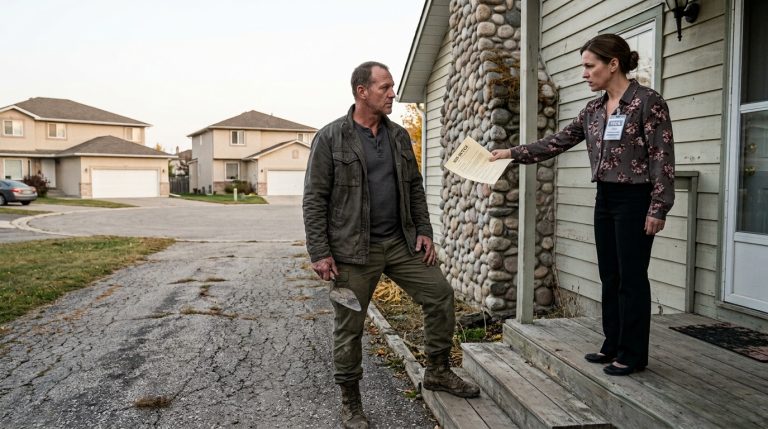
The afternoon sun didn’t just shine on the field; it glared, turning the purple coneflowers into jagged silhouettes against the encroaching suburban sprawl. Karen stood on the edge of the property line, her shadow a long, narrow finger pointing toward my throat. She held her clipboard like a weapon, the plastic surface reflecting the harsh light in a way that made my eyes ache. She was talking, but the words were secondary to the movement of her jaw—a rhythmic, predatory clicking that grated against the low-frequency hum of a thousand bees.
“It’s a disgrace, Jack,” she said, her voice thin and acidic. “The covenants are clear. You’re turning a premier community lot into a fire hazard.”
I looked down at the milkweed. My knees throbbed against the dry, compacted soil, a dull reminder of the hours I’d spent hunched over this patch. I could feel the grit beneath my fingernails, deep and permanent. I didn’t look up immediately. I waited, counting the seconds, measuring the weight of her authority against the absolute, unmoving silence of the prairie. When I finally rose, the movement was slow, deliberate, the way a soldier rises from a trench knowing there is no cover.
I wiped my hands on my jeans, the fabric rasping loudly in the stillness. I looked at her, then past her at the row of houses where curtains twitched like nervous eyelids. She was so sure of her position—so convinced that a piece of paper she’d printed from a community portal held the weight of divine law.
“Paving it,” I said, repeating the word she’d thrown at me. My voice felt heavy, like lead shot rolling in a tin container. “You’re talking about covering five years of labor with six inches of asphalt.”
“The board has the right,” she countered, the smugness tightening the skin around her eyes. “Monday. Eight a.m. sharp. Don’t be surprised when you find your ‘habitat’ under a grader.”
She turned, her heel pivoting with a sharp, hollow click against the pavement, and I caught the glint of a wedding band on her left hand—a plain, gold band, utterly ordinary, yet it seemed to pulse with the arrogance of her entire crusade. I didn’t watch her walk away. I watched the way her shadow crawled back toward the curb, a dark, oily stain that threatened to bleed into my wildflowers.
A cold, hard knot tightened in my gut. It wasn’t fear; it was the specific, freezing clarity that comes just before a breach. My mind began to map the battlefield: the slope of the land, the reach of the HOA bylaws, the weakness in her legal standing that she was too ignorant to see. She thought she was leading a clean-up crew. She didn’t realize she had just walked into the center of a killbox, and I was holding the trigger. The hum of the field seemed to shift, the bees sounding less like insects and more like the synchronized turning of gears in a machine that was finally, after years of silence, starting to move.
CHAPTER 2: THE ARCHIVE OF INTENT
The screen door had finished its slap against the frame, leaving a lingering vibration that traveled up through the soles of my boots. I stood on the porch for a moment, letting the hum of the field settle into my marrow. It wasn’t just a sound; it was a frequency, the collective vibration of thousands of tiny, wings—a living engine I had spent five years tuning.
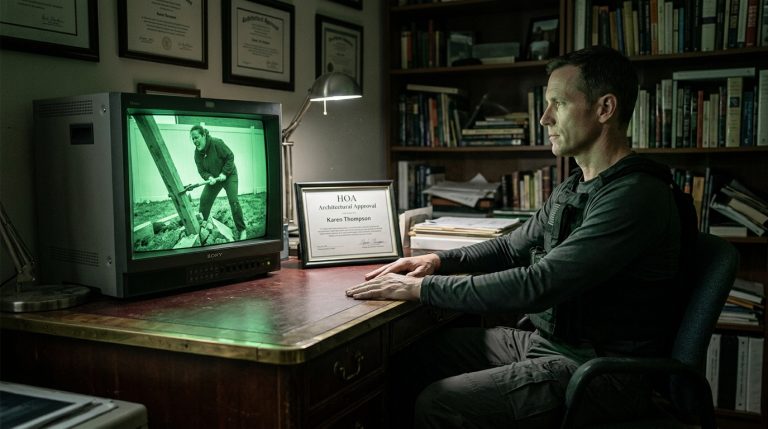
I didn’t head for the kitchen or the living room. I turned toward the office, the door creaking open with a familiar, dry protest. Inside, the air was different. It was cool, smelling faintly of aged paper and the slightly metallic tang of the laser printer I’d been running hard for months. This was the command center.
I stepped in, the floorboards groaning under my weight, and the darkness of the room seemed to push back against the fading evening light. For a second, the house felt foreign, like a structure I was merely passing through, and I had the sudden, disorienting sensation that the walls were observing me. It was a trick of the light, the way the shadows clung to the corners of the ceiling, but it made my skin prickle. It felt as if the house, with its ordered life and pristine surfaces, was holding its breath, waiting to see if I would fold.
I walked to the desk and sat down. The chair was leather, cool against my back, and perfectly positioned to face the window overlooking the field. I didn’t look out at the prairie, though. I reached out and pulled the black-spined binder toward me. It was heavy, the spine cracking slightly as I laid it open. This wasn’t just paper; it was a physical artifact of a life—of Sarah’s life.
My fingers traced the tab labeled USDA – CRP Contract. The ink on the original certification was still sharp, the stamp of the federal seal holding a gravity that no local HOA president could hope to match. I started reading, not for the first time, but with a different set of eyes. This time, I wasn’t looking for the confirmation of protection; I was looking for the language of the counter-attack.
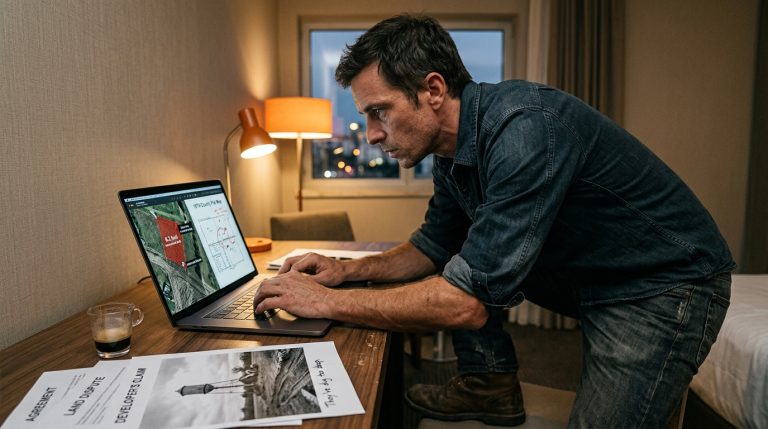
I pulled my tablet from the side of the desk, the glass screen glowing like a pale, ghostly eye in the dim room. I kept the HOA covenants open in one window and the federal regulations in the other. The discrepancy between the two was stark—a gulf of logic I intended to use as a trap. My mind, trained by years of structural engineering to find the stress point in a beam or the flaw in a dam’s foundation, was already running simulations.
If I filed a response now, it would be a scream into the wind. Karen wouldn’t listen. She was too drunk on the imagined authority of her clipboard. No, the move wasn’t to shout; the move was to create a digital and physical trail that would make her next step not just a nuisance, but a liability she couldn’t afford.
I began to draft the correspondence, my fingers moving with a mechanical, rhythmic precision on the keyboard. Cease and desist. The words felt like stones I was lining up for a barricade. I didn’t use flowery language. I didn’t appeal to her sense of community or her memory of what this land used to be. I used the hard, cold lexicon of the law.
Every time I typed a section number, I referenced the exact page in the binder. I was building a case that didn’t rely on emotion. I was building a case that relied on the sheer, crushing inevitability of bureaucratic process. I stopped, mid-paragraph, noticing a slight tremor in my left hand. I forced myself to stop typing and stared at the screen. The light from the monitor reflected in my pupils, creating two tiny, burning points of blue.
I looked back at the field, the silhouettes of the wildflowers now completely engulfed by the encroaching night. Somewhere out there, the caterpillars were feeding, the bees were huddled in their nests, and the entire ecosystem was, for now, unaware of the threat hovering at the edge of its perimeter. I owed them this. I owed Sarah this.
I clicked Save, the digital pulse of the machine the only sound in the house. I had the draft. Now I needed to make sure it was bulletproof. I needed the neighbors to know what was coming, not because I needed their sympathy, but because I needed them to see the reality of the choice the board was making. If I could show them that Karen’s ‘guest parking’ was a catalyst for a lawsuit that would drain their own pockets, I wouldn’t need to fight her alone.
I closed the binder, the sound of the metal rings locking shut echoing like a gunshot in the quiet room. I sat back, the weight of the day settling into my joints, but my mind was moving at a pace that left no room for exhaustion. Monday was less than seventy-two hours away. The war hadn’t started yet; it was merely in the design phase. And I was an engineer who had never believed in half-measures.
CHAPTER 3: THE FIRST ALLY
The morning air outside was crisp, biting into my lungs with the sharpness of a freshly whetted blade. I didn’t head for the front door; I moved toward the backyard, the screen door slapping shut with a finality that felt like a command. The field was still, waiting in the pre-dawn gray, but the world beyond the fence was already stirring. I could see the silhouette of a sedan moving slowly down the street, its headlights cutting through the mist like twin, inquisitive eyes.
I walked to the western boundary of my property, the wire fence digging into my palms as I gripped the top rail. This was the edge of the line, the place where Sarah’s vision met the manicured monotony of the Millers’ yard. Their house was dark, but a single porch light cast a jaundiced, flickering glow over a new, bright-colored bird feeder swaying on a pole. It was a small, defiant gesture, a splash of color against the drab uniformity of the surrounding landscape.
I saw movement near the back steps. Mark Miller emerged, his posture hunched against the cold. He was dressed in a thick hoodie, his hands shoved deep into his pockets. He stopped when he saw me, his head snapping up with a sudden, jerky motion that betrayed his nerves. For a second, he looked like he wanted to bolt back into the safety of his house, but then he straightened, letting out a long, ragged breath that hung in the air like steam.
He walked over, his feet dragging slightly on the damp grass. He stopped three feet from the fence, eyes darting toward the street before landing on me.
“Jack,” he said, his voice barely rising above the rustle of the prairie grass. “I saw your light on late last night. And the one from the office again before dawn. You okay?”
I kept my grip on the wire, feeling the slight vibration of the fence as the wind caught the tall stalks of the milkweed. “I’m fine, Mark. Just doing the math. You’ve heard about the excavators?”
Mark’s face tightened. He looked away, his jaw working as if he were chewing on a bitter thought. “Everyone’s talking about it. Some of the neighbors… they’re scared, Jack. Karen’s been making the rounds, telling people that your field is a breeding ground for pests, that it’s lowering our home values. She’s framing it like it’s a necessary surgical strike for the good of the neighborhood.”
“A surgical strike that involves paving over five acres,” I said, my voice steady, stripped of any inflection that might give away my tactical intent.
Mark leaned in closer, his voice dropping another notch. “I know. Emily knows. But you have to understand the dynamic here. Most people just want to keep their heads down. They’ve seen how she handles dissent. She finds a violation, she piles on the fines, she makes life an absolute nightmare until you cave. It’s not just about the rules; it’s about the constant, low-level fear of being the next target.”
He reached out and adjusted the hanging bird feeder, his fingers fumbling with the clasp. It was a nervous tick, a way to anchor himself. I noticed a slight scrape on the side of his fence post—a mark that looked fresh, jagged, and out of place. I stared at it for a moment, wondering if it was a sign of a forced entry or just the result of a clumsy lawn mower, but the timing felt too coincidental to be an accident.
“I’m not asking you to storm the barricades, Mark,” I said, watching him closely. “I just need to know if you’re still with me if this comes to a vote.”
Mark stopped fidgeting. He met my gaze, his eyes dark with a mix of frustration and something approaching respect. “You have no idea what you’re up against, do you? Karen doesn’t play by the books. She plays by the shadows.” He paused, glancing again toward the street. “I’ll support you, Jack. But be careful. She’s not just an HOA president. She’s a symptom of something bigger. There are people in this neighborhood who benefit from the way she runs things. And they don’t like it when someone starts asking questions about who’s signing the checks.”
The revelation hung in the air, cold and sharp. I had been focused on the board, on the bylaws, on the federal statutes. I hadn’t considered the unspoken web of patronage that must exist beneath the surface of such a rigid, petty hierarchy. Karen wasn’t just a tyrant; she was a gatekeeper for interests I hadn’t yet identified.
“Who?” I asked, but Mark was already turning away, his face hardening as he retreated toward his porch.
“Just watch the mail,” he called back, his voice strained. “And keep an eye on that camera of yours. Things are going to get messy, and the paper trail you’re building might not be enough to stop someone who doesn’t care about the law.”
I watched him go, the back door closing with a soft, muffled click. I stood there, my hands still gripping the fence, feeling the tension of the wire against my skin. The field hummed before me, the insects beginning their morning routine, but the sense of calm was gone. I looked at the fresh scrape on his fence post, then back toward the street. My internal map of the conflict was already shifting, the borders expanding into territory I hadn’t anticipated.
I had come out here to secure an ally, but instead, I had found the first crack in the foundation—a hint that the rot went deeper than one woman with a clipboard. I pulled my phone from my pocket and checked the battery levels, the screen light reflecting against the encroaching dawn. I wasn’t going to wait for the mess to find me. I was going to be the one who cleaned it up.
CHAPTER 4: THE PAPER WEAPON
The drive to the local post office was a study in mundane tension. I kept the heavy stack of documents on the passenger seat, the corners of the envelopes sharp and unyielding against the upholstery. Every time I hit a bump, the paper shifted, a rhythmic, dry sound that mirrored the friction in my own mind. Outside, the suburbs of Oak Creek Meadows rolled by, a landscape of manicured lawns and identical driveways that suddenly looked like a series of interconnected cells.
I pulled into the post office parking lot, the asphalt cracked and weathered by years of neglect. I sat in the truck for a moment, the engine ticking as it cooled. I stared at the building—a nondescript brick structure that held the power to turn a simple letter into a binding, legal confrontation. My gaze landed on the envelope containing the Cease and Desist, addressed with a surgical precision to the HOA board of directors.
A memory flared, unbidden and cold: Sarah, sitting at our kitchen table years ago, her fountain pen moving across a piece of parchment. She had been detailing the native flora of the region, her script elegant, controlled, and intensely deliberate. “The structure isn’t just in the soil, Jack,” she’d whispered, her eyes lit with the quiet joy of discovery. “It’s in the patience of the roots. If you know the system, you know how it thrives, and more importantly, how it sustains itself.”
I pushed the memory down, but the lesson remained. The HOA operated on a system of perceived, unchecked authority. They thrived on the assumption that no one would bother to challenge the machine. My draft wasn’t just a threat; it was a blueprint of their own incompetence.
I stepped out of the truck, the morning air biting at my exposed skin. I walked toward the entrance, my boots sounding hollow against the concrete. Inside, the post office was bathed in the harsh, sterile glow of overhead fluorescent lights. There were no other customers, only the low, mechanical hum of a sorting machine somewhere in the back.
I approached the counter, the clerk a man with thinning hair and glasses that sat precariously on the end of his nose. He didn’t look up as I placed the thick stack of envelopes down.
“Certified mail, return receipt requested,” I said, my voice steady, carrying the weight of the documents.
He moved with a sluggish, bureaucratic indifference, his fingers hovering over the scale. He scanned the address on the first envelope. His eyes widened slightly as he recognized the board’s collective name. He looked at me, a flicker of curiosity crossing his face, but he didn’t ask. He just stamped the receipt, the thump-thump of the rubber seal sounding like a gavel in the quiet space.
As I watched him process the paperwork, I realized that this was the moment the balance shifted. With the ink still drying on the receipts, the HOA was no longer just dealing with a disgruntled homeowner. They were now officially and legally on notice. The “frivolous” claims Karen had dismissed were about to be transformed into a documented, federal-level liability.
I took the green certified mail slips, the paper slightly tacky to the touch, and slid them into my wallet. They were the key. The evidence. The proof of the trap I was setting.
I stepped back out into the bright, uncompromising light of the morning. The neighborhood still looked the same—the quiet streets, the trimmed hedges, the false sense of order. But as I walked back to my truck, I felt the difference. The machine had been engaged. The paper trail had been laid. And somewhere in those five houses across the neighborhood, the board members were about to receive a delivery that would make their comfortable, routine lives look suddenly and terrifyingly fragile.
I started the engine, the roar of the truck momentarily drowning out the distant, rhythmic chirping of the cicadas in the nearby trees. I didn’t head straight home. I drove a loop through the neighborhood, passing by the treasurer’s house, then the street where Carol lived. They were just houses, just wood and brick, but in my mind’s eye, I saw them for what they were: nodes in a network, currently blind to the signal I had just injected into their system.
My hands were firm on the steering wheel. The doubt that had flickered when I looked at the scrape on Mark Miller’s fence was gone, replaced by a cold, surgical focus. The logic was sound. The evidence was preserved. And now, the clock was ticking, a mechanical countdown that would lead directly to Monday morning at 8:00 a.m.
I turned the corner back toward my own street, the wildflower field coming into view. It was a riot of color, a vibrant, chaotic, and utterly alive contrast to the gray, static world surrounding it. I parked in the driveway and sat for a moment, watching a dragonfly dart through the air above the milkweed. Sarah’s dream was more than just beauty. It was a structure, and tonight, I was going to ensure that the structure was ready to withstand the coming storm.
CHAPTER 5: THE ENGINE OF DISCORD
The fog didn’t roll in; it settled like a shroud, heavy and damp, pressing against the windows of my truck until the world outside was reduced to the immediate, muddy reality of my own driveway. I sat motionless, my hands still gripping the steering wheel, watching the blurred outlines of the oak trees across the street vanish into the white. It was an unseasonable, erratic arrival, the kind of atmospheric shift that felt, in my current state of hyper-vigilance, like an intentional interference.
I had come back to ground myself, but the environment had turned against me. I couldn’t see the entrance to my field from the drive anymore. I couldn’t monitor the perimeter. The tactical advantage I had meticulously cultivated—the clear, wide-angle view from my porch and windows—was gone, replaced by a wall of impenetrable mist.
I opened the door, the chill immediately seeping through my jacket. I stepped out, my boots sinking into the wet gravel. I needed to move. Staying inside, waiting for the fog to lift, felt like surrender. I walked toward the side of the house, my eyes straining to pick out shapes in the swirling gray. I needed to get to the security camera’s mounting point on the eaves, to check the signal, but as I rounded the corner, I stopped dead.
The low, rhythmic rumble I had been expecting for Monday morning began to vibrate through the soles of my feet—a deep, resonant thrumming that didn’t belong to the quiet, suburban hum of Oak Creek Meadows.
It was the sound of a diesel engine at high idle.
I moved forward, my body instinctively hunching into the damp cold. Through the shifting haze, I saw the distorted shape of a massive flatbed truck idling at the curb, its heavy yellow cargo—a bulldozer—a ghostly, hulking mass of steel that looked like a prehistoric beast crouched in the mist. The sheer audacity of it hit me with the force of a physical blow. They weren’t waiting for the sun. They weren’t waiting for visibility. They were moving now, under the cover of the morning’s confusion, betting that I would be distracted, or perhaps that the fog would hide the initial encroachment of their machinery.
Frank, the excavation boss, was standing by the truck’s cab, his face a mask of irritation as he consulted a clipboard. He looked like a man who just wanted to get the job done and be gone before the neighborhood woke up. Beside him, Gus, the operator, was already climbing into the cab of the bulldozer, his movements practiced and efficient.
I didn’t think; I moved. I didn’t shout. I didn’t announce my presence. I walked toward the fence line with a cold, singular focus that had nothing to do with anger and everything to do with the geometry of the situation. I had the laminated notice in my pocket, the sharp edges of the plastic digging into my hip, but I knew that wouldn’t be enough. They were here because they had been paid to be here.
I reached the gate just as Gus turned the key. The engine roared, a guttural, earth-shaking sound that tore through the quiet of the morning. The bulldozer tracks creaked, the machine beginning its slow, forward roll toward the soft, vulnerable earth of my field.
I stepped into their path, standing just on the other side of my property line. I held my ground, my posture rigid, my eyes locked on the cab of the dozer. The sheer size of the machine was intimidating—a mountain of yellow metal that seemed to absorb the light, turning the surrounding fog into a sickly, reflected glow.
Gus saw me. He didn’t stop, but his head jerked, his eyes widening through the glass. He brought the machine to a halt, the tracks grinding into the asphalt with a sound that set my teeth on edge. The engine idled loudly, a continuous, thumping pulse that echoed the pounding of my own heart.
Frank walked over, his boots splashing in the puddles. He looked at me, then at the machine, his face red with frustration. “Get out of the way, Jack,” he shouted, his voice strained. “We’ve got a work order from the association. We’re just doing our job.”
“You’re trespassing on a federal site,” I said, my voice cutting through the rumble of the engine with an unnatural clarity. I didn’t raise my pitch. I didn’t need to. The authority in my tone was drawn from the very foundation of the laws I was defending. “Every inch that machine moves onto this dirt is a felony. Every person involved in the operation of that equipment is looking at jail time.”
Frank’s gaze flickered. He looked toward the house across the street, toward Karen’s driveway, as if searching for reinforcements that weren’t there. He was caught between the contract he had signed and the reality of the legal fire I had set beneath him.
The standoff stretched, the seconds expanding into minutes. The fog continued to swirl around us, damp and suffocating, turning the scene into a tableau of frozen, high-stakes tension. I didn’t blink. I didn’t step back. I was the line, and I was holding.
CHAPTER 6: THE POISON PILL
The bulldozer retreated into the fog, its retreating engine roar sounding like the growl of a wounded beast, leaving nothing behind but deep, ugly gashes in the wet clay of my entrance. I didn’t celebrate. I didn’t even move from my position until the last glimpse of yellow steel vanished into the white wall of the morning. My legs felt heavy, the adrenaline draining away to leave a cold, hollow ache in my joints. The standoff had been won, but the victory felt fragile, a temporary reprieve against a tide that was still rising.
I turned and walked back to the house, my boots crunching on the gravel, each step a deliberate exercise in maintaining my composure. The mist seemed to cling to my clothes, damp and heavy, as if the landscape itself were trying to pull me back into the inertia of the morning. When I reached the office, I didn’t pause to take off my coat. I went straight to the desk and pulled the tablet toward me.
The emails were already waiting.
They weren’t addressed to me, of course—I had been copied on the fallout via a leak from a contact who was tired of the board’s erratic, high-handed mismanagement. The thread was a jagged, frantic string of messages between the board members and their legal counsel, the tone oscillating between defensive bluster and outright, unvarnished terror.
“The insurance carrier has issued a reservation of rights,” Arthur Pinter, the treasurer, had written at 9:14 AM. The timestamp was barely an hour after the dozer had turned back. “They are claiming that our attempt to proceed with the site clearing—after receipt of the USDA documentation—constitutes a ‘willful act of negligence.’ They are refusing to indemnify us for any potential fines or litigation costs. We are on our own.”
I scanned down. The reply from the board’s attorney was remarkably sterile, the legal equivalent of a pilot jumping from a crashing plane. “The board proceeded against my initial advice regarding the federal status of the parcel. My previous opinion was based on information provided by the chairwoman. I cannot offer representation for acts of willful misconduct.”
The house around me felt different now. The walls were no longer watching; they were shrinking. The board members were scrambling, their collective front shattering into individual, desperate acts of self-preservation. Karen was nowhere to be seen in the chain, her silence a damning testament to the isolation she had brought upon herself.
My gaze shifted to the binder on my desk. The tab labeled USDA – CRP Contract felt like a weight, a heavy, unmoving anchor in a sea of shifting desperation. I realized then that I had miscalculated the nature of the board’s resistance. I had viewed them as a monolithic entity, a structure that would either hold or crumble. But they were made of individuals—people with mortgages, retirement accounts, and families—all of whom were now staring into the abyss of personal financial ruin.
I pulled up the draft of the next letter, the one Maria Diaz had coached me to prepare. It was a formal Notice of Claim, but I modified it, injecting the specific names of the board members who had been the most vocal about the “parking lot project.” I wanted them to see their own names attached to the liability. I wanted them to know that the threat wasn’t just a general, distant concept; it was a physical, unavoidable consequence of their choices.
I didn’t feel a rush of satisfaction. There was no joy in watching the collapse of people who, until a few weeks ago, had been my neighbors. There was only a grim, professional necessity. I had to ensure that the field was protected, and if that meant dismantling the board’s sense of security, so be it.
The fog outside the window began to thin, the sun struggling to burn through the white. The field was becoming visible again—the muted, damp greens and browns of the prairie emerging from the gloom. It looked serene, oblivious to the fact that it was the center of a storm that was currently ripping the neighborhood’s social fabric to shreds.
I felt a sudden, sharp tremor in my hand as I went to click ‘Send.’ I paused, the cursor blinking on the screen like a heartbeat. The reality of what I was doing was settling in. This wasn’t just about a conservation habitat anymore. This was a battle for the integrity of the community itself, and I was the one who had drawn the line. My focus shifted, the tactical precision of the morning giving way to the deeper, more haunting realization of what Sarah would have thought of this. She had built things that lived. I was building something that was, at least for the moment, designed to destroy.
I hit ‘Send,’ the soft whoosh of the digital mail echoing the finality of the binder closing earlier that morning. There was no turning back now. The board was in a killbox of their own creation, and the only remaining question was how much of the neighborhood’s peace they would take with them when they finally fell.
CHAPTER 7: THE TOWN HALL SHOWDOWN
The clubhouse was a mausoleum of beige walls and low-grade carpet, and tonight, it smelled of stale coffee and the damp, acidic sweat of people who realized their bank accounts were currently being dismantled. I didn’t head for the seats. I stayed by the back wall, my spine against the cool, painted plaster, watching the room fill with a slow, grinding inevitability. Dave stood a few feet to my left, his presence a solid, reassuring block of granite in the shifting currents of the crowd, while Maria Diaz moved with quiet efficiency toward the front, her briefcase a dark, sleek weapon in her hand.
The front table, where the board members sat, looked like a firing squad lined up in reverse. They were huddled, papers scattered like confetti across the folding table, their faces pallid under the harsh overhead fluorescents. Karen was missing, her absence a void that seemed to suck the oxygen from the room, but the remaining members were there, clutching their portfolios as if they were life rafts.
When Arthur Pinter, the treasurer, looked up and caught my eye, he didn’t look angry; he looked hollowed out. He saw the folder under my arm—the same folder that contained the printed chains of their negligence, the insurance denial letters, and the cold, unyielding facts of the USDA enforcement—and he looked away, his shoulders slumping.
“Meeting will come to order,” the acting secretary said, her voice cracking. She didn’t use the gavel. The silence that followed was total, heavy, and absolute, broken only by the hum of the ventilation system.
I walked down the center aisle, the floorboards groaning under my boots in the stillness. I wasn’t there to make a speech. I was there to provide the final piece of the puzzle. I stopped at the front, the board members instinctively shrinking back from the table. Maria nodded once, a sharp, professional gesture, and began to distribute the handouts—the evidence of their personal liability, the reservation of rights letters, and the damning, recorded proof of their willful ignorance.
“We have a motion,” Dave’s voice rumbled from the back, cutting through the room like a command on a parade ground. “Motion to hold the board members personally responsible for the misappropriation of community resources and the deliberate exposure of homeowners to federal litigation.”
The room inhaled. The board members scrambled to find their voices, but the attorney they had hired—a man who looked as though he were already preparing his final invoice—merely leaned back and shook his head, a gesture of total surrender.
“You can’t do this,” the secretary whispered, but the defiance was brittle, shattering before it even reached the back of the room.
I looked at the documents on the table. The paper was clean, the ink dark, the logic—Sarah’s logic—flawless. It was an engineering problem solved. The structural integrity of their little regime had been compromised by the weight of their own choices, and now, the entire edifice was buckling under the pressure of the truth I had brought to light.
I looked around the room. There was no rage in the eyes of the other homeowners anymore. There was a slow, dawning clarity. They were seeing their leaders for what they were: small, frightened people who had gambled with the community’s stability and lost. I realized then that I hadn’t just protected the field. I had provided the community with the mirror they needed to see the rot for themselves.
The secretary raised her hand to gavel the meeting shut, but she stopped, her hand hovering in the air. She looked at the crowd, then at the documents on the table, and finally, she looked at me. There was no fight left in her. She simply let her hand drop to the table, the sharp, plastic thwack serving as the final punctuation mark on the board’s reign.
I stood there, the cool, beige air of the clubhouse feeling suddenly thin. The board members were packing up their folders, their movements jerky and uncoordinated, the picture of a tactical failure so complete it didn’t even require an argument. I felt a strange, detached calm. This was the moment of the transition—the point where the leverage I had applied became the reality they would have to inhabit.
I turned toward the back of the room, looking for Maria. She was already at the door, her work here done. She caught my gaze and gave me a single, appreciative nod—a acknowledgment of the work, the preparation, and the cold, calculated success of the operation. As I followed her out, I didn’t look back at the table. I didn’t need to. The structural collapse was complete. All that remained was the cleanup.
CHAPTER 8: THE PROMISE KEPT
I walked through the parking lot, the asphalt cold and slick with the evening dew. My boots seemed to make no sound, a stark contrast to the thundering, aggressive noise that had filled my head for the past seventy-two hours. Behind me, the clubhouse lights flickered and died, one by one, until the building stood as nothing more than a dark, hulking shadow against the night sky. The neighborhood was quiet—not the tense, suffocating quiet of the pre-confrontation days, but a deep, settled stillness.
I drove home slowly, my hands resting loosely on the steering wheel, my mind no longer calculating angles of attack or analyzing the fine print of insurance liability. I turned into my driveway, the headlights sweeping across the front of the house and onto the edge of the field. The wildflowers were silvered by the moonlight, standing tall and undisturbed.
When I cut the engine, the silence of the night rushed in to meet me. I stepped out, the air smelling of damp earth and late-blooming clover. I didn’t head inside. I walked toward the field, my feet finding the familiar path I had worn into the soil. I moved past the area where the bulldozer had gouged the earth—the scars were still there, jagged and raw, but they looked smaller now, less like a death warrant and more like a wound that would eventually heal.
I reached the center of the prairie, the place where Sarah and I had spent our first evening planning the layout. I knelt, my joints no longer protesting, the contact with the soil grounding me in a way the hard, sterile surfaces of the office never could. I reached into my pocket and pulled out the small, brass trowel I had carried with me every day of the conflict. I’d used it to steady myself, to measure the depth of the soil, to hold onto something real while the world of paperwork threatened to unravel my sanity.
I began to dig, not deep, just enough to loosen the earth. I took a handful of native grass seeds from my pouch—seeds I had harvested from the field itself, the literal continuation of the life we had planted together. I sprinkled them into the fresh, dark soil, covering them with a gentle pat of my palm.
The payoff wasn’t the legal victory. It wasn’t the removal of Karen, or the humbled treasurer, or the new board members who would now be navigating the community with a wary, chastened step. The payoff was this: the continuity of the life Sarah had envisioned. The antagonist’s downfall had been inevitable—they were defeated by their own methods, by the cold, bureaucratic machine they had tried to weaponize against me. Their attempt to pave the future had only served to harden the foundation of what I was protecting.
I sat there for a long time, the cool air settling around me. I felt a deep, slow transition happening within myself. The anger that had been a white-hot coal in my chest for months was cooling, turning into something like iron—durable, steady, and quiet. I thought about the neighbors, the ones who had started their own gardens, the kids who had sketched the butterflies. The victory had ripples, spreading outward from the field into the lives of the people who now saw the land not as a commodity, but as a shared responsibility.
I stood up, the trowel heavy and cold in my hand. I walked back toward the house, the light from the back porch casting a soft, golden glow over the porch steps. I entered the kitchen and placed the trowel on the counter, then moved to the office. The binder—the paper weapon that had won the war—was still on the desk. I didn’t open it. I simply moved it to the shelf, tucking it away behind the other records of our life. It was finished.
I went to the living room, where the curtains were drawn back to reveal the full expanse of the field under the stars. The house felt like a home again, not a command center. I sat in the armchair, the one Sarah had loved, and looked out at the swaying grasses.
The struggle had been long and exhausting, but the quiet that now filled the room was earned. The field was safe. The promise was kept. And as I watched the moonlight play across the surface of the prairie, I felt a sense of peace that had nothing to do with victories or statutes or board meetings. It was the simple, profound peace of knowing that the life we had planted would continue to grow, long after the noise of the world had faded away. I closed my eyes, the weight of the last three days finally lifting, and for the first time in years, the only thing on my mind was the soft, rhythmic rustling of the wind through the grass.