Forged in Iron and Ink: Defending the Rusted Shoreline Against Bureaucratic Encroachment
CHAPTER 1: THE FIRST STRIKE OF THE INTEGER
The fog hung low over the water, clinging to the rotting reeds like wet wool before burning away under a pale, unsparing sun. Out on the boundary line I had spent five years clearing, stabilizing, and fortifying with my own calloused hands, a stranger in a crisp, unwrinkled golf polo was driving steel spikes into wood that didn’t belong to him.
Mark Caldwell didn’t look like a trespasser. Men who steal land rarely do. They wear sunglasses that bounce your own reflection back at you, smile without touching their eyes, and move with the oily confidence of someone who believes paperwork is merely a suggestion for the uninspired. Every blow of his hammer echoed off the tree line, a rhythmic, metallic pulse that grated against the silence I had bought and paid for.
I didn’t storm down the slope shouting threats. Rage is a luxury for people who haven’t spent years buried in county zoning amendments and environmental compliance binders. Instead, I stood frozen in the wet grass, watching the ripples spread across a surface I knew down to its deepest mud channels.
“Improving the community,” Caldwell had called out earlier, brushing me off with a casual flick of his wrist as if he were planting petunias instead of anchoring commercial pilings into private riparian property.
My fingers curled tight inside the pockets of my jacket, brushing against the smooth plastic spine of a small notebook filled with permit numbers, conservation maps, and setback calculations. He thought this was a simple land grab. He thought an HOA newsletter and a few glossy mockups of pontoon boats and paddle boards were enough to rewrite a title deed older than the county seal.
Behind me, the gravel road stayed quiet, save for the distant rumble of a delivery truck idling somewhere near the development’s paved cul-de-sacs. The neighborhood had gone silent over the last month. Joggers crossed the street when they passed my gate; neighbors who used to wave now stared down at their mailboxes or hurried toward their oversized garage doors. Caldwell had spent weeks weaving that silence, turning dissent into a quiet social quarantine.
A sudden, sharp detail caught my eye near the edge of the water—a rusted iron survey stake, driven decades ago to mark the true eastern property bounds, had been pulled clean out of the mud and tossed aside into the cattails, replaced by a neon-pink plastic flag stamped with the HOA logo.
It was a deliberate displacement. A quiet micro-adjustment designed to shift the baseline before anyone even looked at the plats.
The hammer struck again. A dull, heavy thud that rattled the dock planks. Caldwell didn’t turn around. He didn’t have to. He was playing a long game, confident that committee votes and neighborhood peer pressure would grind me down before I ever reached a courtroom.
He didn’t know about the microfilm reels I had spent four hours scrolling through in the basement of the county archives the week before. He didn’t know what was waiting for him at the bottom of my filing cabinet.
CHAPTER 2: THE WEIGHT OF THE LEDGER AND THE COURTHOUSE DUST
The pine boards were wet with morning dew, smelling sharply of fresh sap and chemical pressure treatment. I ran my thumb along the jagged edge of a galvanized nail that had been driven an inch too deep into the load-bearing joist, splitting the grain. A sloppy piece of work. The kind of hasty, amateur construction you get when someone is more interested in planting a flag than building something that lasts.
“You’re stepping inside the buffer zone,” I said to the empty air, though my voice carried flatly across the surface.
There was no one here to argue with me yet. Caldwell had packed up his drill and gone back to his stone-facade fortress across the development, leaving his materials scattered like dry bones along the waterline. But the silence didn’t feel peaceful. It felt tactical—the quiet before a subpoena or a certified letter arrives in the box.
I crouched down beside the displaced iron survey stake. The hole it had occupied for decades was dark and ragged, filled with stagnant water that reflected the overcast sky like a bruised eye. Somebody had used a heavy crowbar or a mattock to pry it loose; the clay around the rim was smeared and compressed. I pulled a small folding ruler from my back pocket, sank it into the mud, and measured the distance from the new plastic marker to the actual boundary line established by the original iron pin.
A four-foot creep. Four feet of public access corridor swallowed up, inch by inch, disguised as community beautification.
It was a small theft, easy to overlook if you weren’t looking at the math. But when you multiply four feet of shoreline across ten residential parcels, you suddenly carve out enough dry land for a commercial staging area—or a wider access road heavy enough to support heavy machinery, pontoon trailers, and dock expansion. The decoy secret the board had been whispering about in the newsletter—the innocent little kayak launch for the kids—didn’t match the heavy engineering specs I had seen sticking out of the surveyor’s clipboard yesterday.
I stood up, wiping red clay from my palms onto my jeans, and looked back toward my cabin. The windows were dark, reflecting the grey sky. Inside, sitting on the bottom shelf of my oak desk behind three binders of environmental impact assessments, was the brown paper folder containing the microfilm printouts and the 1847 water rights patent.
The physical evidence was real, but paper doesn’t stop a bulldozer when the county clerk is three counties away for a three-day weekend.
I walked the length of the disputed shoreline, my boots sinking three inches into the soggy turf. Every step was a calculation of friction and endurance. My legs ached from hours of hauling stone the previous autumn, reinforcing this exact stretch of bank to keep the spring floods from washing my foundation into the basin. To watch some corporate transplant in a golf polo treat that labor like an empty lot was enough to sour the taste of morning coffee in my throat.
The truck engine rumbled before I saw it turn the bend on the gravel access road.
It wasn’t an HOA delivery flatbed this time. It was a dark sedan, low-slung, with tinted windows that caught the dull glare of the overcast morning. It idled at the edge of my gravel turnaround for thirty seconds, the exhaust pipe puffing thin grey clouds into the damp air, before the driver’s side window hummed down an inch.
A pair of reflective sunglasses stared out at me through the gap. I didn’t wave. I didn’t move off the boundary line. I stood there with my hands in my pockets, staring straight back at the tinted glass until the sedan slowly reversed, tires crunching into the gravel, and backed out toward the paved road without a word being spoken.
It was a reconnaissance run. They were mapping my reactions, testing whether I would lose my temper or call the sheriff over a parked car.
I turned my back on the road and walked down to the water’s edge, kneeling to wash the red clay from my fingers in the cold lake. The water was clear, deep, and utterly indifferent to the politics being played out on its banks. But underneath the surface, small schools of perch darted among the submerged roots of the native reeds I had planted four years ago.
They were holding their ground against the current because their roots were deep. Mine would have to be deeper.
I checked my watch. 8:15 AM. The county records office in town opened at nine, and the microfilm scanner I needed was tied to a terminal that didn’t print digital copies. If I wanted the certified surveyor stamps from the 1920 reassessment to back up the 1847 patent, I had to be standing at the front counter when the metal security gate rolled up.
I didn’t look back at Caldwell’s half-built dock as I climbed the slope toward the cabin. The first phase of his campaign was physical intimidation and spatial crowding. Mine would be institutional history, dragged out into the harsh fluorescent light of a courtroom where a golf polo and a smooth sales pitch couldn’t save him from the ink of dead men.
CHAPTER 3: THE BARBECUE CONSENSUS AND THE WEAPONIZED SMILE
The truck engine wheezed twice before catching, rattling the rusted dashboard panels as I pointed the hood down the narrow, winding asphalt lane toward the county seat. The morning mist was burning off into a dull, flat glare that made the wet windshield streak white under the rubber wipers.
Every mail kiosk I passed on the way out of the development bore the fresh, crisp fingerprints of the HOA’s administrative machinery. White envelopes tucked neatly into slot boxes—courtesy warnings, architectural review updates, and the glossy cardstock invitations for the Saturday lakefront barbecue that Caldwell had weaponized into a social loyalty test. I didn’t stop to pull them out. Let them pile up.
The county records office sat on the corner of Fourth and Elm, a limestone box of a building that smelled permanently of floor wax, damp wool, and carbon toner. By the time I killed the engine and stepped out onto the sidewalk, the municipal clock across the street was ticking toward nine.
I didn’t waste time wandering. I pushed through the swinging double doors, crossed the worn linoleum floor, and headed straight for the rear alcove where the microfilm cabinets stood like grey monoliths.
“Back again?”
The clerk behind the high counter didn’t look up from her stack of yellowed tax assessments. Mrs. Gable had worked the deeds desk since before the digital age, her fingers permanently stained with pale ink smudge around the cuticles.
“Looking for the 1923 reassessment maps for the northern basin,” I said, leaning my palms against the scuffed wood of the counter. “Parcel twenty-seven, riparian extension logs.”
She paused, her pencil hovering over a column of figures. Slowly, she raised her chin, her bifocals sliding down her nose as she sized me up with the tired, pragmatic gaze of someone who had seen a thousand property disputes play out over municipal coffee. “That’s the stretch bordering the new development out by the west ridge. The one the golf-polo crowd’s been tearing up with heavy equipment this month.”
“That’s the one.”
She didn’t ask questions. She simply reached beneath the desk, pulled out a heavy metal key ring, and slid a brass key across the surface. “Cabinet four, drawer twelve. Don’t force the spools; the teeth on the third reel are worn down. And bring it back before noon. The zoning board uses that terminal at twelve-thirty.”
I took the key, its metal cold and slick in my palm, and walked down the narrow aisle between the filing stacks.
The microfilm reader hummed to life with a dry, electrical whine, casting a pale rectangular glow across the grease-smudged glass screen. I slid the metal spool into place, threading the fragile, amber-tinted strip of film through the gate with practiced care. The images flickered by in a blur of grey light—handwritten notations, surveyors’ marginalia from the Coolidge administration, ink-stuffed parcel boundaries that had been drawn when horses still pulled the county grading carts.
As I cranked the handle slowly, hunting for the specific reassessment seal, an intrusive memory pulled at the back of my mind. I remembered sitting across from the commercial loan officer five years ago, signing away my last liquid reserves while the man in the charcoal suit smiled across a clean mahogany desk and warned me about wetland buffers. You’re basically buying paperwork with a view, he had laughed.
Back then, I thought he meant the environmental restrictions. Now, staring at the faded cursive on the glowing screen, I realized he was right in a way he hadn’t intended. The land wasn’t just dirt and reeds; it was a paper trail of institutional friction. If you didn’t hold the original ink, you didn’t own the water.
A sharp clatter echoed from the front of the records room—Mrs. Gable dropping a heavy ledger onto her desk.
I blinked against the glare of the screen and kept cranking. The spool clicked softly, stopping on a crisp, certified plat stamp dated October 14, 1923. It reaffirmed every boundary line laid down in the 1847 patent. More importantly, it included an explicit notation from the state water board: Any municipal or association alteration within fifty feet of parcel twenty-seven’s high-water mark constitutes an actionable violation of prior deed covenants.
I pulled out my phone, lined up the camera flash, and snapped three high-resolution frames of the glass screen, making sure the county seal and the microfilm grid coordinates were clearly captured in every shot.
The evidence was piling up in my pocket, quiet and dead-weight heavy. Caldwell could host all the catered barbecues he wanted, passing out paper plates and whispering in the ears of nervous homeowners about property values and community harmony. He could stack his lumber on my access road and plant his pink survey flags in the mud.
Let him build his dock. Let him drive every last nail straight through his own coffin. When the trap finally snapped, it wouldn’t make a sound until the teeth were already locked.
CHAPTER 4: THE MIDNIGHT METRONOME OF THE PILE DRIVER
The drive back from the county seat was a long exercise in grit and gravity. The drizzle turned into a steady, gray sheet by the time I turned my truck onto the unpaved approach of the development, the tires throwing muddy water against the wheel wells with a hollow, rhythmic slap.
When I cut the engine in front of the cabin, the silence of the lake rushed in to fill the space. It wasn’t a peaceful silence. It was the heavy, pregnant quiet that precedes a storm front.
A sudden shift in the wind swept across the water, carrying the sharp, chemical tang of fresh pressure-treated lumber and wet sawdust from the disputed shoreline fifty yards away. They hadn’t stopped working just because the sun had gone down. Across the gray expanse of the basin, halogen work lights glared from the end of Caldwell’s incomplete pier, casting long, skeletal shadows across the reeds.
I didn’t turn on the overhead lights when I stepped inside the cabin. I dropped my jacket over the back of the wooden chair, laid the brown folder flat on the kitchen counter, and walked straight to the window.
Out on the water, the pile driver started up again.
Thump. Pause. Thump.
The low-frequency metallic pulse didn’t just hit the air; it traveled across the surface, vibrating the window glass in its wooden frame and sinking straight into my chest wall like a metronome counting down hours I hadn’t agreed to spend. Thirty-seven, thirty-eight, thirty-nine. Every strike of the heavy iron weight drove another piling deeper into the contested mud, anchoring an illegal structure that the board’s financial backers were counting on to flip the valuation metrics of the entire subdivision before the autumn quarterly meeting.
This was the core of their play—not just a community amenity, but a manufactured equity bump designed to clear the books for the new residential blocks on the west ridge.
I pulled a heavy mug from the hook, poured a finger of cold water from the tap, and stared out at the flashing amber safety beacon mounted on the construction rig. They were working late to force a fait accompli. If the pilings were driven deep enough and the framing bolted down before I could file the injunction with the county judge on Monday morning, they could argue structural permanence in civil court, dragging out the legal fight for years while insurance liabilities and bond costs bled me dry.
My phone buzzed against the wooden counter, a harsh, vibrating rattle that made the ceramic mug jump.
An incoming text from an unknown local number. I picked it up, unlocking the screen with a swipe of my thumb. The message was short, stripped of pleasantries: Save yourself the legal fees, neighbor. The board votes on the final budget Tuesday. You can’t fight a whole community.
No signature. But I could see Mark Caldwell’s tailored golf polo and reflective sunglasses standing behind every word of it. It was a digital warning shot, designed to test my nerve in the dark.
I didn’t reply. I didn’t block the number either. Instead, I opened the contacts menu, found the direct extension for the county environmental compliance officer I had spoken with during the initial shoreline stabilization permits five years ago, and drafted a clean, factual message detailing the unauthorized mechanical pile driving occurring outside municipal zoning hours.
I attached a snapshot of the 1923 microfilm plat right beneath it.
Active structural trespass on parcel twenty-seven, riparian buffer zone, I typed into the body. Requesting immediate enforcement action under state environmental code.
I hit send. The screen flickered, the little delivery checkmark turning solid gray against the dark background.
The pile driver out on the lake hammered another iron-shod timber into the silt. Thump.
I set the phone face down on the counter, walked over to the corner where my heavy-duty waders hung from a iron peg, and reached up to check the straps. If they wanted to play a game of midnight logistics and pressure tactics, they were going to find out that I didn’t need sleep to watch the water line. I needed iron, ink, and a very short memory for threats.
CHAPTER 5: THE MICROFILM REEL AND THE MISSING LEDGER
The morning air outside the municipal building bit with the raw edge of late autumn. I didn’t wait for the weekend to blow over; I was parked at the curb before the janitor had even finished hosing down the concrete steps.
When Mrs. Gable unlocked the side entrance, her eyes registered surprise, but she didn’t say anything. She just slid the brass key across the mahogany counter without a word, her lips pressed into a thin, dry line.
I took the key and retreated straight to the microfilm terminal in the back alcove. The machine was already warm from yesterday’s abuse, emitting a faint, ozone-heavy smell that clogged the back of my throat. I didn’t load the 1923 reassessment reels this time. I was hunting further back—digging into the municipal development transactions from three years prior, right around the time Mark Caldwell and his investment group broke ground on the west ridge properties.
The screen flickered white, casting stark lines across the concrete floor as I spun the manual crank.
Reel after reel of board minutes scrolled past in a blur of gray text. Resolutions on paving specs, architectural color codes for siding, routine approvals for street lamps and mailbox posts. Nothing out of the ordinary—until I hit the financial disclosure annex for the fiscal year ending right after Caldwell took over the presidency.
I stopped cranking. The spool gave a soft metallic click as it locked.
Right there, tucked into an unindexed addendum regarding infrastructure enhancement bonds, was a line item that didn’t match the community bylaws: a private development transfer agreement between the HOA board and an LLC registered out of a post office box two counties over. The stated purpose was “waterfront amenity augmentation,” but the underlying collateral listed for the construction loan wasn’t community property.
It was parcel twenty-seven. My shoreline.
They had already leveraged my land as collateral for a private bank loan before a single piling was ever driven into the mud. The dock wasn’t just a community favor or a vanity project to raise resale values; it was a physical anchor required to satisfy the preliminary draw conditions of a commercial real estate loan that Caldwell’s private LLC had taken out to bail out his failing west ridge project.
A cold spike of adrenaline hit my chest. The decoy secret the board had been pushing—the innocent little kayak launch for the neighborhood kids—was a complete smoke screen designed to mask a corporate land grab. If they could force a permanent municipal structure onto my water, the bank’s title search would recognize it as a shared utility easement, legally swallowing my private title into the subdivision’s commercial footprint.
I reached for my phone to snap a photo of the screen, but the display suddenly flashed black.
The terminal let out a sharp, electrical pop, and the cooling fan inside the housing unit whined down to a dead silence. The screen went completely dark, reflecting only my own grim expression in the glass.
I frowned, jiggling the power cord plugged into the baseboard outlet. Nothing.
From the front counter, Mrs. Gable called out, her voice echoing off the limestone walls. “Sorry about that! Transformer blown down on Fourth Street. Power grid just tripped across the whole block.”
I stood up slowly, the microfilm key clinking against my belt loop in the sudden gloom. The data was there, burned into the amber frames of the film still locked inside the machine’s dead reader, but I couldn’t print it, and I couldn’t photograph it without power.
Caldwell’s machinery had cut the power just when the truth was coming into focus. Coincidence or calculated pressure, the result was the same: the digital trail had gone dark, leaving me standing in a concrete vault with an unprinted proof and a Monday morning deadline ticking closer by the second.
CHAPTER 6: THE COMMUNITY HALL CONFRONTATION AND THE FOLDED PAPERS
The power grid stayed down across Fourth Street for twenty minutes, long enough for the fluorescent ballast overhead to cool completely and for Mrs. Gable to light a small emergency candle at her front desk. I didn’t leave my seat in the back alcove. I sat in the dark, my fingers resting on the cold metal crank of the microfilm machine, running the sequence of events over in my mind like a mechanic diagnosing a seized engine block.
The timing of the blackout wasn’t a random weather glitch. Transformers don’t blow out on clear-sky autumn mornings with a light drizzle unless a heavy line load trips the substation breaker—or unless someone with access to the municipal utility closet flips a manual disconnect switch.
When the lights finally flickered back on with a loud, buzzing snap, flooding the room with harsh fluorescent glare, I didn’t bother re-threading the film. I had already memorized the grid coordinates of the LLC transfer agreement.
I pushed away from the terminal, grabbed my leather portfolio from the wooden bench, and walked straight out to the front counter. Mrs. Gable looked up from her desk, her expression guarded.
“Everything you need?” she asked, her voice dropping to a low professional register.
“I need certified copies of the municipal infrastructure bond annex from three years ago,” I said, sliding a twenty-dollar bill and a formal records request slip across the laminate wood. “And I need the county auditor’s signature verifying the transfer ledger attached to parcel twenty-seven.”
She didn’t touch the money immediately. She looked past my shoulder toward the front window, where the municipal parking lot stretched wet and gray under the overcast sky. A dark sedan—identical to the one that had idled outside my access road forty-eight hours ago—was parked diagonally across two visitor spaces near the curb.
“You’re stepping into deep water, son,” Mrs. Gable said quietly, her pencil tapping a slow, rhythmic beat against the counter. “Mark Caldwell doesn’t just run the homeowners association. His firm handles the county’s municipal bond underwriting. If you pull those financial annexes, you’re not just fighting a neighborhood dispute over a fishing pier. You’re unseating an audit.”
“Good,” I said, keeping my voice flat and unyielding. “The water was overdue for a cleanup anyway.”
She sighed, pulled a heavy rubber stamp from her drawer, and slammed it down onto the requisition form with a solid, definitive thud.
Two hours later, armed with a fresh manila envelope stuffed with embossed certificates and certified financial transcripts, I walked into the community clubhouse just as the quarterly emergency board session was being called to order.
The room smelled of floor wax and stale coffee. Folding chairs were packed tight with thirty-odd local residents—homeowners who had spent the last month avoiding my gaze at the mailbox clusters, whispering in driveways, and swallowing the curated narratives printed in the monthly newsletters. At the front of the room, behind a long rectangular table draped in blue felt, Mark Caldwell sat in the center seat.
He wore his customary pressed golf polo, his silver hair neatly parted, his reflective sunglasses resting on the table right beside his silver gavel. When I walked through the double doors, a sudden, heavy hush fell over the room. The shuffling of papers stopped.
Caldwell didn’t flinch. He leaned back in his chair, folding his hands over his stomach with a practiced, patronizing smirk. “Ah,” he boomed, projecting his voice for the back rows. “Look who decided to join us. If you’re here about the shoreline improvements, Mr. Miller, we already have a sign-up sheet for the community kayak racks near the entrance.”
I didn’t take a seat. I walked straight down the center aisle, the heels of my boots clicking hard against the linoleum floor, stopping ten feet short of the front table.
“There is no kayak rack, Mark,” I said, my voice carrying clean and cold through the dead silence of the hall. “And there isn’t a community improvement project. There’s a private commercial loan backed by stolen collateral.”
Murmurs rippled through the front rows. Caldwell’s smirk tightened, his jaw muscles flexing beneath his clean-shaven skin. “You’re out of order. This is a private association meeting. Security can—”
“Security is sitting outside in the county sheriff’s cruiser,” I interrupted, dropping the manila envelope flat onto the blue felt table right in front of his gavel. The heavy thud of paper against wood echoed off the walls. “And the environmental compliance officer is currently reviewing the stop-work order for every piling you drove into my riparian buffer zone.”
I reached out, unbuttoning the flap of the envelope and sliding out the certified microfilm printouts, the 1847 water rights patent, and the municipal bond annex linking his LLC to the property title.
“You didn’t build a dock for the neighborhood,” I said, staring directly into his reflective lenses. “You used my land as unregistered collateral to bail out your west ridge development. And you used the HOA’s dues to finance the foundation.”
The room erupted into an immediate wave of cross-talk. Neigbors turned to one another, eyes wide, shock and betrayal rippling across faces that had spent weeks nodding blindly to his speeches. Caldwell’s polished composure finally fractured, his hand twitching toward the edge of the table as he stared down at the black-and-white ink of the documents staring back up at him.
CHAPTER 7: THE STOP ORDER AND THE DISMANTLING OF ARROGANCE
The silence in the community hall was absolute, save for the hum of the overhead ventilation unit drawing stale coffee breath out of the room.
Mark Caldwell’s fingers hovered above the smooth wooden handle of the gavel, his knuckles whitening against the grain. For three seconds, the polished facade cracked entirely, revealing the panicked calculation of a man whose bluff had just been called with a royal flush. The private LLC loan annex, stamped and certified by the county auditor, lay exposed under the fluorescent lights for every homeowner in the three rows to see.
“This is…” Caldwell started, his voice dropping the booming public relations pitch in favor of a sharp, thin rasp. “This is a private administrative matter concerning neighborhood asset management. It has nothing to do with—”
“It has everything to do with fraudulent collateral,” a voice rang out from the fourth row.
It was Sarah Jenkins, a resident who had spent three years maintaining her property without a single complaint, standing up slowly from her folding chair. Her gaze flicked from the papers on the table to Caldwell’s tense shoulders. “You told us the dock was a shared amenity to raise our home values. You didn’t mention you were using individual land parcels as security for a commercial loan out on the west ridge.”
The room erupted into overlapping arguments. Two other board members sitting on either side of Caldwell abruptly pushed their chairs back, distancing themselves from the center seat as if the blue-felt table had suddenly caught fire.
The heavy double doors at the back of the hall swung open with a sharp click.
A county sheriff’s deputy, accompanied by the environmental compliance officer I had messaged the night before, stepped into the room. Their heavy-soled boots crunched steadily against the linoleum as they walked down the center aisle, bypassing the startled crowd straight toward the front table.
The compliance officer didn’t look at Caldwell. He looked directly at me, lifting a clipboard with a pink-bordered municipal seal. “Mr. Miller? We served the emergency stop-work order to the construction contractor twenty minutes ago. All pile driving on parcel twenty-seven is formally halted, pending full title verification and structural audit.”
“Thank you,” I said, keeping my hands steady inside my jacket pockets.
The deputy stepped up beside Caldwell, his hand resting casually against the leather holster on his hip. “Mr. Caldwell, you’re going to want to step away from the table and gather your personal effects. The county prosecutor’s office has requested an immediate accounting of the infrastructure bond transfers filed under your LLC.”
Caldwell stood up slowly, his movements stiff and mechanical. The reflective sunglasses slid off the edge of the table, hitting the linoleum floor with a sharp plastic clatter, but he didn’t reach down to pick them up. He walked past the deputy without a word, his head bowed, cutting a small and diminished figure through the center aisle as the neighbors who had once applauded his polished speeches now turned their shoulders away to let him pass.
The machinery of his control hadn’t been broken by a shouting match or a physical brawl. It had been dismantled by three inches of iron stakes, a brown paper folder of microfilm records, and a willingness to stand in the mud and wait for the law to catch up.
I picked up my manila envelope, sliding the certified plats and deeds back into the protective sleeve. The room was clearing out fast, the murmurs of a shocked neighborhood dissolving into the damp autumn air outside.
I walked out the side exit into the parking lot. The gray drizzle had finally stopped, leaving the asphalt slick and dark. Down the road, through the thinning screen of oak trees, the lake caught the pale afternoon light, calm and undisturbed. The half-built timber skeleton of the illegal dock stood silent against the water, waiting for the extraction crews to come and pull the pilings back out of the mud where they never belonged.
CHAPTER 8: THE GOLDEN HOUR ON THE RECLAIMED BANK
The sun was sinking low over the western ridge, bleeding long, copper streaks across the surface of the lake. When I killed the engine in front of the cabin, the stillness was absolute. No hammers. No grinding generators. No distant shouting or administrative warnings slipped under the gate. Just the steady, rhythmic lap of water against the shoreline and the sharp, clean scent of wet pine and dry earth.
Down at the water’s edge, the half-built structure sat dismantled, its rough timber pilings unbolted and stacked neatly like cordwood on the dry bank. Environmental officers had supervised the final extraction earlier that afternoon, ensuring every treated board and rusted iron bracket was hauled away. The pink survey flags had been pulled from the mud, leaving only small, ragged holes in the turf that the evening frost would soon heal.
I walked down the slope, my boots sinking slightly into the familiar give of the clay.
The core truth of what had happened over the last few grueling months had finally settled into the landscape. Mark Caldwell’s corporate financing scheme had unraveled completely under the weight of the 1847 patent and the municipal audit. Stripped of his presidency, facing permanent censure from the board, and burdened by the legal fallout of his unauthorized collateral agreements, he had vanished from the neighborhood by noon, his dark sedan rolling out of the development without a backward glance.
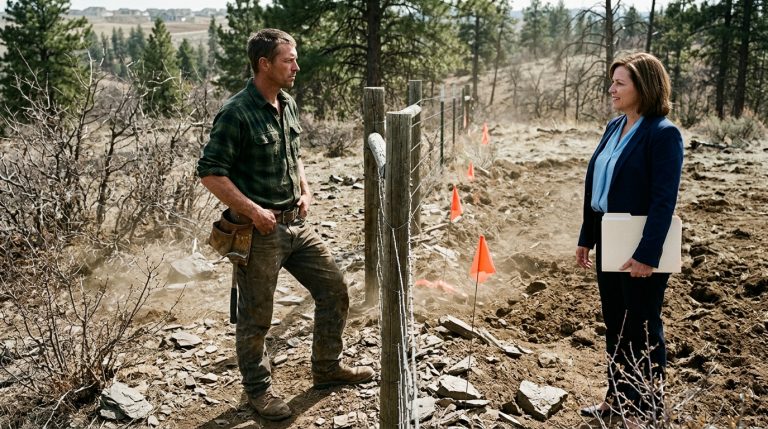
The neighborhood itself was already changing. Earlier that afternoon, two residents from the far side of the development—people who had spent weeks avoiding my eyes at the mailboxes—walked down my gravel drive. They didn’t bring petitions or complaints. They brought a battered toolbox and an offer to help reset the leaning fence post near the southern property boundary that winter storms had loosened the year before. We didn’t talk about the lawsuits or the board meetings. We just worked in silence, measuring angles and driving fresh galvanized nails into solid wood.
I crouched beside the water’s edge, running my palm over the rough grain of one of the salvaged pilings left stacked on the bank. Each notch in the timber was a physical reminder of the pressure, the late-night microfilm sessions, and the cold calculation it took to stand firm against institutional momentum without losing ground to impulse.
Anger would have rushed into the fight and broken against their retainers and committees within a week. But patience—tempered by law, documentation, and stubborn endurance—had turned their own machinery against them.
Behind me, the cabin door clicked open, and the warm glow of a desk lamp spilled out across the wooden porch.
I stood up, brushing red clay from the knees of my jeans, and turned back toward the house. The lake before me caught the final amber rays of twilight, turning the water into a sheet of polished copper. The boundaries were secure. The paperwork was filed. And for the first time in months, the future of the shoreline was defined not by fear or corporate leverage, but by the quiet, unyielding weight of law and respect.
I stepped onto the porch, pulled off my work gloves, and closed the door against the evening chill, leaving the dark water to settle into peace.