The Iron Foundation of Sterling Ridge: How One Veteran’s Century-Old Stone Wall Broke a Tyrant’s Grip
CHAPTER 1: THE PINK TRACKSUIT
The cold morning air bit at my fingers, but my grip on the steel handles of the garden clippers remained steady.
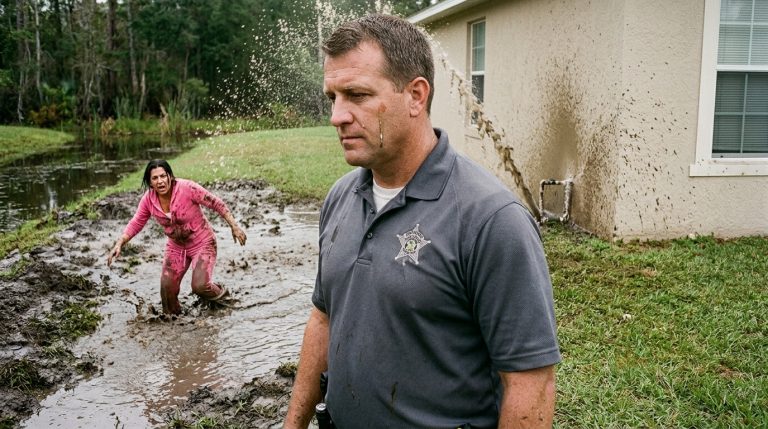
Just beyond the invisible boundary where my front lawn met the public concrete, the self-appointed queen of the Sterling Ridge Homeowners Association stood in a lurid pink tracksuit that strained against her frame.
Behind her idled a heavy diesel skid steer loader, its metal bucket resting low like a mechanical jaw waiting to snap shut on a century of hard-earned history.
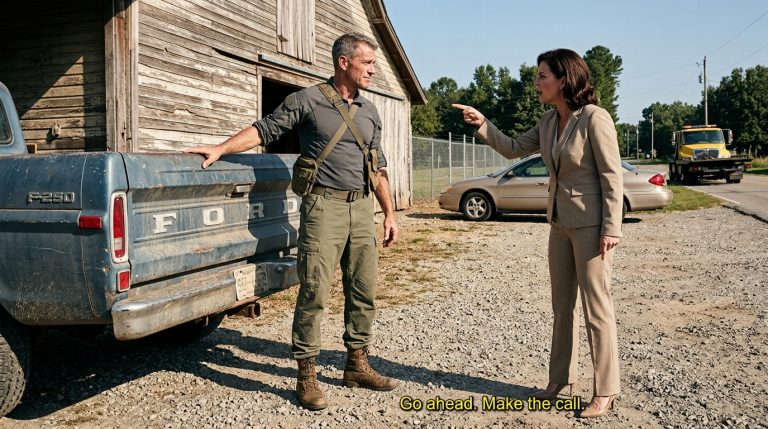
“That illegal eyesore comes down today, Mr. Caldwell,” Karen barked, her voice cutting through the quiet morning like grinding gears.
I did not flinch, nor did I raise my voice to match her theater.
Instead, I let the blades of the clippers click shut around a dead rose stem, the small mechanical snap serving as the only punctuation to her mounting hysteria.
“You’ve had thirty days to comply with the aesthetic code,” she continued, puffing out her chest as a few nearby curtains twitched behind neighboring windows. “The board voted, and the HOA is exercising its right to remedy the violation at your expense.”
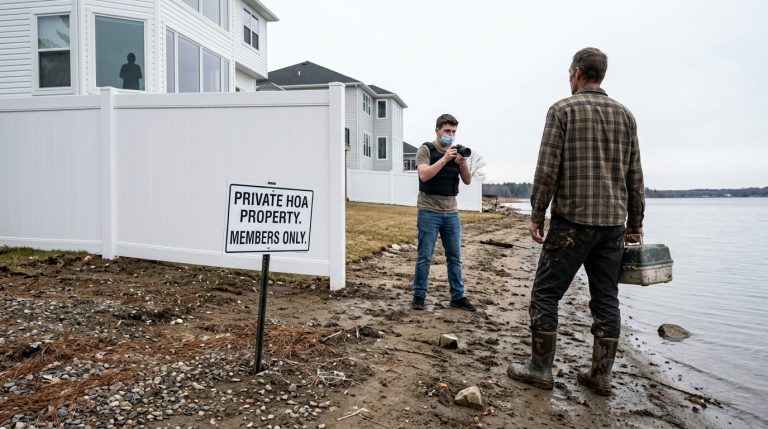
The violation she referred to was a four-foot-high, dry-stacked stone wall of granite and fieldstone that ran the entire length of my front yard, settling into the earth as if it had grown there a hundred years before this cookie-cutter development ever broke ground.
It was my sanctuary, my piece of old-world craftsmanship, and the very reason I bought the property after two decades of military engineering service.
The machine’s engine revved higher, the exhaust fouling the crisp autumn air with the sharp scent of unburned diesel.
The operator leaned against the roll cage, arms crossed and entirely detached from the absurdity unfolding on the lawn.
My blood ran cold with the familiar, calculating stillness of an old combat deployment, but my outward posture remained deliberately languid.
I set the clippers down inside my plastic garden bucket, wiped my palms against my jeans, and walked slowly toward the property line.
“Karen,” I said, keeping my tone flat and low enough that she had to strain to catch the words over the rumbling engine. “You are making a catastrophic mistake.”
She let out a short, barking laugh, her face tightening into a cruel, triumphant smirk as she gestured grandly to the idle driver.
“The only mistake was yours, thinking you were above the rules,” she snapped, stepping back onto the sidewalk. “Proceed.”
CHAPTER 2: THE QUIET PERIMETER
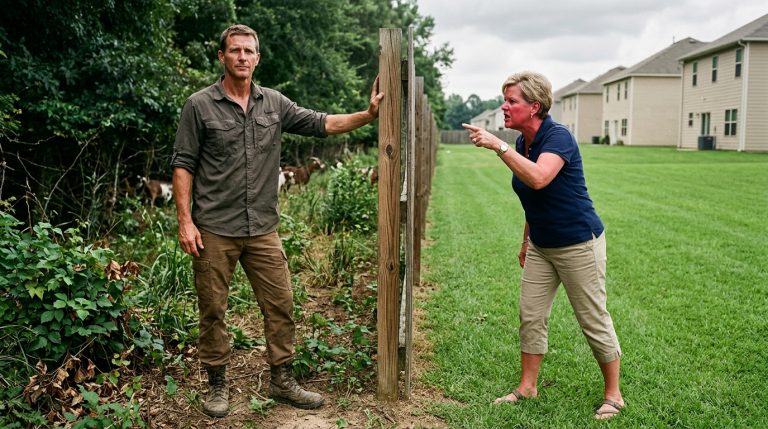
Carlos Garcia stopped his weed eater with a sharp whine that died away into the damp morning air, pushing his safety glasses up his forehead as I leaned on the wooden fence post.
“Morning, Carlos,” I said, keeping my voice level against the distant hum of traffic from the main road. “Just got a notice from the HOA. They want me to tear down my stone wall.”
Carlos stared down from his elevated turf, a flicker of genuine confusion narrowing his dark eyes.
“You’re kidding me. Why?”
“Says it’s the wrong material. Supposed to be vinyl or wood,” I replied, letting the sheer absurdity of the mandate hang between us like a physical weight.
He glanced from my century-old granite barrier up toward his own back patio, a sudden, uneasy shadow crossing his expression.
“That’s insane. That wall’s been there forever.”
“I know,” I said quietly, rolling the cold metal rake handle between my palms. “Just wanted to give you a heads-up. If they do force me to take it down, it’s going to be a major excavation project. Lots of heavy equipment tearing up this slope.”
I didn’t spell out the mechanics of soil stability or foundation shifting; I simply left the dots unjoined for him to connect himself.
He looked down at the steep grassy drop separating our properties, his jaw tightening as the practical reality of an unreinforced slope sank in.
“If that goes, my back deck is going to have nothing underneath it when the heavy rains start,” Carlos muttered, his voice dropping an octave.
“That’s why I’m contesting it,” I said, offering a curt nod before turning back down the path toward my own yard.
The fines began arriving in the mail by the end of the week, each white envelope thicker and more aggressive than the last.
The initial $500 penalty ballooned into thousands, accompanied by typed threats of administrative liens and community censure.
Karen was building a heavy paper trail, creating a formal narrative designed to brand me as a rogue element before the upcoming quarterly meeting.
She wanted a public spectacle where the rules of her board could crush any resistance without a trial.
I sat at the kitchen table under the glare of a single overhead light, turning the latest certified letter over in my fingers without opening it.
The front window caught the reflection of my own tired eyes, reminding me that defense alone would only exhaust my resources over time.
I set the envelope down beside a printed copy of the neighborhood master deed and reached for the telephone.
Marcus picked up on the second ring, his voice sharp and crisp from a downtown law office hundreds of miles away.
“Jack,” Marcus said without preamble. “Tell me you didn’t pay them.”
“Never crossed my mind,” I said, tapping a finger against the edge of the master deed. “She’s escalating to formal enforcement hearings at the clubhouse.”
“Good,” Marcus replied, papers rustling on his end of the line. “Let her walk right into the trap of her own making. We hit her with a formal cease and desist on firm letterhead, citing the grandfather clauses she’s actively ignoring.”
“Make sure it arrives three days before the meeting,” I said, my gaze shifting to the dark outline of the stone wall visible through the kitchen glass. “She won’t share it with the board, but it will force her to scramble.”
CHAPTER 3: KANGAROO COURT
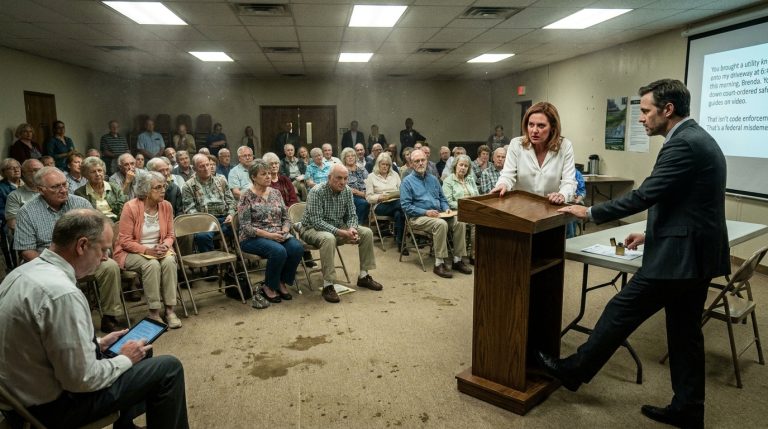
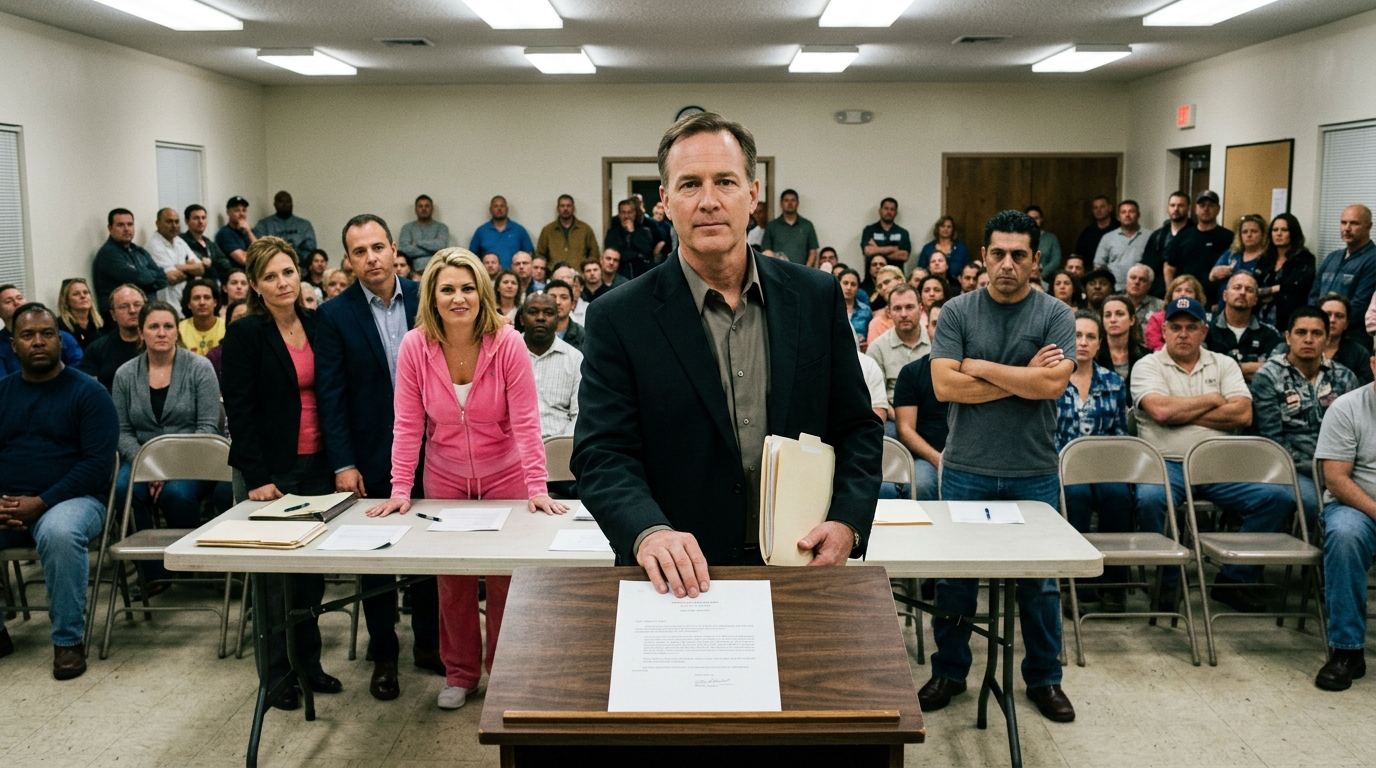
The room was suffocatingly hot, packed shoulder-to-shoulder with residents who had abandoned all pretense of casual conversation.
At the head of the long folding table, Karen sat flanked by her two board loyalists, her expression locked in a severe, regal mask of absolute authority.
She opened the floor with a calculated sigh, her voice dripping with theatrical martyrdom as she addressed the assembled crowd.
“As you all know, the board works tirelessly to maintain the aesthetic integrity and property values of Sterling Ridge,” she began, her gaze sweeping across the rows of folding chairs. “Unfortunately, we have a homeowner who believes the rules simply do not apply to him.”
A murmur rippled through the middle rows where Carlos Garcia sat stiffly, his arms crossed over his chest.
Karen launched into a rehearsed tirade detailing my refusal to cooperate, holding up a glossy photograph of a white vinyl fence as if comparing holy scripture to trash.
When she finally paused for breath, her triumphant smirk settled squarely on my face.
“Mr. Caldwell, do you have anything to say before the board votes on immediate punitive enforcement?”
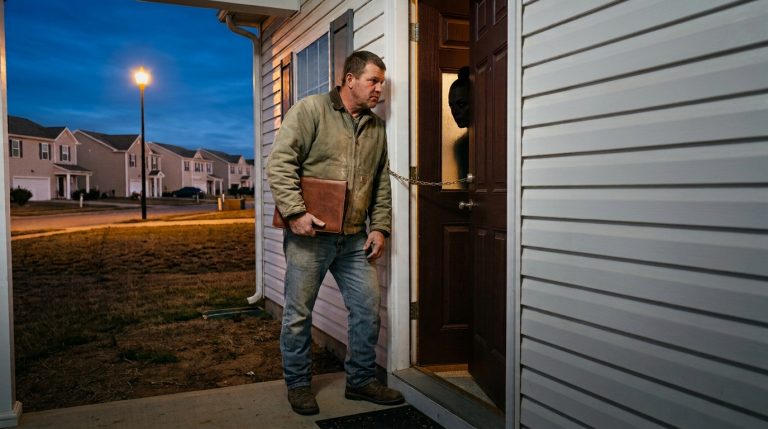
I stood up slowly, picking up the heavy manila folder from the wooden seat beside me, and walked toward the center aisle without a word.
The silence in the room grew heavy, broken only by the rhythmic clicking of my boots against the linoleum floor.
“Good evening,” I said, my voice steady and deliberately quiet, forcing the room to lean in. “First, I would like to correct the record on what this structure actually represents.”
Karen’s mouth tightened into a hard, white line as I pulled out a stapled set of documents from the folder.
“This is not a decorative fence subject to aesthetic whims,” I continued, turning my gaze directly toward the uphill residents in the back rows. “It is a four-foot-high, dry-stacked granite retaining wall holding back approximately four hundred tons of earth beneath several of your homes.”
A sharp intake of breath echoed near the back as Carlos leaned forward, his face draining of color.
Karen slammed her palm against the tabletop, the sharp crack making several people jump in their seats.
“That is entirely out of order—we are here to discuss aesthetic non-compliance!”
“Finally,” I interrupted, cutting straight through her rising panic without raising my volume by a single decibel. “I have here a formal legal notice delivered to the board three days ago regarding severe structural and financial liability—a document your president chose not to share with anyone in this room.”
I placed the single sheet of legal letterhead squarely on the edge of the podium.
The clubhouse erupted into overlapping shouts of disbelief as neighbors turned to glare at the head table, the illusion of absolute control shattering instantly under the weight of unvarnished reality.
CHAPTER 4: THE BASEMENT BLUEPRINT
Reel after reel of faded municipal history spun past under the harsh fluorescent glare, chronicling decades of subdivision permits, zoning board meetings, and grading changes across the county.
The air down here smelled of aged paper, damp concrete, and the heavy dust of forgotten bureaucratic battles.
I kept my hand resting flat on the cold metal casing of the machine, feeding the crank forward with slow, methodical precision until a set of late-1970s topographical layouts finally snapped into focus.
The blueprints were yellowed and brittle at the margins, marked up with the erratic red ink of initial site surveys.
I adjusted the focus knob, squinting against the glaring light as the architectural lines of the Sterling Ridge terrace development resolved into intricate detail.
Tucked away in the lower left corner, half-hidden beneath a faded cartographer’s legend, a tiny handwritten note caught my eye.
The handwriting was sharp, hurried, and unmistakably technical.
“Existing dry-stacked stone wall on lot 1A, 121 Sterling Drive, designated as primary basal retaining structure for phase one development,” it read, the ink bleeding slightly into the paper grain over the decades. “Do not remove or alter. Structure critical for slope stability of tiers one to three.”
Tiers one to three meant nearly thirty modern residential lots perched precariously along the steep hillside directly above my property line.
The original developers had skipped building an expensive, modern concrete retaining wall at the base of the hill by legally anchoring their entire civil engineering plan to a farmer’s century-old masonry.
I leaned back in the hard wooden chair, letting out a long, slow breath that stirred the dust motes hanging in the air.
Karen wasn’t just fighting a petty battle over aesthetic codes; her ignorance was actively threatening to send an entire neighborhood sliding down into my front yard.
I reached into my pocket, pulled out a portable flash drive, and plugged it into the archive terminal to pull high-resolution digital copies of the engineering mandate.
If the board wanted a formal war over structural compliance, I was no longer fighting for a garden wall—I was holding the foundation of the mountain together.
CHAPTER 5: THE FINAL STAND
The heavy tracks of the skid steer loader ground into the asphalt just outside my boundary line, vibrating right up through the soles of my boots.
Karen stepped down from her white SUV, her lurid pink tracksuit straining as she struck a victorious pose on the public sidewalk.
“Your thirty days are up, Mr. Caldwell,” she announced, her voice pitched high to carry across the lawn. “Proceed with the removal.”
The machinery revved, thick exhaust choking the crisp autumn air as the metal bucket lifted toward the lowest tier of granite.
I did not raise my voice or reach for a phone; I walked straight toward the equipment holding a heavy manila folder.
“Stop right there,” I said, locking eyes with the veteran machine operator as I thrust the notarized paperwork into his hands.
He glanced down at the pages, his professional irritation instantly morphing into cold horror as his eyes caught the 1978 engineering schematic.
“Are you out of your mind, lady?” the operator snarled, turning on Karen with a flushed neck. “This is the primary retaining wall holding up this entire hill!”
“That’s a non-compliant fence, do your job!” Karen shrieked, stepping forward to block his path.
“My job isn’t getting sued into bankruptcy over a landslide,” he shot back, shutting down his engine with a sharp mechanical clunk.
A black city sedan pulled up right behind her vehicle, and Mr. Davies stepped out onto the curb with an official tablet in hand.
“Looks like I got here just in time,” the city engineer said, his gaze sweeping from the idle machine to the trembling HOA president. “An immediate stop-work order is going on this entire parcel for gross criminal negligence.”
Karen stood frozen on the concrete, her empire of petty rules evaporating into silence as the neighbors began stepping out onto their porches to watch.
CHAPTER 6: THE DUSTY GRAY AFTERMATH
The transition across Sterling Ridge did not happen overnight, but the collapse of Karen’s authority was absolute and irreversible once the insurance investigators arrived.
Faced with potential personal liability for gross negligence and a community-wide recall petition backed by eighty percent of the homeowners, the former board president resigned without a word and quietly put her house on the market.
The ensuing legal settlement was swift and procedural rather than vindictive.
The HOA’s corporate insurance carrier covered every cent of my legal and engineering fees, issuing a formal letter of exoneration that was mailed directly to every household in the development.
More importantly, a binding consent decree was entered into the public record, formally designating my century-old granite barrier as protected community infrastructure and making the association permanently responsible for its structural oversight.
Carlos Garcia stepped into the role of interim HOA president within a week, immediately dismantling the punitive architectural guidelines and replacing them with common-sense property standards.
The petty fines stopped.
The anonymous warning letters vanished from front door handles.
Instead of an atmosphere of quiet surveillance, the neighborhood returned to the simple rhythm of backyard barbecues and children playing late into the dusk.
Carlos walked over from the lawn with a fresh burger on a paper plate, leaning against the wooden porch post beside me.
“We’re rewriting the bylaws tonight to clear out all the old enforcement text,” Carlos said, shaking his head with a faint smile. “Hard to believe one piece of paper could change a whole subdivision.”
“It wasn’t the paper,” I replied, watching the sunlight catch the rough texture of the fieldstone. “It was the weight of what’s underneath it.”
He nodded slowly, looking out over the slope that supported his own home before walking back toward the grill where neighbors were gathered in easy, unhurried conversation.
Sarah stepped out through the screen door, leaning her head gently against my shoulder as we watched the evening shadows lengthen across the yard.
The stone wall stood solid and gray against the fading light, its stacked granite impervious to the weather, the passage of time, and the temporary fury of unbridled entitlement.
The battle was over, the foundation was secure, and the quiet rhythm of everyday life had finally settled back into place where it belonged.