The Sawdust Legacy: How an Army Engineer Broke a Suburban Tyrant
CHAPTER 1: THE GATE LINE AMBUSH
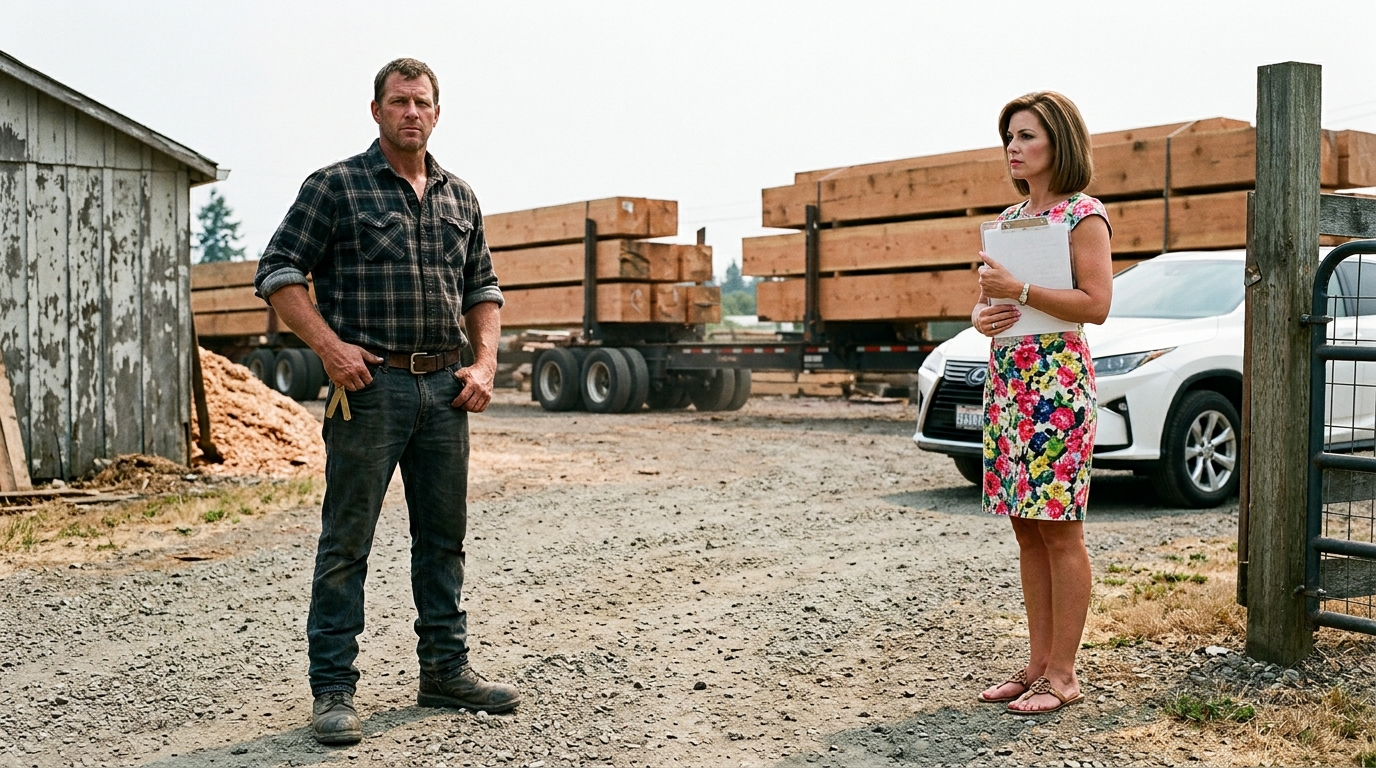
The diesel engine of my flatbed idle-rumbled behind me, sending a steady vibration through the gravel beneath my boots.
Ten thousand pounds of custom-milled Douglas fir beams sat stacked on the trailer beds, heading for a build site three miles north.
Karen didn’t care about the truck, the build, or the county line.
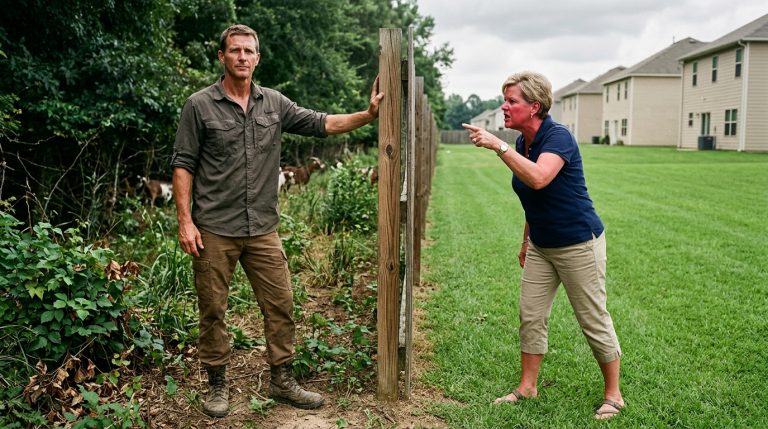
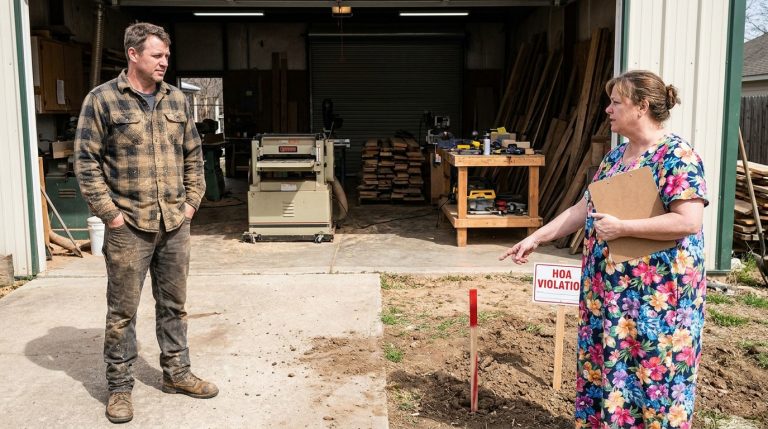
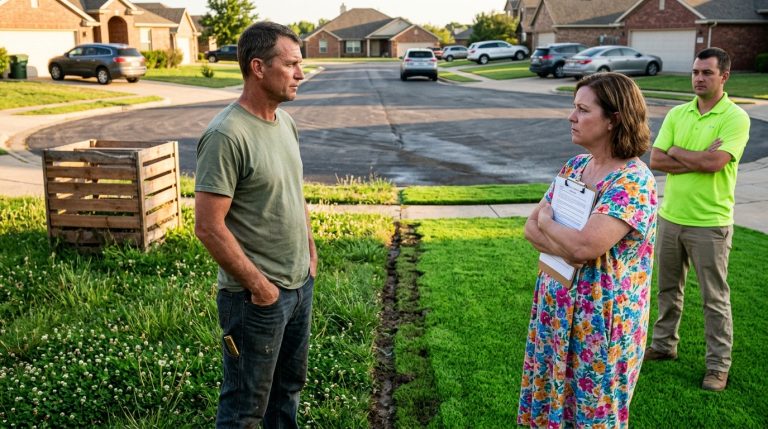
She stood two feet onto the gravel shoulder of my property line, her floral-print dress catching the humid midday draught.
A heavy acrylic clipboard was clamped against her chest like an armor plate.
“That pile of shavings by the south shed is a registered biohazard under county health guidelines,” she said, her voice piercing the low thrum of the diesel exhaust. “Your commercial noise levels constitute a public nuisance under Covenant 7.4B. I am giving you thirty days to cease all cutting, or I will personally file for property condemnation.”
I didn’t step past my gatepost.
My thumbs hooked into my belt loops, my fingers brushing the cold brass edge of the feeler gauge tucked into my side pocket.
Her white Lexus SUV sat parked horizontally across the entrance, blocking the turn radius completely.
“This road has been a logging route since 1928,” I said. “The land on your side of the fence was timberland when your developer was still in grade school.”
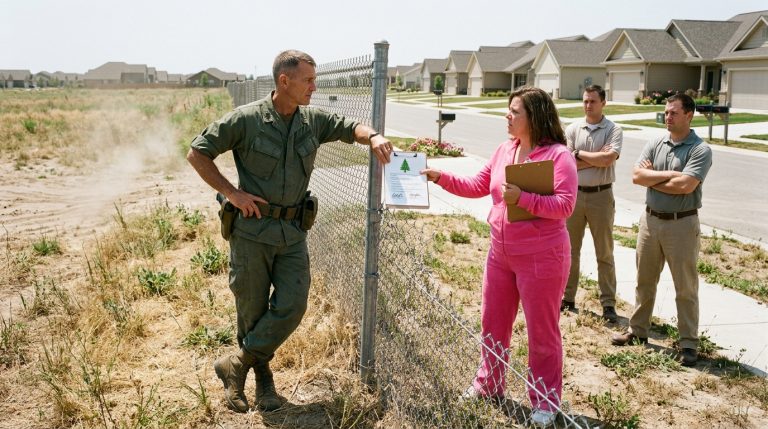
“The past doesn’t override current residential covenants, Mr. Peterson,” she said, taking a quarter-step forward. Her manicured fingers tapped the edge of her clipboard. “You operate a heavy industrial nuisance next to two hundred family homes. You either sign the voluntary compliance agreement by Friday, or the daily fine structure kicks in at five hundred dollars.”
“I don’t sign paper on my own dirt,” I said.
She smiled, a sharp, mechanical twitch of her cheeks that didn’t reach her eyes.
“Then the county marshal will deliver the injunction for me.”
She turned on her heel, her designer sandals crunching into the gravel as she walked back to the driver’s side of her Lexus.
The door clicked shut, the power window rolled up, and the white vehicle backed out just enough to clear my gate before speeding down the asphalt toward the Whispering Pines entrance.
I stood in the driveway until the dust settled over the ditch.
The heavy wood beams behind me held their alignment on the steel trailer bed, perfectly square, raw, and dense.
I reached into my pocket, pulled out the brass gauge, and ran my thumb down its smooth, notched spine until the metal turned cold against my skin.
CHAPTER 2: THE PAPERWORK RECONNAISSANCE
The paper was heavy, legal-grade stock that smelled of stale toner and decades of county vault humidity.
Sarah set a mug of black coffee next to my elbow, the porcelain clicking against the timber. She didn’t say a word, just left her hand resting on the back of my chair for a second before sitting across from me.
I flattened the edges of the master plat with two heavy steel sockets from the shop.
The developer had drawn Whispering Pines in tight, geometric grids—two hundred tiny beige boxes squeezed together like cell blocks.
Right on the eastern boundary line, my sixty acres sat outlined in thick India ink.
At the bottom corner of the map, tucked inside the county recorder’s legend, was a tiny block of italicized text.
I pulled the brass feeler gauge from my pocket, using its thin, flat steel edge to trace the small print word for word.
Parcel 7B: Exempt. Pre-existing agricultural and light industrial use.
Sarah leaned forward, her eyes scanning the line where the steel tip rested. “Is that what I think it is, Jack?”
“It’s a wall,” I said. “The original developer had to sign that exemption to get his permits through the county board back in ninety-eight. My dad made sure of it before they poured the first curb.”
“So Karen’s five-page violation letter…”
“Is paper,” I said, running my thumb over the notched brass handle. “She’s enforcing rules on a piece of dirt that was legally firewalled before her house had a foundation.”
I pulled a yellow legal pad across the oak and picked up a pen.
I didn’t call a lawyer, and I didn’t write an angry response to the HOA board.
Instead, I logged the time, the date, the exact wording of the legend, and the county file stamp number from the top right margin.
The front desk of the HOA office sat between a fingernail salon and a vape shop in a cheap strip mall on the edge of town.
The air inside smelled of stale cinnamon air freshener and burnt pot coffee.
Karen sat behind a laminated particle-board desk, her manicured fingers flying over a keyboard like she was directing air traffic.
She didn’t look up when the glass door chimed, letting the silence stretch for a full ten seconds while I stood in front of her desk.
“Mr. Peterson,” she said finally, her voice smooth and dry as cardboard. “Have you come to hand over the signed compliance agreement?”
“I need certified copies of the recorded covenants, the current bylaws, and the complete line-item financial ledger for the last fiscal year,” I said.
Her fingers stopped over the keys. Her eyes narrowed, flicking down to my clean denim shirt, then up to my face.
“That’s over two hundred pages of administrative documentation,” she said, her voice dropping the polite customer-service edge. “There is a standard copying fee of fifty cents per page.”
I pulled a folded hundred-dollar bill from my wallet and laid it flat on the laminate between us.
“I’ll wait.”
Her mouth pressed into a thin, pale line, the skin around her nose tightening as she pulled a heavy key from her drawer.
She stood up, her floral mumu rustling against the desk edge, and walked toward the back copy room without another word.
While the machine began its slow, rhythmic thumping in the back, I looked at the community bulletin board pinned to the drywall beside her chair.
Tacked between notices for lost cats and lawn-mowing schedules was a printed quarterly budget summary.
My eye caught a single line item near the bottom under administrative expenses: Disbursement – Community Solutions LLC: $40,000.00.
The address listed below the business name wasn’t a local office—it was a post office box three towns over in Apex.
The copy machine clicked off, and Karen walked back out, shoving a thick stack of warm paper into a paper bag.
She didn’t hand me change for the hundred.
“Everything the board is legally required to provide is in there,” she said, her hands resting flat on her desk like she was holding down a trap door.
“I suggest you read the noise sections carefully before Friday.”
I took the bag, tucked the legal pad under my arm, and walked out into the humid afternoon air without giving her a single word to work with.
CHAPTER 3: THE QUIET ALLIANCE
The sedan came to a halt ten feet from my boots, its driver’s side door opening with a dry metallic creak.
George Henderson stepped out, his stooped shoulders framed by a worn flannel shirt, his knuckles swollen from decades of cabinet work.
He didn’t look at the sawmill or the stacks of timber; he looked straight at the porch, holding a folded copy of the HOA newsletter in his gnarled right hand.
“Jack Peterson,” he said, his voice a low gravel rasp. “Hope I’m not interrupting the shift.”
“Just wrapping up the afternoon cut,” I said, staying seated. “What can I do for you, George?”
He climbed the three wooden steps, his heavy work boots dragging slightly, and slapped the glossy newsletter down on the bench beside me.
“This junk mail landed in two hundred mailboxes this morning. She didn’t put your name on it, but she didn’t have to.”
I picked up the paper. On the front cover, under a bold banner about neighborhood beautification, three paragraphs described an ‘unregulated commercial operation threatening property values and public air quality.’
“It’s propaganda,” I said, setting the paper down without turning the page. “She’s building a consensus before she tries to leverage the county.”
“She’s a plague,” George said, sitting on the top step with a quiet grunt as his knees took the weight. “She fined the Miller kid two thousand dollars last month because his driveway basketball hoop was painted midnight blue instead of navy. Forced old Mrs. Gable to strip forty years of clover out of her side lawn because it didn’t match the sod guidelines.”
I reached into my pocket, my fingers finding the brass feeler gauge and feeling its notched edge.
“People pay it?”
“They pay it because they’re terrified of the legal liens,” George said, turning his head to look toward the beige rooftops visible over my boundary fence line. “She’s got three cronies on the board who vote her way every Tuesday night. Nobody stands up to her because nobody wants a ten-thousand-dollar legal bill over a flowerbed.”
Sarah came through the screen door, carrying two glasses of iced tea. She handed one to George with a quiet nod.
“Mr. Henderson,” she said. “Good to see you off the lawnmower.”
“Wish it was under better terms, Mrs. Peterson,” George said, taking a slow sip. He set the glass down between his boots and looked at me sideways. “She thinks you’re just an old boy with a woodpile. She doesn’t know you’ve got the paper on this place.”
“I have the original plat map,” I said. “Parcel 7B is exempt. But she’s not operating on property law, George. She’s operating on fear and community pressure.”
“Then give ’em something else to look at,” George said, his jaw tightening. “The Millers are ready to sell their house just to get out from under her fines. Mrs. Gable cries every time the mailman comes down the street. If somebody gives them a line to hold, they’ll stand behind it.”
I looked down at the newsletter, then at the brass tool in my hand.
“I’m not running a political campaign, George.”
“You don’t have to,” he said, pushing himself up off the porch step with a heavy sigh that rattled in his chest. “You just have to survive the next board meeting. Because if she breaks you, there’s nobody left in this township who can stop her.”
He walked back down the gravel, his boots kicking up small puffs of gray dust as he climbed into his Buick.
I stayed on the porch until the red tail lights vanished around the bend of the access road, my thumb tracing the cold steel notches of the gauge.
CHAPTER 4: BUREAUCRATIC COUNTERFIRE
The driver’s door swung open, and Bill, a county code inspector I’d known for five years, stepped out holding a metal clipboard.
He didn’t look angry; he looked exhausted, his cap pulled low against the glare of the afternoon sun.
“Jack,” Bill said, letting out a weary breath as he walked toward the saw bed. “Got three complaints logged at the desk this week. Illegal dumping, unpermitted commercial structures, and biohazard runoff.”
I pulled the brass feeler gauge from my pocket, turning it twice between my knuckles before tucking it away.
“Karen?”
“You know I can’t name the complainant,” Bill said, tapping his pen against the aluminum board. “Show me the sawdust pile and the kiln permits so I can check these boxes and get out of your hair.”
I walked him to the south shed, pulling the laminated 1978 original building permit off the wall clip, along with the electrical upgrade authorization from five years back.
Then I handed him a fresh carbon copy of my monthly contract with the regional tree nursery that picked up the pine shavings for animal bedding.
Bill scanned the contract, checked the permit numbers against his master list, and checked three boxes on his form with sharp, decisive strokes.
“Clean as a whistle, just like last year,” he muttered, writing Complaint Unfounded across the top margin in large block letters. “She’s trying to stack administrative paper against you, Jack. Watch your flank.”
Two days later, an environmental officer arrived to test the creek line along my eastern boundary fence.
I handed her five years of quarterly water-lab reports from my own files before she even unboxed her sample bottles.
By Friday, an OSHA inspector walked the perimeter of the primary saw blade, took two photographs of my heavy steel emergency safety guards, and signed off on zero violations.
I didn’t toss a single report into the trash.
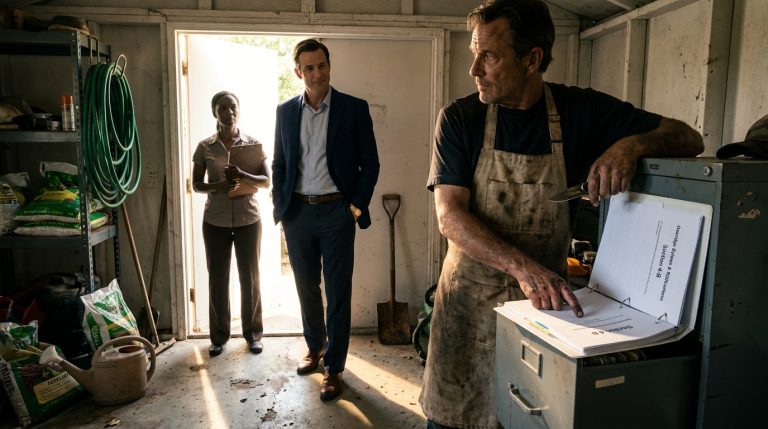
I scanned every signed inspector clearance form, printed high-resolution copies, and filed them directly into a thick black binder beside the plat map.
Every time Karen called an agency to crush my operation, she succeeded only in creating an official government record certifying that my mill was legal, clean, and fully compliant.
She was calling in air strikes on my position, but all she was doing was providing certified witnesses for my defense.
I closed the black binder, snapped the heavy steel rings shut, and picked up the telephone to call David Chen’s legal office downtown.
CHAPTER 5: THE SUPPLYCHAIN LEVER
David Chen leaned back in his leather swivel chair, eyeing the invoices before looking up at me.
“Harrington Homes, Blue Ridge Builders, and Apex Construction,” David said, his index finger tapping the edge of the top sheet. “That’s every major contractor framing out Phase Three of Whispering Pines.”
“They buy all their custom cedar porticos, exterior trim, and structural trusses directly from my yard,” I said, pulling the brass feeler gauge from my pocket and setting it on the glass beside the paper stack. “Karen thinks she’s trying to close down a standalone nuisance. She doesn’t realize she’s about to cut the supply line for her neighborhood’s forty-home expansion.”
David picked up the brass gauge, turning the cold metal tool over once in his hand before setting it back down.
“If your mill stops cutting, their construction timelines stall instantly.”
“Ten thousand board feet of cedar delivered last Tuesday,” I said. “If Harrington has to source those custom dimensions from an out-of-state mill, he’s looking at a three-month delay and six figures in liquidated damages.”
Mark Harrington sat down at my oak dining table two nights later, his thick shoulders filling out a dark work jacket, accompanied by Dave Miller from Blue Ridge and Paul Jessup from Apex.
Mark slammed his coffee mug onto the wood, his face darkening as he scanned the certified copy of Karen’s five-page violation letter and the plat map layout.
“She’s trying to put our primary supplier out of business while we’re pouring footings for forty houses?” Mark growled, his jaw clenching. “A three-month delay on those cedar beams destroys my quarterly budget.”
“She thinks she’s running a trial on me at the special community meeting next Thursday,” I said, leaning forward over the table. “She wants to vote a six-figure legal lien against my property in front of two hundred residents.”
Mark looked across at Dave and Paul, a grim, hard smile cutting across his weathered face.
“Then let’s make sure we’re sitting in the front row.”
CHAPTER 6: THE TOWN HALL EXECUTION
“This special session is brought to order,” Karen said, her voice crackling through the cheap PA speakers. Her manicured hands gripped the wooden edges of the podium, her floral-print dress standing out under the harsh fluorescent lights. “The board is here to address a persistent commercial nuisance that threatens our property values and air safety.”
Mark Harrington, Dave Miller, and Paul Jessup walked straight past the rows of folding chairs, taking three seats in the very front row.
They didn’t carry notebooks, but their presence in dark suits brought a sudden, heavy silence over the room.
Karen’s knuckles turned white against the wood as she raised her gavel. “We will begin with the legal lien authorization—”
“Point of order,” I said, tapping the spacebar on my laptop.
A high-definition image of the 1998 subdivision plat map hit the wall screen behind her head. The thick India ink outline of my property glowed six feet tall, with the legend magnified in red text at the center.
“My name is Jack Peterson,” I said, my voice steady without needing the room microphone. “The master plat map legally defines Whispering Pines. Parcel 7B is explicitly exempt from all HOA covenants, conditions, and restrictions. This board has no legal jurisdiction over my land, my mill, or my commercial operations.”
Murmurs rippled through the eighty residents seated between the folding chairs.
Karen’s mouth opened, her jaw twitching as she tried to strike the gavel down. “That is an unapproved presentation—”
“I yield my time to Mark Harrington,” I said, hitting the key to switch the projection to three official inspection reports from the EPA, OSHA, and county code enforcement—all stamped Complaint Unfounded.
Mark Harrington stood up, his six-foot-three frame cutting off the line of sight between Karen and the audience.
“I am the lead contractor on Phase Three,” Mark said, his voice a low rumble that carried across the gymnasium floor. “If this board proceeds with an illegal action against Jack Peterson’s mill, Harrington Homes, Blue Ridge, and Apex Construction will halt all building operations in Whispering Pines effective immediately.”
Shouts erupted from the middle rows as homeowners sat up in their chairs.
“Our custom timber, porticos, and framing joists come from that mill,” Mark continued, turning to face the crowd. “If you shut down his saw, you freeze our construction schedules, and our legal teams will sue this HOA for tortious interference.”
Karen pounded the gavel three times in rapid, frantic succession, the wood cracking against the tabletop. “Security! Clear the front row—”
David Chen stepped up to the aisle, opening a leather portfolio and resting his hands flat on the wooden rail separating the board from the floor.
“Under state transparency laws,” David said, his voice quiet, cold, and clear, “we compelled the production of the last five years of financial ledgers. Over forty thousand dollars in community funds were disbursed directly to Community Solutions LLC—a shell company registered to a P.O. Box in Apex under the sole ownership of Karen Peterson.”
The room went completely dead silent.
“An additional ninety thousand dollars was paid in legal retainer fees to Abernathy and Finch,” David added, looking directly at Karen. “Senior partner Robert Abernathy is Mrs. Peterson’s brother-in-law.”
George Henderson stood up from his folding chair near the exit doors, his worn carpenter’s hands cupped around his mouth.
“I move for a vote of no confidence!” George shouted. “Right now!”
“Second!” the Miller family called out from the third row.
“Vote! Vote! Vote!” the chant swept through the rows, forty homeowners rising to their feet as Karen backed away from the podium, her clipboard slipping from her fingers and clattering flat onto the hardwood floor.
By the time the special election cleared two weeks later, George Henderson held ninety percent of the resident votes for board president.
The initial motion passed by the new board threw out every violation notice issued against my parcel, nullified the illegal fines, and turned the full financial ledger over to the district attorney’s office.
I stood on the gravel shoulder of my property line three weeks later, my thumbs resting in my belt loops as the diesel flatbed idled behind me.
Karen pulled her white Lexus up to the gate line, her house on Whispering Pines Road showing a fresh real estate sign stuck into the turf behind her fence.
She rolled her window down two inches, her face pale, the arrogant mask completely stripped away.
“You ruined this community,” she whispered, her voice dry as dead leaves.
I reached into my side pocket, pulled out the brass feeler gauge, and ran my thumb over its smooth, cold edge.
“I didn’t ruin anything, Karen,” I said, looking past her car toward the ten-thousand-pound stack of custom-milled oak beams resting on the trailer bed, ready to frame the entrance of a new home. “I built it.”
I turned my back on the Lexus, walked over to the driver’s side of the flatbed, and gave my haul driver the thumbs-up to pull out onto the open road.